
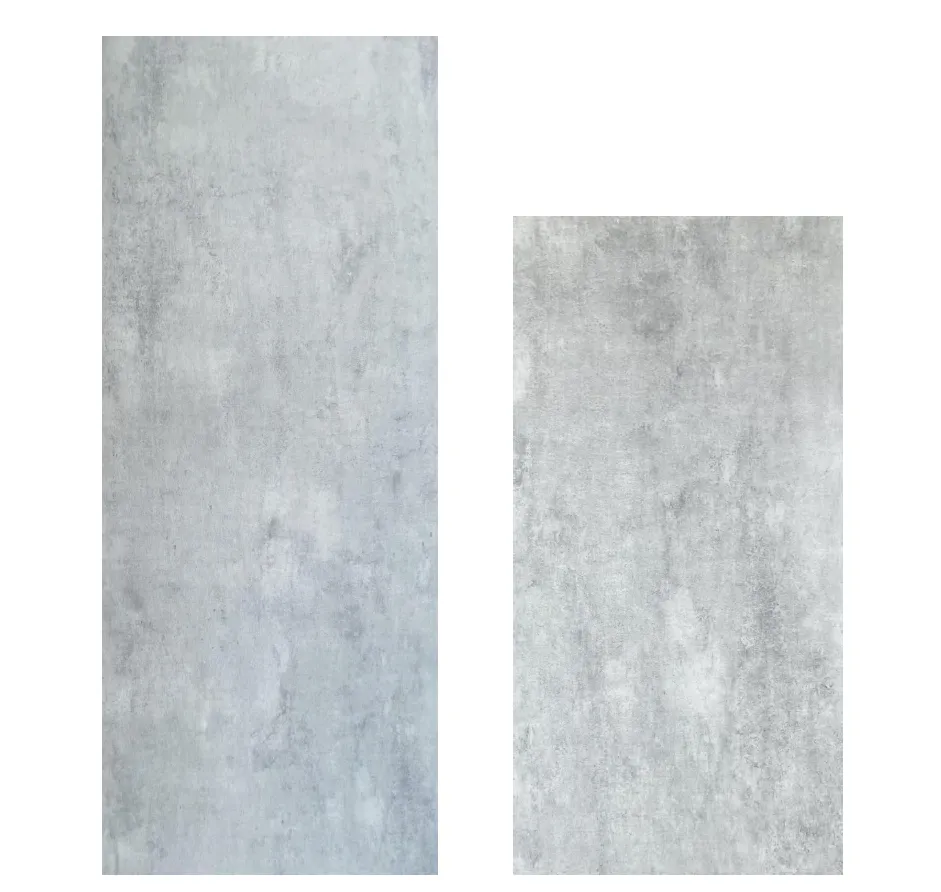
Architecture has always been a dialogue between human ambition and the materials at our disposal. From the limestone pyramids of Giza to the glass skyscrapers of today, every era's buildings tell a story of innovation in how we shape our world. In recent years, a quiet revolution has been unfolding in the construction industry—one that marries the timeless elegance of marble with the industrial strength of concrete, all while redefining sustainability and versatility. At the heart of this revolution lies the Marble Concrete Board , a material powered by advanced modified cementitious composites. Let's dive into how this technology is changing the game, and why architects, builders, and homeowners alike are increasingly turning to it for their most ambitious projects.
If you're picturing a slab of concrete with a marble sticker slapped on top, think again. Marble Concrete Board is a sophisticated hybrid material that blends the best of both worlds: the natural beauty of marble and the structural integrity of concrete. But what truly sets it apart is its foundation in modified cementitious materials —a class of engineered composites that have been reimagined to overcome the limitations of traditional building materials.
Traditional marble, while stunning, is heavy, porous, and prone to cracking under stress. Standard concrete, on the other hand, is durable but often lacks the refined aesthetic appeal that architects crave. Marble Concrete Board bridges this gap by combining crushed marble aggregates (for that signature veined look) with a modified cementitious binder—think of it as concrete, but supercharged. The result? A material that weighs up to 40% less than natural marble, resists water and fire, and can be molded into shapes and textures that would be impossible with quarried stone.
To understand why Marble Concrete Board is such a leap forward, we need to talk about what makes a cementitious material "modified." Traditional cement is a mix of limestone, clay, and other minerals, heated and ground into a fine powder that hardens when mixed with water. It's strong, but it's also brittle and can shrink or crack over time, especially under temperature changes or structural movement.
Modified cementitious materials, by contrast, are engineered with precision. Manufacturers start with a base of Portland cement but then add a cocktail of additives to enhance performance: polymer fibers for flexibility, nano-silica for density, recycled aggregates for sustainability, and even pigments to mimic the depth of natural marble. These additives act like tiny reinforcements, turning the cement matrix into a material that's not just strong, but resilient . Imagine a spider's web—individually fragile threads, but together, they form a structure that can catch a fly without breaking. That's the idea here: the modified cementitious binder holds the marble aggregates in place while absorbing stress, preventing cracks and increasing longevity.
The manufacturing process itself is equally innovative. Unlike natural marble, which requires quarrying (a process that's both labor-intensive and environmentally taxing), Marble Concrete Board is cast in controlled factory settings. This means consistency—no two slabs of natural marble are identical, but with modified cementitious materials, every board can be replicated with pinpoint accuracy. It also reduces waste: excess material from one batch can be recycled into the next, cutting down on the carbon footprint of production.
Let's get to the good stuff: what advantages does this material offer over its predecessors? We're talking durability, flexibility, beauty, and sustainability—all wrapped into one. Let's break it down.
Buildings are meant to last, and so should their materials. Traditional marble is soft (it ranks a 3-4 on the Mohs hardness scale, for context) and can scratch or etch easily, especially in high-traffic areas. Standard concrete, while harder, is porous—meaning it absorbs water, leading to mold, staining, or even freeze-thaw damage in cold climates.
Marble Concrete Board, thanks to its modified cementitious binder, flips the script. The polymer additives create a dense, non-porous surface that repels water (with absorption rates as low as 0.5%, compared to 2-3% for natural marble). It's also resistant to scratches, stains, and UV rays, making it ideal for both indoor and outdoor use. In lab tests, these boards have shown compressive strengths of 40-50 MPa—stronger than many traditional concrete mixes—and flexural strength that allows them to bend slightly without breaking, reducing the risk of cracks from structural movement. For a busy restaurant floor or a high-rise exterior, that's peace of mind you can build on.
Here's where the lightweight flexible stone sheets trend comes into play. Traditional marble slabs can weigh 20-25 kg per square meter, which adds significant load to a building's structure. This limits where they can be used—think second-story floors or tall facades, where excess weight increases construction costs and safety risks.
Marble Concrete Board, by comparison, clocks in at just 12-15 kg per square meter. That's a 30-50% weight reduction, making it feasible for applications that were once off-limits. Imagine cladding a 50-story tower with marble-like panels—with traditional stone, the structural engineers would have to reinforce the building's frame to handle the load. With Marble Concrete Board, the lighter weight reduces stress on the structure, cutting down on steel and concrete usage in the foundation. It's also flexible: unlike rigid natural stone, these boards can be curved or bent to follow architectural lines, opening up design possibilities for organic shapes or curved walls that would be impossible with quarried marble.
Let's be honest: part of the appeal of marble is its beauty. Those swirling veins, the depth of color, the way it catches the light—these are the things that make it a timeless choice for luxury spaces. The fear with engineered materials is often, "Does it look fake?" With Marble Concrete Board, the answer is a resounding no.
Manufacturers use advanced molding techniques to replicate the natural patterns of marble, from the subtle veining of Carrara to the bold drama of Emperador. The crushed marble aggregates in the mix add depth and texture, so the finish looks and feels authentic—no plastic-y sheen here. And because it's factory-made, you get consistency across batches. No more hunting through quarries for matching slabs or dealing with unexpected color variations. Want a polished finish for a sleek kitchen countertop? Done. Prefer a honed, matte look for a rustic living room wall? That's an option too. The versatility extends to color, too—from classic whites and grays to bold hues that mimic rare marbles, the possibilities are nearly endless.
In an era where "green building materials" are no longer a trend but a necessity, Marble Concrete Board shines. Let's start with the obvious: natural marble quarrying is destructive. It involves blasting mountainsides, displacing ecosystems, and generating massive amounts of waste (up to 70% of quarried stone is discarded as rubble). Concrete production, too, is carbon-intensive—traditional cement manufacturing accounts for about 8% of global CO2 emissions.
Modified cementitious Marble Concrete Board addresses both issues. First, it uses recycled aggregates (like crushed glass or reclaimed concrete) in its mix, reducing the need for virgin materials. Second, the factory casting process minimizes waste—scraps can be ground up and reused in future batches. Third, the lightweight nature reduces transportation emissions (fewer trucks needed to haul materials) and lowers the overall carbon footprint of a building by reducing structural steel and concrete usage. It's no wonder that many of these boards qualify for LEED credits, making them a favorite among eco-conscious architects and developers.
Luxury often comes with a premium, but Marble Concrete Board challenges that notion. Natural marble can cost $100-$200 per square foot, depending on rarity, plus installation fees (thanks to its weight and fragility). Standard concrete is cheaper, but you'd need to add expensive sealants or overlays to make it look halfway decent.
Marble Concrete Board hits the sweet spot. It typically costs 30-50% less than natural marble, with lower installation costs (lighter weight means fewer laborers and less structural support needed). And because it's low-maintenance (no annual sealing required, unlike natural stone), the long-term savings add up. For homeowners or businesses looking to elevate their space without breaking the bank, it's a no-brainer.
Still not convinced? Let's put Marble Concrete Board head-to-head with traditional marble and standard concrete. The numbers speak for themselves:
| Feature | Natural Marble | Standard Concrete | Modified Cementitious Marble Concrete Board |
|---|---|---|---|
| Weight (kg/m²) | 20-25 | 22-24 | 12-15 |
| Compressive Strength (MPa) | 15-25 | 20-30 | 40-50 |
| Water Absorption (%) | 2-3 | 4-5 | <0.5 |
| Scratch Resistance (Mohs Scale) | 3-4 | 5-6 | 6-7 |
| Sustainability | Low (quarrying, high waste) | Moderate (high CO2, limited recycling) | High (recycled materials, low waste, energy-efficient production) |
| Cost (per sqm, approx.) | $150-$300 | $30-$60 (unfinished) | $80-$120 (finished, ready to install) |
The short answer? Almost anywhere. This material's versatility makes it suitable for both interior and exterior applications, from residential to commercial projects. Here are just a few ways it's being used today:
One notable example is a recent mixed-use development in Dubai, where architects chose Marble Concrete Board for the exterior cladding. The lightweight panels reduced the building's structural load by 35%, allowing for a more open, glass-heavy design while still achieving the luxury aesthetic the developers wanted. Inside, the lobby features floor-to-ceiling Marble Concrete Board walls in a marble interstellar gray finish, creating a seamless flow between indoor and outdoor spaces.
As technology advances, so too will modified cementitious materials. We're already seeing innovations like MCM 3D Printing Series —where Marble Concrete Board can be 3D-printed into complex shapes, opening up new design possibilities. Imagine curved staircases or custom moldings that were once impossible with traditional manufacturing. There's also ongoing research into self-healing additives, which could allow the material to repair small cracks on its own, further extending its lifespan.
Sustainability will continue to be a driving force. Manufacturers are experimenting with carbon-capture technologies in the production process, turning CO2 emissions into a raw material for the cement binder. We're also seeing more use of local aggregates, reducing transportation costs and supporting regional supply chains. The goal? To create a material that's not just green, but circular —one that can be recycled at the end of a building's life into new Marble Concrete Boards.
Marble Concrete Board, powered by modified cementitious materials, isn't just a new product—it's a shift in how we think about building. It proves that we don't have to choose between strength and beauty, or durability and sustainability. Whether you're an architect designing the next iconic skyline, a builder looking to streamline installation, or a homeowner wanting to elevate your space, this material offers a solution that checks all the boxes.
As we move forward, the buildings we create will reflect our values: innovation, resilience, and respect for the planet. Marble Concrete Board is leading the charge, showing that the future of construction isn't just about building taller or faster—it's about building smarter, more beautifully, and more sustainably. And that, in the end, is the greatest advantage of all.
Recommend Products












