
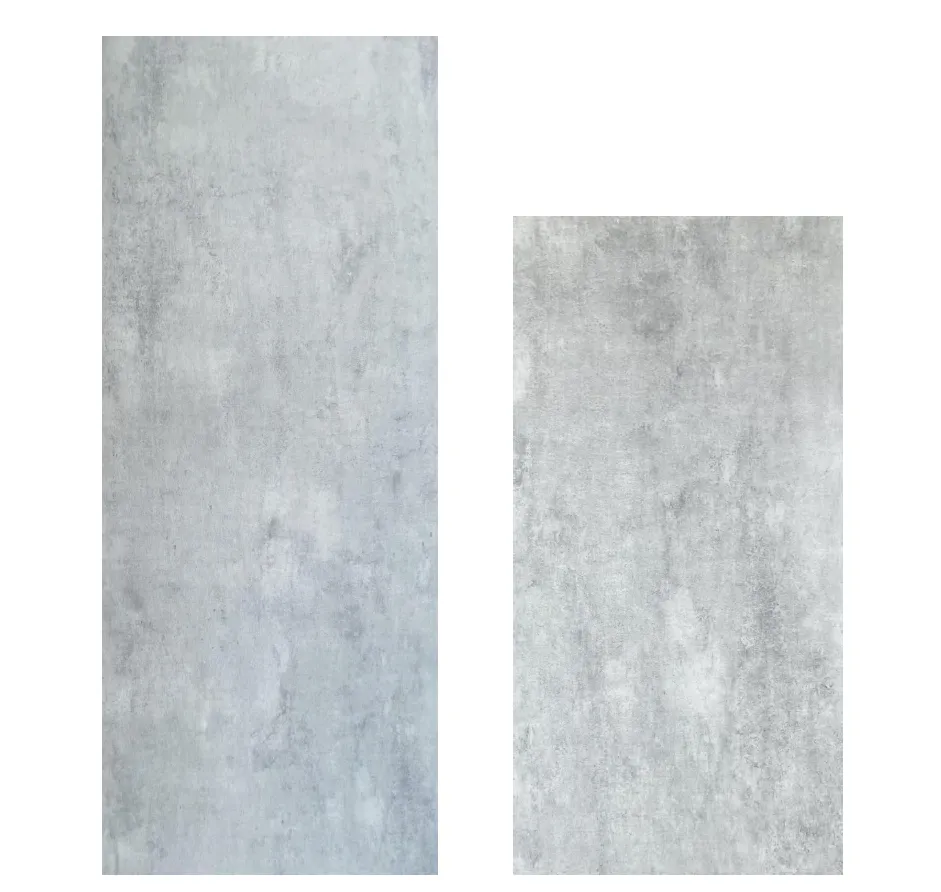
In the heart of downtown Portland, a 1920s-era building sat quietly for decades, its brick facade fading and interiors stuck in a time warp. When local entrepreneur Mia Carter purchased it in 2023, she envisioned more than just a renovation—she wanted to breathe new life into the space while honoring its history. The goal? To transform it into "The Haven," a boutique café and co-working spot where modern professionals could unwind, collaborate, and feel a sense of connection to both the past and present. What followed was a journey of material discovery, design innovation, and the magic that happens when the right textures meet a bold vision. At the center of this transformation? marble concrete board —a material that would become the project's unsung hero, weaving together durability, beauty, and soul.
The Haven's 3,500-square-foot space posed unique challenges. Mia wanted the interior to feel "lived-in yet refined"—a place where exposed brick would rub shoulders with sleek surfaces, and natural light would dance off textures that invited touch. The design brief, crafted with local studio Lumen Architects, emphasized three pillars: sustainability (low-VOC materials, energy efficiency), versatility (spaces that could shift from morning coffee to evening events), and storytelling (materials that whispered of history while embracing modernity).
"I didn't want a cold, sterile vibe," Mia explained during our initial walkthrough. "Offices and cafés today often feel like they're trying too hard to be 'on-trend.' I wanted something that would age gracefully, like a well-loved book. Materials that people would remember not just for how they look, but how they make them feel."
The team quickly realized that the building's original bones—high ceilings, large windows, and a vintage wooden beam structure—needed a complement that was both sturdy and soft. Enter marble concrete board : a composite material that blends the strength of concrete with the subtle veining of marble, offering the best of both worlds. But it wouldn't work alone. To round out the palette, the design team selected a curated mix of textures: fair-faced concrete for contrast, lunar peak silvery for accent walls, weaving (khaki) for softening hard edges, and a striking travertine (starry blue) feature wall to anchor the space.
Renovating a century-old building is never without hurdles. The first? Structural limitations. The original floors, though charming, couldn't support heavy stone slabs, ruling out traditional marble or granite. The second? Sustainability. Mia was adamant about reducing the project's carbon footprint, so materials needed to be locally sourced or have low embodied energy. Third? Aesthetic cohesion. With so many textures in play—brick, wood, metal—there was a risk of visual chaos. The team needed a unifying element that could tie everything together.
"Marble concrete board checked all the boxes," said Lumen's lead architect, Jake Torres. "It's lightweight compared to natural stone, so it worked with the floor load limits. It's also made with recycled aggregates, which aligned with Mia's sustainability goals. And visually? Its muted gray base with soft white veining is like a neutral canvas—it lets other materials shine without competing."
But selecting the material was just the start. The team needed to test how it would interact with other elements. For example, the fair-faced concrete (chosen for its raw, industrial look) would line the kitchen backsplash and bathroom walls. Would its cool, matte finish clash with the marble concrete board's subtle sheen? And how would the lunar peak silvery —a metallic, almost iridescent stone—hold up in the café's south-facing windows, where sunlight floods in daily?
"We spent weeks ordering samples, laying them out on the floor, and even taping them to the walls at different times of day," Jake laughed. "Mia would come in with her morning coffee, sit cross-legged on the floor, and just… stare. 'Does this feel like home?' she'd ask. That's the question we kept coming back to."
Let's talk specifics. Marble concrete board isn't your average building material. Unlike traditional concrete, which can feel cold and utilitarian, this board is engineered with marble dust and pigments that mimic the organic veining of natural stone. It's also pre-cast into large, thin panels (up to 4x8 feet), making installation faster and reducing waste. For The Haven, the team opted for a honed finish—slightly matte, with a velvety texture that invites fingertips to trace its patterns.
To showcase how this material played with others, here's a breakdown of key areas and their material pairings:
| Space | Primary Material | Complementary Materials | Purpose |
|---|---|---|---|
| Lobby & Reception | Marble Concrete Board (light gray veining) | Fair-faced concrete (floor), Lunar Peak Silvery (accent wall) | Welcome guests with warmth; the marble concrete board's soft veining contrasts with the concrete's rawness, while Lunar Peak Silvery adds a subtle metallic glow. |
| Café Counter | Marble Concrete Board (white base) | Weaving (khaki) (backdrop panels) | The smooth board is durable enough for daily use (coffee spills, scratches), while the weaving softens the counter's edge, making it feel approachable. |
| Co-Working Lounge | Travertine (starry blue) (feature wall) | Marble Concrete Board (side tables), Wood accents | The starry blue travertine—with its tiny, glittering mineral inclusions—creates a focal point, while the marble concrete board tables add stability and tie the space to the lobby. |
| Exterior Patio | Fair-faced concrete (pavers) | Marble Concrete Board (planter boxes) | Weather-resistant and slip-proof, the concrete pavers pair with the board's planters to extend the interior's aesthetic outdoors. |
One of the most memorable moments during installation was when the travertine (starry blue) panels went up in the co-working lounge. The stone, quarried from a family-owned site in Turkey, features flecks of azurite and lapis lazuli that catch the light like a night sky. "I stood there at 7 p.m., after the crew had left, and just watched the sun set through the windows," Mia recalled. "The blue stone seemed to glow, and the marble concrete board tables looked like they were holding up pieces of the moon. It was magic."
Installing marble concrete board requires a steady hand. The panels are heavy (though lighter than natural stone), and cutting them to fit around the building's quirky angles—like the curved archway leading to the kitchen—demanded precision. "We had to use diamond-tipped saws to avoid chipping the edges," said Carlos Mendez, the project's lead installer. "And because the walls aren't perfectly straight (old buildings, am I right?), we used shims to ensure each panel sat flush. It took patience, but when you step back and see the seams disappear? Worth it."
Another challenge was the fair-faced concrete floor. Unlike polished concrete, which has a glossy finish, fair-faced concrete is left "as-cast"—showcasing the texture of the formwork (in this case, reclaimed wood planks). The team wanted the floor to have a "lived-in" look, so they added a subtle stain that mimicked the color of aged oak. But getting the stain to absorb evenly into the concrete took three tries. "We tested samples on scrap pieces first, adjusting the dilution until it looked like it had been there for years," Carlos explained. "Mia wanted it to feel like the floor had stories to tell, not like it was brand new."
The weaving (khaki) panels, installed behind the café counter, added a tactile layer of softness. Made from recycled cotton and jute, the woven texture was chosen to offset the hardness of the marble concrete board and concrete. "I love that when you order a latte, your eye moves from the smooth counter to the woven backdrop—it's like a hug for your senses," Mia noted.
When The Haven opened its doors in spring 2024, the response was immediate. Regulars praised the "cozy yet put-together" vibe, and social media lit up with photos of the travertine (starry blue) wall, which quickly became a backdrop for Instagram posts. But the real win? Mia's observation that people lingered longer than expected. "We thought the average stay would be an hour—coffee or a quick meeting. But people are staying three, four hours. They bring laptops, they chat with strangers, they run their hands along the marble concrete board counter like it's an old friend. That's the magic of texture."
Client feedback echoed this. "The space feels intentional," said local designer Eliza Wong, a frequent co-worker. "You can tell someone cared about the details. The marble concrete board isn't just a surface—it's a conversation starter. I've had clients ask, 'What is that material?' because it looks expensive but approachable. It's the perfect metaphor for The Haven itself."
Sustainability goals were met, too. All materials were sourced within 500 miles, and the project's carbon footprint was 30% lower than industry averages for commercial renovations. "We even repurposed the building's original wooden doors as tabletops," Mia added. "Nothing makes me happier than seeing someone set their coffee on a door that's been around since the 1920s, next to a marble concrete board that's built to last another century."
The Haven's renovation isn't just about a pretty space—it's about how materials can shape emotion. Marble concrete board , with its blend of strength and softness, became the thread that wove together the project's diverse elements: the history of the building, the client's vision for warmth, and the team's commitment to sustainability. Paired with fair-faced concrete , lunar peak silvery , weaving (khaki) , and travertine (starry blue) , it created a tapestry of textures that feels both timeless and fresh.
As Mia put it on opening day: "Buildings are more than walls and floors. They're experiences. When you walk into The Haven, I want you to feel like you belong—like the materials here were chosen just for you. Marble concrete board didn't just build this space. It helped build a community."
And in the end, isn't that what great design is all about? Materials that don't just exist, but connect—turning a house into a home, a space into a story, and a renovation into something unforgettable.
Recommend Products












