
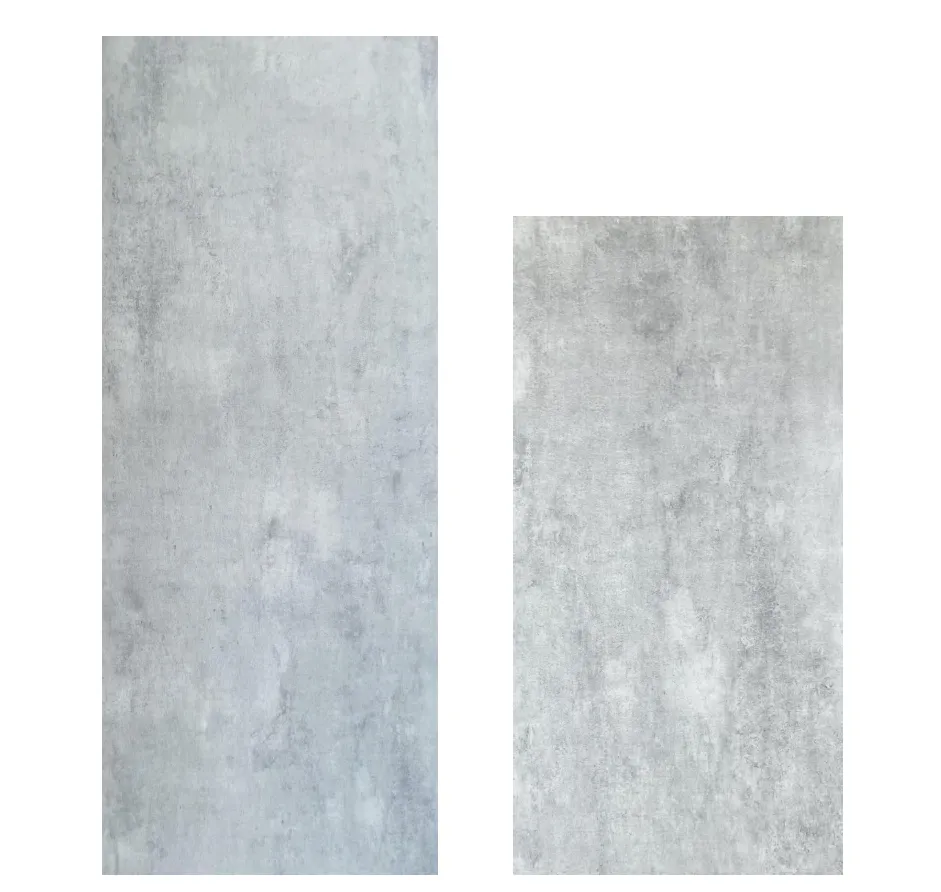
There's something almost primal about the way we're drawn to natural stone. Walk into a room with a marble floor or a travertine wall, and you don't just see a material—you feel a connection to the earth. Those veins in marble? They're the result of millions of years of geological pressure. The pockmarks in travertine? They formed when mineral-rich water evaporated, leaving behind nature's own version of art. But here's the thing: natural stone is heavy, expensive, and often fragile. It's why, for decades, designers and architects have dreamed of a material that captures that same magic but bends to the needs of modern spaces. Enter marble concrete board texture replication—a marriage of nature's genius and human ingenuity that's changing how we think about building materials.
Marble concrete board isn't just a "fake" stone. It's a reimagining of natural patterns, crafted with precision to honor the complexity of what the earth creates. It takes the swirl of marble, the porosity of travertine, the raw edge of fair-faced concrete, and reworks them into a material that's lighter, stronger, and ready to adapt to any design vision. This isn't about cutting corners—it's about making the beauty of natural stone accessible to more projects, more spaces, and more people. Whether you're designing a cozy home or a towering commercial complex, marble concrete board lets you bring a piece of the earth's story indoors, without the limitations of the real thing.
To replicate natural stone patterns, you first have to understand them. Natural stone isn't random—it's a product of time, pressure, and chemistry. Take travertine, for example. Quarried from places like Italy and Turkey, travertine forms in hot springs, where calcium carbonate deposits build up layer by layer. The result? A stone with tiny, irregular voids (formed by gas bubbles trapped during formation) and soft, earthy tones—think travertine beige, starry blue, or even the warm hues of travertine (starry orange). These details aren't flaws; they're what make travertine feel alive, like a snapshot of a moment in geological history.
Marble, on the other hand, is all about movement. When limestone is exposed to extreme heat and pressure deep underground, its crystals recrystallize, creating those iconic, swirling veins. No two marble slabs are the same—the veining is as unique as a fingerprint. From the crisp white of marble veil white to the moody gray of marble interstellar gray, each shade and pattern tells a story of tectonic shifts and mineral deposits. It's why marble has been a symbol of luxury for centuries; it's nature's own form of art.
Then there's fair-faced concrete—a material that celebrates rawness. Unlike polished concrete, which is smooth and reflective, fair-faced concrete is left "as-cast," with the texture of the mold still visible. It has a matte finish, subtle imperfections, and an industrial edge that feels both modern and timeless. It's the kind of material that doesn't try to be something it's not—and that honesty is part of its appeal.
Marble concrete board texture replication takes these distinct characteristics and translates them into a new medium. It's not about copying nature exactly; it's about capturing its essence. A travertine-inspired marble concrete board might replicate the size and spacing of those natural voids, but using pigments that resist fading in sunlight. A marble-replicated board could mimic the depth of veining, but with a finish that's more scratch-resistant than real marble. And fair-faced concrete elements? They might borrow that raw texture but with added durability to stand up to heavy foot traffic. This is mimicry as an art form—respectful of the original, but unafraid to innovate.
| Natural Stone Type | Key Characteristics | Replicated Marble Concrete Board Features | Ideal Applications |
|---|---|---|---|
| Travertine | Porous with natural voids, subtle color gradients (e.g., travertine beige, starry blue, starry orange) | Lightweight (up to 70% lighter than natural stone), precise void replication, fade-resistant pigments | Lobby walls, bathroom backsplashes, outdoor patios |
| Marble | Swirling veining, smooth surface, varied palettes (e.g., marble veil white, interstellar gray) | 3D-molded veining for depth, scratch-resistant coating, customizable vein thickness | Kitchen countertops, fireplace surrounds, hotel reception desks |
| Fair-faced Concrete | Raw, matte texture, industrial aesthetic, subtle mold marks | Consistent texture, reduced porosity, enhanced impact resistance | Exterior cladding, accent walls, modern office interiors |
| Granite | Speckled, crystalline structure, durable (e.g., granite portoro, nero margiua) | Crystalline pattern replication via particle mixing, heat-resistant finish | Outdoor kitchen countertops, high-traffic commercial floors |
Replicating natural stone patterns isn't just about artistic vision—it's about cutting-edge technology. At the heart of this process are materials and techniques that blend science and creativity. Take MCM flexible stone, for example. MCM, or Modified Composite Material, is a game-changer in the world of building materials. It's made by combining natural stone particles (like marble or granite dust) with a polymer resin, creating a material that's thin (often just 3-5mm thick), flexible, and incredibly strong. This flexibility is key for texture replication: MCM can be molded into even the most intricate patterns, from the thread-like veining of linear travertine to the rough, pitted surface of rock cut stone.
Then there's 3D printing—a technology that's revolutionizing how we think about texture. While 3D printing series might evoke images of plastic prototypes, in the context of marble concrete board, it's used to create precision molds. Imagine a 3D scanner capturing every nuance of a travertine (starry red) slab—the size of each void, the angle of each ridge, the subtle shift in color. That data is then fed into a 3D printer, which creates a mold with microscopic accuracy. When MCM flexible stone or fair-faced concrete is poured into that mold, the result is a texture that's nearly indistinguishable from the original—except it's lighter, more consistent, and tailored to the project's needs.
Another critical technique is pigmentation. Natural stone gets its color from minerals—iron oxides for reds and oranges, copper for blues and greens. Replicating that requires more than just adding dye; it's about layering pigments to mimic the depth of natural stone. For example, a travertine (vintage gold) marble concrete board might have a base layer of warm beige, then flecks of gold added during the mixing process, and finally a topcoat with subtle color gradients to mimic the way sunlight hits natural travertine. The result? A texture that doesn't just look natural—it feels natural, with depth that changes as light shifts throughout the day.
But technology alone isn't enough. There's an element of artistry here, too. Many manufacturers work with geologists and designers to study natural stone formations, ensuring that the replicated patterns honor the original's complexity. It's not uncommon for a team to spend weeks analyzing a single slab of marble interstellar gray, mapping its veining patterns before translating them into a mold. This blend of science and art is what sets marble concrete board apart—it's not mass-produced; it's crafted, with attention to detail that would make even the most discerning stonemason nod in approval.
At the end of the day, marble concrete board is about more than just texture—it's about transforming spaces. Let's start with residential design. Imagine walking into a home where the kitchen backsplash is clad in marble veil white marble concrete board. The veining is soft, like brushstrokes on a canvas, and the surface is smooth to the touch. It looks like expensive marble, but it's resistant to the acids in tomato sauce and the scratches of pots and pans. Upstairs, the bathroom features travertine (starry blue) marble concrete board on the walls—those iconic voids filled with a clear resin to prevent water damage, but still visible enough to evoke the feeling of a sunlit Turkish spa. Downstairs, the living room has a fair-faced concrete accent wall, its raw texture balancing the warmth of the wood furniture. This isn't just a house—it's a space that feels intentional, where every material choice tells a story.
Commercial spaces, too, are reaping the benefits. Take a boutique hotel in the heart of the city. Its lobby features a towering wall of travertine (vintage silver) marble concrete board, the cool silver tones offset by warm lighting that highlights the replicated voids. The effect is dramatic, but because the material is lightweight, the structural load on the building is minimal—no need for extra support beams or reinforced walls. In the hotel's restaurant, the bar top is made of marble interstellar gray marble concrete board, its deep gray veining complementing the gold accents in the decor. Diners run their hands over the surface, remarking on how "real" it feels, never guessing it's a replicated texture. And outside, the hotel's facade uses fair-faced concrete panels with a subtle wood grain board texture, blending industrial edge with organic warmth. It's a building that stands out, but not for being flashy—for being thoughtful.
Even outdoor spaces are getting in on the action. A public park might use gobi panel-inspired marble concrete boards for its benches, their rough texture mimicking the desert's windswept stone. A restaurant's patio could feature travertine (starry orange) tiles, their warm hues complementing the evening sunset, and their slip-resistant finish ensuring safety even after rain. Because marble concrete board is designed to withstand the elements—UV rays, moisture, temperature fluctuations—it's a material that works as hard outdoors as it does indoors.
One of the most exciting things about marble concrete board is its versatility. It can be cut into large slabs for expansive walls, or small tiles for intricate backsplashes. It can be curved to follow the lines of a modern staircase, or stacked to create a rustic accent wall. And because it's customizable, designers aren't limited to nature's palette—they can tweak colors, adjust veining thickness, or even combine patterns. Imagine a retail store that uses a gradient of travertine (starry green) to (starry red) marble concrete boards on its facade, creating a visual journey that draws customers in. Or a home office with a desk made of linear travertine (claybank) marble concrete board, its linear pattern encouraging focus and creativity. The possibilities are as endless as the designer's imagination.
Let's be honest: beauty is important, but in the world of building materials, practicality matters too. Marble concrete board doesn't just look good—it performs. Start with weight: natural stone is heavy. A single slab of marble can weigh hundreds of pounds, requiring cranes and specialized labor to install. Marble concrete board, by contrast, is often 50-70% lighter. That means easier transportation, simpler installation (no need for heavy machinery), and less strain on the building's structure. For high-rise buildings, this is a game-changer—imagine cladding a 20-story facade with marble-inspired panels that don't require reinforcing the building's frame. It's not just about convenience; it's about opening up design possibilities that were once impossible.
Durability is another key advantage. Natural travertine is porous, which means it stains easily—spill a glass of red wine, and you might be left with a permanent mark. Marble is softer, prone to scratches and etching from acidic substances like lemon juice. Marble concrete board, though? It's designed to resist these issues. Many products are sealed during manufacturing, creating a barrier against moisture, stains, and UV rays. A travertine-inspired board might have its replicated voids filled with a clear, durable resin, preventing dirt and water from seeping in. And because the texture is molded rather than cut, there are no weak points—no cracks or fissures that could lead to damage over time. This makes marble concrete board ideal for high-traffic areas like airports, shopping malls, or busy family homes.
Sustainability is also a big selling point. Quarrying natural stone is resource-intensive—it requires heavy machinery, disrupts ecosystems, and often involves transporting stone across the globe, leaving a large carbon footprint. Marble concrete board, by contrast, is often made with recycled materials (like crushed stone dust from quarries that would otherwise go to waste) and MCM flexible stone, which uses less raw material than traditional stone. Its lightweight nature also reduces transportation emissions, and because it's durable, it needs to be replaced less often—meaning less waste over time. For architects and designers committed to green building practices, this is a huge plus. It's a way to bring natural beauty into a space without compromising on environmental values.
Then there's cost. Natural stone isn't just expensive to buy; it's expensive to install, maintain, and replace. Marble concrete board offers a more budget-friendly alternative, with costs often 30-50% lower than natural stone. And because it's easier to install, labor costs are reduced too. This doesn't mean it's "cheap"—it means it's accessible. A small business owner can now afford a marble-inspired countertop for their cafe. A homeowner can clad their entire bathroom in travertine-like panels without breaking the bank. It's about democratizing design, making high-end aesthetics available to more people, more projects, and more communities.
As technology advances, the possibilities for marble concrete board texture replication are only growing. Imagine a world where you can scan a piece of stone from your favorite hiking trail—a weathered boulder from the mountains, a smooth pebble from the beach—and have it replicated as a custom marble concrete board for your home. With advancements in 3D scanning and printing, that future is closer than you think. We're also seeing experimentation with new materials, like foamed aluminium alloy board (vintage gold) combined with marble concrete board textures, creating hybrid materials that blend industrial strength with organic beauty.
Another trend is interactivity. Some manufacturers are exploring texture-changing materials—marble concrete boards that shift color based on temperature or light, mimicking the way natural stone appears different at dawn than at dusk. Others are incorporating technology like embedded sensors, turning walls into interactive displays that still maintain the look of natural stone. It's a bold vision, but one that aligns with our desire for spaces that are both beautiful and functional.
But perhaps the most exciting development is the focus on storytelling. As we become more conscious of where our materials come from, there's a growing demand for textures that tell a story—whether it's replicating stone from a historical site (like historical pathfinders stone) to honor a building's heritage, or creating custom patterns inspired by local landscapes. Marble concrete board isn't just a material anymore; it's a canvas for narrative, a way to connect spaces to their surroundings, their history, and their community.
Marble concrete board texture replication isn't about replacing natural stone—it's about celebrating it. It's a testament to human creativity that we can look at the earth's most beautiful creations and say, "We want to honor this, but we also want to make it better—more accessible, more durable, more adaptable." Whether it's the porous charm of travertine, the swirling elegance of marble, or the raw honesty of fair-faced concrete, these replicated textures allow us to bring a piece of nature into our spaces in a way that's thoughtful, practical, and full of heart.
At the end of the day, the best buildings aren't just structures—they're experiences. They make us feel connected, inspired, and at home. Marble concrete board texture replication helps create those experiences by blending the timeless allure of natural stone with the innovation of modern technology. It's a reminder that the most beautiful things in life often come from collaboration—between nature and human ingenuity, between art and science, between the past and the future. So the next time you run your hand over a marble concrete board wall, take a moment to appreciate it: it's not just a texture. It's a story—one that starts with the earth, and ends with a space that feels uniquely yours.
Recommend Products












