
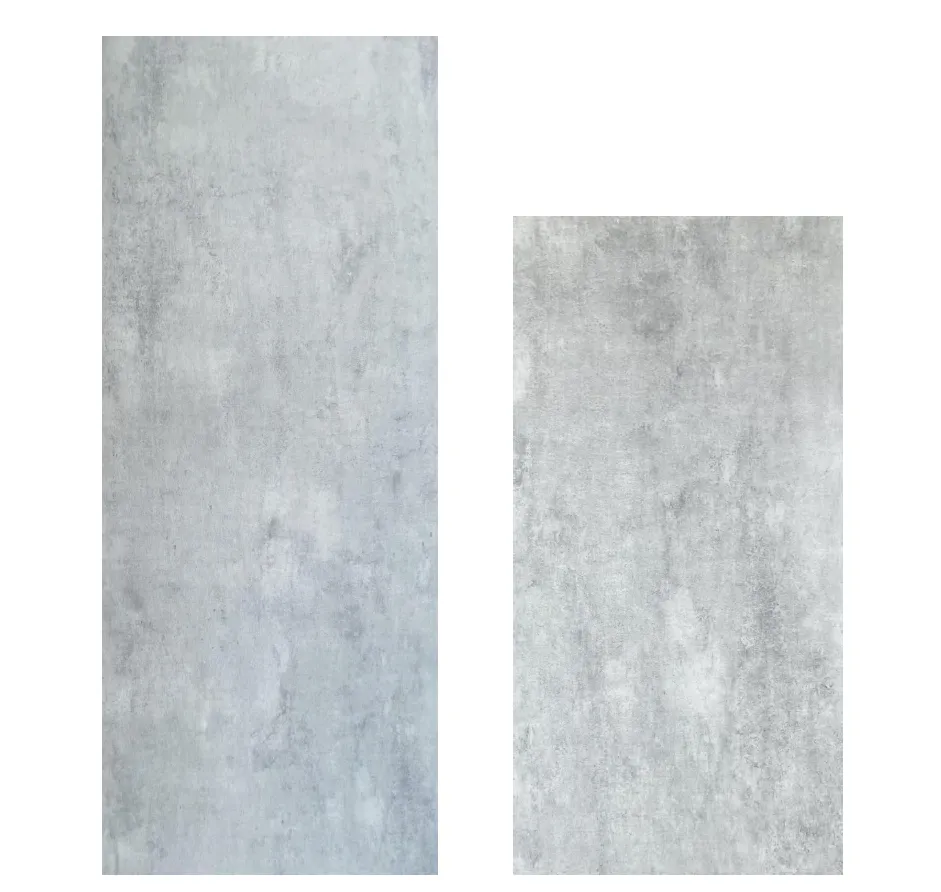
Choosing the right material for your walls, floors, or countertops is more than a practical decision—it's about crafting a space that tells your story. For decades, ceramic tiles have been the go-to for homeowners and designers, celebrated for their affordability and classic appeal. But in recent years, a new contender has emerged: marble concrete board. Blending the timeless elegance of natural stone with the resilience of modern engineering, this material is redefining what's possible in interior and exterior design. Today, we're diving deep into the world of marble concrete board and ceramic tiles, comparing their durability, design flexibility, and how they transform everyday spaces into something extraordinary.
Let's start with the basics: how do these materials hold up to the chaos of daily life? Ceramic tiles, made from fired clay and glazed for protection, are no strangers to wear and tear. They're resistant to scratches from pets' claws or furniture dragged across the floor—until they're not. drop a heavy pot in the kitchen, and there's a good chance a ceramic tile might chip or crack, leaving an unsightly gap that's hard to repair without replacing the entire tile. The grout lines between tiles only add to the vulnerability; they can erode over time, collecting dirt and making the surface look tired long before its time.
Marble concrete board, on the other hand, is built for resilience. Crafted from modified composite materials (think mcm flexible stone and reinforced polymers), it's designed to withstand heavy impacts without chipping. I recently spoke with Maria, a homeowner in Chicago who replaced her kitchen floor with marble concrete board two years ago. "We have two kids and a golden retriever who thinks the kitchen is his personal racetrack," she laughed. "I was terrified we'd ruin it, but even after a toy truck incident involving a full milk carton, there's not a scratch. The old ceramic tiles? We replaced three in the first six months."
Ceramic tile repairs often involve matching the exact color and pattern of the existing tile—a hunt that can take weeks, if not months. Marble concrete board, with its seamless installation, eliminates this hassle. Even in high-traffic areas like entryways or commercial lobbies, it maintains its integrity, saving you time, money, and the stress of constant touch-ups.
Bathrooms, kitchens, and outdoor patios are battlefields for moisture and heat. Ceramic tiles have long been favored here because they're water-resistant—at least, the tiles themselves are. The problem lies in the grout. Over time, water seeps into those tiny cracks, breeding mold and mildew that's tough to clean and even harder to eliminate. In humid climates, this can turn a fresh bathroom into a musty space that feels uninviting.
Marble concrete board flips the script. Its non-porous surface and seamless design mean no grout lines to trap moisture. Sarah, an architect who specializes in coastal homes, swears by it: "We use mcm big slab board series for beach house exteriors. Saltwater, rain, humidity—nothing phases it. Clients used to complain about tile grout turning black within a year; now, their walls look as crisp as the day they were installed."
Heat resistance is another win for marble concrete board. Ceramic tiles can handle moderate heat, but direct exposure to high temperatures (like a hot pan left on the floor) can cause the glaze to discolor or crack. Marble concrete board, however, is engineered to withstand extreme heat, making it ideal for fireplaces, outdoor kitchens, or even commercial spaces with radiant heating systems. It's not just about surviving the heat—it's about maintaining beauty, too. No more unsightly burn marks or discoloration; just a surface that stays true to its original look, year after year.
Ceramic tiles can last 10–20 years with proper care, but their appearance fades over time. The glaze wears thin, scratches become more visible, and grout lines darken, leaving spaces feeling dated. Many homeowners end up replacing tiles not because they're broken, but because they no longer match the home's evolving style.
Marble concrete board, by contrast, is built to age like fine wine. Its surface develops a subtle patina over time, adding character rather than detracting from it. Take the historical pathfinders stone finish, for example—it's designed to mimic the weathered beauty of ancient stone paths, growing more charming with every scuff and footstep. John, a restaurant owner in New Orleans, opted for marble concrete board in his dining room five years ago. "It looked great on day one, but now? It has this warm, lived-in feel that guests love. Ceramic tiles always felt cold and sterile by comparison—like a hospital waiting room instead of a cozy bistro."
Ceramic tiles offer variety, but they're limited by their manufacturing process. You'll find floral patterns, geometric designs, and even wood-look options, but the texture is often flat and uniform. Grout lines further restrict the visual flow, breaking up patterns and making spaces feel smaller than they are.
Marble concrete board, though? It's a playground for texture lovers. Thanks to innovations like mcm 3d printing series , designers can create surfaces that mimic everything from rough-hewn masonry stone to smooth fair-faced concrete . Imagine a living room wall with the tactile depth of gobi panel , evoking the rugged beauty of desert landscapes, or a kitchen backsplash that looks like polished travertine (starry blue) , with subtle sparkles that catch the light. The possibilities are endless—and because it's all in one slab, there are no grout lines to interrupt the magic.
Mark, an interior designer, shared a recent project: "A client wanted a bedroom that felt like a mountain retreat. We used lunar peak silvery marble concrete board on the accent wall, and it's stunning. The texture is so realistic, you'd swear it's real stone, but it's lightweight and easy to install. With ceramic tiles, we'd have needed dozens of pieces and grout that would have ruined the seamless look. This? It's like the wall itself is telling a story."
Ceramic tiles come in standard colors, but custom shades are expensive and hard to replicate. If you fall in love with a unique hue, you're stuck ordering extra tiles "just in case"—and if the manufacturer discontinues the line, you're out of luck.
Marble concrete board, however, is a chameleon. From the soft warmth of lime stone(beige) to the bold drama of lunar peak black , the color options are virtually limitless. And because it's mixed on-site (or in specialized facilities), you can tweak shades to match your vision perfectly. "I had a client who wanted a wall color that matched the sunset over their lake house," said Lisa, a color consultant. "We mixed a custom golden travertine(whte golden) with hints of amber, and it's breathtaking. With ceramic tiles, we'd have been stuck with 'sunset orange' from a swatch book—not the same thing at all."
Ceramic tiles are versatile, but they're heavy and rigid, limiting where they can be used. Ceilings? Unlikely. Curved walls? Almost impossible. They work best on flat, horizontal surfaces, and even then, the weight can be a problem for older homes with weak structures.
Marble concrete board, with its mcm flexible stone technology, bends (literally) to your needs. It's lightweight enough for ceilings, flexible enough for curved walls, and thin enough to use as a backsplash or even furniture veneer. Take the foamed aluminium alloy board (vintage silver) finish—imagine it wrapping around a curved staircase, adding industrial chic without the weight of real metal. Or bamboo mat board for a ceiling, bringing warmth to a room without sacrificing height.
Jake, a contractor, summed it up: "We recently used mcm project board series for a boutique hotel with a curved lobby wall. With ceramic tiles, we would have needed to cut hundreds of tiny pieces, and the result would have looked choppy. Marble concrete board? We bent it to the curve, installed it in a day, and the client cried when they saw it. That's the difference—this material lets you dream bigger."
| Feature | Ceramic Tiles | Marble Concrete Board |
| Durability | Prone to chipping; grout lines trap moisture and mold. | Impact-resistant; seamless design resists moisture, scratches, and heat. |
| Design Options | Limited textures and colors; grout lines interrupt patterns. | Unlimited textures (3D printing, stone, wood, metal); custom colors; seamless surfaces. |
| Installation | Time-consuming; requires grout; heavy and rigid. | Quick, seamless installation; lightweight and flexible for curves/ceilings. |
| Maintenance | Grout needs regular sealing; stains and mold hard to remove. | Easy to clean; no grout; resistant to stains and mold. |
| Ideal Use Cases | Budget-friendly projects; small, flat surfaces (bathroom floors, backsplashes). | High-traffic areas, curved surfaces, custom designs, coastal/humid climates. |
Ceramic tiles have earned their place in design history—they're affordable, widely available, and work well for simple, functional spaces. But if you're craving a material that combines durability with design freedom, marble concrete board is the clear winner. It's not just a surface; it's a canvas for creativity, a shield against life's messes, and a partner in crafting spaces that feel uniquely yours.
Whether you're building a new home, renovating a kitchen, or designing a commercial space, consider this: your walls and floors aren't just background—they're part of your story. Marble concrete board doesn't just tell that story; it makes sure it lasts. So why settle for tiles that fade, chip, and limit your vision? Choose a material that grows with you, ages with grace, and turns every room into a masterpiece.
After all, great design isn't about following trends—it's about creating spaces that feel alive. And with marble concrete board, your space will breathe, endure, and inspire for years to come.
Recommend Products












