
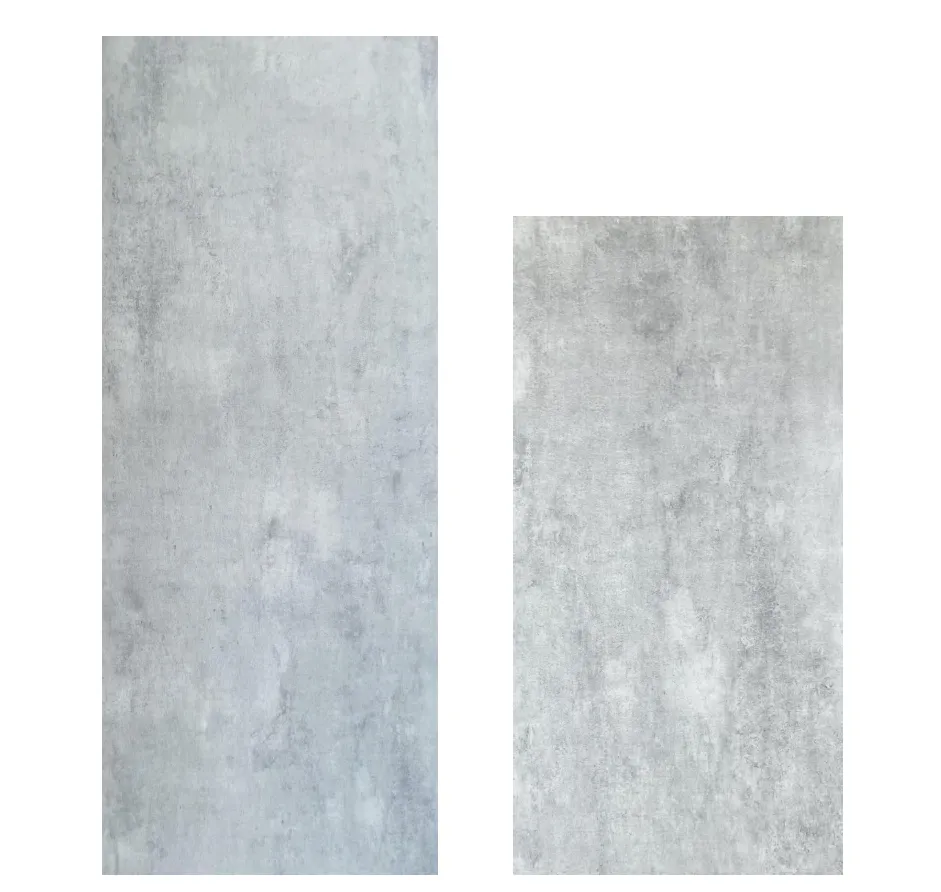
When it comes to designing spaces—whether a sleek corporate lobby, a cozy home kitchen, or a bustling retail store—the choice of materials speaks volumes. For decades, natural marble has reigned supreme as a symbol of luxury, with its veined patterns and timeless elegance. But in an era where sustainability, durability, and cost-effectiveness are becoming just as important as aesthetics, a new contender has emerged: Marble Concrete Board. A product of advanced engineering, this modified composite material panel blends the best of natural stone's beauty with the practicality of modern technology. In this article, we'll dive into how Marble Concrete Board stacks up against traditional natural marble, examining three critical factors that influence every builder's decision: cost, durability, and eco-impact.
Natural Marble: A Timeless Classic with a Price Tag
Natural marble forms deep within the Earth over millions of years, as limestone undergoes intense heat and pressure. Quarried from sites around the world—from the marble-rich hills of Italy to the quarries of India—each slab is unique, boasting one-of-a-kind veining and color variations. This uniqueness is part of its allure, but it also comes with inherent challenges. From extraction to installation, natural marble's journey is labor-intensive and resource-heavy, making it a premium choice with a premium cost.
Marble Concrete Board: The Engineered Alternative
Marble Concrete Board, on the other hand, is a
modified composite material panel
designed to mimic the look of natural marble without its drawbacks. Crafted by combining marble aggregates, resins, and other reinforcing materials, it's a product of precision engineering. Unlike natural marble, which is cut from solid stone, this composite is formed into sheets or panels, often with added benefits like flexibility—making it suitable for curved surfaces or as
flexible stone cladding panels
. Its composition allows manufacturers to control factors like porosity, strength, and weight, resulting in a material that's both versatile and reliable.
When budgeting for a project, material costs can make or break a design vision. Let's break down how Marble Concrete Board and natural marble compare in terms of upfront expenses, installation, and long-term maintenance.
Natural marble's journey starts with mining. Quarrying involves heavy machinery to extract large blocks of stone, a process that's not only labor-intensive but also risky. Once extracted, these blocks are transported to processing facilities, where they're cut into slabs, polished to a high shine, and treated to enhance their appearance. All these steps add up: on average, natural marble costs between $80 to $200 per square meter, depending on the rarity of the stone and its origin. Exotic varieties, like Italian Calacatta marble, can soar to $300 per square meter or more.
Marble Concrete Board, by contrast, is manufactured in controlled factory settings. As a modified composite material, it uses a blend of marble dust (often recycled from natural marble processing waste), polymers, and fibers. This reduces the need for large-scale mining, cutting down on raw material costs. Production is also more efficient: panels can be mass-produced with consistent thickness and finish, minimizing waste. As a result, Marble Concrete Board typically ranges from $40 to $100 per square meter—roughly half the cost of mid-range natural marble. For large projects, this difference can translate to savings of tens of thousands of dollars.
Natural marble slabs are heavy—often weighing 20 to 30 kilograms per square meter. Installing them requires specialized labor and equipment, including cranes for lifting and teams of workers to position each slab. This adds to the installation cost, which can range from $30 to $60 per square meter. In contrast, Marble Concrete Board panels are significantly lighter, thanks to their composite structure. Some variants can weigh as little as 8 to 12 kilograms per square meter, making installation faster and less labor-intensive, with costs averaging $15 to $30 per square meter. For a 500-square-meter project, that's a savings of $7,500 to $15,000 on installation alone.
Natural marble's porosity is its Achilles' heel. Without regular sealing—typically every 6 to 12 months—it absorbs liquids, leading to stains from coffee, wine, or even water. Sealing costs around $10 to $15 per square meter each time, and over a 10-year period, that adds up to $100 to $150 per square meter in maintenance. Scratches are another issue; natural marble is relatively soft, so heavy furniture or sharp objects can leave marks, requiring professional polishing to repair.
| Cost Factor | Natural Marble | Marble Concrete Board |
|---|---|---|
| Upfront Cost (per sq.m) | $80–$200+ | $40–$100 |
| Installation (per sq.m) | $30–$60 | $15–$30 |
| 10-Year Maintenance | $100–$150 | $10–$20 |
| Total (10-Year, per sq.m) | $210–$410+ | $65–$150 |
Beyond cost, how a material holds up over time is critical—especially in high-traffic areas or outdoor spaces. Let's put Marble Concrete Board and natural marble to the test in terms of strength, resistance to the elements, and everyday wear and tear.
Natural marble's porous nature makes it a magnet for stains. Even with sealing, a spilled glass of red wine can seep into the stone within minutes, leaving a permanent mark. In commercial settings like restaurants or hotels, this is a constant headache. Marble Concrete Board, however, is engineered to be non-porous. Its composite matrix—made with resins and polymers—creates a tight, impermeable surface that repels liquids. In lab tests, Marble Concrete Board panels have withstood exposure to coffee, oil, and even acidic substances like vinegar for 24 hours without staining. For homeowners or business owners, this means fewer panic moments and more peace of mind.
Natural marble is relatively soft, scoring 3 to 4 on the Mohs hardness scale (for reference, a copper penny is 3, and steel is 5.5). This makes it prone to scratches from everyday items like keys, furniture legs, or even high heels. In contrast, Marble Concrete Board is designed for durability, often scoring 5 to 6 on the Mohs scale. Its reinforced structure—sometimes incorporating materials like fiberglass or modified composite fibers—resists scratches and dents. In a test conducted by a leading construction materials lab, a Marble Concrete Board panel withstood 500 cycles of abrasion with a steel wool pad, showing only minimal surface wear, while a natural marble slab showed visible scratches after just 100 cycles.
Natural marble is best suited for indoor use. When exposed to outdoor elements—rain, snow, UV rays—it can fade, discolor, or even crack due to freeze-thaw cycles. For example, a marble patio in a cold climate may develop cracks within 5 to 7 years as water seeps into pores, freezes, and expands. Marble Concrete Board, however, is built to withstand the elements. Its composite formulation includes additives that resist UV degradation, preventing color fading even after years of sun exposure. It's also less susceptible to freeze-thaw damage, thanks to its low water absorption rate (often less than 1%). This makes it an ideal choice for outdoor applications like facades, patios, or pool surrounds—areas where natural marble would struggle to last.
In today's world, the environmental footprint of building materials is no longer an afterthought—it's a deciding factor for architects, developers, and homeowners alike. Let's explore how Marble Concrete Board and natural marble measure up in terms of sustainability.
Natural marble mining is a resource-intensive process. Quarries can span hundreds of acres, requiring the removal of trees, topsoil, and vegetation, which disrupts local ecosystems and contributes to deforestation. According to the United Nations Environment Programme, stone mining accounts for approximately 1% of global deforestation, with marble quarries being among the most impactful due to the large blocks of stone extracted. Additionally, mining generates significant waste: for every ton of usable marble, up to 2 tons of waste rock and debris are produced, much of which ends up in landfills.
Marble Concrete Board, by contrast, often leverages recycled materials. Many manufacturers use marble dust or scraps leftover from natural marble processing—waste that would otherwise go to landfills. For example, one leading producer reports that their Marble Concrete Board contains up to 40% recycled marble aggregate. This not only reduces waste but also lessens the demand for new mining. Additionally, since it's manufactured in factories, the production process generates less waste overall—typically around 5% waste compared to 50% or more in natural marble processing.
The carbon footprint of natural marble starts with mining (heavy machinery burning fossil fuels), continues with transportation (shipping heavy slabs across the globe), and ends with processing (energy-intensive polishing). A study by the Green Building Council found that the carbon footprint of natural marble can range from 20 to 30 kilograms of CO2 per square meter. Marble Concrete Board, on the other hand, has a lower carbon footprint—often 10 to 15 kilograms of CO2 per square meter. This is due to several factors: less energy in production (no need for heavy mining equipment), lighter weight reducing transportation emissions, and the use of recycled materials. For a 1,000-square-meter project, choosing Marble Concrete Board over natural marble could reduce CO2 emissions by 10 to 15 tons—equivalent to taking 2 to 3 cars off the road for a year.
As the demand for eco-friendly construction grows, certifications like LEED (Leadership in Energy and Environmental Design) have become important benchmarks. Marble Concrete Board often qualifies for LEED points due to its recycled content, low VOC emissions, and energy-efficient production. Many manufacturers also adhere to green building materials standards, ensuring their products meet strict environmental criteria. Natural marble, while a natural material, rarely qualifies for such certifications due to its high mining impact and carbon footprint. For developers aiming for LEED certification, Marble Concrete Board can be a valuable asset in achieving their sustainability goals.
When it comes to real-world use, both materials have their niches. Natural marble excels in luxury, low-traffic indoor spaces where its unique beauty is the star. But for most projects—especially commercial, outdoor, or budget-conscious ones—Marble Concrete Board is the practical choice.
Think luxury hotel lobbies, high-end residential bathrooms, or historic building restorations. Natural marble's veining and depth add a sense of opulence that's hard to replicate. However, it's not ideal for kitchens, entryways, or outdoor areas where spills, scratches, or weather could damage it quickly.
For developers and contractors, b2b construction material sourcing often prioritizes durability, cost, and consistency—all areas where Marble Concrete Board delivers. It's perfect for:
Natural marble will always hold a special place in design history for its unmatched elegance. But in a world where budgets, durability, and sustainability matter, Marble Concrete Board emerges as the smarter choice for most projects. As a modified composite material panel , it offers the aesthetic appeal of marble at half the cost, with twice the durability and a fraction of the environmental impact. Whether you're a developer sourcing materials for a large-scale project ( b2b construction material sourcing simplified) or a homeowner upgrading your space, Marble Concrete Board proves that you don't have to sacrifice beauty for practicality. In the end, it's more than a material—it's a solution that balances design, durability, and responsibility for the modern world.
Recommend Products












