
Walk into any modern building—whether it's a bustling café, a serene art gallery, or a sleek office—and you'll notice something quiet but powerful: the materials. They don't just fill space; they shape how we feel. A cold, industrial wall might make us feel detached, while a warm, textured surface invites us to linger. For architects and designers, this balance between strength (can it withstand time, weather, and wear?) and beauty (does it tell a story, evoke emotion?) is the heart of their work. And lately, one material has been turning heads as the answer to that age-old struggle: Marble Concrete Board. But how does it stack up against the tried-and-true Regular Concrete Panels we've relied on for decades? Let's dive in—not just with specs, but with the stories these materials tell.
Regular Concrete Panels are the workhorses of the building world. You've seen them: gray, sturdy, and unapologetically utilitarian. Made from a mix of cement, water, sand, and gravel, they're the backbone of warehouses, parking garages, and low-rise structures. They're affordable, easy to produce, and get the job done—no frills, no fuss. Think of them as the reliable pickup truck of materials: you trust them to haul heavy loads, but you wouldn't necessarily show them off at a car show.
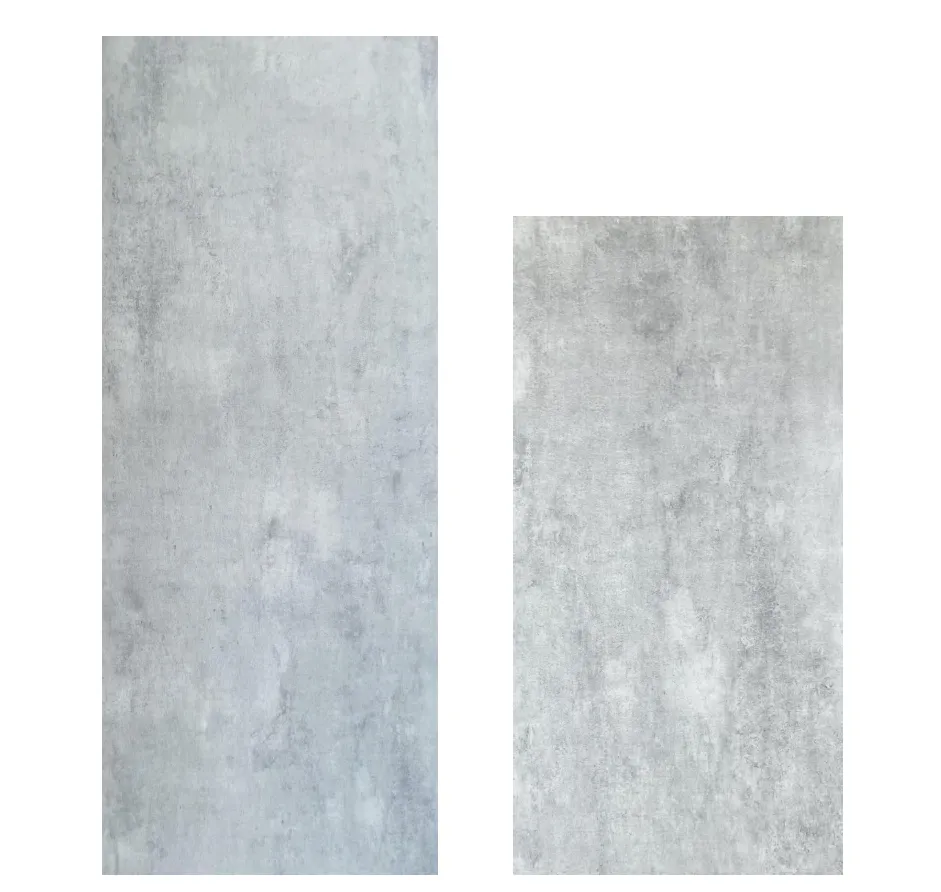
Marble Concrete Board, on the other hand, is like that pickup truck reimagined by a luxury designer. It starts with the same concrete base but adds a twist: marble aggregates—tiny fragments of marble stone—that infuse the material with depth, texture, and a touch of elegance. It's concrete, but elevated. Imagine taking a plain canvas and adding subtle brushstrokes of gold, gray, or cream—suddenly, it's not just a surface; it's a statement. And it's not just about looks. Those marble particles do more than shine; they reinforce the concrete, making it denser, tougher, and more resilient than its plain counterpart.
Let's talk about strength—the kind that matters when you're building a space meant to last. Regular Concrete Panels are strong, sure. Their compressive strength (how much weight they can handle before cracking) typically ranges from 30 to 40 MPa (megapascals). That's enough for most low-traffic areas or temporary structures. But here's the catch: they're porous. Water seeps in, freeze-thaw cycles crack them, and over time, they start to look worn—like a pair of jeans that never quite bounce back after a wash. For a restaurant owner whose floors take a beating from chairs scraping and spills, or a homeowner dreaming of a patio that survives harsh winters, that porosity can turn "reliable" into "replaceable" far too soon.
Marble Concrete Board, though? It's built to outlast. Thanks to those marble aggregates—crushed and mixed into the concrete matrix—it boasts a compressive strength of 50 to 60 MPa. To put that in perspective: 60 MPa is like having a material that can support the weight of three small cars stacked on top of it without flinching. But it's not just brute force. The marble particles fill in the gaps that regular concrete leaves behind, making it far less porous. Water beads off instead of seeping in. Stains? They wipe away, leaving the surface as fresh as the day it was installed. I spoke to a builder in Chicago who used Marble Concrete Board for a rooftop deck four years ago. "We get snow, rain, even the occasional hailstorm," he said. "You'd never know it. The panels still look brand new. With regular concrete, we'd be patching cracks by now."
Let's be honest: Regular Concrete Panels have their place. There's a raw, industrial charm to Fair-Faced Concrete —that unfinished, matte look that screams "no-nonsense." It works in factories, parking garages, or minimalist spaces where "less is more" is the vibe. But "less" can sometimes feel like "empty." Walk into a room clad in regular concrete, and you might think, "This is functional," but rarely, "This is beautiful." The color is flat—usually a dull gray or beige. The texture? Gritty, sometimes uneven, like a surface that's trying to hide its flaws rather than celebrate them.
Marble Concrete Board flips that script. It's concrete with a soul. The marble aggregates catch the light, creating subtle veining and depth—think soft grays streaked with gold, or creamy beiges with hints of white, like a sunset frozen in stone. It's not just "pretty"; it's intentional. Designers are using it in lobbies where first impressions matter, in restaurants where ambiance is part of the menu, and in homes where walls should feel like art, not just boundaries. One interior designer I know used it for a boutique hotel in (Dali), pairing large slabs with warm wood accents. "Guests keep touching the walls," she laughed. "They say it feels 'alive'—like it has a story. Regular concrete? No one ever touched the walls there."
And then there's versatility. Regular Concrete Panels come in limited colors and sizes—mostly small, uniform slabs that can feel repetitive. Marble Concrete Board, though, is part of Architectural Big Slab Solutions —large-format panels (some up to 3 meters long) that create seamless, uninterrupted surfaces. Imagine a fireplace wall made from a single slab, the marble veining flowing like a river from floor to ceiling. No grout lines, no breaks—just a canvas that feels both grand and intimate. It's the difference between a mosaic made of tiny tiles and a sweeping landscape painting.
| Feature | Marble Concrete Board | Regular Concrete Panels |
|---|---|---|
| Primary Composition | Concrete mixed with marble aggregates and reinforced fibers | Traditional cement, sand, and gravel mix |
| Compressive Strength | 50–60 MPa (highly resistant to weight and pressure) | 30–40 MPa (sufficient for light to moderate use) |
| Porosity & Stain Resistance | Low porosity; water and stains bead off easily | High porosity; prone to water damage and staining |
| Aesthetic Options | Marble veining, multiple color tones (beige, gray, gold), large-format slabs | Limited to gray/beige, small uniform sizes, industrial look |
| Typical Use Cases | High-end retail, hotels, residential interiors/exteriors, rooftop decks | Industrial spaces, parking garages, utilitarian structures |
Marble Concrete Board isn't just a "better concrete"—it's part of a larger shift in how we build. Today's designers aren't just choosing materials; they're curating experiences. And materials like MCM Flexible Stone (malleable, lightweight stone veneers) and Architectural Big Slab Solutions are making it possible to blend strength and beauty in ways we never could before. Imagine a curved wall wrapped in MCM Flexible Stone, leading into a room with floor-to-ceiling Marble Concrete Board slabs. It's dynamic, it's unexpected, and it works because both materials are built to last.
Sustainability matters too. Marble Concrete Board often uses recycled marble aggregates, cutting down on waste. And because it's so durable, it needs fewer replacements over time—meaning less material in landfills. Regular concrete, while recyclable, often requires more frequent repairs, offsetting its eco-friendly edge.
Installation is a breeze. Thanks to its lightweight design (yes, even with marble!), Marble Concrete Board is easier and faster to install than regular concrete panels, which are heavy and cumbersome. That means shorter build times, lower labor costs, and less disruption for everyone involved.
At the end of the day, Regular Concrete Panels are reliable—like an old friend who's always there. But Marble Concrete Board? It's that friend who also inspires you, surprises you, and makes you see the world differently. It's stronger, more beautiful, and more versatile. It's for the architect who wants a museum facade that stands for centuries and takes visitors' breath away. It's for the homeowner who dreams of a patio where kids can play, dogs can run, and dinner parties can happen—without worrying about cracks or stains. It's for anyone who believes that the spaces we build should be as resilient as the people who use them.
So the next time you walk into a building and find yourself pausing, running a hand over a wall, or smiling at the light dancing on a surface, take a closer look. Chances are, it's not just concrete. It's Marble Concrete Board—proving that strength and beauty don't have to be enemies. They can be partners, building spaces that last, and feel like home.
Recommend Products












