
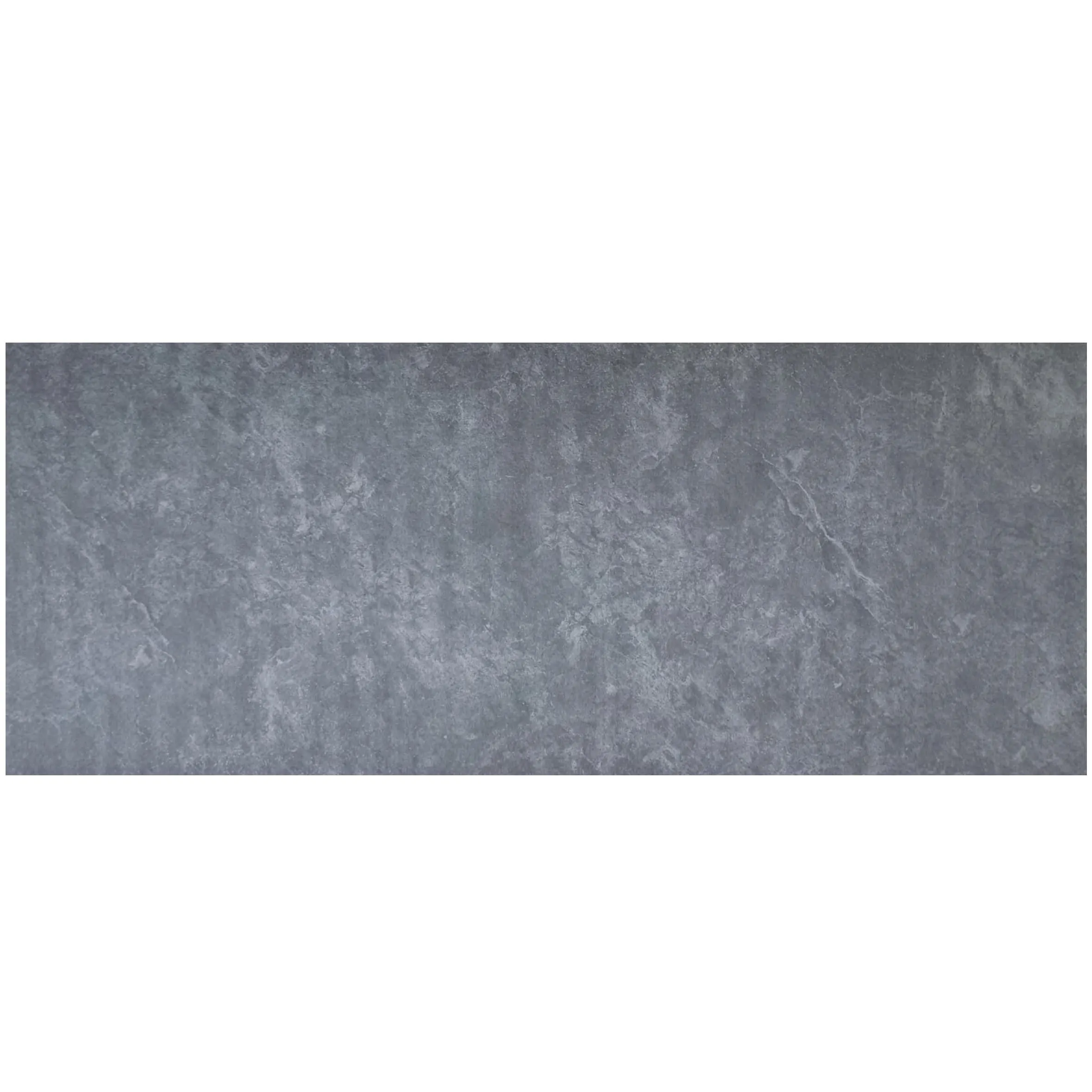
It's a crisp Tuesday morning in downtown Portland, and I'm standing in the lobby of the newly opened Evergreen Arts Center. Sunlight streams through floor-to-ceiling windows, casting soft patterns on the walls—and my attention is immediately drawn to them. They're clad in a stone that seems to shift with the light: deep, moody gray with threads of silver that glint like distant stars. It's Marble Interstellar Gray, and as I reach out to touch it, the surface is cool but not cold, with a subtle texture that feels both polished and organic. "We wanted something that feels grounded but otherworldly," says Mia Chen, the center's lead architect, appearing beside me. "This stone? It's like bringing a piece of the night sky indoors, but with the warmth of a well-loved home."
Marble Interstellar Gray isn't just a material—it's a storyteller. In a world where architectural trends come and go as quickly as social media fads, this stone has carved out a space as both a trendsetter and a timeless classic. To understand why, let's step beyond the lobby walls and explore what makes it so special, how it harmonizes with other innovative materials like MCM flexible stone and the Lunar Peak series, and why architects and designers are turning to it to shape the buildings of tomorrow.
At first glance, you might mistake it for traditional marble, but look closer. Unlike the veiny, often busy patterns of classic marbles, Marble Interstellar Gray has a more restrained beauty. Its base is a deep, smoky gray—think storm clouds just before dawn—shot through with thin, irregular threads of silver and charcoal. These "interstellar" veins aren't uniform; each slab is unique, like a fingerprint. "It's nature meets engineering," explains Carlos Mendez, a geologist at StoneCraft Labs, which sources the stone. "We start with high-quality natural marble, then enhance its durability through a proprietary process that strengthens the bonds between minerals. The result? A stone that's 30% harder than standard marble, but still retains that raw, earthy charm."
But it's the texture that really sets it apart. Run your hand across it, and you'll feel a gentle, almost sandpaper-like grain—subtle enough to be elegant, but tactile enough to invite touch. "That texture is intentional," Mia says, gesturing to the lobby wall. "In public spaces, people crave connection. A smooth, cold surface feels sterile. This? It makes you want to reach out, to engage with the space on a physical level."

Walk through any historic district, and you'll notice a common thread: the materials used—brick, limestone, traditional marble—were chosen for their ability to age gracefully. They develop patinas, wear in places, and tell the story of the people who walked through their doors. Marble Interstellar Gray carries that same ethos, but with a modern twist. "Trends in architecture often lean into extremes—all glass, or all concrete, or bold colors that feel dated in five years," says James Rivera, a design historian and author of Materials That Matter . "Marble Interstellar Gray avoids that. Its neutral palette is a blank canvas, but its depth means it never feels boring. It works in a 1920s Art Deco renovation as easily as it does in a 2025 tech startup office."
Take the example of the Hudson Hotel in Chicago, a 1930s landmark that underwent a $40 million restoration last year. The original lobby had been stripped of its marble in the 1970s, replaced with cheap tile. When the design team, led by Studio Moda, set out to restore it, they chose Marble Interstellar Gray for the new walls. "We wanted to honor the building's history without pastiching it," says lead designer Lila Patel. "The stone's gray base echoes the original marble's (dignity), but the silver veins add a modern edge. Guests walk in and say, 'This feels like it's always been here—but better.'"

Great architecture isn't about one material stealing the show—it's about harmony. Marble Interstellar Gray excels here, acting as a "neutral hero" that elevates everything around it. One of its most exciting pairings is with MCM flexible stone, a lightweight, adaptable material that's revolutionizing cladding. "MCM flexible stone is like the chameleon of the building world," Mia says. "It can mimic wood, stone, even metal, and it's flexible enough to wrap around curves. Pair it with Marble Interstellar Gray, and you get contrast in texture and weight."
Case in point: the Skyline Gallery in Seattle, which opened earlier this year. The exterior is a mix of curved MCM flexible stone panels in "Gobi Panel" (a warm, sandy tone) and vertical slabs of Marble Interstellar Gray. "The MCM panels soften the building, making it feel approachable," explains architect Raj Patel. "The Marble Interstellar Gray adds structure—like the backbone of the design. Together, they're like a conversation: the MCM says, 'Come in,' and the marble says, 'Stay awhile.'"
Then there's the Lunar Peak series—stones in silvery, golden, and black hues that evoke the moon's surface. "Lunar Peak Silvery is a natural partner for Marble Interstellar Gray," Carlos notes. "The silvery veins in the marble pick up the metallic sheen of the Lunar Peak, creating a cohesive look that feels celestial. We used both in the Celestial Observatory in Flagstaff, Arizona—Marble Interstellar Gray for the main walls, Lunar Peak Silvery for the accent panels. At night, when the observatory lights up, it's like the building itself is glowing from within."
| Material | Texture | Best For | Aesthetic Vibe |
|---|---|---|---|
| Marble Interstellar Gray | Subtly grained, cool to the touch with silver "star" veins | Feature walls, lobby floors, fireplace surrounds | Timeless, sophisticated, slightly moody |
| Lunar Peak Silvery | Smooth, metallic sheen with a matte finish | Accent panels, countertops, ceiling details | Futuristic, ethereal, light-catching |
| MCM Flexible Stone (Gobi Panel) | Sandy, slightly rough, lightweight | Exterior cladding, curved surfaces, backsplashes | Warm, earthy, approachable |

Beauty is fleeting if it can't stand the test of time. Marble Interstellar Gray checks that box, too. Thanks to its engineered composition, it's resistant to scratches, stains, and water damage—making it ideal for high-traffic areas. "We installed it in the lobby of O'Hare Airport's Terminal 5 last year," Raj says. "Thousands of people walk over it daily, with luggage wheels, coffee spills, you name it. A year later, it still looks brand new. Traditional marble would have needed constant polishing; this? Just a quick wipe-down with a damp cloth."
Sustainability is another plus. The stone is sourced from quarries in northern Italy that adhere to strict environmental standards, with 85% of waste recycled into other building materials. "Clients are asking for green options more than ever," Mia says. "Marble Interstellar Gray lets them have both beauty and a clear conscience. It's a material that doesn't just look good—it does good, too."

At the end of the day, architecture is about people. So what do those who live and work surrounded by Marble Interstellar Gray have to say? I visited the Riverbank Residences in Denver, a luxury apartment complex where every unit features a Marble Interstellar Gray accent wall in the living room. "I was worried it would make the space feel dark," says tenant Sarah Lopez, a graphic designer. "But the silver veins reflect light, so even on cloudy days, the room feels bright. And it's so versatile—I've changed my decor three times, and it goes with everything: boho, minimalist, even my current mid-century modern phase."
Over in Austin, Texas, the Foundry Co-working Space uses the stone in its meeting rooms. "Our members are creative types—artists, writers, tech startups," says manager Jake Torres. "They tell us the walls inspire them. One novelist said the marble looks like 'a sky full of stories,' and now she writes her best chapters in there. That's the magic of it, right? It doesn't just look good—it feels good to be around."
As architecture continues to evolve—leaning into biophilic design, adaptive reuse, and smart buildings—Marble Interstellar Gray is right there with it. "We're seeing it paired with foamed aluminium alloy boards in vintage silver for a retro-futuristic look," Carlos says. "Or with fair-faced concrete for an industrial-chic vibe. The possibilities are endless because it's not tied to one era or style."
Mia agrees. "The best materials are the ones that grow with us. Marble Interstellar Gray isn't just a trend—it's a foundation. It's the quiet confidence in a room, the backdrop that lets life's moments shine. In 50 years, when we look back at the buildings of today, I think we'll see this stone as a throughline: a material that understood exactly what we needed—then and now."
Back at the Evergreen Arts Center, the morning light has shifted, and the Marble Interstellar Gray walls now glow with a softer, golden hue. A group of children runs past, laughing, their tiny hands brushing the stone as they go. Mia smiles. "See that? That's the test. If a material can make kids want to touch it, if it can make adults pause and say, 'Wow,' then it's not just building material. It's art. It's memory. It's home."
And in a world that's always rushing forward, there's something deeply comforting about that—a stone that feels both like a whisper from the past and a promise for the future. Marble Interstellar Gray isn't just shaping buildings. It's shaping how we live, work, and connect. And that, more than any trend, is what makes it truly timeless.
Recommend Products












