
Walk onto any construction site, and you'll likely spot it: piles of broken tiles, chipped stone slabs, and bags of unused mortar stacked near dumpsters. That's construction waste, and it's a silent crisis hiding in plain sight. The World Green Building Council estimates that the construction industry generates 30% of global waste and consumes 25% of all raw materials—numbers that feel even heavier when you consider much of that waste ends up in landfills, leaching chemicals into soil and water. But here's the good news: innovative materials are emerging to rewrite this story. Among them, Marble Interstellar Gray stands out not just for its sleek, modern aesthetic, but for its ability to slash waste at every stage of a project. Let's dive into how this engineered stone is changing the game, and why it might just be the future of sustainable building.
For decades, natural stone—marble, granite, travertine—has been the gold standard for luxury in construction. Its unique veining, cool touch, and timeless appeal make it a favorite for countertops, floors, and facades. But what most people don't see is the cost of that beauty. Let's take natural marble, for example. Quarrying it involves hacking massive blocks from mountainsides, a process that scars landscapes and often wastes 30-40% of the extracted stone right from the start. Those blocks are then transported to factories, where they're cut into slabs. Even with advanced tools, up to 20% of each slab is lost to offcuts, chips, and dust during shaping. By the time the stone reaches a construction site, installers often have to trim slabs to fit specific spaces, generating more waste. Add in breakage during transit or installation, and it's not uncommon for a project to waste 50% more stone than it actually uses.
Take a mid-sized hotel renovation I heard about last year. The design called for 2,000 square feet of gray marble in the lobby. The contractor ordered 3,000 square feet to account for cutting waste and breakage. When the project wrapped, 800 square feet of unused or broken marble ended up in a landfill. That's enough to cover a small apartment—all wasted because natural stone is unpredictable, heavy, and hard to shape precisely. And marble isn't alone: granite, limestone, and even concrete can generate similar levels of waste, contributing to the industry's massive environmental footprint.

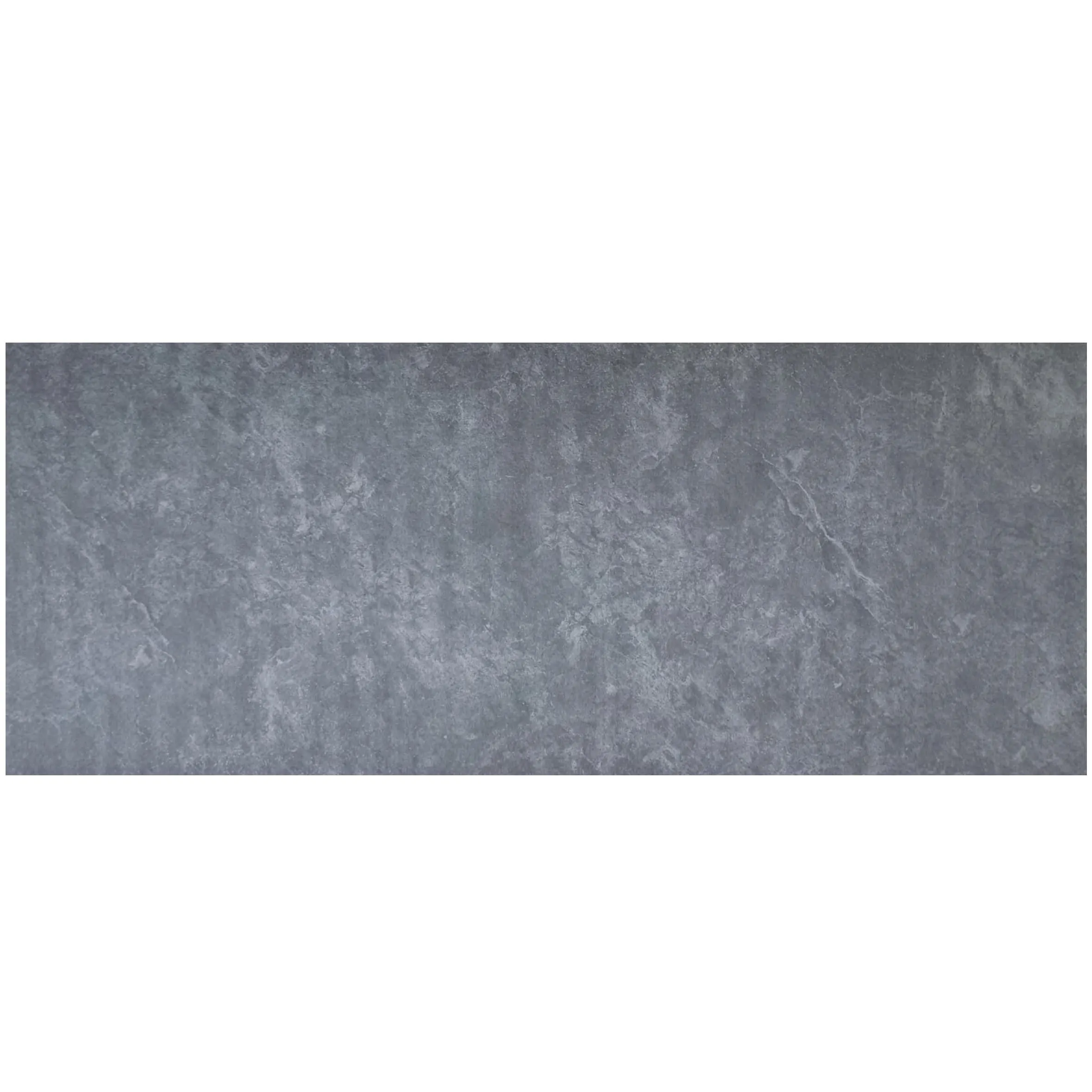
Enter Marble Interstellar Gray. At first glance, you might mistake it for high-end natural marble. Its soft gray base is swirled with subtle white veining, mimicking the look of quarried stone. But here's the difference: it's not mined—it's made. This engineered stone is crafted in factories using a blend of recycled marble dust (often leftover from natural stone processing), resin binders, and sustainable aggregates. The result? A material that's just as beautiful as natural marble, but designed from the ground up to minimize waste.
Let's break down why that matters. First, the manufacturing process. Traditional marble quarrying is a blunt, wasteful affair. Engineers can't control how a block of natural stone will split or what veining it will have, so they extract more than they need to ensure quality. Marble Interstellar Gray, by contrast, is mixed and poured into molds that match exact project specifications. Want 12-inch by 24-inch slabs with a specific thickness? The factory makes them to order. No extra stone, no guesswork. One leading manufacturer reports that this precision cuts manufacturing waste by 85% compared to natural marble. That's a huge leap—instead of tossing half the raw material, almost every ounce goes into a usable slab.
Then there's transportation. Natural marble slabs are heavy—often 200-300 pounds each. Hauling them requires big trucks, and the weight increases the risk of breakage (which means more waste). Marble Interstellar Gray, though, is lighter—about 30% less dense than natural stone—because it's reinforced with resin instead of relying solely on the stone's natural density. Lighter slabs mean fewer trucks on the road, lower carbon emissions, and less breakage during transit. On a project using 100 slabs, that could mean 3 fewer truck trips and 5 fewer broken slabs—small numbers that add up to big waste reduction.
Installation is where the waste savings really shine. Imagine a contractor installing natural marble in a kitchen. They measure the countertop, cut the slab, and—oops—snag a corner, ruining the piece. Now they have to cut another slab, generating more dust and offcuts. With Marble Interstellar Gray, the slabs are pre-cut to the project's exact dimensions at the factory. The installer just has to fit them into place, like a puzzle with perfectly shaped pieces. In one case study from a residential builder in Colorado, switching to pre-cut engineered stone reduced on-site cutting waste from 15% to less than 2%. That's a lot fewer dust masks, less noise, and way less debris in the dumpster.
| Stage of Use | Natural Marble Waste | Marble Interstellar Gray Waste |
|---|---|---|
| Quarrying/Manufacturing | 30-40% of extracted stone | 5-8% of raw materials |
| Transportation Breakage | 5-10% of slabs | 1-2% of slabs |
| On-Site Cutting/Trimming | 15-20% of installed slabs | 2-3% of installed slabs |
| Total Estimated Waste | 50-70% of initial order | 8-13% of initial order |

Marble Interstellar Gray doesn't work alone. It's part of a growing family of sustainable building materials, and one of its closest partners is MCM flexible stone. If Marble Interstellar Gray is the workhorse for large, flat surfaces, MCM flexible stone is the versatile sidekick for curves, edges, and tricky spaces. Think of it as stone with a bend—it's made by bonding thin layers of stone particles to a flexible backing, allowing it to wrap around columns, archways, or uneven walls without cracking.
Why does that matter for waste? Traditional rigid stone can't bend, so installing it on curved surfaces means cutting small, triangular pieces to fit—a process that generates tons of offcuts. MCM flexible stone, though, can be trimmed with scissors or a utility knife, and its flexibility means fewer cuts are needed. On a recent museum project in Boston, the design included a curved lobby wall that would have required 200 small, custom-cut natural stone tiles (with 50 extra for breakage). By using MCM flexible stone in a complementary gray tone to Marble Interstellar Gray, the team installed the entire wall with just 25 sheets of flexible stone and less than 1 sheet of waste. That's a 95% reduction in tile waste, just by choosing a material that bends with the design.
Then there's fair-faced concrete, another unsung hero of low-waste construction. Unlike traditional concrete, which is often hidden under paint or cladding, fair-faced concrete is left exposed, showcasing its raw, textured surface. By skipping the extra layers, projects save on material costs and reduce waste from unused tiles or paint. When paired with Marble Interstellar Gray—say, concrete walls with a marble-like accent strip—the combo creates a modern, industrial look while slashing the total materials needed. A school in Seattle used this pairing for its new auditorium, cutting cladding waste by 60% compared to the original plan of using natural stone and paint.

Let's get concrete (again) with a real-world example. The Skyline Residences in Austin, Texas, is a 12-story apartment building with 200 units, each featuring a kitchen backsplash and bathroom vanity top in—you guessed it—Marble Interstellar Gray. The project team initially considered natural gray marble, but after crunching the numbers, they switched to the engineered stone. Here's what happened:
Another example: the renovation of the historic Central Library in Portland, Oregon. The goal was to update the interior while preserving the building's 1920s charm. The design called for a marble-like floor in the reading room, but the old structure couldn't support the weight of natural marble. Enter Marble Interstellar Gray. Its lighter weight (30% less than natural stone) meant no structural reinforcements were needed, and the pre-cut slabs fit perfectly around the library's original oak bookshelves. Waste? Just 2% of the total material used. The head architect later said, "We didn't just save on waste—we saved the building from unnecessary stress. It was a win-win."

Waste reduction isn't just about the construction phase—it's about the whole lifecycle of a material. Marble Interstellar Gray excels here, too. Natural marble is prone to chipping, staining, and etching, which means it often needs to be replaced every 10-15 years in high-traffic areas. Marble Interstellar Gray, though, is engineered to be more durable. Its resin binder resists scratches and stains, and its uniform composition means it wears evenly over time. Many manufacturers offer 25-year warranties, and some projects report the material looking new after 30 years of use. Less replacement means less waste in the long run—no more tearing out old, damaged marble and sending it to the landfill every decade.
And when the time does come to replace it, Marble Interstellar Gray is recyclable. Unlike natural stone, which breaks down into non-reusable dust, the engineered stone can be crushed and reused as aggregate in new construction materials or even new Marble Interstellar Gray slabs. Some companies are already testing closed-loop systems, where 90% of old slabs are recycled into new ones. That's the circular economy in action—turning waste into a resource instead of a problem.
Of course, no material is perfect. Marble Interstellar Gray costs about 10-15% more per square foot than low-grade natural marble, though the savings in waste, transportation, and installation often offset the upfront price. Some designers also miss the "imperfections" of natural stone—the unique veining or color variations that make each slab one-of-a-kind. But as manufacturers refine their processes, they're adding more variability to engineered stones, creating options that mimic the uniqueness of natural stone without the waste.
There's also the learning curve. Contractors used to working with natural stone sometimes need training to handle engineered materials, which can slow adoption. But as more projects showcase the benefits—like the Skyline Residences and Central Library—contractors are catching on. One installer in California put it this way: "At first, I was skeptical. I'd worked with natural stone for 20 years. But after installing Marble Interstellar Gray and seeing how little waste we had, I'll never go back. My crew's happier (less dust, less heavy lifting), the clients are happier (lower costs, faster timelines), and I'm happier knowing we're not filling landfills."
Construction waste is a big problem, but it's not an unsolvable one. Materials like Marble Interstellar Gray, MCM flexible stone, and fair-faced concrete are proving that sustainability and beauty don't have to be opposites. By rethinking how we make, transport, and install building materials, we can cut waste, save money, and reduce our impact on the planet.
The next time you walk into a building with a sleek, gray stone finish, take a closer look. It might just be Marble Interstellar Gray—and if it is, it's doing more than looking good. It's part of a movement to build smarter, waste less, and leave a lighter footprint. And that's a trend worth celebrating.
So here's to the engineers who designed it, the contractors who install it, and the designers who choose it. Together, they're not just building structures—they're building a future where construction waste is the exception, not the rule. And that's a future we can all get behind.
Recommend Products












