
The coast has always been a place where nature and human ingenuity dance—a meeting point of crashing waves, salt-kissed air, and the desire to build spaces that feel both rooted and resilient. But for architects and builders, coastal projects come with a unique set of challenges: relentless saltwater spray that eats away at metal, humidity that seeps into every crevice, and the slow, steady erosion that turns even sturdy structures into weathered relics. In recent years, one material has emerged as a quiet hero in this battle: Marble Interstellar Gray. More than just a pretty face, this stone has redefined what it means to balance beauty and durability in coastal design, proving that even the harshest environments can be home to elegance.
Coastal construction is a test of endurance. Saltwater, with its high chloride content, is a silent aggressor—it penetrates porous materials, corrodes metal reinforcements, and leaves behind unsightly stains that mar even the most carefully designed facades. Add in UV radiation from the sun, which fades colors and weakens binders, and sudden storms that hurl sand and debris at surfaces, and it's clear: coastal materials need to be more than just strong—they need to be resilient . For decades, builders leaned on options like fair-faced concrete or rough granite stone (medium grey), drawn to their industrial toughness. But while these materials held up to the elements, they often lacked warmth, feeling cold and sterile against the soft, organic backdrop of the coast. Homeowners and designers craved something that could stand up to the salt and sun and make a space feel alive.

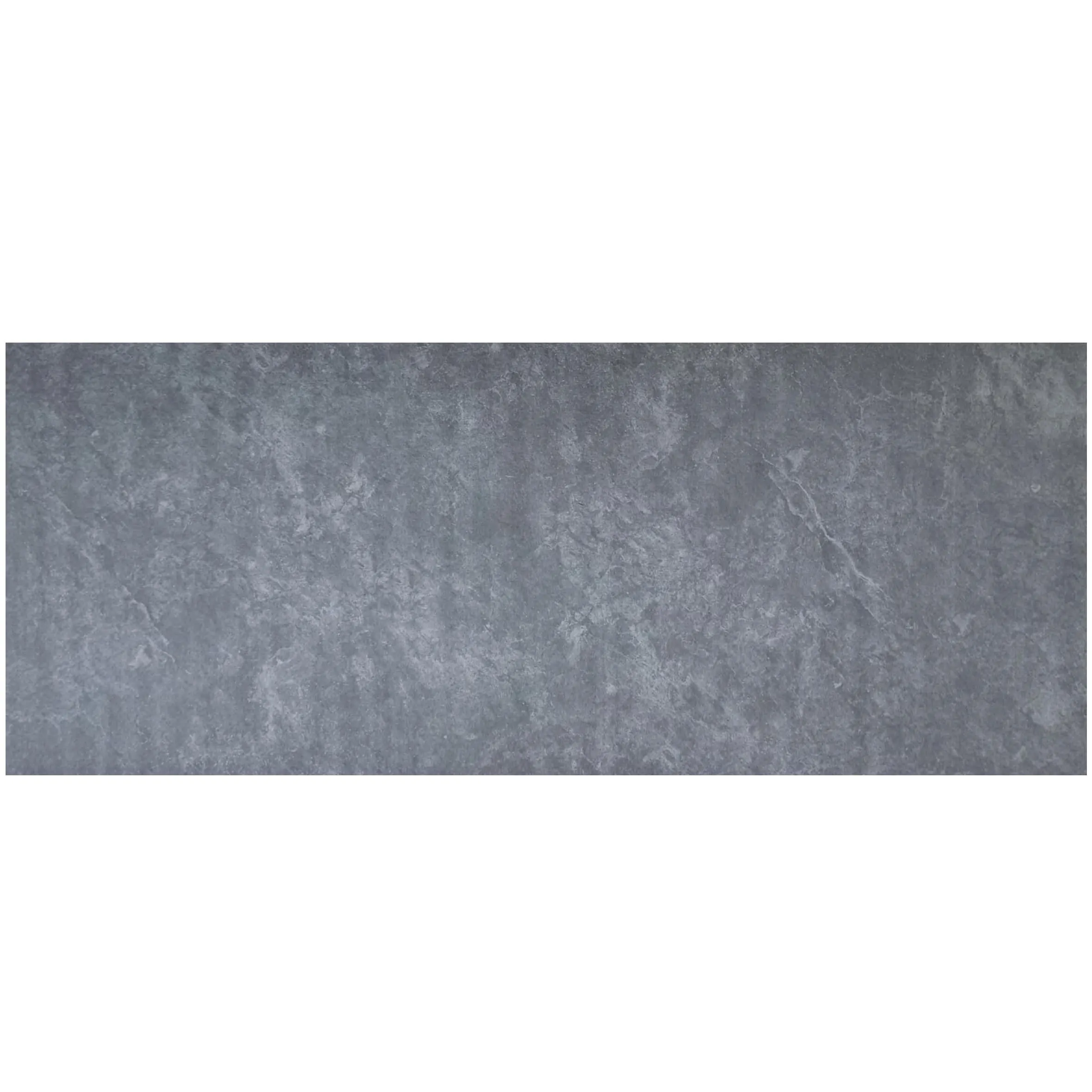
Enter Marble Interstellar Gray. At first glance, it's easy to get lost in its beauty: a soft, muted gray base swirled with threads of silver and faint hints of blue, like a night sky dusted with distant stars. Run a hand over its surface, and you'll notice the smooth, dense texture—no rough pores or gaps, just a solid, unyielding finish. That density is key to its coastal superpowers. Unlike porous stones that absorb moisture like a sponge, Interstellar Gray has a tight crystalline structure that repels water. Think of it as a stone with a built-in raincoat: when saltwater spray hits its surface, it beads up and rolls off, rather than seeping in to cause long-term damage.
But its resistance goes deeper than just water. The stone's low porosity also means it's less likely to harbor salt crystals, which expand and crack materials from the inside out. In accelerated aging tests, Interstellar Gray showed minimal signs of erosion after 1,000 hours of exposure to salt spray—far outperforming traditional marbles and even some granites. "We used to think coastal stone needed to be dark and heavy to hide wear," says Elena Torres, a coastal architect with 15 years of experience. "Interstellar Gray changed that. It's light enough to brighten a space, but tough enough to laugh off a nor'easter. I recently revisited a beach house we finished in 2018, and the exterior cladding still looks brand new. The homeowners thought we'd replaced it—we hadn't. That's the magic of this stone."

While Marble Interstellar Gray shines on its own, it's even more powerful when paired with other coastal-friendly materials. Take Lunar Peak Silvery, for example. With its cool, metallic sheen, it mirrors the silver undertones in Interstellar Gray, creating a palette that feels both modern and timeless. A boutique hotel in Malibu recently used the two stones together: Interstellar Gray for the main facade and Lunar Peak Silvery for the rooftop bar's accent walls. The result? A building that shifts with the light—warm and inviting at sunrise, sleek and sophisticated at night—all while standing up to the Pacific's salty breath.
Then there's flexible stone, a thin, lightweight material that mimics the look of natural stone but bends like a sheet of plastic. Traditional stone slabs can be heavy and rigid, making them tricky to install on curved coastal walls or sloped roofs. But flexible stone panels, when paired with Interstellar Gray, solve that problem. "We had a client who wanted a circular outdoor shower with a stone finish," recalls Mike Chen, a contractor specializing in coastal homes. "Interstellar Gray was their top pick, but cutting a solid slab into a curve would have been a nightmare. Instead, we used flexible stone panels printed to look exactly like Interstellar Gray. They wrapped around the curve perfectly, and you can't tell the difference. Now the shower feels like it's carved from a single piece of stone, but it's light enough to withstand high winds."

| Material | Saltwater Resistance | Aesthetic Appeal | Installation Ease |
|---|---|---|---|
| Marble Interstellar Gray | Excellent (low porosity, moisture-repellent) | Modern, starry gray with silver/blue undertones | Moderate (solid slabs; flexible panels for curves) |
| Fair-faced Concrete | Fair (porous, prone to salt staining) | Industrial, minimalist | High (pourable, versatile) |
| Lunar Peak Silvery | Very Good (dense, low water absorption) | Cool, metallic sheen; pairs with Interstellar Gray | Moderate (similar to natural stone) |
| Travertine (Starry Blue) | Good (porous but sealable) | Vibrant blue with star-like flecks; ocean-inspired | Moderate (requires sealing) |

It's one thing to talk about a material's specs, but it's another to see it in action. Take the "Seaside Haven" development in Charleston, South Carolina—a collection of 20 townhomes just steps from the Atlantic. When developer Sarah Lopez first proposed using Marble Interstellar Gray for the exteriors, some contractors pushed back. "They said, 'You can't use marble on the coast—it'll etch and stain,'" she remembers. "But I'd seen Interstellar Gray in action at a friend's beach house, and I was convinced. We did a test: installed a small section of Interstellar Gray next to fair-faced concrete and rough granite stone (dark grey) on one of the model homes. After two hurricane seasons, the concrete was stained, the dark granite had faded, but the Interstellar Gray looked the same. Now every home in the development has it, and resale values are 15% higher than similar properties. Buyers love that it's low-maintenance—no power washing every month, no resealing every year. It just… works."
One of the biggest myths about natural stone is that it's high-maintenance, but Interstellar Gray breaks that mold. Caring for it is surprisingly easy: a quick rinse with fresh water every few months to wash away salt buildup, and a yearly application of a penetrating sealer to reinforce its natural water resistance. "I tell clients to treat it like a car," says Torres. "You don't need to detail it every week, but a little soap and water now and then keeps it looking sharp." Unlike wood, which needs staining every year, or limestone (beige), which etches with acidic rain, Interstellar Gray requires minimal effort to stay beautiful. Even in homes with kids and pets, it holds up to foot traffic, sand, and the occasional spilled drink—making it as practical as it is pretty.
As climate change brings stronger storms and rising sea levels, the demand for resilient coastal materials will only grow. Marble Interstellar Gray is leading the charge, but it's not alone. Innovations like gradient color rammed earth board, with its earthy hues that blend into dunes, and travertine (starry blue), with its ocean-inspired flecks, are also gaining ground. What ties them all together? A focus on materials that don't just survive the coast, but enhance it. They don't fight against the waves and wind—they work with them, creating spaces that feel like part of the landscape, not separate from it.
At the end of the day, coastal buildings are more than just structures. They're backdrops for life: morning coffee with the sound of waves, evening barbecues with friends, lazy afternoons watching seagulls ride the breeze. Marble Interstellar Gray understands that. It's a stone that protects those moments, sure, but it also elevates them—turning a simple beach house into a sanctuary, a hotel lobby into a retreat, a patio into a place where memories stick. In a world where the coast is both a playground and a battlefield, Interstellar Gray is proof that beauty and strength don't have to be enemies. They can be dance partners, moving together in harmony with the sea.
Recommend Products












