
Walk into a hotel lobby, and the first thing that wraps around you isn't just the air—it's the space itself. The walls that rise gently, the floors that guide your steps, the textures that catch your eye as you pause to take it all in. In hospitality, design isn't just about aesthetics; it's about emotion. It's about creating moments that stick with guests long after they check out—moments that make them think, "I felt something here." And at the heart of those moments? Materials. Not cold, lifeless substances, but storytellers. Each slab, panel, and surface has a voice, and when chosen with care, they weave a narrative that turns a stay into a memory. Today, we're exploring five such materials—Marble Interstellar Gray, Fair-faced Concrete, Lunar Peak Silvery, Rammed Earth Board (Gradient), and Travertine (Starry Blue)—that are redefining how hotels connect with guests, one texture, color, and feeling at a time.
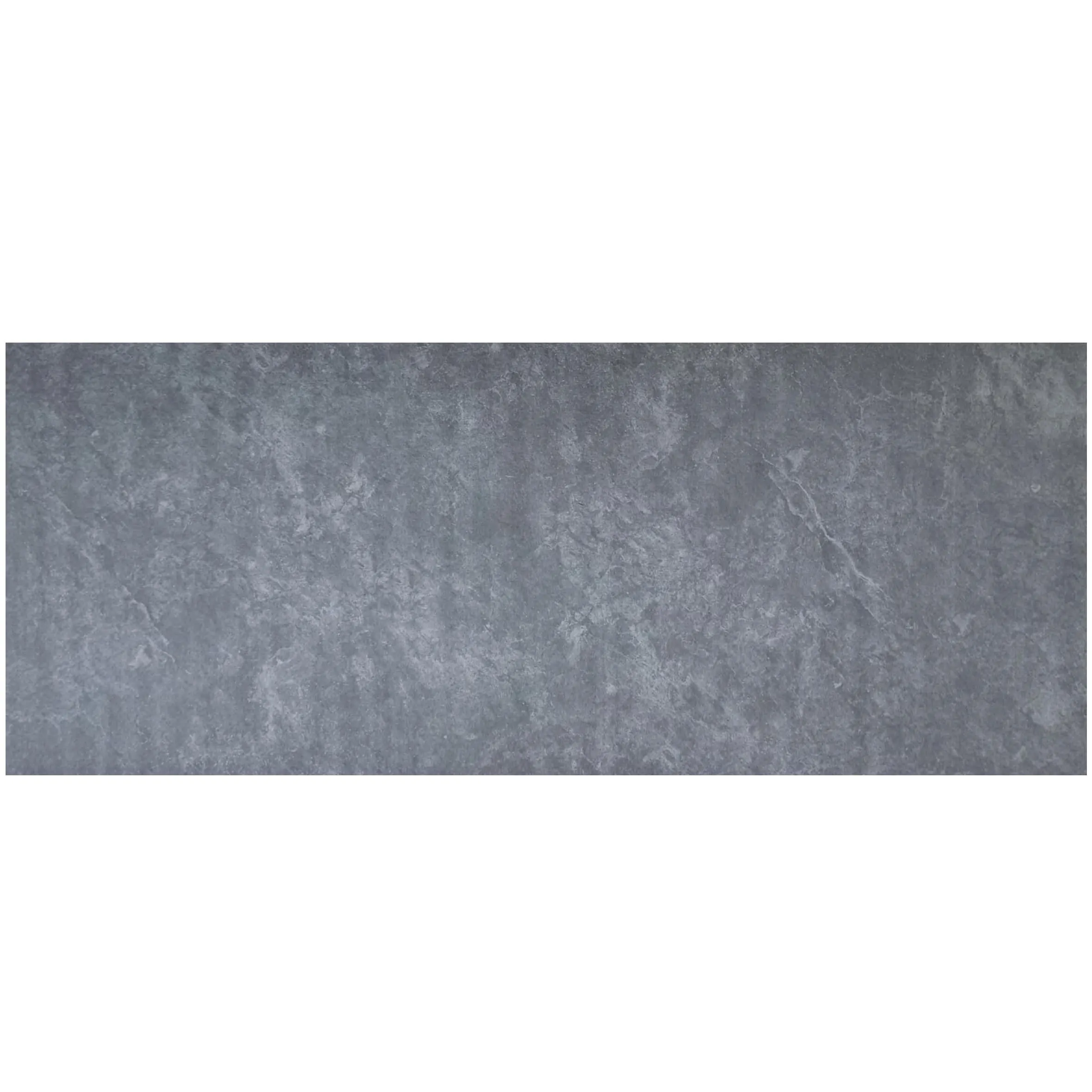
If ever there was a material that balanced "grand" and "gentle," it's Marble Interstellar Gray. Picture this: You step into a boutique hotel's reception area, and your gaze is drawn immediately to the front desk. It's not a flashy, over-the-top structure, but a quiet statement—crafted from a single slab of Marble Interstellar Gray. The surface is smooth, cool to the touch, but not icy. Run your hand across it, and you'll feel the subtlest of undulations, like the memory of waves frozen in stone. What truly captivates, though, is its color: a soft, smoky gray base threaded with veins of silver and charcoal, as if someone took a brush dipped in starlight and painted constellations just beneath the surface. It's marble, yes, but not the kind that screams "opulence." This is marble that whispers "refinement."
In a recent stay at a hotel in Lisbon, I watched a couple pause mid-conversation to trace one of those silver veins with their fingertips. "It looks like the night sky," the woman said, smiling. That's the magic of Interstellar Gray—it invites interaction. It doesn't demand attention; it earns it. Hoteliers are using it in unexpected places: not just reception desks, but accent walls in guest rooms, where it pairs with warm wooden furniture and soft linen drapes to create a space that feels both luxurious and lived-in. In a spa suite I visited in Kyoto, the walls behind the freestanding tub were clad in large-format Interstellar Gray panels, backlit with warm LED strips. As the light seeped through the marble's natural veining, it cast a pattern on the ceiling that looked like a meteor shower frozen in time. A guest there told me, "I didn't want to leave the tub. It felt like bathing under the stars, but in the coziest way possible."
What makes Interstellar Gray so special in hospitality is its versatility. It doesn't overpower; it elevates. In a bustling hotel bar, it adds a touch of sophistication without making the space feel stiff. In a quiet reading nook, it calms the eye, letting guests sink into a book without distraction. It's the kind of material that ages gracefully, too—those subtle veins and soft grays only grow more charming with time, like a well-loved storybook. For guests, it's a reminder that elegance doesn't have to be loud. Sometimes, the most memorable moments are the quiet ones.

"Concrete in a hotel?" you might ask. "Isn't that… industrial?" But Fair-faced Concrete isn't your average construction material. It's concrete with a soul. Stripped of harsh finishes and left in its raw, unapologetic state, it has a warmth that surprises. Run your hand along a wall made of it, and you'll feel the softness of its matte surface—not the cold, rough texture you might expect, but something closer to a well-worn leather journal. Its color is a quiet neutral, ranging from soft off-white to gentle gray, with tiny specks of aggregate that catch the light like hidden treasures. It's honest. It doesn't pretend to be something it's not, and in a world of polished perfection, that honesty is a breath of fresh air.
I stayed at a hotel in Copenhagen last year where the entire restaurant was wrapped in Fair-faced Concrete. At first glance, I thought it might feel stark, but paired with reclaimed wooden tables, pendant lights made from hand-blown glass, and a wall of potted herbs, it felt like a cozy cabin in the woods—if the cabin were in the heart of the city. The manager told me they chose it because they wanted guests to "feel grounded." "Too many places feel like they're trying to impress," she said. "We wanted people to relax, to feel like they could kick back and be themselves." And it worked. I found myself lingering over breakfast, running my finger along the edge of the concrete banister, noticing how the morning light turned its surface a warm golden-gray. A family at the next table had their kids tracing the tiny cracks and patterns in the wall, turning it into a game of "find the hidden rocks." That's the power of Fair-faced Concrete: it invites connection. It doesn't just sit there; it becomes part of the conversation.
In guest rooms, it's often used for accent walls or headboards, adding a touch of understated texture that contrasts beautifully with soft linens and plush rugs. It's durable, too—able to stand up to the hustle and bustle of hotel life without losing its charm. For guests, it feels real. It feels like a space that was built with care, not just for looks, but for living. And in a world that often feels over-designed, that's a gift.

Imagine standing on a mountain at dusk, watching the moon rise. The light it casts isn't harsh; it's soft, silvery, and full of quiet magic. That's Lunar Peak Silvery. A stone that seems to hold moonlight within its surface, it shimmers gently—not with the flash of glitter, but with the subtle glow of a starry night. Its base is a pale, almost white-gray, but what makes it unforgettable is the metallic sheen that runs through it, like someone sprinkled stardust and then smoothed it into the stone. It's ethereal, but not fragile. There's a strength to it, a quiet resilience that makes it feel both otherworldly and grounded.
I encountered Lunar Peak Silvery in the spa of a resort in Bali, where it lined the walls of the meditation room. The space was dimly lit, with only a few candles flickering in the corners, but the stone seemed to glow from within. As I sat cross-legged on the floor, I found my eyes drawn to it, tracing the silvery paths that wound across its surface. It was like looking at a map of the moon—familiar yet full of mystery. A fellow guest, a yoga instructor from Canada, told me she'd started her mornings there, just sitting and staring at the wall. "It's calming," she said. "Like the stone itself is breathing. I leave feeling like I've been outside, even though I'm indoors."
Hoteliers are using Lunar Peak Silvery in spaces where they want guests to slow down: spa treatment rooms, rooftop lounges, even hallway alcoves where travelers can pause and collect their thoughts. It pairs beautifully with warm woods and soft textiles, creating a balance between the celestial and the earthy. For guests, it's a reminder of the beauty of the natural world—even when they're far from home. It's a material that doesn't just look good; it makes you feel something. And isn't that what hospitality is all about?

There's something primal about rammed earth. It's one of the oldest building materials in the world, used for centuries to create homes that feel rooted in the land. But Rammed Earth Board (Gradient) takes that ancient tradition and gives it a modern twist. Instead of a single, uniform color, it shifts gently from one hue to another—soft terracotta blending into warm beige, then fading into a hint of sage green, like a sunset painted into the earth itself. Its texture is rich and tactile, with the look of hand-packed soil that's been smoothed by time. Run your hand over it, and you'll feel the tiny indentations and ridges, evidence of the human touch that went into making it. It's earthy, yes, but it's also alive. It feels like a piece of the planet, brought indoors to wrap guests in warmth.
A boutique hotel in Arizona uses Rammed Earth Board (Gradient) for its lobby walls, and stepping inside is like walking into a desert landscape at dawn. The gradient shifts from deep red (like the desert soil) to soft gold (like the rising sun), and the effect is mesmerizing. I watched a family from New York stand in front of it for ten minutes, pointing out the colors and talking about their trip to the Grand Canyon. "It feels like we brought a piece of the desert back with us," the father said, grinning. That's the power of this material: it connects guests to place. It tells them, "You're not just in a hotel. You're in this place, this moment, and we want you to feel it."
In guest rooms, it's often used for headboards or accent walls, paired with natural fibers like jute and cotton to enhance that "earthy luxury" vibe. It's also eco-friendly, made from locally sourced materials that have a low environmental impact—a selling point for today's conscious travelers. For guests, Rammed Earth Board (Gradient) feels like a hug from the planet. It's warm, it's real, and it reminds them that some of the most beautiful things in life are the ones that have been around forever.

Travertine has long been a favorite in design, loved for its porous surface and warm, earthy tones. But Travertine (Starry Blue) is travertine with a twist: it's the night sky, captured in stone. Its base is a deep, moody blue, not the bright blue of a summer day, but the rich, velvety blue of twilight. And scattered across its surface are tiny pits and holes—natural to travertine—but in this case, they're filled with a shimmering, star-like material that catches the light. Run your finger over one, and it's smooth, cool, like pressing a fingertip to a window on a winter night. It's playful, but not childish. It's sophisticated, but not serious. It's a material that makes you smile, then lean in closer to see more.
I found Travertine (Starry Blue) in the corridor of a boutique hotel in Santorini, where it covered the floors. The hallway was dimly lit, with small sconces casting a warm glow, and as I walked, the "stars" in the stone seemed to twinkle. I found myself slowing down, almost unconsciously, my eyes fixed on the ground. A group of friends from Australia walked past, and one of them stopped, exclaiming, "It's like walking on the ocean at night!" That's the beauty of it: it sparks imagination. It turns a simple walk down a hallway into an adventure.
Hoteliers are using it in unexpected places: bathroom walls, where the blue hue evokes calm; bar countertops, where the stars catch the light of cocktails and laughter; even elevator interiors, turning a short ride into a moment of wonder. It's versatile, too—able to shift from playful to serene depending on the lighting and surroundings. For guests, Travertine (Starry Blue) is a reminder that magic can be found in the smallest details. It's not just a floor or a wall; it's a conversation starter, a memory maker, and a little piece of wonder in an otherwise ordinary day.
| Material | Appearance | Texture | Emotional Impact | Ideal For |
|---|---|---|---|---|
| Marble Interstellar Gray | Smoky gray base with silver/charcoal veins, like a starry night. | Smooth, cool, with subtle undulations. | Timeless, refined, and quietly elegant. | Reception desks, guest room accent walls, spa backdrops. |
| Fair-faced Concrete | Soft neutral (off-white to gray) with tiny aggregate specks. | Warm matte, slightly textured but not rough. | Honest, grounded, and unpretentiously cozy. | Restaurant walls, guest room headboards, lobby pillars. |
| Lunar Peak Silvery | Pale gray base with a subtle, moonlit metallic sheen. | Gently shimmering, smooth with a hint of depth. | Calm, ethereal, and connected to the night sky. | Spa meditation rooms, rooftop lounges, hallway alcoves. |
| Rammed Earth Board (Gradient) | Blending earth tones (terracotta, gold, sage green) like a desert sunset. | Rich, tactile, with the texture of hand-packed soil. | Warm, rooted, and deeply connected to nature. | Lobby walls, guest room accent walls, yoga studios. |
| Travertine (Starry Blue) | Deep velvety blue base with "star-like" shimmering pits. | Cool, smooth, with playful, twinkling details. | Whimsical, curious, and full of wonder. | Corridor floors, bathroom walls, bar countertops. |
In the end, hospitality isn't about beds and breakfasts. It's about feeling. It's about creating spaces where guests don't just stay—they belong. And materials like Marble Interstellar Gray, Fair-faced Concrete, Lunar Peak Silvery, Rammed Earth Board (Gradient), and Travertine (Starry Blue) are the unsung heroes of that mission. They don't just fill a room; they fill it with meaning. They make guests pause, touch, wonder, and remember. They turn a hotel into a story, and guests into characters in that story.
So the next time you walk into a hotel, take a moment to really look around. Notice the walls, the floors, the textures that catch your eye. Ask yourself: What is this space trying to say? Chances are, it's speaking the language of materials—and if you listen closely, you might just hear a story that stays with you long after you check out. After all, the best hotels don't just provide a place to sleep. They provide a place to feel. And isn't that what we all want, in the end? To feel something real.
Recommend Products












