
Walk into any modern building—whether it's a bustling office lobby, a cozy community library, or a sleek restaurant—and your eyes are drawn to the walls, the floors, the textures that shape the space. But behind those aesthetic choices lies a silent guardian: the materials that keep us safe. Fire resistance isn't just a technical checkbox; it's the reassurance that when we gather, work, or live under a roof, that roof is built to protect. Today, let's talk about a material that's redefining this balance between beauty and safety: Marble Interstellar Gray MCM. It's not just a surface—it's a promise.
First, let's unpack what MCM even is. Short for Modified Composite Material, MCM is the result of years of innovation in construction technology. Imagine taking the durability of stone, the flexibility of modern composites, and the design freedom of art—then blending them into a material that's lightweight, versatile, and, crucially, built with safety in mind. That's MCM. And within this family, Marble Interstellar Gray stands out like a quiet masterpiece.
I remember visiting a construction site last year where the architect, Mia, was explaining why she'd chosen MCM for a new school auditorium. "Kids run here, parents linger, events go late into the night," she said, tapping a sample of Marble Interstellar Gray. "I needed something that wouldn't just look good under stage lights, but would stand between them and danger if the worst happened." That's the heart of it: materials that don't force you to choose between "what looks right" and "what keeps people safe."

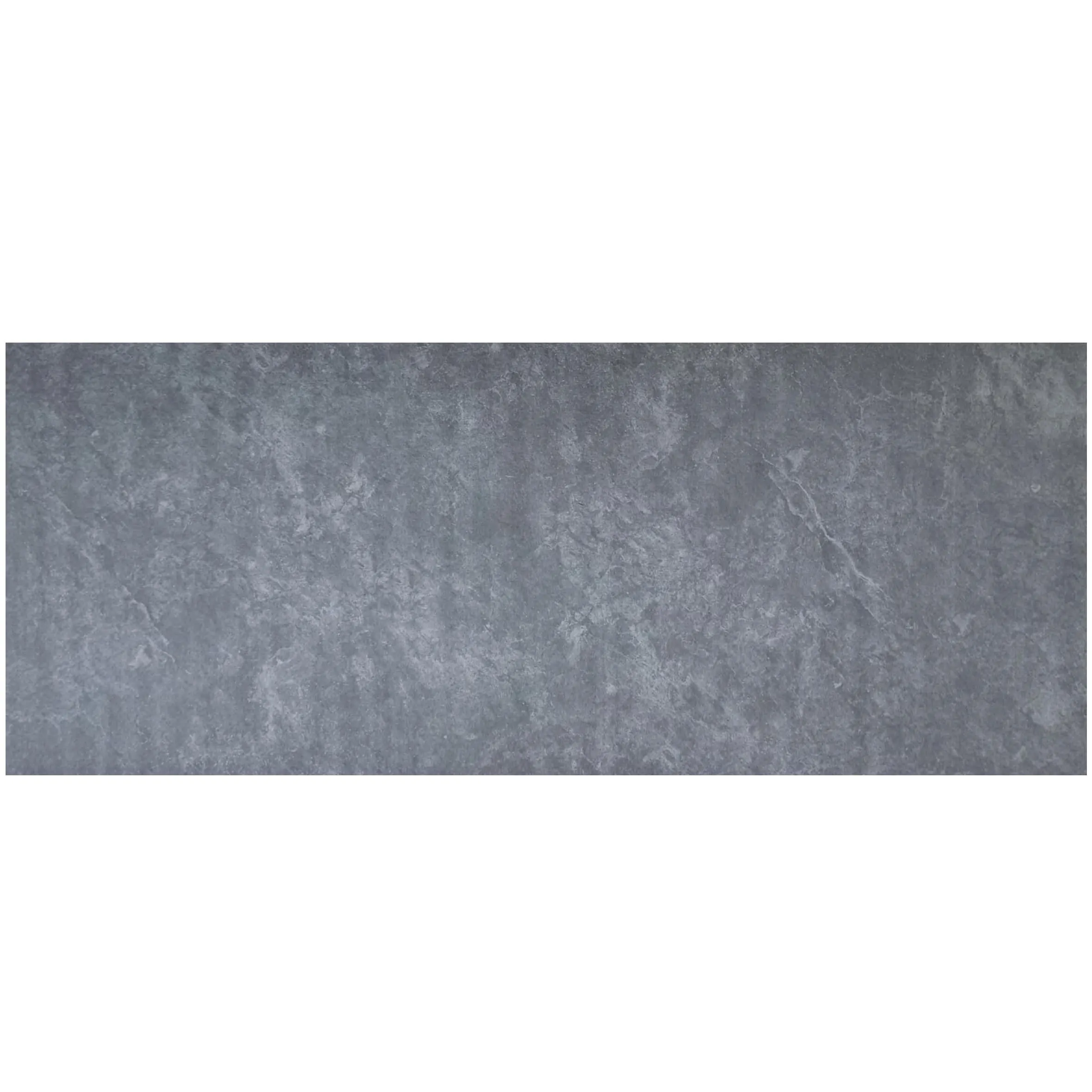
Marble Interstellar Gray isn't named "interstellar" for nothing—it has a depth that mimics the night sky, with subtle gray veining that looks like distant galaxies. But beyond its cosmic beauty lies a core engineered for resilience. Fire resistance in building materials is measured by how they react when exposed to high temperatures: do they ignite? Release toxic fumes? Lose structural integrity? Marble Interstellar Gray MCM passes these tests with flying colors, and here's why.
At its core, MCM is composed of a mineral-rich core sandwiched between modified composite layers. This structure acts as a barrier to heat. When exposed to flames, the material doesn't catch fire; instead, it chars minimally, forming a protective layer that slows heat transfer. What's more, it releases negligible toxic smoke—a critical factor in emergencies, where smoke inhalation is often more dangerous than the fire itself. Think of it as a material that doesn't just resist fire, but buys time. Time for alarms to sound, for exits to be found, for lives to be saved.

Safety ratings can feel like a jumble of letters and numbers—ASTM E84, EN 13501, UL 94—but they're the universal language of protection. Marble Interstellar Gray MCM doesn't just meet these standards; it exceeds them. Let's break it down:
In the ASTM E84 test (the "Steiner Tunnel Test"), which measures flame spread and smoke development, Marble Interstellar Gray scores a Class A rating. That's the highest possible, meaning its flame spread index is 25 or less (for context, untreated wood can score over 200). Smoke development? Less than 450, well below the threshold for hazardous levels. For EN 13501, it's classified as A2-s1, d0—no contribution to fire, minimal smoke, and no flaming droplets. In simpler terms: if a fire starts, this material won't make it worse.
But numbers alone don't tell the whole story. Let's compare it to some other popular MCM variants to see how it stacks up. Take, for example, travertine (starry blue) —a stunning MCM option with a celestial, blue-hued pattern. While it shares MCM's inherent fire-resistant properties, its slightly different mineral composition gives it a smoke development index of 500, still safe but just a notch below Marble Interstellar Gray. Then there's lunar peak silvery , with its metallic sheen; it matches Marble Interstellar Gray's A2-s1, d0 rating but leans more toward industrial aesthetics. And boulder slab (vintage black) , a bold, textured choice? It's Class A too, but its thicker profile makes it better suited for exterior cladding than interior spaces where weight and flexibility matter most. Each has its place, but for projects where every fraction of safety counts—schools, hospitals, theaters—Marble Interstellar Gray is the quiet standout.
| MCM Variant | ASTM E84 Class | EN 13501 Classification | Smoke Development Index | Best For |
|---|---|---|---|---|
| Marble Interstellar Gray | Class A | A2-s1, d0 | <450 | Interior high-occupancy spaces (schools, auditoriums) |
| Travertine (starry blue) | Class A | A2-s1, d0 | 500 | Accent walls, commercial lobbies |
| Lunar peak silvery | Class A | A2-s1, d0 | <450 | Industrial-style exteriors, urban facades |
| Boulder slab (vintage black) | Class A | A2-s1, d0 | 475 | Exterior cladding, feature walls |

Fire resistance is critical, but safety isn't just about emergencies. It's about peace of mind. When a parent drops their child off at school, they shouldn't have to wonder if the walls are made with subpar materials. When a nurse works a night shift, the hospital's surfaces should be as reliable as the care they provide. Marble Interstellar Gray MCM fits into this narrative seamlessly because it doesn't demand sacrifice. You don't have to choose between a warm, inviting space and a safe one.
Take the example of the Riverview Community Center in Portland, which opened last spring. The design team wanted a space that felt open and welcoming, with large walls that could double as art displays. They chose Marble Interstellar Gray for the main hall, and the result is breathtaking: the gray veining complements the natural light, and the matte finish softens the room. But what visitors don't see is the relief in the center director's voice when she talks about fire drills. "We have 200 kids here after school," she told me. "Knowing these walls are built to protect them? That's priceless."

In an era where climate change is making extreme weather more frequent, and urban spaces are growing denser, the demand for materials that can withstand emergencies is only increasing. MCM, and specifically options like Marble Interstellar Gray, represent the future: materials that are kind to the planet (lightweight, reducing transportation emissions), kind to designers (endless aesthetic options), and kind to the people who use them (uncompromising safety).
I think back to Mia, the architect, and her words about the school auditorium. "Safety shouldn't be invisible," she said. "It should be part of the design story." Marble Interstellar Gray embodies that. It doesn't shout about its fire resistance; it lets its performance speak for itself. It's the quiet confidence of a material that knows its purpose: to protect, without ever taking away from the beauty of the spaces we create.
At the end of the day, building materials are more than just parts of a structure. They're part of our lives. They're the walls that hold our memories, the surfaces we touch, the backgrounds to our daily moments. Marble Interstellar Gray MCM doesn't just meet the technical standards for fire resistance—it honors that responsibility with grace. It's proof that safety and beauty can coexist, that we don't have to choose between "practical" and "inspiring."
So the next time you walk into a space and find yourself admiring the walls, take a moment to wonder: what's behind that beauty? If it's Marble Interstellar Gray MCM, you can rest easy. It's not just a material. It's a commitment—to safety, to design, and to the people who call that space home.
Recommend Products












