
Architecture is more than just walls and roofs—it's a language. Every material chosen, every texture embraced, tells a story. It's the quiet hum of a well-lit lobby, the warmth of a sunlit kitchen, the grandeur of a public square that makes you pause and think, "This was built with care." In recent years, the world of building materials has seen a revolution, one that blends innovation with soul. Enter MCM—Modified Composite Material—a name that's quickly becoming synonymous with flexibility, durability, and design freedom. And among its stars? Marble Interstellar Gray MCM, a material that doesn't just meet international quality standards; it redefines them.
Let's start with the basics: What is MCM, and why has it taken the architectural world by storm? Traditional building materials—think heavy stone, rigid concrete, or fragile ceramics—have long dictated what's possible. They're strong, sure, but they come with trade-offs: weight that limits installation, inflexibility that stifles creativity, or environmental footprints that leave much to be desired. MCM, or Modified Composite Material, was born to challenge those limitations.
At its core, MCM is a blend of natural minerals, polymers, and advanced fibers, engineered to be lightweight yet incredibly tough. Imagine a material that can mimic the luxurious look of marble or the rugged charm of stone but weighs a fraction of the real thing. That's MCM. And within the MCM family, MCM flexible stone stands out as a game-changer. It bends without breaking, adapts to curved surfaces, and opens doors to designs once thought impossible—think undulating facades, spiral staircases wrapped in stone-like texture, or accent walls that flow like liquid across a room.
But MCM isn't just about flexibility. It's about smart engineering. These materials undergo rigorous testing to ensure they can withstand the harshest of conditions: scorching sun, freezing rain, saltwater exposure, and even the wear and tear of high-traffic spaces. They're resistant to scratches, stains, and fading, making them a practical choice for both indoor and outdoor use. And perhaps most importantly, MCM is often more sustainable than traditional materials, using less energy in production and reducing the need for heavy transportation due to its lightweight nature.

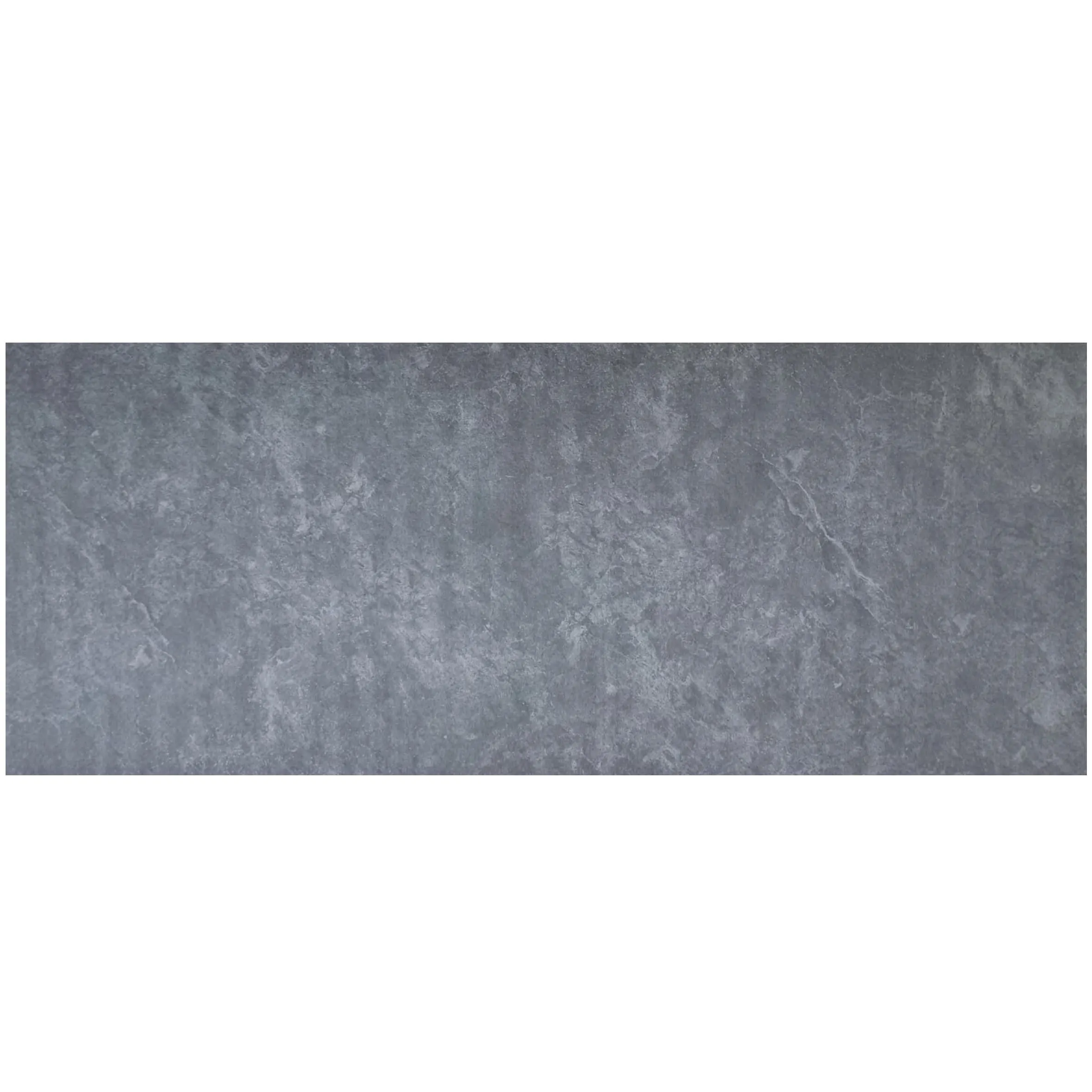
If MCM is the revolution, then Marble Interstellar Gray is its crown jewel. Close your eyes for a moment (okay, maybe just squint) and picture the night sky—deep, mysterious, dotted with distant stars that twinkle like diamonds. Now imagine capturing that essence in a building material. That's the inspiration behind Marble Interstellar Gray MCM. Its surface isn't just gray; it's a symphony of shades—smoky charcoal, soft silver, and hints of midnight blue—swirled together to mimic the vastness of space. Run your hand across it, and you'll feel a texture that's both smooth and subtly textured, like polished stone with a whisper of cosmic dust.
But this isn't just about aesthetics. The design of Marble Interstellar Gray is intentional, crafted to evoke calm and curiosity. In commercial spaces, it adds a touch of sophistication without feeling cold; in homes, it creates a serene backdrop that lets furniture and art take center stage. Architects and designers often talk about "biophilic design"—connecting people to nature through spaces—and Marble Interstellar Gray does just that, but with a twist: it connects us to something even larger, the universe beyond our planet.
What truly sets it apart, though, is its versatility. Unlike natural marble, which is heavy and prone to cracking, Marble Interstellar Gray MCM is lightweight (typically 3-5 kg per square meter) and flexible. It can be cut into any shape, bent around curves, or installed vertically or horizontally with ease. This means it's not limited to floors or countertops; it can clad entire building facades, line elevator interiors, or even serve as a statement ceiling in a luxury hotel lobby. The possibilities are as endless as the stars that inspired it.

Great design is nothing without substance. For a material to truly excel, it must pass the toughest tests—and Marble Interstellar Gray MCM doesn't just pass; it aces them. Let's break down what "international quality standards" really mean here. We're talking about certifications from bodies like the International Organization for Standardization (ISO), the American Society for Testing and Materials (ASTM), and the European Committee for Standardization (CEN). These aren't just pieces of paper; they're guarantees that the material has been put through its paces in labs and real-world conditions.
Take durability, for example. Marble Interstellar Gray MCM undergoes accelerated aging tests, where it's exposed to extreme temperatures (from -40°C to 80°C), UV radiation, and humidity cycles for thousands of hours. The result? Minimal color fading, no cracking, and zero loss of structural integrity. Compare that to natural marble, which can etch or stain with acidic substances, or traditional concrete, which may crack under thermal expansion. Marble Interstellar Gray stands firm, proving it's built to last decades, not just years.
Then there's fire resistance—a critical factor for any building material. MCM, including Marble Interstellar Gray, is classified as non-combustible (Class A in the U.S., Euroclass A2 in Europe), meaning it won't contribute to the spread of fire. This isn't just a safety feature; it's a peace of mind for builders, homeowners, and anyone who steps foot in a space clad with it.
Sustainability is another area where Marble Interstellar Gray shines. International standards now demand materials that minimize environmental impact, and MCM delivers. Its production process uses up to 70% recycled materials, and its lightweight nature reduces transportation emissions (since more panels can be shipped in a single load). It's also 100% recyclable at the end of its life, closing the loop on sustainability. In a world where green building certifications like LEED and BREEAM are becoming the norm, Marble Interstellar Gray is a material that helps projects earn those coveted points.

The world of MCM and advanced building materials is crowded with innovators, each bringing something unique to the table. Let's take a closer look at how Marble Interstellar Gray compares to a few notable peers, including Lunar Peak Silvery , Boulder Slab (vintage black) , and the ever-popular fair-faced concrete . This isn't about pitting them against each other; it's about understanding why Marble Interstellar Gray often comes out on top for those seeking both quality and creativity.
| Feature | Marble Interstellar Gray MCM | Lunar Peak Silvery MCM | Boulder Slab (Vintage Black) MCM | Fair-faced Concrete |
|---|---|---|---|---|
| Weight (kg/m²) | 3.5 – 4.5 | 4.0 – 5.0 | 5.5 – 6.5 | 20 – 25 |
| Flexibility | Can bend up to 30° without cracking | Moderate flexibility (up to 20°) | Low flexibility (rigid design) | Very low flexibility (prone to cracking under stress) |
| Color & Texture | Deep gray base with silver and blue undertones; cosmic-inspired swirls | Bright silvery-white with subtle metallic flecks | Matte black with rough, stone-like texture | Uniform gray; porous, industrial texture |
| Durability (UV Resistance) | ASTM D4329 certified (no fading after 2,000 hours of UV exposure) | Good (fading < 5% after 1,500 hours) | Excellent (fading < 3% after 2,000 hours) | Poor (prone to discoloration over time) |
| Sustainability | 70% recycled content; 100% recyclable; low carbon footprint | 65% recycled content; recyclable | 60% recycled content; recyclable | High carbon footprint; limited recyclability |
| Installation Ease | Lightweight, can be installed with standard tools; suitable for DIY (with training) | Moderate; slightly heavier than Interstellar Gray | Requires professional installation due to weight | Requires skilled labor; heavy machinery needed |
As the table shows, Marble Interstellar Gray strikes a balance that's hard to beat. It's lighter than Lunar Peak Silvery and far more flexible than Boulder Slab, making it ideal for creative designs. Compared to fair-faced concrete, it's a fraction of the weight, which reduces structural load and installation costs. And when it comes to sustainability, it outperforms traditional materials by a mile. But numbers only tell part of the story; the real magic is in how it feels to live and work with these materials.
Take Lunar Peak Silvery, for example. It's stunning in modern, minimalist spaces, with its bright, reflective surface that bounces light around a room. But its moderate flexibility means it's best suited for flat or gently curved surfaces. Boulder Slab (Vintage Black), on the other hand, is all about rugged charm—perfect for industrial or rustic designs—but its weight and rigidity limit where it can be used. Fair-faced concrete has its place in brutalist architecture, but its high maintenance and tendency to fade make it a tough sell for most projects.
Marble Interstellar Gray, though? It's the chameleon of the bunch. It can play the role of elegant backdrop in a high-end restaurant, add edge to a tech startup's office, or bring warmth to a family home. Its flexibility means it can follow the curves of a custom-built bookshelf or wrap around a spiral staircase, turning ordinary spaces into extraordinary ones. And because it's MCM, it's low maintenance—no sealing, no polishing, just an occasional wipe-down to keep its cosmic glow intact.

Talk is cheap; let's look at real projects where Marble Interstellar Gray MCM has left its mark. One standout example is the "Stellar Hub," a mixed-use development in downtown Chicago. The architects wanted a facade that would stand out but not overpower the surrounding historic buildings. They chose Marble Interstellar Gray for the main cladding, pairing it with floor-to-ceiling glass windows. The result? A building that shimmers like a distant galaxy by day and glows softly at night, thanks to integrated LED lighting behind the MCM panels. Tenants rave about the natural light, and passersby can't help but stop to take photos—proof that good design sparks joy.
Another project is a boutique hotel in Kyoto, Japan, where the interior designers used Marble Interstellar Gray MCM for the lobby walls and reception desk. In a city known for its traditional wooden temples and serene gardens, the hotel wanted to blend old and new. The MCM's cosmic texture contrasts beautifully with the hotel's tatami rooms and bamboo accents, creating a space that feels both timeless and futuristic. "Guests often comment on how the lobby feels like a bridge between Earth and space," says the hotel manager. "It's a conversation starter, and that's exactly what we wanted."
Residential spaces are getting in on the action too. In a modern home in California, a homeowner replaced their outdated brick fireplace with a Marble Interstellar Gray MCM surround. "We wanted something that would make the fireplace the focal point of the living room, but without the weight and cost of real marble," they explain. "The MCM was easy to install, and now every time we have guests over, they ask where we got it. It's become the heart of our home."
In today's world, "green" isn't just a buzzword; it's a responsibility. The construction industry is one of the largest contributors to carbon emissions, accounting for nearly 40% of global energy-related CO2 output, according to the United Nations. That's why materials like Marble Interstellar Gray MCM are more important than ever—they offer a way to build beautifully without destroying the planet.
Let's dive into the details. The production process for Marble Interstellar Gray uses 70% recycled materials, including post-consumer plastic and industrial mineral waste that would otherwise end up in landfills. By repurposing these materials, MCM manufacturers reduce the need for virgin resources, lowering their environmental impact. What's more, the lightweight nature of MCM means fewer trucks are needed to transport it, cutting down on transportation emissions. A single truck can carry up to 500 square meters of Marble Interstellar Gray MCM, compared to just 100 square meters of natural marble— that's a 400% increase in efficiency.
Durability also plays a role in sustainability. A material that lasts longer needs to be replaced less often, reducing waste over time. Marble Interstellar Gray MCM is designed to have a lifespan of 50+ years, compared to natural marble, which may need restoration every 10-15 years, or painted concrete, which fades and chips after just a few years. This longevity means fewer resources are consumed in the long run, making it a smart choice for eco-conscious builders.
And when the time does come to replace it, Marble Interstellar Gray MCM is 100% recyclable. Unlike natural stone, which can't be melted down or repurposed, MCM can be ground up and used to make new panels, closing the loop on the material's lifecycle. It's a circular approach that aligns with the principles of a sustainable future—one where we build, use, and reuse, rather than take, make, and waste.
So, what does the future hold for MCM and materials like Marble Interstellar Gray? If current trends are any indication, it's bright. As cities grow denser and architects push the boundaries of design, the demand for lightweight, flexible, and sustainable materials will only increase. MCM checks all those boxes—and then some.
We're already seeing innovations in MCM technology, from self-cleaning coatings that repel dirt and water to panels embedded with solar cells that generate electricity. Imagine a building clad in Marble Interstellar Gray MCM that not only looks stunning but also powers itself. It sounds like science fiction, but it's closer than you think. Researchers are also exploring ways to enhance MCM's thermal insulation properties, making it even more energy-efficient for both hot and cold climates.
But perhaps the most exciting part is how MCM is democratizing design. In the past, luxury materials like marble or granite were reserved for high-end projects with big budgets. MCM changes that. It offers the look and feel of natural stone at a fraction of the cost, making sophisticated design accessible to more people—whether you're building a luxury hotel or a modest home. This democratization has the power to transform neighborhoods, making beautiful, well-designed spaces the norm, not the exception.
Marble Interstellar Gray MCM isn't just a building material; it's a symbol of progress. It represents a shift in how we think about architecture—away from rigid, wasteful practices and toward flexible, sustainable, and soulful design. It meets international quality standards not because it has to, but because it was designed to exceed them. From its cosmic-inspired aesthetics to its unbeatable durability and eco-friendly credentials, it's a material that understands the needs of modern builders, designers, and homeowners.
As we look to the future, one thing is clear: the buildings of tomorrow won't just be structures—they'll be stories. And Marble Interstellar Gray MCM will be there to help tell them—one wall, one facade, one space at a time. So the next time you walk into a building and feel that sense of wonder, take a closer look. Chances are, you're standing in the presence of MCM magic.
In the end, it's not just about meeting standards. It's about raising them. And Marble Interstellar Gray MCM? It's reaching for the stars.
Recommend Products












