
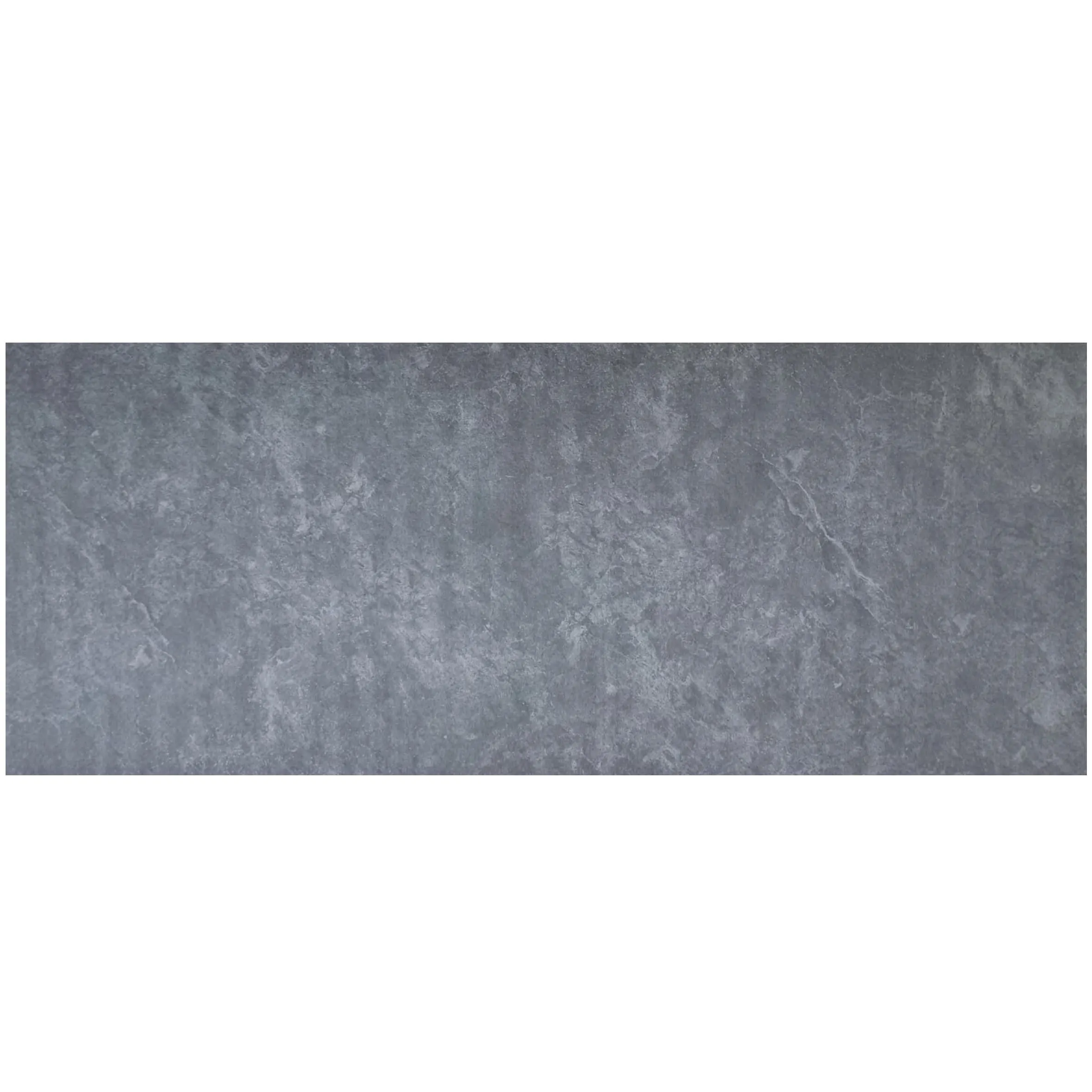
Picture this: You're standing in a sunlit design studio, coffee in hand, staring at two samples on your desk. On one side, a slab of Marble Interstellar Gray —swirls of stormy gray and silver, like a galaxy frozen in stone, its surface cool and smooth under your fingertips. On the other, a piece of raw concrete , rough yet refined, with tiny aggregate pebbles peeking through a matte finish that feels both industrial and organic. Which one do you choose? For architects and designers, this isn't just a material pick—it's a decision that shapes how a space feels, functions, and tells its story. Today, we're diving deep into this dilemma, exploring whether the cosmic elegance of Marble Interstellar Gray or the earthy adaptability of concrete (and its sophisticated cousin, fair-faced concrete ) offers better design flexibility. And yes, we'll even throw in a wildcard: MCM flexible stone , a modern marvel that's redefining what "flexibility" means in materials.
Marble has always been the poster child for luxury, but Marble Interstellar Gray isn't your grandma's marble. Imagine a slab that looks like someone took a photograph of the night sky and pressed it into stone—deep charcoal backdrops streaked with silvery veins that twist and turn like shooting stars. It's a marble that feels both ancient and futuristic, blending the organic unpredictability of natural stone with the consistency modern designers crave (thanks to careful engineering that minimizes flaws). What makes it stand out? Its versatility in tone: the base gray can shift from soft dove to near-black depending on lighting, while the veins add just enough drama without overwhelming a space. It's not just a material; it's a mood—one that can swing from calm sophistication in a residential bathroom to bold statement in a hotel lobby.
If Marble Interstellar Gray is the elegant poet, concrete is the rugged storyteller. For decades, it was dismissed as "utilitarian"—the stuff of parking garages and factory floors. But in recent years, designers have fallen in love with its raw, unapologetic beauty. And when we talk about concrete's design flexibility, we can't ignore fair-faced concrete —the "naked" version that skips the paint or plaster, letting the material's natural texture shine. Think about it: formwork marks (those subtle ridges left by wooden molds), tiny air bubbles, and the speckled pattern of aggregate all become intentional design elements. Unlike marble, concrete starts as a blank canvas. Want it white? Add lime. Warm beige? Tint it with oxides. Aged patina? Expose the aggregate. It's a chameleon that can mimic stone, wood, or even metal with the right finishes. And here's the kicker: it's not just for walls and floors. Today, you'll find concrete in countertops with polished surfaces that rival marble, lighting fixtures with delicate curves, and even furniture that feels surprisingly cozy (yes, cozy—thanks to underfloor heating and soft textiles that balance its coolness).
Before we pit marble and concrete against each other, let's talk about the new kid on the block: MCM flexible stone . If marble is rigid and concrete is moldable but heavy, MCM flexible stone is the acrobat of the group. Made from a composite of natural stone particles and a flexible polymer backing, it's thin (often less than 3mm thick), lightweight, and—you guessed it—bendable. Picture wrapping it around a curved column, installing it on a ceiling with tricky angles, or even using it to clad furniture without adding bulk. It comes in textures that mimic everything from rough-hewn stone to smooth marble, including designs that nod to Marble Interstellar Gray's veining or concrete's raw finish. But why does this matter in our comparison? Because flexibility isn't just about looks—it's about how a material adapts to the shape of a space. And MCM? It's rewriting the rules of what's possible.

Design flexibility starts with aesthetics. Can a material transform to fit different styles, from minimalist to maximalist, from residential to commercial? Let's break it down.
Marble Interstellar Gray's superpower is its built-in drama. Its veining is never the same twice—one slab might have thin, wispy lines that look like smoke; another could feature bold, thick streaks that demand attention. This uniqueness is a double-edged sword: it's perfect for one-of-a-kind feature walls but can be tricky if you need matching slabs for a large floor. Concrete, on the other hand, is a blank slate. Left natural, it's a soft gray with warm undertones, but it takes stains, dyes, and pigments like a champ. Want a concrete countertop that looks like terracotta? Stain it. A wall that mimics aged wood? Acid-etch the surface. Fair-faced concrete ups the ante by showcasing the "story" of its making—formwork seams, tiny air bubbles, and aggregate variations add visual interest without needing color. And then there's MCM flexible stone, which borrows the best of both worlds: it can replicate Marble Interstellar Gray's veining with laser precision (so you get consistency across large projects) or mimic concrete's rough texture in a lightweight sheet that's easy to install in tight spaces.
Let's talk feel. Run your hand over polished Marble Interstellar Gray, and it's smooth as glass—cool to the touch, with a subtle sheen that reflects light like a mirror. Honed (matte) versions soften that shine, giving it a velvety texture that's less prone to fingerprints. Concrete, by contrast, loves texture. You can leave it "as-cast" with a rough, pitted surface that feels like river rock, or polish it to a high gloss that rivals marble (hello, polish concrete floors). Fair-faced concrete often leans into its industrial roots, with visible tool marks or brushstrokes that add depth. MCM flexible stone? It's a texture chameleon. Want the look of rough concrete without the weight? Choose an MCM design with a "sanded" finish. Crave the smoothness of marble but need to wrap a curve? Opt for a polished MCM variant. It's texture without the limitations of traditional materials.
Lighting can make or break a material, and here's where the contrast between marble and concrete really shines. Marble Interstellar Gray is a light dancer. Polished surfaces bounce light around a room, making small spaces feel larger; honed versions absorb light softly, creating a cozy, intimate vibe. Its veining acts like a built-in light show—hit it with warm overhead lighting, and the silver streaks turn golden; cool LED strips behind a slab make the veins glow like neon. Concrete, by comparison, is a light absorber. Its matte finish softens harsh light, making it ideal for spaces where you want to avoid glare (think: home offices or art galleries). Fair-faced concrete plays with shadows—those tiny pits and ridges cast subtle patterns when light hits them, adding movement to a wall. MCM flexible stone, with its thin profile, can even be backlit, turning a feature wall into a glowing focal point—something heavy marble or thick concrete can't easily do.

A material can look stunning, but if it's a nightmare to install or falls apart in a year, its design flexibility is moot. Let's get practical.
Marble Interstellar Gray is gorgeous, but it's not light. A standard 3cm slab can weigh 15-20kg per square foot—meaning you'll need a team of installers and possibly structural reinforcement for floors or walls. Cutting it requires specialized tools to avoid cracking those precious veins. Concrete, while durable, is also heavy when poured in thick slabs, though precast concrete panels can ease installation. Fair-faced concrete demands precision during pouring—any mistake in the formwork (a bent board, a loose seal) shows up in the final product, so it's not for rookie contractors. Then there's MCM flexible stone: at just 2-3mm thick and weighing 4-5kg per square meter, it's a breeze to handle. A two-person crew can install it with basic tools (a utility knife, adhesive, and a roller), and it bends around curves with a radius as tight as 30cm. Want to clad a spiral staircase? MCM can do it. Need to cover a ceiling with uneven beams? No problem. For projects with tight deadlines or tricky geometries, this is a game-changer.
Let's talk about the "oops" moments: a wine spill, a chair scraping across the floor, a kid with a crayon. Marble Interstellar Gray is tough, but it's not invincible. It's porous, so without sealing, red wine or citrus can stain it. It's also prone to etching from acidic substances (looking at you, vinegar and lemon juice). That said, modern sealants can protect it, and its hardness (around 3-4 on the Mohs scale) holds up well to daily foot traffic. Concrete, when properly cured, is a tank. It's scratch-resistant, heat-resistant, and impervious to stains if sealed. Fair-faced concrete often has a denser surface, making it even more durable. The catch? It can crack if the substrate shifts, and while small cracks add character, large ones are a headache. MCM flexible stone? Its polymer backing gives it flexibility, so it's less likely to crack under stress (like a building settling). It's also water-resistant and stain-resistant, making it ideal for kitchens, bathrooms, or even outdoor use (with proper sealing). For high-traffic areas like retail stores or restaurants, this durability is a huge plus.
In 2024, flexibility isn't just about design—it's about aligning with eco-friendly goals. Marble Interstellar Gray, like all natural stone, requires quarrying, which has environmental impacts (though some brands source from mines with strict sustainability practices). It's also heavy, so shipping it long distances adds to its carbon footprint. Concrete has a bad rap for its carbon emissions (cement production is a major CO2 contributor), but innovations like low-carbon cement or recycled aggregate are making it greener. Fair-faced concrete scores points here because it needs no additional finishes (no paint, no tiles), reducing material waste. MCM flexible stone, made from recycled stone particles and low-VOC polymers, is often the most sustainable option. Its lightweight nature also cuts down on transportation emissions, and some brands offer panels made from 80% recycled content. For projects aiming for LEED or BREEAM certification, this can tip the scales.

Design flexibility isn't just about what a material looks like—it's about where it works . Let's map out their best roles.
In homes, Marble Interstellar Gray is a star in kitchens and bathrooms. Imagine a kitchen island with a polished Interstellar Gray countertop, paired with white cabinetry and brass hardware—the veins catch the light, turning meal prep into a mini light show. In bathrooms, a honed slab as a shower wall adds luxury without feeling cold. Concrete, meanwhile, shines in living areas. A fair-faced concrete fireplace surround becomes the focal point of a minimalist living room, its rough texture balancing soft sofas and warm rugs. Polished concrete floors in a bedroom? They're sleek, easy to clean, and pair beautifully with wood accents. MCM flexible stone? It's the multitasker. Use it as a backsplash in the kitchen (no grout lines to clean!), wrap it around a bedroom accent wall, or even cover a coffee table for a stone-look finish that won't scratch if you put your feet up.
In commercial spaces, first impressions matter. Marble Interstellar Gray makes a bold statement in hotel lobbies—think a reception desk clad in thick slabs, or a feature wall that greets guests with cosmic veining. It's also a hit in high-end retail: a luxury boutique might use it for shelving or checkout counters to elevate the brand's image. Concrete, on the other hand, is perfect for spaces that want to feel "authentic." A café with fair-faced concrete walls, mismatched wooden tables, and string lights? It feels cozy yet modern. Co-working spaces love polished concrete floors for their durability and easy maintenance. And MCM flexible stone? It's ideal for chain restaurants or retail outlets that want a consistent look across locations. Its lightweight nature also reduces shipping costs, and it can be printed with custom patterns (hello, brand logos subtly embedded in the texture).
Outdoor design tests a material's mettle—rain, snow, UV rays, and temperature swings. Marble Interstellar Gray can work outdoors, but it needs sealing to prevent water absorption (which can lead to cracking in freezing climates). It's best for covered patios or low-traffic areas. Concrete? It's an outdoor champion. Stained concrete pool decks, fair-faced concrete planters, or even outdoor kitchens with concrete countertops—they stand up to the elements and develop a beautiful patina over time. MCM flexible stone, with its weather-resistant polymer backing, is surprisingly tough outdoors. Use it to clad an outdoor bar, line a garden path, or cover a pergola ceiling. It won't fade in the sun, and its flexibility means it can handle expansion and contraction from temperature changes better than rigid marble or concrete.

So, does Marble Interstellar Gray or concrete offer better design flexibility? The answer, as with most design questions, is: "It depends."
Choose Marble Interstellar Gray if you crave natural luxury, one-of-a-kind veining, and a material that elevates a space with understated drama. It's perfect for projects where aesthetics take center stage, and you're willing to invest in installation and maintenance.
Choose concrete (especially fair-faced concrete ) if you love raw, industrial charm, need durability for high-traffic areas, or want a material that can be customized with stains and textures. It's the workhorse with soul.
And don't sleep on MCM flexible stone —it's the wildcard that bridges the gap, offering the look of marble or concrete with the installation ease and adaptability modern projects demand. For curved surfaces, tight deadlines, or eco-conscious builds, it's a game-changer.
At the end of the day, the most flexible design is one that blends materials. Imagine a lobby with a Marble Interstellar Gray feature wall, fair-faced concrete floors, and MCM flexible stone accents wrapping the columns. It's not about picking a winner—it's about using each material's strengths to tell a richer story. Because in design, the best flexibility isn't just about what a material can do—it's about how it makes people feel when they step into the space.
| Feature | Marble Interstellar Gray | Concrete (Including Fair-Faced) | MCM Flexible Stone |
|---|---|---|---|
| Aesthetic Vibe | Cosmic luxury, natural veining, elegant | Raw industrial, customizable, organic texture | Versatile mimicry (stone/concrete looks), lightweight |
| Installation Ease | Heavy (needs structural support), specialized tools | Heavy (precast easier), requires skilled formwork (fair-faced) | Lightweight, bendable, DIY-friendly with basic tools |
| Durability | Good (with sealing), prone to staining/etching | Excellent (scratch/heat-resistant), develops patina | Very good (flexible, water/stain-resistant) |
| Best For | Luxury interiors, feature walls, high-end surfaces | Industrial-chic spaces, outdoor areas, high-traffic zones | Curved surfaces, ceilings, quick installations, eco-projects |
Recommend Products












