
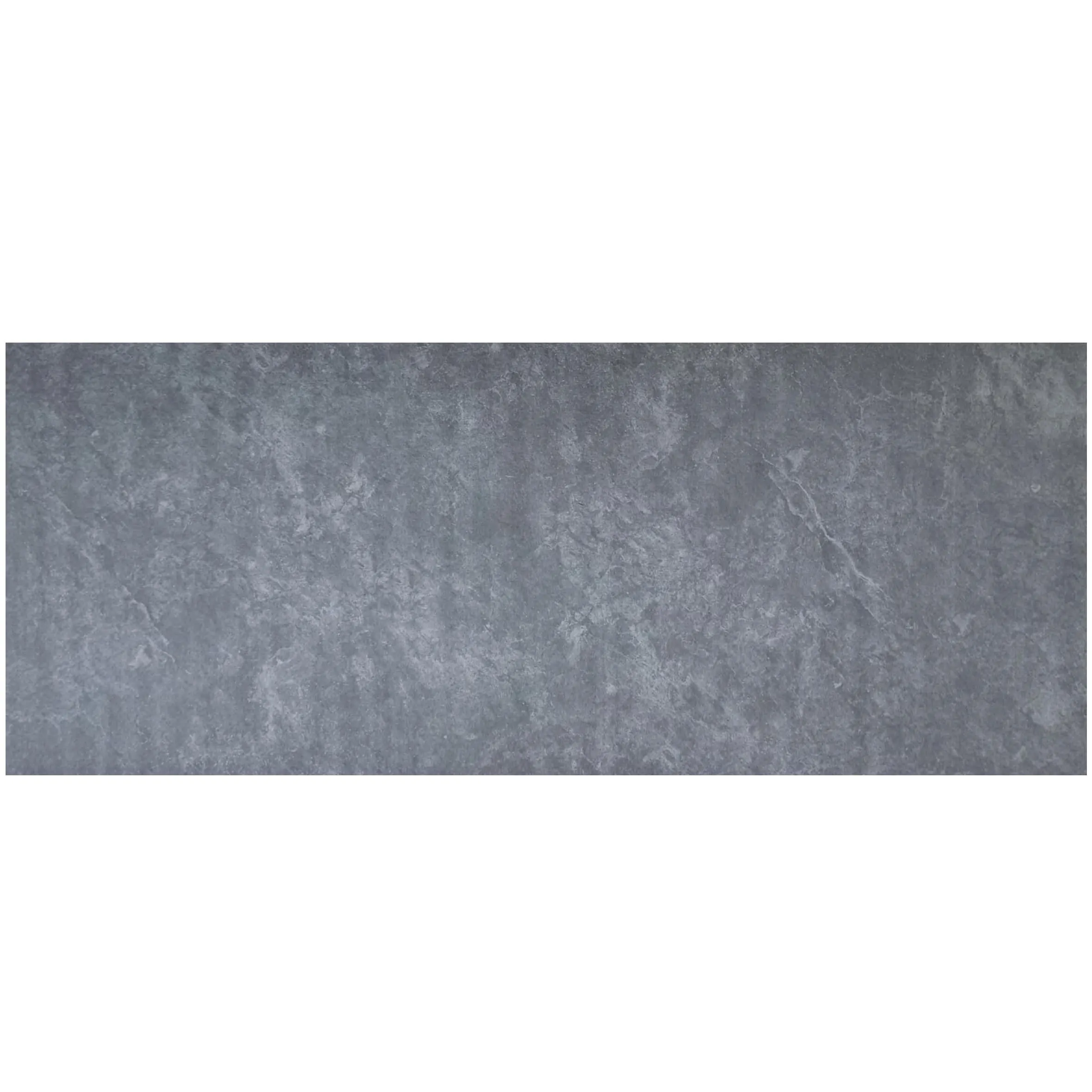
Picture this: You're standing in the middle of a newly designed lobby, sunlight streaming through floor-to-ceiling windows, casting warm glow on the walls. To your left, a wall shimmers with a smooth, consistent gray surface that seems to shift like stardust under the light—you're told it's Marble Interstellar Gray. To your right, a classic marble slab showcases swirling veins of white and gray, each pattern as unique as a fingerprint. Both are stunning, but as an architect, designer, or homeowner, you can't help but wonder: Which one will stand the test of time? Which will fit better with your project's budget, maintenance needs, and long-term vision?
Natural marble has been a symbol of luxury for centuries, gracing palaces, museums, and grand homes with its organic beauty. But in recent years, engineered alternatives like Marble Interstellar Gray—part of innovative lines such as mcm flexible stone—have emerged, promising the best of both worlds: the aesthetic appeal of natural stone and the practicality of modern materials. Today, we're diving deep into the performance differences between these two options, so you can make an informed choice that aligns with your project's goals, whether you're designing a commercial space, a residential interior, or an exterior facade that needs to brave the elements.
Let's start with the basics: how well do these materials hold up over time? Natural marble is a metamorphic rock formed from limestone under intense heat and pressure. Its beauty lies in its imperfections—veins, pits, and color variations that tell the story of millions of years of geological activity. But those same imperfections can be a double-edged sword when it comes to durability.
Natural marble is relatively soft, ranking around 3-4 on the Mohs hardness scale (for reference, granite is 6-7, and a fingernail is 2.5). This means it's prone to scratching from everyday objects like keys, furniture legs, or even high heels. I once visited a historic home where the natural marble flooring in the entryway had visible etch marks from decades of foot traffic and accidental spills—charming in a rustic, lived-in way, but not ideal if you're aiming for a sleek, polished look that stays pristine.
Porosity is another concern. Natural marble is highly porous, acting like a sponge that absorbs liquids. A spilled glass of wine, a drizzle of olive oil, or even rainwater (if used outdoors) can seep into the stone, leaving permanent stains or discoloration. To combat this, natural marble requires regular sealing—typically every 6-12 months, depending on usage. Miss a sealing session, and you might find yourself staring at a stubborn stain that no amount of scrubbing can remove.
Now, enter Marble Interstellar Gray. This isn't your grandmother's marble—it's an engineered stone, often part of mcm flexible stone or flexible stone cladding panels lines, designed to mimic the look of natural marble while addressing its weaknesses. Engineered stones like Marble Interstellar Gray are typically made by combining natural stone aggregates (like marble dust or quartz) with polymers, resins, or other binders under high pressure and heat. The result? A material that's denser, harder, and far less porous than natural marble.
On the Mohs scale, Marble Interstellar Gray often ranks around 5-6, making it significantly more scratch-resistant than natural marble. I spoke with a restaurant owner in downtown Chicago who switched from natural marble countertops to Marble Interstellar Gray five years ago. "We used to have to replace sections of the counter every year because of scratches from knives and pots," he told me. "Now, even with daily use, the surface still looks brand new. No more panic when a server spills lemon juice—we just wipe it up, and there's no stain."
Porosity is another win for engineered stone. Most Marble Interstellar Gray products have a non-porous surface, meaning liquids bead up and can be wiped away without seeping in. This eliminates the need for regular sealing, saving time and money in the long run. For exterior applications, this is a game-changer: while natural marble might crack or discolor when exposed to freeze-thaw cycles or harsh weather, Marble Interstellar Gray (especially when part of a weather-resistant mcm flexible stone line) can withstand rain, snow, and UV rays without losing its luster.

Beauty is subjective, but when it comes to design, consistency and predictability matter—especially for large-scale projects. Natural marble's biggest selling point is its uniqueness. No two slabs are exactly alike; each has its own pattern of veins, color variations, and even tiny fossils or mineral deposits that add character. For some, this is irreplaceable. Imagine a luxury hotel bathroom with a natural marble vanity top that has a one-of-a-kind vein pattern, turning a functional space into a work of art. It's the kind of detail that makes a space feel exclusive and timeless.
But this uniqueness can also be a challenge. If you're designing a wall that spans 50 feet, matching multiple natural marble slabs to create a cohesive look is no easy feat. Slabs from the same quarry can vary in color (one might be lighter gray, another darker), vein direction (some veins might run horizontally, others vertically), or even texture (some might be smoother, others more pitted). This inconsistency can lead to a patchy, disjointed appearance if not carefully curated—a problem that's only amplified when working with limited slab sizes.
Marble Interstellar Gray, on the other hand, offers precision and consistency. Since it's engineered, manufacturers can control the color, pattern, and texture to a tee. Want a wall with a uniform gray base and subtle, star-like flecks that repeat evenly across the surface? Marble Interstellar Gray delivers. This makes it ideal for modern designs that prioritize clean lines, minimalism, or bold, repetitive patterns. I recently worked on a retail store project where the client wanted a "galaxy wall" effect—Marble Interstellar Gray's consistent stardust pattern allowed us to cover the entire 30-foot wall without a single jarring mismatch, creating a seamless, immersive experience for shoppers.
That said, some critics argue that engineered stones lack the "soul" of natural marble. There's a tactile difference, too: natural marble often has a slightly cooler, more varied texture, with subtle ridges and valleys from its geological formation. Marble Interstellar Gray, while smooth, can feel more uniform—though advances in technology (like 3D printing in some mcm 3d printing series) are closing this gap, adding depth and texture that mimic natural stone's organic feel.
At the end of the day, the choice between natural marble's organic charm and Marble Interstellar Gray's consistent beauty depends on your design vision. If you want a space that feels "lived-in" and unique, natural marble might be the way to go. If you need precision, scalability, or a specific, repeatable aesthetic (like the starry effect of Marble Interstellar Gray), engineered stone is the smarter choice.

Installation is where the rubber meets the road—or, in this case, where the stone meets the wall. Natural marble is heavy. A standard 2cm-thick slab can weigh around 13 pounds per square foot, and 3cm slabs can hit 20 pounds per square foot. This weight creates two major challenges: handling and structural support. Installing natural marble often requires a team of professionals with specialized equipment (like cranes for large slabs) and careful planning to ensure the substrate (the surface it's being attached to) can bear the load. In older buildings or projects with weight restrictions (like high-rise facades), this can be a dealbreaker.
Cutting natural marble is also a delicate process. The stone is prone to chipping or cracking if not handled with precision, and each cut generates a lot of dust—requiring proper ventilation and safety gear. For custom shapes or intricate designs, this can drive up labor costs and lead times. I once witnessed a contractor spend an entire day cutting a natural marble slab to fit around a curved window frame; by the end, there were three discarded slabs due to cracks, and the final piece still had a small chip that had to be repaired.
Now, let's talk about Marble Interstellar Gray, often part of flexible stone cladding panels or mcm flexible stone lines. These engineered panels are designed with installation in mind—starting with weight. Most flexible stone cladding panels weigh between 3-5 pounds per square foot, a fraction of natural marble's weight. This makes them easier to handle: a single installer can carry and position panels without heavy machinery, reducing labor costs and installation time. For high-rise exteriors or interior walls where structural support is limited, this lightweight nature is a huge advantage.
Flexibility is another key feature. As the name suggests, flexible stone cladding panels can bend slightly, conforming to curved surfaces or uneven substrates that would break natural marble. Imagine installing stone on a rounded column or a wavy accent wall—with natural marble, this would require custom-cutting expensive slabs and risking breakage. With Marble Interstellar Gray panels, you can simply bend the material to fit, saving time and minimizing waste.
Cutting and customization are also simpler with engineered panels. Most Marble Interstellar Gray products can be cut with standard tools (like a circular saw or jigsaw), generating less dust and reducing the risk of chipping. This makes on-site adjustments a breeze—whether you need to cut around electrical outlets, windows, or door frames. A contractor I worked with on a retail renovation project told me, "Switching to Marble Interstellar Gray panels cut our installation time in half. We didn't need a crane, we didn't have to worry about heavy slabs cracking, and we could make quick cuts on-site. The project finished a week early, and the client was thrilled."

Let's be honest: no one wants to spend weekends scrubbing stone surfaces or worrying about stains. Natural marble, while beautiful, demands attention. As we touched on earlier, its porosity means regular sealing is a must. But sealing isn't a set-it-and-forget-it solution. Even with a fresh seal, acidic substances (like vinegar, citrus juice, or cleaning products with bleach) can etch the surface, leaving dull spots that require professional polishing to fix. For high-traffic areas (like hotel lobbies or restaurant floors), this means scheduling regular maintenance shutdowns—costing time and money.
Cleaning natural marble also requires care. You can't just grab any household cleaner; abrasive or acidic products will damage the stone. Instead, you need to use pH-neutral cleaners and soft cloths, adding another layer of complexity to upkeep. I have a friend with a natural marble kitchen countertop who still cringes when her kids eat citrus fruits near it—"One drop of lemon juice, and I'm on my hands and knees with a neutral cleaner, praying it doesn't etch," she laughs.
Marble Interstellar Gray, on the other hand, is low-maintenance by design. Its non-porous surface resists stains, so you can wipe up spills with a damp cloth and mild soap—no special cleaners required. No sealing, no polishing, no panic when someone spills coffee. For busy commercial spaces (like airports, hospitals, or office buildings) or homeowners who want luxury without the hassle, this is a huge relief.
Even in high-traffic areas, Marble Interstellar Gray holds up well. Its dense surface is resistant to scratches and scuffs, so you won't see visible wear from foot traffic or daily use. A property manager at a busy shopping mall shared, "We used Marble Interstellar Gray for our food court walls five years ago. It's been through spills, kids running into it, even the occasional skateboard scrape—and it still looks as good as the day it was installed. We just wipe it down with a pressure washer once a month, and that's it."
| Performance Aspect | Natural Marble | Marble Interstellar Gray (Engineered) |
|---|---|---|
| Hardness (Mohs Scale) | 3-4 (Prone to scratches) | 5-6 (Highly scratch-resistant) |
| Porosity | Highly porous (requires sealing every 6-12 months) | Non-porous (no sealing needed) |
| Weight (per sq. ft.) | 13-20 lbs. (Heavy, requires structural support) | 3-5 lbs. (Lightweight, easy to handle) |
| Aesthetic Consistency | Unique, varied patterns (inconsistent across slabs) | Uniform color/pattern (consistent across panels) |
| Installation Flexibility | Brittle, hard to cut; not flexible | Flexible, easy to cut; conforms to curves |
| Maintenance | Regular sealing, stain-prone, requires pH-neutral cleaners | No sealing, stain-resistant, easy to clean with soap and water |
| Cost (Long-Term) | Higher (material + installation + maintenance) | Lower (material + installation + minimal maintenance) |

In today's design world, sustainability isn't just a buzzword—it's a priority. Natural marble extraction involves quarrying, which can have significant environmental impacts: deforestation, soil erosion, and habitat destruction. Quarrying also consumes large amounts of water and energy, and the transportation of heavy slabs from quarries (often in remote locations like Italy, Turkey, or India) adds to carbon emissions. While some quarries follow eco-friendly practices (like reforestation or water recycling), the process is inherently resource-intensive.
Longevity is another factor. While natural marble can last for centuries (think of ancient Roman temples with marble columns still standing), its susceptibility to staining, scratching, and weathering means that in high-use areas, it may need to be replaced or repaired more frequently. This leads to more waste over time—discarded slabs, repair materials, and the energy required to extract and transport new stone.
Engineered stones like Marble Interstellar Gray often have a smaller environmental footprint. Many mcm flexible stone or flexible stone cladding panels lines use recycled materials (like marble dust from natural stone processing) in their production, reducing waste. The manufacturing process is also more energy-efficient than quarrying, and the lightweight panels reduce transportation emissions. Additionally, since Marble Interstellar Gray is durable and low-maintenance, it has a longer lifespan in high-use areas, reducing the need for replacement and lowering long-term environmental impact.
That said, not all engineered stones are created equal. Some use high levels of resins or plastics, which can off-gas volatile organic compounds (VOCs) or be non-recyclable at the end of their life. When choosing Marble Interstellar Gray, look for products with low VOC emissions and recyclable components—many reputable manufacturers now prioritize sustainability in their production processes.
Let's talk numbers. Natural marble is often seen as a luxury material, and its price reflects that. Depending on the type, origin, and slab size, natural marble can cost anywhere from $80-$200 per square foot (material only). Add in installation (which requires specialized labor and equipment), sealing, and long-term maintenance, and the total cost can easily exceed $300 per square foot over 10 years. For large projects, this can be prohibitive.
Marble Interstellar Gray, as part of mcm flexible stone or flexible stone cladding panels lines, typically has a lower upfront cost—material prices range from $30-$70 per square foot. Installation is cheaper, too, thanks to lightweight panels and simpler cutting/handling. With no sealing or specialized maintenance required, the long-term cost drops even further. Over 10 years, the total cost for Marble Interstellar Gray often comes in at $100-$150 per square foot, less than half of natural marble's long-term cost.
Of course, cost isn't the only factor—for projects where natural marble's unique beauty is non-negotiable (like a high-end boutique or a historic restoration), the investment may be worth it. But for most commercial or residential projects where durability, consistency, and practicality matter, Marble Interstellar Gray offers better value for money.
Recommend Products












