
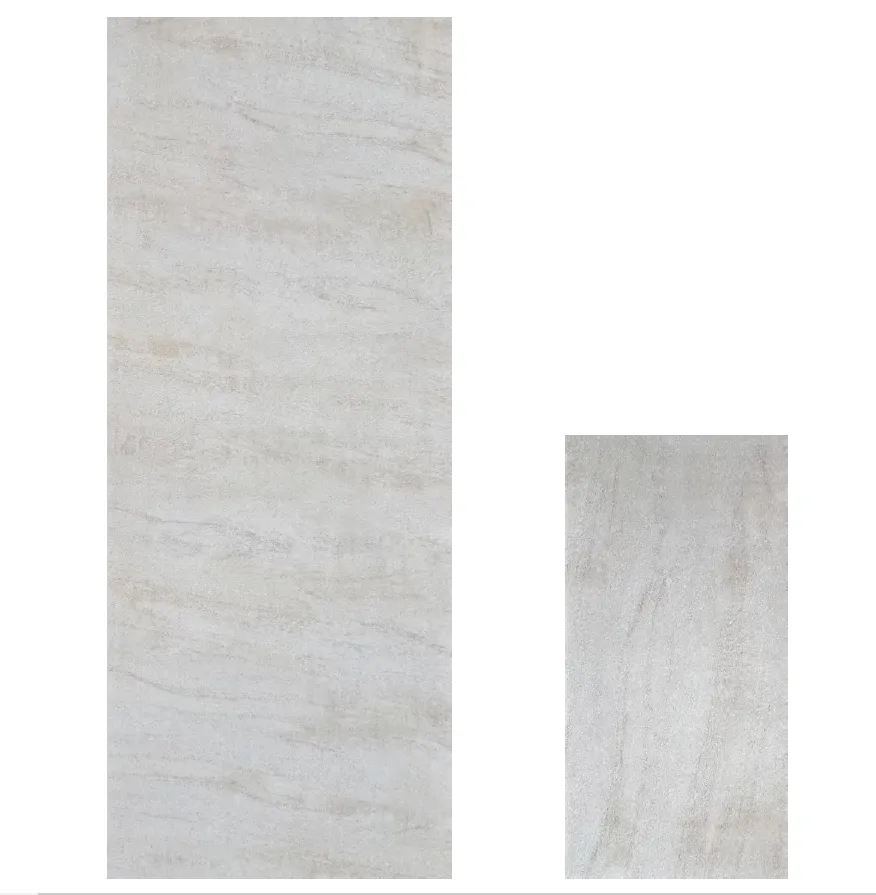
Picture this: a sleek, curved facade that seems to flow like water, catching the light at every angle. For years, such designs were little more than sketches on an architect's drafting table, held back by the rigidity of traditional building materials. Stone, concrete, and even metal—all strong, all durable, but stubbornly inflexible. Then came a breakthrough: Marble Stream Stone , a material that bends without breaking, curves without cracking, and turns those once-impossible designs into reality. In the world of modern architecture, where form and function dance in ever more intricate patterns, flexibility isn't just a luxury; it's a revolution. And at the heart of that revolution lies the innovative technology of MCM flexible stone , a game-changer for designers bold enough to dream in curves.
For decades, architects have grappled with a fundamental conflict: the desire to create organic, flowing spaces versus the limitations of the materials they had to work with. Traditional marble slabs, for example, are heavy—often weighing 20-30 kg per square meter—and brittle. Try to bend them even slightly, and they crack. Fair-faced concrete , while celebrated for its raw, industrial beauty, is similarly rigid; pouring it into complex curved molds requires expensive formwork and often results in uneven surfaces. Even newer cladding options, like aluminum panels, lack the natural texture and warmth of stone, leaving a cold, sterile feel in their wake.
The problem isn't just aesthetic. Curved surfaces serve practical purposes, too. A gently curved facade can redirect wind, reducing a building's energy consumption. An interior curved wall can soften acoustics in a busy lobby or create intimate seating nooks in a restaurant. But without a flexible material that could mimic the look of natural stone, these benefits remained out of reach. Quarried stone was too stiff, synthetic alternatives too artificial. It was a design dead end—until MCM big slab board series arrived, bringing Marble Stream Stone with it.
So, what exactly is Marble Stream Stone, and how does it defy the laws of traditional stone? At its core, it's a product of modified composite material panels (MCM), a technology that blends natural stone aggregates with high-performance polymers and reinforcing fibers. Think of it as stone reimagined: the same earthy textures, the same depth of color, but with a flexibility that would make a gymnast envious.
The magic starts with the manufacturing process. Instead of cutting slabs from a quarry, Marble Stream Stone is crafted in layers. First, a base of recycled stone dust—up to 80% of the material is repurposed from traditional quarry waste—is mixed with a lightweight polymer binder. Then, a thin layer of natural marble or travertine veneer is added, preserving the stone's authentic look. Finally, a reinforcing mesh is embedded to add tensile strength. The result? A panel that's just 3-6mm thick, weighs a mere 6-8 kg per square meter, and can bend to a radius as tight as 30cm. That's the difference between a wall that looks curved (with clunky seams and visible supports) and one that is curved, seamless and smooth.
But flexibility isn't the only trick up its sleeve. Marble Stream Stone is also surprisingly durable. The polymer binder resists moisture, preventing the cracks and discoloration that plague traditional marble in humid climates. The reinforcing fibers make it impact-resistant, so it stands up to everything from hailstorms to accidental bumps during installation. And because it's lightweight, it reduces the load on a building's structure, cutting down on construction costs and making it ideal for retrofits or high-rise projects where weight is a critical factor.
To truly appreciate Marble Stream Stone's innovation, it helps to see how it stacks up against the materials architects have relied on for years. Below is a comparison of key metrics—flexibility, weight, durability, and installation ease—for Marble Stream Stone, fair-faced concrete, traditional marble slabs, and the MCM big slab board series (a close cousin in the MCM family).
| Material | Minimum Bending Radius | Weight (kg/m²) | Moisture Resistance | Installation Time (per 100m²) |
|---|---|---|---|---|
| Marble Stream Stone | 30cm | 6-8 | High (polymer-sealed) | 8-10 hours |
| Fair-Faced Concrete | Not flexible (requires formwork) | 20-25 | Medium (prone to efflorescence) | 24-30 hours |
| Traditional Marble Slab | Not flexible (brittle) | 25-30 | Low (porous, stains easily) | 15-18 hours |
| MCM Big Slab Board Series | 50cm | 9-11 | High | 10-12 hours |
The numbers tell a clear story. Marble Stream Stone outperforms traditional materials in flexibility and weight, while matching or exceeding them in durability. Installation time is cut in half compared to fair-faced concrete, thanks to its lightweight panels and simple, adhesive-based mounting system. Even compared to the MCM big slab board series—a versatile product in its own right—Marble Stream Stone offers a tighter bending radius, making it the go-to choice for projects that demand extreme curvature, like spiral staircases or undulating feature walls.
It's one thing to talk about flexibility in theory; it's another to see it in action. Across the globe, architects are already using Marble Stream Stone to transform spaces, proving that curved surfaces aren't just beautiful—they're practical, too. Take the Riverfront Cultural Center in Osaka, Japan, a building designed to echo the flow of the nearby Yodo River. Its exterior features a 120-meter-long curved facade clad in Marble Stream Stone, its soft gray veins mimicking the river's currents. Before MCM technology, this design would have required thousands of small, overlapping stone tiles, creating a patchwork effect. With Marble Stream Stone, the panels were bent on-site to a 50cm radius, resulting in a seamless surface that looks as if it was carved from a single block of stone.
Interior designers are equally enthusiastic. In a boutique hotel in Barcelona, the lobby's focal point is a sweeping curved wall made of flexible stone cladding panels in Marble Stream Stone's "Stream Limestone (Claybank)" finish. The warm, earthy tones and subtle texture of the stone soften the space, while the curve guides guests toward the reception desk—a masterclass in using form to influence movement. "We wanted the lobby to feel like a cave, protective and inviting," says the hotel's lead designer. "Traditional stone would have made that impossible. Marble Stream Stone let us wrap the room in texture without sacrificing flow."
Even furniture design is getting in on the action. A Milan-based studio recently unveiled a collection of curved dining tables topped with thin sheets of Marble Stream Stone. The material's flexibility allows the table edges to slope gently downward, creating a floating effect, while its durability ensures it can withstand daily use. "It's like having a piece of sculpture you can eat off of," jokes the studio's founder. "And because it's so light, we can ship the tables flat-pack—no more struggling with heavy marble slabs."
At the heart of Marble Stream Stone's success is MCM flexible stone technology, a process that rethinks how stone is made. Traditional stone is quarried in large blocks, cut into slabs, and polished—a process that wastes up to 60% of the original stone as dust and offcuts. MCM, by contrast, starts with that waste. Recycled stone dust, collected from quarries and processing plants, is mixed with a thermosetting polymer resin (think of it as a super-strong, heat-resistant glue) and reinforced with fiberglass mesh. This mixture is pressed into thin sheets, then topped with a layer of natural stone veneer—just 1-2mm thick—to mimic the look of quarried stone.
The result is a material that's both strong and flexible. The polymer resin acts as a shock absorber, allowing the panel to bend without cracking, while the fiberglass mesh adds tensile strength, preventing tearing. Testing shows that Marble Stream Stone can withstand up to 3,000 cycles of bending (from flat to a 30cm radius and back) without showing signs of fatigue—a durability that puts even some metals to shame. And because it's so thin (3-6mm), it's easy to handle on-site. Installers can cut it with standard tools, bend it by hand, and attach it to curved substrates using a simple adhesive. No heavy machinery, no specialized equipment—just a few people and a vision.
Sustainability is another key advantage. By using recycled stone dust, MCM flexible stone reduces the need for quarrying, which is notoriously damaging to ecosystems. Traditional marble mining can strip forests, disrupt water sources, and release large amounts of carbon dioxide. MCM production, by contrast, uses 70% less energy and emits 60% less CO2 per square meter of material. For architects and developers committed to green building practices, this is a game-changer. "We're not just creating beautiful buildings," says a sustainability consultant at a leading architecture firm. "We're creating buildings that don't cost the Earth—literally."
For architects and contractors, beauty and sustainability are important—but so are the numbers. Let's break down Marble Stream Stone's technical specifications to see how it holds up in real-world conditions:
These specs aren't just impressive on paper—they translate to real-world benefits. A lighter material means lower shipping costs and reduced structural load, which can cut down on foundation expenses. A higher fire rating gives peace of mind in commercial projects. And that low water absorption? It makes Marble Stream Stone ideal for humid climates, coastal areas, or even outdoor showers in luxury resorts.
While its flexibility is its most headline-grabbing feature, Marble Stream Stone is more than just a one-trick pony. It comes in a stunning range of finishes, from the smooth, polished look of linear travertine (claybank) to the rough, textured surface of rock cut stone (dark grey) . Want the look of weathered wood? There's wood grain board . Craving the industrial edge of concrete? Polish concrete finish has you covered. And because it's part of the MCM big slab board series , panels can be produced in sizes up to 1.2m x 2.4m, minimizing seams and creating a more seamless look—even on straight surfaces.
This versatility means Marble Stream Stone isn't limited to curved designs. It's equally at home on flat facades, accent walls, or even ceilings. In a recent office renovation in Berlin, designers used large-format Marble Stream Stone panels in slate veil white to cover an entire wall, creating a minimalist backdrop for the company's art collection. The panels were so lightweight that they could be mounted directly to the existing drywall, avoiding the need for expensive structural upgrades. "We wanted a clean, stone-like look without the weight," says the project manager. "Marble Stream Stone delivered that—and more. The installers finished the job in a day, and the client couldn't believe how real it looked."
As architects and designers continue to push the boundaries of what's possible, the demand for flexible, sustainable cladding materials is only growing. And MCM flexible stone is poised to lead the charge. Researchers are already experimenting with new formulations, adding recycled glass or metal particles to create even more unique textures. Imagine a Marble Stream Stone panel that shimmers like starlight, or one that changes color with temperature. The possibilities are endless.
There's also the potential for customization. Right now, panels are produced in standard sizes, but advances in digital printing technology could soon allow designers to create custom patterns or even replicate rare stone varieties that are no longer quarried. Want a curved wall that looks like ancient Roman travertine? With MCM, it might soon be possible—without damaging a single historic quarry.
Perhaps most exciting is the role Marble Stream Stone could play in sustainable architecture. As the world grapples with climate change, building materials with low carbon footprints are becoming a priority. MCM flexible stone, with its recycled content and energy-efficient production process, is already ahead of the curve. In fact, a recent study found that using Marble Stream Stone instead of traditional marble reduces a building's embodied carbon by up to 40%—a significant step toward net-zero construction goals.
In the end, Marble Stream Stone is more than just a material—it's a mindset shift. It's a rejection of the idea that buildings must be boxy, rigid, and uniform. It's an invitation to dream in curves, to let form follow feeling, and to create spaces that feel alive. For too long, architects were told, "You can't do that." Now, thanks to MCM flexible stone and flexible stone cladding panels , the answer is, "Why not?"
So, to the designers reading this: the next time you sketch a curved wall, a spiral staircase, or a flowing facade, don't let the limitations of traditional materials hold you back. Marble Stream Stone is here, and it's ready to bend—literally—to your vision. The future of architecture isn't straight. It's curved, it's flowing, and it's more beautiful than ever.
Recommend Products












