
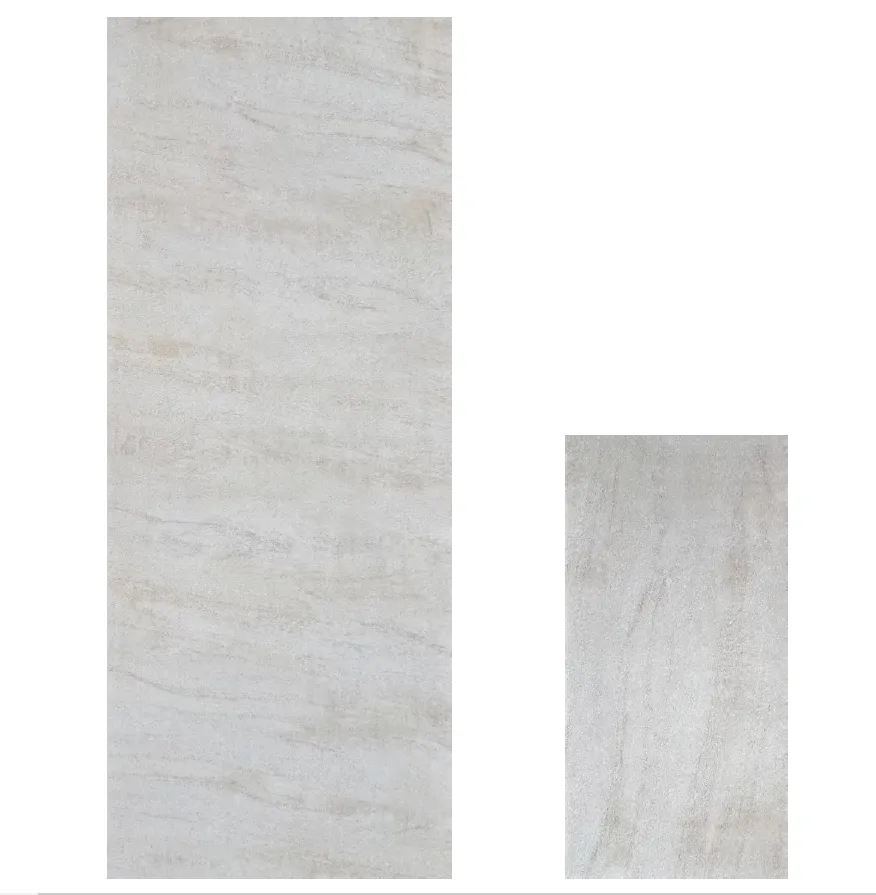
Walk into any well-designed space—a boutique hotel lobby, a cozy café, or a friend's thoughtfully renovated home—and you'll notice it: the quiet star of the show isn't just the furniture or the lighting. It's the surface beneath your feet, the wall that wraps around you, the material that sets the mood. Two materials that often steal this spotlight are Marble Stream Stone and Travertine . Both carry the weight of history, the beauty of nature, and the versatility of modern design—but they're as different as a moonlit stream and a sun-warmed meadow. Today, let's pull back the curtain on these two favorites, exploring not just their specs, but how they make us feel, where they shine brightest, and why choosing between them is less about "better" and more about "better for you."
Before we dive into the "how" and "why," let's get clear on the "what." Both Marble Stream Stone and Travertine are natural stones, born from the earth's geological processes, but their journeys to your living room couldn't be more distinct.
Travertine is a type of limestone formed in hot springs, where mineral-rich water cools and deposits calcium carbonate. Think of it as nature's own bubble bath: those tiny, honeycomb-like pores you often see on its surface? They're leftover from gas bubbles trapped as the stone solidified. This gives Travertine a porous, textured feel—like a stone that's "breathed" for centuries. It comes in warm, earthy tones: soft beiges, creamy whites, and even bold hues like Travertine (Starry Red) or Travertine (Starry Blue) , which mimic the night sky with flecks of color.
Marble Stream Stone , on the other hand, is a metamorphic rock. It starts as limestone, but when buried deep underground and subjected to intense heat and pressure, its minerals recrystallize, creating the characteristic veining that marble is famous for. The "Stream Stone" name hints at its appearance: flowing, wavy patterns that look like water currents frozen in time. It's denser, smoother, and often more polished than Travertine, with a cool, luxurious sheen. Varieties like Marble Interstellar Gray take this to the next level, with deep, cosmic-like veins that feel both modern and timeless.
So, in short: Travertine is the earthy, textured friend who feels like a warm hug. Marble Stream Stone is the sleek, sophisticated cousin who turns heads at a dinner party. Both have their charm—but let's break down what that charm looks like, practically and aesthetically.
Let's start with the fun part: how they look and feel. Because when it comes to design, "vibe" isn't just a buzzword—it's everything. A material can make a room feel calm or energetic, rustic or futuristic, and Marble Stream Stone and Travertine are masters of setting the mood.
Run your hand over a Travertine tile, and you'll immediately notice its personality. Those signature pores—called "vugs"—are like little windows into its past, each one a reminder of the hot springs where it formed. Some are filled (a process called "honing") to create a smoother surface, while others are left open, giving the stone a tactile, almost organic texture. It's the kind of material that feels lived-in from day one, like a favorite sweater that only gets cozier with time.
Color-wise, Travertine leans into warmth. The classic Travertine (Beige) is a soft, sandy neutral that pairs beautifully with wood tones and greenery, making it a staple in bohemian or Mediterranean-style spaces. But it's the "starry" varieties that really spark joy: Travertine (Starry Blue) shimmers with tiny flecks of blue and silver, like a night sky reflected in a mountain lake, while Travertine (Starry Orange) feels like a desert sunset captured in stone. These aren't just colors—they're emotions. Imagine a breakfast nook lined with Starry Orange Travertine; suddenly, even a rainy morning feels a little sunnier.
And let's not forget the finishes. Travertine can be polished, but it's at its best when it's matte or brushed, emphasizing its natural texture. A brushed Travertine floor in a hallway feels like walking on a sun-baked riverbed, grounding you with every step.
If Travertine is about texture, Marble Stream Stone is all about movement. Its veins—those swirling, branching patterns—are like nature's own artwork, each slab as unique as a fingerprint. Unlike Travertine's porous surface, Marble Stream Stone is dense and often polished to a high shine, turning those veins into rivers of light that dance across the surface when the sun hits.
Colors here tend to be cooler and more dramatic. Marble Interstellar Gray is a stunner: a deep, moody gray base with white and silver veins that look like constellations. It's the kind of stone that makes a statement without yelling—perfect for a modern living room with minimalist furniture, where the walls become the art. Marble Veil White , on the other hand, is soft and ethereal, with delicate gray veining that feels like fog rolling over a meadow. It's light, airy, and instantly elevates any space into something elegant.
The finish here matters, too. A polished Marble Stream Stone is sleek and reflective, ideal for spaces where you want to maximize light—think a small bathroom or a kitchen with limited windows. A honed finish, though, softens the shine, giving it a more understated luxury that works in bedrooms or home offices, where calm is key.
"I once used Travertine (Starry Red) in a wine bar's accent wall," says Mia, a designer friend of mine. "The client wanted something that felt 'rustic but romantic,' and those red flecks? They glowed under the pendant lights like embers. People kept touching the wall—you could tell it made the space feel intimate, like a secret hideaway."
Aesthetic love is important, but let's get real: your choice of stone has to keep up with your life. Kids, pets, spills, humidity—these are the unsung heroes (or villains) of home design. So how do Marble Stream Stone and Travertine stack up when the going gets messy?
| Feature | Travertine | Marble Stream Stone |
|---|---|---|
| Durability | Moderate. Softer than marble (3-4 on the Mohs scale), prone to scratches if not sealed. Best for low-to-medium traffic areas. | High. Harder (3-5 on the Mohs scale) and denser, resisting scratches and chips better. Suitable for high-traffic spaces. |
| Porosity | Highly porous. Absorbs liquids easily—spills (like wine or coffee) can stain if not wiped quickly. Requires regular sealing (every 1-2 years). | Less porous. More resistant to stains, but still needs sealing (every 2-3 years) to protect against etching from acidic substances. |
| Water Resistance | Not ideal for wet areas (showers, pools) unless heavily sealed and maintained. Best for dry or moderately humid spaces. | Better for wet areas (kitchen backsplashes, bathrooms) due to lower porosity, but still avoid prolonged standing water. |
| Maintenance | Needs regular sealing, gentle cleaners (no acids!), and quick attention to spills. Open pores can trap dirt, so sweeping/vacuuming is a must. | Lower maintenance: seal less often, can handle mild cleaners, and polished finishes resist dirt buildup. Avoid harsh chemicals to prevent etching. |
| Cost | Generally more affordable than marble, with prices ranging from $3-$8 per square foot (varies by finish/color). | Tends to be pricier, averaging $5-$15 per square foot, due to higher density and more complex extraction. |
Let's unpack this. If you're dreaming of a Travertine kitchen countertop, pause. That morning coffee spill? It could leave a mark if you're not fast with a cloth. But in a bedroom, where traffic is light and spills are rare? It's perfect. I installed Travertine tiles in my guest bathroom (sealed, of course), and it's held up beautifully for years—no stains, just that warm, inviting glow every time guests visit.
Marble Stream Stone , on the other hand, is a workhorse with style. My sister has it in her entryway, and between her two kids, a golden retriever, and endless soccer cleats, it still looks brand new. The key? Sealing it once a year and wiping up juice spills immediately (pro tip: keep a microfiber cloth by the door). It's not indestructible—nothing is—but it's tough enough for the chaos of family life.
And let's talk about etching—marble's arch-nemesis. Acidic substances like lemon juice, vinegar, or even tomato sauce can eat away at the polished surface, leaving dull spots. Travertine is less prone to etching, but its porosity makes staining a bigger risk. It's a trade-off, really: do you fear stains more than scratches? That's often the deciding factor.
Now that we know their personalities and practicalities, let's match them to the spaces they love most. Because even the most beautiful stone can feel out of place if it's in the wrong room.
"I recommended Marble Stream Stone for a client's kitchen renovation," says Raj, a contractor I worked with last year. "She has two toddlers and a busy life, so we went with a honed finish to hide water spots and a neutral color to mask any inevitable spills. Now, she texts me photos of her kids doing homework on the counter—proof that luxury can be kid-friendly."
Here's a little secret: you don't have to choose just one. Design is about balance, and sometimes pairing Travertine and Marble Stream Stone creates magic. For example, use Travertine (Beige) on the floor of your bathroom for warmth, then add a Marble Stream Stone backsplash for a touch of luxury. Or, in a living room, let Travertine be the star of the accent wall and use Marble Interstellar Gray for the fireplace surround, creating a layered, textured look.
And let's not forget complementary materials. Wood Grain Board pairs beautifully with both stones, adding softness to their hardness. Fair-Faced Concrete can ground a space with Travertine, while Foamed Aluminium Alloy Board (Vintage Silver) adds industrial edge to Marble Stream Stone. The possibilities are endless—design is about telling your story, and these stones are just the starting chapter.
At the end of the day, choosing between Marble Stream Stone and Travertine isn't about picking a "winner." It's about asking: What does my space need? What do I value most? Do I crave the warmth of a material that feels like a hug, or the cool elegance of one that feels like a statement?
Travertine is for the dreamers, the ones who love imperfection and stories. It's for the home that feels lived-in, where a scratch or a stain is just another chapter. Marble Stream Stone is for the pragmatists with a taste for luxury, the ones who want beauty that works as hard as they do. It's for the space that feels intentional, where every detail is a choice.
Whichever you choose, remember: these stones aren't just surfaces. They're silent storytellers, carrying the earth's history and your life's moments in every vein, pore, and texture. And that? That's the real magic of design—finding a material that doesn't just fit your space, but fits you .
Recommend Products












