
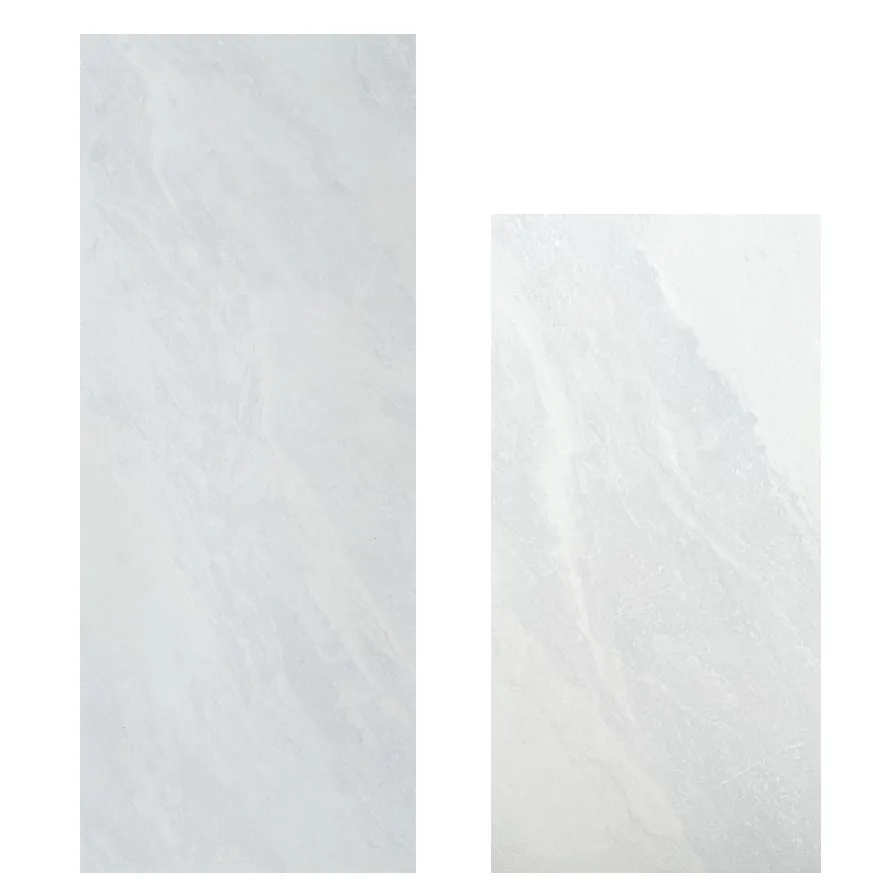
Architecture has always been a dance between form and function, but in recent years, that dance has gotten a lot more creative. Thanks to advancements in materials science and manufacturing, designers and builders are no longer limited by the rigid constraints of traditional stone, concrete, or wood. Enter the world of MCM (Modified Composite Material) panels—specifically, the game-changing Marble Veil White 3D Printed Panels. These aren't just building materials; they're a canvas for architectural imagination, blending the timeless elegance of marble with the flexibility of modern technology. In this article, we'll dive into what makes these panels so special, how they're reshaping the way we build, and why custom shapes are quickly becoming the heartbeat of unique, memorable structures.
Let's start with the basics. Marble Veil White 3D Printed Panels are part of the broader MCM 3D Printing Series, a line of innovative building materials designed to push the boundaries of what's possible in construction. At first glance, you might mistake them for natural marble—their surface boasts the same soft, veined patterns that have made marble a staple in luxury architecture for centuries. But look closer, and you'll realize these panels are something entirely new. They're lightweight, flexible, and most importantly, customizable in ways natural marble (or even traditional composite panels) could never be.
So, what's in the name? "Marble Veil White" refers to their aesthetic—the panels mimic the delicate, veiled appearance of white marble, with subtle gray or gold streaks that add depth without overwhelming. "3D Printed" is the key differentiator here. Instead of being cut from a slab or molded into a fixed shape, these panels are built layer by layer using advanced 3D printing technology. This process allows for intricate, one-of-a-kind designs that would be impossible (or prohibitively expensive) with traditional methods. And because they're part of the MCM family, they benefit from the series' signature properties: durability, weather resistance, and a fraction of the weight of natural stone.
But these panels aren't just a pretty face. They're engineered to solve real-world problems for architects and builders. Think about it: natural marble is heavy, brittle, and hard to customize. Traditional composite panels often come in standard sizes, limiting design flexibility. Marble Veil White 3D Printed Panels? They're light enough to be installed on virtually any surface, flexible enough to bend around curves or wrap over uneven substrates, and customizable enough to match even the wildest design sketches. It's like having a marble-like material that bends to your will—no chisels required.
To truly appreciate these panels, you need to understand the technology that brings them to life: 3D printing. When most people hear "3D printing," they might picture small plastic trinkets or prototypes. But in construction, 3D printing (or additive manufacturing) is a revolution. Instead of subtracting material (like cutting a slab of stone) or molding it into a fixed shape, 3D printing adds material layer by layer, following a digital blueprint. For Marble Veil White panels, this means designers can input a 3D model into a computer, and the printer will build the panel exactly to those specifications—no wasted material, no limitations on complexity.
The material itself is a marvel of engineering. MCM 3D Printing Series panels, including Marble Veil White, are made from a blend of natural stone aggregates (think marble dust or fine granite particles), high-performance polymers, and reinforcing fibers. This "modified composite" gives the panels the best of both worlds: the look and feel of natural stone, with the strength, flexibility, and lightness of modern composites. The 3D printing process allows for precise control over the material's density and structure, so panels can be optimized for specific needs—whether that's extra durability for an outdoor facade or enhanced flexibility for a curved interior wall.
What's most exciting about this technology is its scalability. Unlike traditional 3D printers that are limited by build size, the industrial printers used for MCM panels can produce large-format pieces—perfect for the MCM Big Slab Board Series, which includes panels up to 3 meters in length. But even with these big slabs, the customization doesn't suffer. Want a panel with a wave-like texture? A geometric pattern that repeats across a facade? A free-form shape that mimics the flow of water? The printer can handle it. It's like having a sculptor and a factory in one—precision meets artistry.
In a world where cookie-cutter buildings and generic facades dominate many city skylines, custom shapes are a way to stand out. But it's not just about aesthetics—though that's a big part of it. Custom shapes solve functional problems, too. Imagine a restaurant with a curved bar area: traditional materials might require multiple seams or awkward cuts, disrupting the flow. With Marble Veil White 3D Printed Panels, that bar can be a single, seamless curve, enhancing both the visual appeal and the customer experience. Or consider a home with a sloped roof: instead of using flat panels that look out of place, you could print panels that follow the roof's angle, creating a cohesive, integrated design.
Architects and designers are increasingly using custom shapes to tell stories. A museum dedicated to marine life might feature wave-like panels that evoke the ocean. A tech company's headquarters could use geometric, angular panels to reflect innovation and precision. These shapes aren't arbitrary—they're part of the building's narrative. And with 3D printed panels, that narrative doesn't have to be watered down by material limitations. As one architect put it, "It's like finally being able to draw a line on paper and have it become reality, exactly as you imagined it."
Custom shapes also play a role in sustainability. By designing panels that fit the space perfectly, there's less waste during installation. Traditional materials often require cutting down to size, which generates scraps that end up in landfills. With 3D printing, the panel is built to the exact dimensions needed, so there's minimal waste. Plus, the lightweight nature of MCM panels reduces the need for heavy structural support, which can lower a building's overall carbon footprint by reducing the amount of steel or concrete required for the frame.
Earlier this year, a boutique hotel in Barcelona unveiled its new rooftop lounge, "The Azure Lounge," and it's turning heads for one reason: its curved, cloud-like facade. Designed by award-winning architect Marina López, the lounge features a 20-meter-long wall made entirely of Marble Veil White 3D Printed Panels. The panels, which vary in shape from gentle arcs to sharp, cloud-like peaks, were printed to fit together seamlessly, creating the illusion of a single, flowing structure.
"We wanted the lounge to feel like a floating cloud," López explains. "Traditional marble would have been too heavy and impossible to curve without visible seams. Even standard composite panels come in flat sheets, which would have broken the illusion. Marble Veil White 3D Printed Panels were the only option that let us achieve that soft, organic shape while keeping the elegance we wanted." The result? A space that's become an Instagram sensation, with guests raving about the "cloud wall" and the way the light filters through the veined panels at sunset.
Of course, in architecture, beauty is only skin deep. A material might look stunning, but if it can't stand up to the elements or requires constant maintenance, it's not practical. That's where Marble Veil White 3D Printed Panels truly shine—they're as tough as they are beautiful.
Let's start with durability. Thanks to their composite makeup, these panels are resistant to scratches, stains, and UV damage. Unlike natural marble, which is porous and can absorb liquids (leading to stains), the polymer binders in MCM panels create a non-porous surface that's easy to clean. Spilled wine at a restaurant? A quick wipe with a damp cloth, and it's gone. Heavy rain or snow? No problem—these panels won't crack or fade. They're also fire-resistant, meeting strict building codes for both commercial and residential use. In independent tests, Marble Veil White panels have withstood temperatures up to 600°C without warping or releasing toxic fumes—impressive for a material that looks so delicate.
Sustainability is another key selling point. The construction industry is one of the world's largest contributors to waste and carbon emissions, so any material that reduces that impact is a win. Marble Veil White panels check several boxes here: first, they use recycled stone aggregates, diverting waste from quarries and mines. Second, the 3D printing process produces minimal waste—since panels are built to exact specifications, there's no excess material to discard. Third, their lightweight nature reduces transportation costs and emissions—you can fit more panels on a truck, and installation requires less heavy machinery. Finally, the panels are fully recyclable at the end of their life, making them a circular solution for eco-conscious builders.
Compare that to traditional materials like fair-faced concrete, which is durable but heavy, requires extensive formwork, and generates a lot of waste during production. Or wood grain board, which adds warmth but can warp, rot, or attract pests if not properly treated. Marble Veil White 3D Printed Panels offer the best of durability and sustainability without compromising on design—something that's increasingly important for clients and regulators alike.
To really understand the value of Marble Veil White 3D Printed Panels, it helps to see how they compare to other popular building materials—both traditional and from the MCM family. Let's break it down in a table:
| Material | Customization Level | Weight (per sqm) | Installation Complexity | Durability (Outdoor Use) | Best For |
|---|---|---|---|---|---|
| Marble Veil White 3D Printed Panels | High (any shape, texture, size) | 8-12 kg | Low (lightweight, adhesive-backed options) | Excellent (UV, water, scratch resistant) | Curved facades, custom interiors, artistic installations |
| Wood Grain Board | Medium (standard sizes, limited shapes) | 10-15 kg | Medium (requires sealing, careful handling) | Moderate (prone to warping, rot in moisture) | Warm interiors, accent walls, low-moisture areas |
| Fair-Faced Concrete | Low (fixed molds, minimal customization) | 20-30 kg | High (requires formwork, heavy lifting) | Excellent (durable but porous) | Industrial-style exteriors, load-bearing walls |
| MCM Big Slab Board Series | Medium (large sizes, limited curves) | 12-18 kg | Medium (needs structural support for large slabs) | Very Good (similar to 3D printed MCM) | Large, flat facades, commercial buildings |
As you can see, Marble Veil White 3D Printed Panels stand out for their high customization, low weight, and easy installation—all while matching or exceeding the durability of other materials. For projects where design flexibility is key, there's really no comparison.
So, where are architects and builders actually using these panels? The answer is: almost everywhere. From residential homes to commercial spaces to public art installations, Marble Veil White 3D Printed Panels are proving their versatility. Let's explore a few standout applications:
Residential Interiors: Homeowners are increasingly using these panels to create statement walls in living rooms, bedrooms, or home offices. Imagine a master bedroom with a curved headboard wall covered in Marble Veil White panels, backlit to highlight the veining—it's luxury meets comfort. Or a home theater with acoustic panels printed in custom shapes to improve sound quality while adding a touch of elegance.
Commercial Facades: Retail stores, hotels, and office buildings are using these panels to create eye-catching exteriors. A clothing boutique in Tokyo, for example, used Marble Veil White panels printed in a honeycomb pattern to create a facade that changes appearance with the light—shiny and reflective during the day, soft and diffused at night. The panels are lightweight enough that they didn't require additional structural support, saving the client time and money.
Hospitality Spaces: Hotels and restaurants are using custom-shaped panels to create immersive environments. A beach resort in Bali recently renovated its lobby with panels printed to mimic the shape of ocean waves, paired with MCM Flexible Stone accents (another star of the MCM lineup) to add texture. The result? Guests feel like they're stepping into a coastal cave, even in the middle of a building.
Public Art: Cities are commissioning artists to create large-scale installations using these panels. In Berlin, a new public square features a 10-meter-tall sculpture made entirely of interlocking Marble Veil White panels, printed in geometric shapes that cast intricate shadows throughout the day. The lightweight material made it possible to install the sculpture without heavy cranes, and its durability ensures it will stand up to the elements for decades.
Marble Veil White 3D Printed Panels are just the beginning. The MCM 3D Printing Series is constantly evolving, with new textures, colors, and capabilities in the works. One exciting development is the integration of smart technology—imagine panels with built-in sensors that monitor temperature, humidity, or structural stress, sending data to a building management system. Or panels that change color based on light conditions, using photochromic pigments. The possibilities are endless.
Another trend is the move toward even larger custom panels. While the MCM Big Slab Board Series already offers large formats, advances in 3D printing technology could soon allow for panels that span entire building facades in a single piece—eliminating seams and further enhancing design continuity. And as the technology becomes more accessible, we'll likely see smaller firms and even homeowners embracing custom 3D printed panels for their projects, democratizing design in a way that hasn't been possible before.
Perhaps most importantly, the MCM 3D Printing Series is helping to redefine what "sustainable architecture" means. By combining recycled materials, minimal waste production, and energy-efficient manufacturing, these panels are setting a new standard for eco-friendly building. As clients and regulators demand greener solutions, materials like Marble Veil White will only become more essential.
At the end of the day, architecture is about more than just creating spaces—it's about creating experiences. A building should inspire, delight, and tell a story. Marble Veil White 3D Printed Panels are helping architects and builders do just that, by removing the "can't" from the design process. No longer do we have to say, "We can't do that shape because the material won't allow it." Now, the only limit is imagination.
Whether you're designing a luxury hotel, a cozy home, or a public art installation, these panels offer a unique combination of beauty, durability, and flexibility that's hard to match. They're a testament to how far building materials have come—and a glimpse of where they're going. So the next time you walk past a building that makes you stop and stare, take a closer look. Chances are, it might just be wrapped in the soft, veiled beauty of Marble Veil White 3D Printed Panels—proof that in architecture, the future is custom, and it's here now.
Recommend Products












