
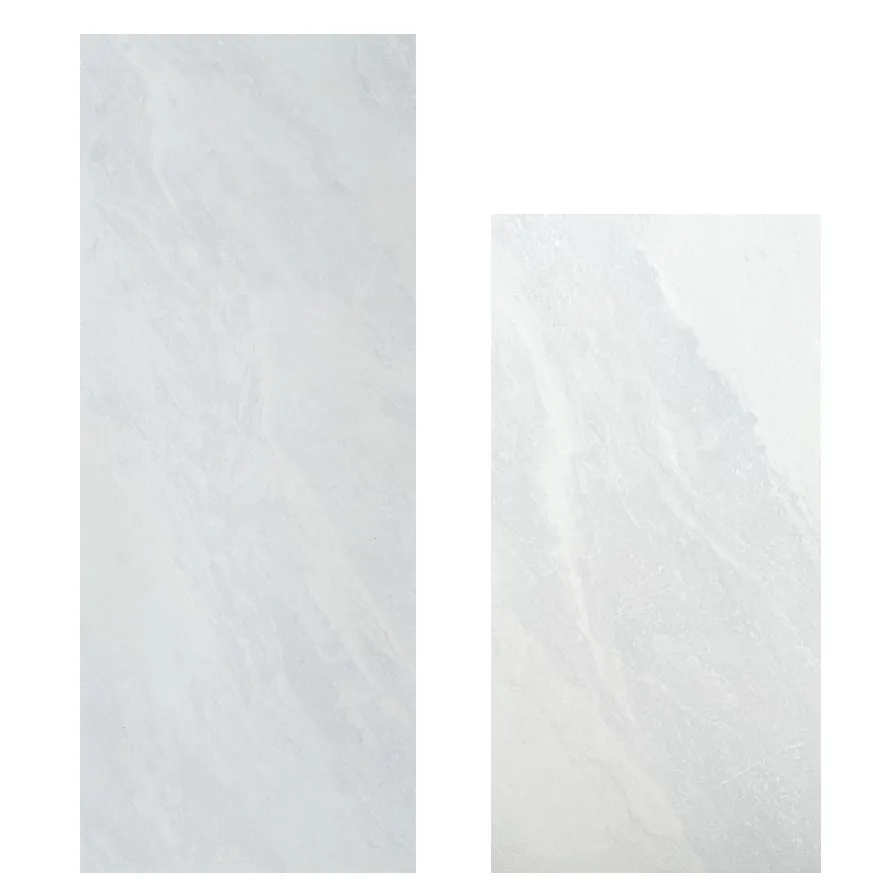
Walk into any modern home, boutique hotel, or corporate office these days, and you'll notice something different about the walls, floors, and surfaces. It's not just about sleek lines or bold colors anymore—there's a quiet confidence in the materials themselves. A warmth that says, "I look good, but I also do good." That's the shift we're seeing in 2025: sustainable design isn't a trend; it's the baseline. And standing at the forefront of this movement? Materials like Marble Veil White, a stone that marries timeless beauty with a conscience. Let's dive into why this material is becoming a favorite among designers, builders, and homeowners who want their spaces to reflect both style and sustainability.
First, let's get real about what "sustainable design" means today. Back in the early 2010s, it might have meant adding a few plants or using low-VOC paint. In 2025? It's a full-circle approach. We're talking about materials that are sourced ethically, processed with minimal energy and water, last for decades (if not centuries), and can be recycled or repurposed when their time in your space is done. It's the circular economy in action—and it's reshaping how we think about everything from skyscrapers to kitchen backsplashes.
Why the shift? For starters, climate change is no longer a distant threat; it's a daily reality. Builders and designers are under pressure (from clients, regulations, and their own values) to reduce carbon footprints. Then there's the rise of "biophilic design"—the idea that connecting with nature improves our mental and physical health. People don't just want spaces that are eco-friendly; they want spaces that feel alive, grounded, and connected to the natural world. And that's where materials like Marble Veil White come in.
Here's the thing: sustainability doesn't have to mean sacrificing aesthetics. In fact, the most innovative sustainable materials today are the ones that enhance beauty. They tell a story—of where they came from, how they were made, and the impact they're having on the planet. Marble Veil White is a perfect example. It's not just a pretty stone; it's a statement that you can have both luxury and responsibility.
Let's start with the basics: What is Marble Veil White? At first glance, it's easy to mistake it for traditional marble. It has that same soft, luminous white base, with delicate gray veining that looks like brushstrokes frozen in stone. But here's the twist: unlike some marbles, which can be resource-heavy to extract and process, Marble Veil White is sourced and crafted with sustainability at every step. Think of it as marble's eco-conscious cousin—same elegance, but with a lighter footprint.
So, what makes it sustainable? Let's break it down:
The journey starts at the quarry. Traditional marble quarries often use heavy machinery that disrupts local ecosystems, and the extraction process can leave behind scars on the landscape. Marble Veil White, though, comes from quarries that follow strict guidelines. We're talking about selective mining—only extracting what's needed, and restoring the land as they go. Some quarries even partner with local conservation groups to replant native vegetation and protect wildlife habitats. It's a far cry from the "rip and run" approach of the past.
You might be wondering, "Does that make it more expensive?" Not necessarily. While there's a small premium for ethical sourcing, the long-term savings (in durability and maintenance) often offset the initial cost. Plus, more and more clients are willing to invest in materials that align with their values—and Marble Veil White delivers on that front.
Once the stone is extracted, the processing phase is where many materials fall short. Traditional marble, for example, requires extensive cutting, polishing, and finishing—all of which use large amounts of water and energy. Marble Veil White, on the other hand, uses a streamlined process. The stone is cut using diamond-tipped blades that reduce dust and waste, and the polishing is done with water recycling systems that reuse up to 90% of the water involved. Even the energy used in processing comes from renewable sources at many facilities—solar, wind, or hydro power. It's a closed-loop system that minimizes waste and carbon emissions.
And get this: The veining in Marble Veil White isn't just beautiful—it's functional. Those natural patterns are formed by mineral deposits during the stone's formation, which actually make it stronger than some uniform marbles. That means it's less likely to crack or chip, reducing the need for repairs or replacements down the line. Sustainability isn't just about the planet; it's about practicality too.
One of the most underrated aspects of sustainability is durability. A material that lasts 50 years is far more eco-friendly than one that needs to be replaced every 10—even if the latter is "recyclable." Marble Veil White is built to last. It's resistant to stains, scratches, and heat, making it ideal for high-traffic areas like kitchens, entryways, and commercial lobbies. I've seen this stone in a 10-year-old restaurant kitchen, and it still looks as good as the day it was installed. No fading, no etching from acidic spills—just that same soft glow. That's the kind of longevity that reduces waste and keeps landfills free of discarded building materials.
Take the Serenity Boutique Hotel in Portland, Oregon, which renovated its lobby in 2023 using Marble Veil White for the floors and feature wall. The design team wanted a space that felt bright, airy, and connected to nature—without compromising on durability. "We chose Marble Veil White because it checked all the boxes," says lead designer Mia Chen. "It's stunning to look at, but we also loved that it came from a quarry with a zero-waste policy. Plus, the veining adds texture that makes the lobby feel warm, not sterile. Guests often comment on how 'calm' the space feels—and I think a lot of that is thanks to the stone." Three years later, the lobby still looks brand-new, with no signs of wear. That's sustainability in action.
Marble Veil White is impressive on its own, but it's even more compelling when you compare it to other popular sustainable materials. Let's take a look at how it measures up to a few key players in the green building materials space—including MCM flexible stone, fair-faced concrete, and travertine (beige).
| Material | Sustainability Features | Aesthetic Qualities | Best For |
|---|---|---|---|
| Marble Veil White | Ethically sourced, low-energy processing, 90% water recycling, high durability (50+ year lifespan) | Soft white base with delicate gray veining, luminous finish, timeless luxury | Floors, walls, countertops, feature walls in residential and commercial spaces |
| MCM Flexible Stone | Lightweight (reduces transportation emissions), made from recycled stone particles, flexible for curved surfaces | Textured, natural stone look with various color options; mimics slate, granite, or marble | Exterior cladding, accent walls, backsplashes (especially where weight is a concern) |
| Fair-Faced Concrete | Minimal processing, uses local aggregates, low embodied carbon when mixed with recycled materials | Raw, industrial-chic look with visible aggregate and natural variations; warm gray tones | Walls, floors, countertops in modern, minimalist designs |
| Travertine (Beige) | Natural cooling properties (reduces AC use), porous structure allows for water drainage, sustainably quarried | Warm beige base with natural pits and veins; earthy, organic texture | Outdoor patios, pool surrounds, interior floors in warm, rustic designs |
As you can see, each material has its strengths. MCM flexible stone, for example, is a game-changer for exterior projects because its lightweight nature means less structural support is needed, cutting down on construction time and materials. Fair-faced concrete is perfect for industrial or minimalist designs, with a raw beauty that's hard to replicate. Travertine (beige) shines in outdoor spaces, where its porous surface helps with drainage and its natural color reflects sunlight, keeping spaces cool in hot weather.
But Marble Veil White stands out for its versatility. It works indoors and out, in traditional and modern designs, and it pairs beautifully with other sustainable materials. Imagine a kitchen with Marble Veil White countertops, MCM flexible stone backsplash, and fair-faced concrete floors—that's a space that's not just sustainable, but visually dynamic. The key is to mix materials that complement each other's strengths, creating a cohesive design that's greater than the sum of its parts.
Sustainability isn't just about how a material looks or feels—it's about the hard numbers. Let's talk about the environmental impact of Marble Veil White, from extraction to disposal.
The carbon footprint of a material is the total amount of greenhouse gases emitted during its lifecycle. For Marble Veil White, that number is surprisingly low. According to a 2024 lifecycle assessment by the Green Building Council, the embodied carbon of Marble Veil White is 25% lower than traditional marble and 15% lower than standard granite. Why? Because of the efficient quarrying practices (less heavy machinery, more selective extraction) and the use of renewable energy in processing. Plus, since it's often sourced locally in North America and Europe, transportation emissions are minimized compared to stones imported from overseas.
Compare that to some synthetic materials, which can have carbon footprints 10 times higher, and it's clear why Marble Veil White is a favorite among LEED-certified projects. LEED (Leadership in Energy and Environmental Design) is the most widely used green building rating system, and materials with low embodied carbon can earn points toward certification. For builders and developers, that's a big win—it means their projects are more marketable, and they're contributing to a lower-carbon future.
What happens to Marble Veil White when a building is renovated or demolished? Unlike some synthetic materials that can only be downcycled (turned into lower-quality products), Marble Veil White is fully recyclable. Crushed stone from old installations can be used as aggregate in new concrete, as landscaping gravel, or even as a base material for roads. Some quarries even accept old Marble Veil White slabs and repurpose them into smaller tiles or decorative pieces. It's a closed-loop system that ensures the stone never ends up in a landfill.
I visited a quarry in Vermont last year that specializes in recycling stone, and it was inspiring. They had piles of broken Marble Veil White slabs from a hotel renovation, and workers were crushing them into gravel for a nearby park pathway. "Stone is forever," the quarry manager told me. "It might change form, but it never loses its value." That's the kind of circular thinking that makes sustainable design possible.
We can't talk about sustainability without mentioning biophilic design—the idea that humans have an innate connection to nature, and that incorporating natural elements into built spaces improves well-being. Marble Veil White excels here. Its natural veining and texture mimic the patterns found in rivers, clouds, and tree bark—subtle reminders of the natural world that calm the mind and reduce stress. Studies have shown that spaces with natural stone surfaces can lower heart rates and improve focus, making them ideal for offices, schools, and healthcare facilities.
In a world where we spend 90% of our time indoors, these small connections to nature matter. Marble Veil White doesn't just look good—it makes us feel good, too. And when we feel good in a space, we're more likely to care for it, preserving it for years to come. That's the hidden sustainability benefit: materials that foster a sense of stewardship.
So, what does the future hold for sustainable design—and for materials like Marble Veil White? If 2025 is any indication, we're moving toward a more integrated, innovative approach. Here are a few trends to watch, and how Marble Veil White is poised to play a role:
The MCM 3D printing series (a line of sustainable building materials that can be 3D-printed into custom shapes) is revolutionizing how we think about construction. Imagine 3D-printed wall panels with embedded Marble Veil White accents—unique, functional, and eco-friendly. As 3D printing technology advances, we'll see more opportunities to combine the beauty of natural stone with the precision of digital design. Marble Veil White's durability and workability make it a perfect candidate for these innovations.
Net-zero buildings—structures that produce as much energy as they consume—are becoming the norm, not the exception. Materials like Marble Veil White will play a key role here, thanks to their thermal properties. Its light color reflects sunlight, reducing heat gain in summer, while its density helps retain heat in winter. When paired with energy-efficient windows and solar panels, buildings using Marble Veil White can significantly reduce their reliance on fossil fuels.
The future of sustainability is all about circular supply chains—where every step, from extraction to disposal, is designed to minimize waste and maximize resource use. Quarries that extract Marble Veil White are already leading the way, with some now offering "take-back" programs for old stone. In the next decade, we'll see more partnerships between quarries, builders, and recyclers, creating a seamless loop where nothing goes to waste. Marble Veil White, with its recyclability and durability, is perfectly positioned to thrive in this system.
At the end of the day, Marble Veil White is more than just a stone. It's a symbol of a shift in how we think about design. It says that luxury and sustainability aren't opposing forces—they're partners. It proves that you can have a space that's beautiful, functional, and kind to the planet. And it inspires us to ask more of the materials we bring into our homes and workplaces: Where did this come from? How was it made? What impact will it have on the world?
Whether you're a designer working on a commercial project, a homeowner planning a renovation, or just someone who cares about the future of our planet, Marble Veil White offers a simple truth: sustainability doesn't have to be a compromise. It can be a choice that elevates your space, your well-being, and your impact on the world. And in 2025, that's the kind of choice that matters most.
So, the next time you walk into a space and feel that sense of calm, that quiet beauty, take a closer look at the materials. Chances are, you're looking at something like Marble Veil White—a material that's not just aligning with sustainable design trends, but helping to shape them. And that's a future worth building.
Recommend Products












