
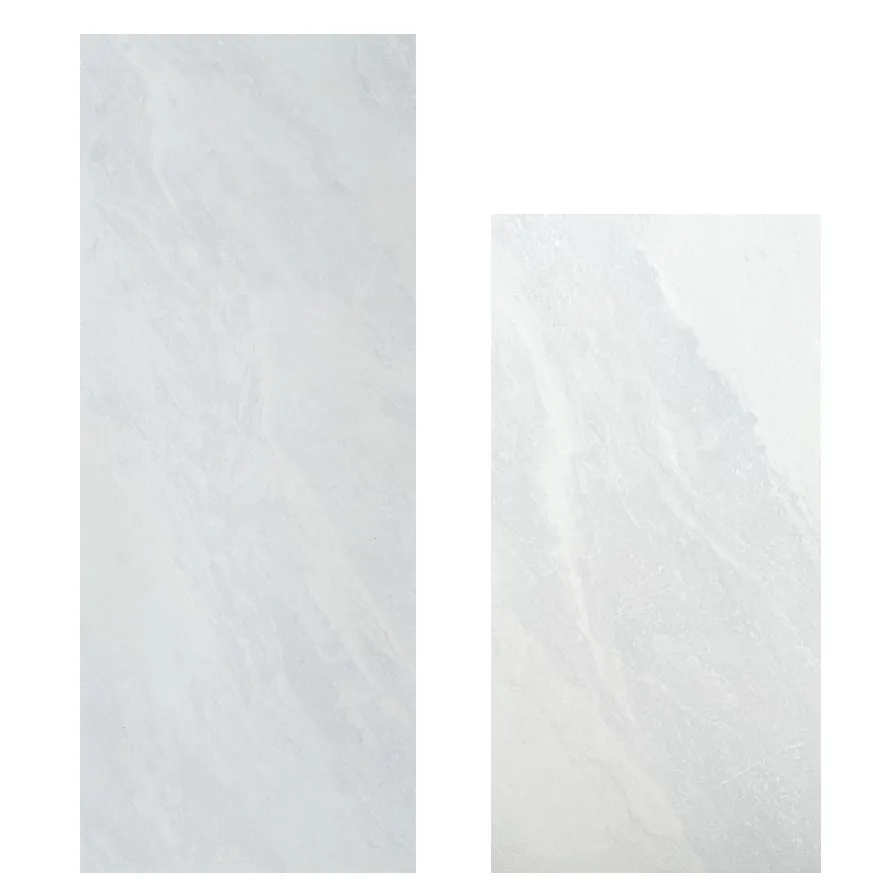
In the world of interior and exterior design, trends ebb and flow, but some elements have a way of sticking around—evolving, adapting, and redefining what "modern" means. Today, we're seeing a beautiful dance between the timeless elegance of natural stone and the sleek edge of contemporary metallics, with materials like marble veil white and foamed aluminium alloy board (vintage silver) taking center stage. This isn't just about aesthetics; it's about creating spaces that feel both grounded and forward-thinking, where every texture tells a story and every color choice sparks emotion. Let's dive into how these materials are shaping the design landscape, and why they've become the darlings of architects, designers, and homeowners alike.
If modern design had a "neutral hero," marble veil white would wear the crown. Unlike bold marbles with dramatic veining or rich hues, this variety is a study in subtlety—soft, creamy white backgrounds swirled with delicate threads of light gray, like clouds drifting across a winter sky. It's the kind of material that doesn't shout; it whispers, drawing the eye in with its quiet complexity. What makes it so versatile? Its ability to adapt. In a minimalist living room, it becomes the calm centerpiece; in a maximalist dining area, it grounds the chaos of patterns and colors. It's not just a surface—it's a mood setter.
Part of marble veil white's appeal lies in its natural origins. Quarried from select regions where geological conditions have crafted its unique veining over millennia, each slab is one-of-a-kind. No two pieces are identical, which means every space that uses it feels personal, like a fingerprint of the earth itself. Designers love this exclusivity, but they also appreciate its practicality. Modern sealing technologies have made marble veil white more durable than ever, resistant to stains and scratches—perfect for high-traffic areas like kitchen countertops or bathroom walls. It's a material that bridges the gap between "luxury" and "livable," proving that elegance doesn't have to be fragile.
Take, for example, a recent project by a boutique design firm in Portland: a 1,800-square-foot apartment where marble veil white was used for the kitchen island, backsplash, and even the fireplace surround. The client wanted a space that felt "grown-up but not stuffy," and the marble delivered. Paired with warm wood floors and soft, diffused lighting, the stone's veining came alive, shifting from subtle to striking as the sun moved across the room. "It's like having a piece of art that you can cook on," the client noted. That's the magic of marble veil white—it's functional art.
If marble veil white is the canvas, metallic accents are the brushstrokes that add depth and dimension. And among the metallics trending now, foamed aluminium alloy board (vintage silver) stands out for its ability to blend industrial edge with understated luxury. Unlike shiny chrome or brash gold, vintage silver has a muted, weathered finish—think of an old silver coin that's been loved and handled, with a soft sheen that catches light without overwhelming. It's the metallic equivalent of a well-worn leather jacket: cool, confident, and full of character.
What makes foamed aluminium alloy board so practical? Its lightweight nature and durability. Unlike solid metal, the foamed version is easy to install, making it ideal for accent walls, ceiling panels, or even furniture details. It's also resistant to corrosion and heat, which means it works indoors and out—from a restaurant's outdoor patio to a home's interior accent wall. Designers are using it to add "pop" without the fuss, creating focal points that feel intentional but not forced. For instance, in a recent hotel lobby in Chicago, the design team paired marble veil white flooring with foamed aluminium alloy board (vintage silver) panels behind the reception desk. The contrast was stunning: the marble's softness balanced the metal's crispness, creating a space that felt both grand and approachable.
But vintage silver isn't just about contrast—it's about harmony. When used alongside marble veil white, it picks up the gray threads in the stone's veining, creating a visual conversation between the two materials. It's like they're speaking the same language, just with different accents. This synergy is why you'll see this pairing in everything from high-end boutiques to cozy cafes. A coffee shop in Seattle, for example, used marble veil white for its countertop and foamed aluminium (vintage silver) for the shelving brackets and light fixtures. The result? A space that felt modern but welcoming, where the metallic accents added a touch of sophistication without making customers feel like they needed a dress code.
While marble veil white and vintage silver create a stunning base, modern design is all about layers. Too much of either can feel cold or sterile, which is where materials like fair-faced concrete and wood grain board step in. These elements add warmth, texture, and a touch of the organic, turning a "designer space" into a "home."
Fair-faced concrete—also known as "exposed concrete"—is exactly what it sounds like: concrete left in its natural state, with visible aggregates and subtle variations in color. It has a raw, earthy quality that grounds the elegance of marble and the edge of metal. Think of it as the "neutral backbone" of a space, providing a tactile contrast to smooth marble and sleek metal. In a kitchen with marble veil white countertops and vintage silver hardware, fair-faced concrete walls add depth, making the space feel rooted and authentic. It's no wonder restaurants and offices are using it too—its industrial-chic vibe pairs perfectly with the casual, "unpolished" aesthetic that's in demand today.
Then there's wood grain board, which brings the outdoors in with its organic patterns and warm tones. Unlike solid wood, wood grain board is often made from sustainable materials like bamboo or reclaimed wood fibers, making it an eco-friendly choice for design-conscious homeowners. Its texture—whether smooth or rough-sawn—adds a tactile element that invites touch, softening the coolness of marble and metal. Imagine a bedroom with marble veil white nightstands, a vintage silver lamp base, and wood grain board flooring: the wood warms up the space, making it feel cozy and inviting, while the marble and metal add a touch of luxury. It's a trio that works because each material plays to its strengths—elegance, edge, and warmth—without stepping on each other's toes.
| Material | Key Characteristics | Best For | Vibe |
|---|---|---|---|
| Marble Veil White | Creamy white with soft gray veining; smooth, polished texture. | Countertops, flooring, fireplace surrounds, backsplashes. | Elegant, timeless, serene. |
| Foamed Aluminium Alloy Board (Vintage Silver) | Lightweight, weathered silver finish; matte sheen, industrial texture. | Accent walls, ceiling panels, light fixtures, furniture details. | Edgy, sophisticated, character-rich. |
| Fair-Faced Concrete | Raw, exposed finish with visible aggregates; matte, porous texture. | Walls, floors, countertops, outdoor patios. | Industrial, grounded, authentic. |
| Wood Grain Board | Organic wood patterns; warm tones, smooth or rough texture. | Flooring, accent walls, cabinetry, furniture. | Cozy, natural, inviting. |
Creating a space that balances marble veil white, vintage silver, fair-faced concrete, and wood grain board isn't about throwing them all together—it's about intentionality. Here are a few tips from designers who've mastered the art:
For example, a family home in Austin, Texas, used this approach to stunning effect. The living room features a fair-faced concrete fireplace wall, flanked by wood grain board shelves. Above the fireplace, a marble veil white mantel adds elegance, while foamed aluminium alloy board (vintage silver) picture frames and a floor lamp tie the look together. "It feels like us," the homeowner said. "Not too fancy, not too casual—just right." That's the goal, after all: design that reflects the people who live in it, using materials that grow with them.
At the end of the day, the popularity of marble veil white, foamed aluminium alloy board (vintage silver), fair-faced concrete, and wood grain board boils down to one thing: they make spaces feel human. In a world that's increasingly digital and disconnected, we crave materials that remind us of the natural world and the passage of time. Marble carries the weight of history; vintage silver feels lived-in; concrete speaks to authenticity; wood brings warmth. Together, they create spaces that aren't just "designed"—they're experienced.
This trend also aligns with a broader shift toward "quiet luxury"—a rejection of flashy, logo-driven design in favor of quality, craftsmanship, and subtlety. People want their homes and workplaces to feel refined but not ostentatious, unique but not trendy. Marble veil white and vintage silver deliver that: they're luxurious without being loud, timeless without being boring.
As designer Maria Gonzalez puts it: "Good design should fade into the background so life can take center stage. These materials do that. They support the moments—morning coffee, family dinners, late-night conversations—without stealing the spotlight." And isn't that what we all want? A space that feels like a partner in life, not just a pretty backdrop.
Marble veil white and metallic accents like foamed aluminium alloy board (vintage silver) are more than just design trends—they're a reflection of how we live now: balancing the old and new, the sleek and the soft, the bold and the understated. When paired with materials like fair-faced concrete and wood grain board, they create spaces that are as functional as they are beautiful, as comforting as they are inspiring.
Whether you're designing a tiny apartment or a sprawling commercial space, remember this: the best designs tell a story. And with marble veil white, vintage silver, concrete, and wood, that story is one of harmony—between nature and industry, past and present, you and your space. It's a story worth telling, and these materials are the perfect narrators.
Recommend Products












