
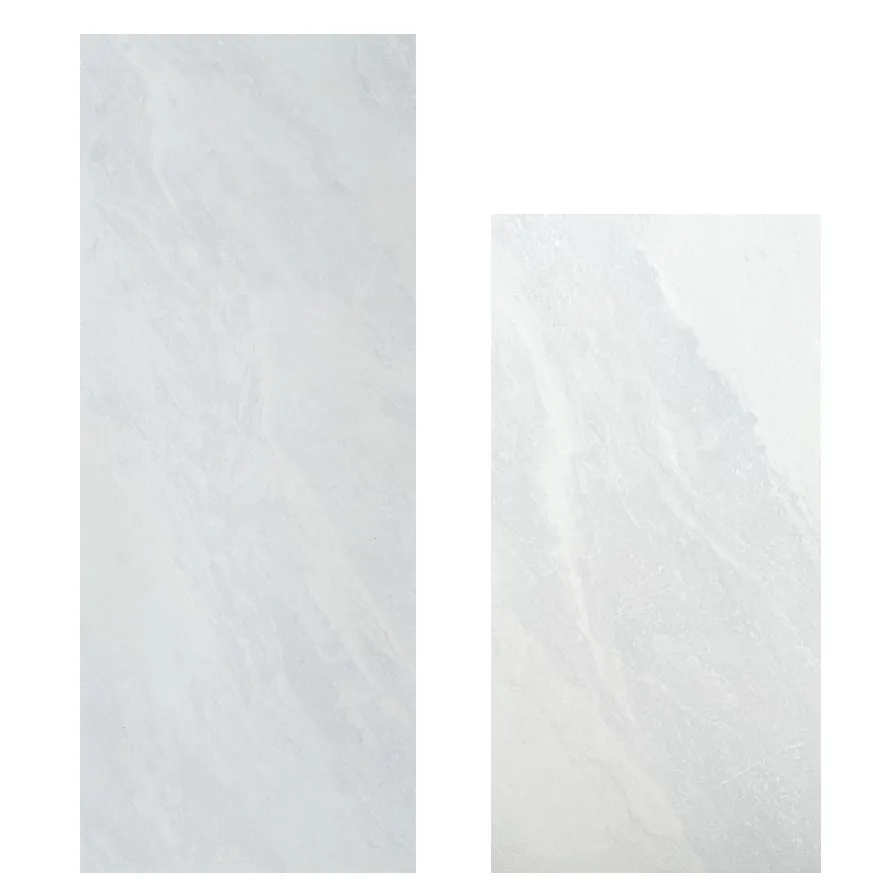
Where flexibility meets timeless beauty—crafting spaces that bend, flow, and breathe life into architectural dreams
Walk through any modern city, and you'll notice a quiet rebellion against the straight line. Curved facades rise like waves from urban streets, domed ceilings cradle light in grand lobbies, and spiral staircases wrap around spaces like frozen music. There's a reason architects and designers are falling in love with curves: they feel alive. Unlike rigid angles, curves evoke movement, warmth, and a sense of organic harmony—qualities that make buildings feel less like structures and more like stories.
But here's the catch: traditional building materials weren't built for curves. Marble, granite, even concrete—they're tough, durable, and stunning, but they're also rigid. Bending them into sweeping arcs or gentle S-shapes often means sacrificing structural integrity, aesthetics, or both. Cracks, uneven surfaces, or the need for clunky support structures can turn a visionary design into a compromised reality.
Enter Marble Veil White Flexible Stone —a material that doesn't just keep up with curved architecture's ambitions, but propels them forward. It's the kind of innovation that makes architects pause and say, "Wait, we can actually do that?"
At first glance, Marble Veil White could easily be mistaken for the finest Italian marble. Its surface is veined with delicate, cloud-like patterns in soft whites and subtle grays, mimicking the natural elegance of stone quarried from ancient mountains. But run your hand along it, and you'll feel the difference: a slight give, a flexibility that hints at its revolutionary design. This isn't just stone—it's stone reimagined.
Marble Veil White is part of MCM's renowned flexible stone series, a line of materials engineered to combine the durability of natural stone with the adaptability of modern composites. Its secret lies in a proprietary manufacturing process that layers ultra-thin stone veneers with a lightweight, flexible backing. The result? A material that can bend up to 90 degrees (and sometimes more, depending on thickness) without cracking, chipping, or losing its structural stability.
Imagine a sheet of this stone being rolled onto a curved wall like wallpaper—no heavy machinery, no risk of shattering. For architects, that's a game-changer. Suddenly, the curved lobby wall that once required a team of stone masons and weeks of labor can be installed in days, with precision and minimal waste.
What truly sets Marble Veil White apart, though, is its aesthetic range. The "veil white" finish is a masterclass in understatement—clean, bright, and endlessly adaptable. It pairs seamlessly with warm woods in a cozy residential space, adds sophistication to a minimalist office, or stands as a neutral backdrop for bold art in a gallery. But don't let its subtlety fool you: when light hits it, the veining comes alive, casting soft shadows that shift throughout the day, turning static walls into dynamic, breathing surfaces.
And for designers craving more drama? Marble Veil White plays well with others. Mix it with boulder slab accents for a rustic-modern vibe, or contrast it with the industrial edge of fair-faced concrete to create spaces that feel both grounded and ethereal. It's not just a material—it's a collaborator.
From intimate interiors to sprawling exteriors, Marble Veil White is proving that flexibility doesn't mean compromising on impact. Here are just a few ways architects and designers are putting it to work:
In a boutique hotel in Barcelona, the lobby is dominated by a sweeping curved wall clad in Marble Veil White. The wall rises from the floor, arcs gently overhead, and disappears into the ceiling, creating a sense of enclosure that feels both grand and intimate. Guests often pause to run their hands along it, surprised by the stone's smoothness and the way the light dances across its veins. "It's like walking into a cloud," one guest noted—a far cry from the cold, imposing lobbies of yesteryear.
Residential designers are also embracing the trend. In a Tokyo apartment with limited square footage, a curved Marble Veil White wall separates the living area from the bedroom, eliminating the need for harsh corners and making the space feel larger and more fluid. The material's light color reflects natural light, brightening the room, while its flexibility allowed the designer to follow the apartment's unique, non-linear layout.
Exterior curved architecture poses a unique challenge: materials must withstand rain, wind, UV rays, and temperature fluctuations. Marble Veil White rises to the occasion. In a cultural center in Lisbon, its facade features a series of undulating waves clad in the stone, inspired by the nearby Atlantic Ocean. Even after years of exposure to salt air and harsh sun, the surface remains intact—no fading, no cracks, just the same timeless beauty as the day it was installed.
Architect Maria Santos, who led the project, explains: "We wanted the building to feel like it was moving, like it was part of the landscape. Traditional stone would have required massive support structures, which would have ruined the illusion of lightness. Marble Veil White let us achieve those curves with minimal weight, so the building truly looks like it's floating."
Classical architecture is full of curves—arches, domes, vaulted ceilings—but traditional materials made them labor-intensive and costly. Marble Veil White is breathing new life into these forms. In a restored 19th-century theater in Prague, the domed ceiling, once cracked and water-damaged, has been re-clad in the stone. The result? A ceiling that looks like it was carved from a single block of marble, but weighs a fraction of the original material, reducing stress on the building's structure.
Even modern takes on classic forms benefit. A restaurant in New York City features a series of elliptical arches clad in Marble Veil White, each one slightly different in curvature, creating a rhythm that guides diners through the space. "It's classical architecture meets jazz," says the restaurant's designer. "The stone's flexibility let us improvise, to make each arch feel unique."
Curious how Marble Veil White compares to other materials? Let's break it down:
| Material | Flexibility | Aesthetic Appeal | Durability | Installation Ease |
|---|---|---|---|---|
| Marble Veil White Flexible Stone | High (bends up to 90°+) | Natural marble veining, soft white finish | Weather-resistant, fire-retardant, low maintenance | Lightweight; can be installed with standard tools |
| Fair-Faced Concrete | Low (requires formwork for curves) | Industrial, raw aesthetic | Highly durable but prone to staining | Heavy; requires specialized labor |
| Boulder Slab | Low (rigid, thick stone slabs) | Rustic, earthy texture | Very durable; natural stone strength | Heavy; requires structural support |
| 3D Art Concrete Board | Medium (pre-cast curves only) | Customizable textures, modern look | Durable but less weather-resistant than stone | Moderate; pre-cast panels limit on-site adjustments |
The table tells a clear story: while materials like fair-faced concrete and boulder slab have their strengths, Marble Veil White stands out for its unique combination of flexibility, aesthetics, and ease of installation. It's not just a substitute for traditional stone—it's an upgrade for a world that demands more from its buildings.
In an era where sustainability is non-negotiable, Marble Veil White has another trick up its sleeve: it's kind to the planet. Traditional stone quarrying is resource-intensive, often leaving behind scarred landscapes and high carbon footprints. MCM's manufacturing process, by contrast, uses recycled stone particles and minimal water, reducing waste and emissions. The material itself is also lightweight, which means less fuel is needed for transportation, and less structural support is required for installation—further cutting down on a project's carbon footprint.
But sustainability isn't just about manufacturing. It's about longevity. Marble Veil White is designed to last decades, resisting fading, scratching, and weathering. In a world of fast fashion and disposable design, that's a radical act of sustainability. "We don't just want buildings that look good today," says an MCM sustainability engineer. "We want buildings that look good in 50 years, that don't need to be stripped and replaced. That's the real definition of green design."
No two curved designs are the same, and Marble Veil White doesn't force designers into a one-size-fits-all box. It's available in a range of thicknesses (from 3mm to 12mm), allowing for different levels of flexibility and durability. Want a bold, dramatic vein pattern? Or a softer, more subtle veining? MCM works with designers to customize the stone's appearance, ensuring it aligns with the project's vision.
Even the backing material can be tailored—choosing between different composites to enhance flexibility for tight curves or add extra insulation for exterior applications. It's design without compromise, and it's changing how architects approach their craft.
As technology advances and design trends shift toward more organic, human-centered spaces, materials like Marble Veil White will only grow in importance. We're already seeing architects push boundaries further: curved skyscrapers with facades that undulate like fabric, interior spaces that flow without a single straight wall, even furniture—yes, furniture—clad in flexible stone.
But perhaps the most exciting part isn't the technology itself—it's the human element. When a material bends as easily as Marble Veil White, it frees architects to design not just for function, but for feeling. It lets them create spaces that hug you, that guide you, that make you feel something deeper than just "this is a nice room."
In the end, that's what great architecture is all about: connection. And with Marble Veil White Flexible Stone, that connection is getting a little more flexible, a little more beautiful, and a whole lot more human.
Recommend Products












