
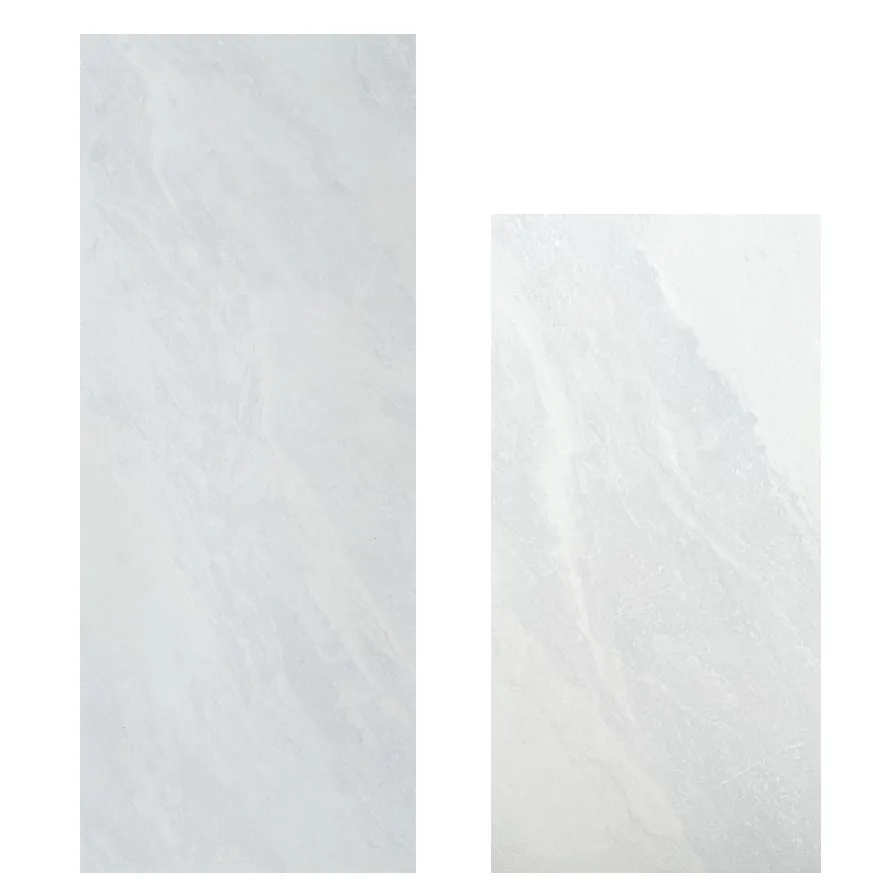
Where elegance meets elasticity—redefining how we build curves
Curved walls have always held a special place in design. They soften spaces, guide movement, and evoke a sense of flow that sharp angles can't match. But for decades, bringing these organic forms to life has been a battle against rigid materials. Traditional marble cracks under pressure, concrete feels heavy and unforgiving, and even wood—once malleable—loses its shape over time. Enter Marble Veil White Flexible Stone , a material that doesn't just bend to your design vision; it embraces it. Let's dive into how this innovation is turning curved wall dreams into reality.
At first glance, you might mistake it for high-end natural marble. The soft, wispy veining in shades of ivory and pale gray, the subtle sheen that catches light—all the hallmarks of luxury stone. But pick it up, and you'll notice the difference immediately. This isn't the heavy, brittle slab you're used to. It's lightweight, thin (typically 3–5mm thick), and here's the kicker: it bends. Not just a little flex, but enough to wrap around curves with radii as tight as 50cm without chipping, cracking, or losing its structural integrity.
So, what makes it "flexible"? It's all in the mcm flexible stone technology. MCM, or Modified Composite Material, is the magic behind the material. Think of it as nature and science holding hands: a base of natural stone aggregates (like marble dust or quartz) is mixed with a polymer resin binder, then compressed into thin sheets. The result? A material that retains the look and feel of natural stone but gains the flexibility of a vinyl sheet and the durability of engineered composites. And Marble Veil White is the crown jewel of this lineup—crafted to mimic the timeless beauty of marble while solving its age-old flaws.
Curved walls are more than just a design trend—they're a response to how we want to live. In a world of sharp edges and boxy rooms, curves feel welcoming. They encourage conversation in living rooms, create serene nooks in bedrooms, and make hotel lobbies feel grand yet intimate. But for architects and designers, they've long been a headache. Traditional materials simply weren't built for bends.
Take fair-faced concrete , for example. It's durable and industrial-chic, but try bending it? You'll need custom molds, heavy reinforcement, and a team of experts to avoid cracks. Natural marble? Even if you manage to carve a curve, the weight alone requires structural support that eats into floor space and budget. Wood grain board can curve, but it warps with moisture and lacks the stone's elegance. Travertine, with its porous texture, is even more fragile. The list goes on—and until now, the answer was always compromise: smaller curves, thicker materials, or sacrificing aesthetics for functionality.
Marble Veil White flips that script. Suddenly, a curved accent wall in your home office isn't a "maybe someday" project—it's a weekend renovation. A hotel with a sweeping, curved lobby facade isn't a budget-buster—it's a statement piece that sets you apart from the competition. It's not just a material; it's permission to stop limiting your designs to what's possible, and start building what feels right.
To truly appreciate its value, let's put Marble Veil White head-to-head with some common alternatives. This table breaks down how it stacks up against traditional marble, fair-faced concrete, and even other flexible materials like wood grain board:
| Feature | Marble Veil White Flexible Stone | Traditional Marble Slab | Fair-Faced Concrete | Wood Grain Board |
|---|---|---|---|---|
| Flexibility | Bends to radii as tight as 50cm | Brittle; cracks under minimal flex | Rigid; requires custom molds for curves | Moderate flex; warps with moisture |
| Weight (per sqm) | 4–6kg | 20–25kg | 15–18kg | 7–9kg |
| Installation | Adhesive application; can be cut on-site with standard tools | Requires heavy machinery; professional cutting | Formwork needed; long curing time | Nailing/screwing; prone to splitting at curves |
| Durability | Resistant to scratches, moisture, and UV rays | Susceptible to staining and etching | Durable but prone to cracking if not reinforced | Scratches easily; fades in sunlight |
| Aesthetics | Consistent marble-like veining; high-end look | Unique natural patterns; variable quality | Industrial, matte finish; limited color options | Warm, organic wood texture; limited to wood tones |
As the table shows, Marble Veil White isn't just "another flexible material"—it's a sweet spot of strength, beauty, and practicality. It's light enough for DIYers to handle, tough enough for high-traffic areas, and stunning enough to rival natural stone. And when it comes to curved walls? It's in a league of its own.
Curved walls are versatile, and so is Marble Veil White. Let's walk through a few scenarios where this material shines:
Imagine (oops—scratch that) Picture your living room with a curved accent wall behind the sofa. Instead of a flat, boring surface, it's a gentle arc that wraps around the space, making the room feel larger and more inviting. With Marble Veil White, that wall isn't just a backdrop—it's a focal point. The soft white veining reflects light, brightening the room, while the curve guides the eye from the seating area to the window. Or consider a bathroom with a curved shower niche: traditional tile would require tedious cutting and grouting, but Marble Veil White bends to the niche's shape, creating a seamless, water-resistant surface that's easy to clean.
Even smaller projects make a big impact. A curved headboard wall in the bedroom adds softness to an otherwise angular space. A breakfast nook with a curved backsplash? It turns a simple corner into a cozy retreat. The best part? Because it's lightweight, you don't need to reinforce your walls. Just clean the surface, apply a strong adhesive, and press the panels into place. No messy mortar, no heavy lifting—just a weekend project that transforms your home.
For businesses, first impressions matter. A hotel lobby with a sweeping curved wall clad in Marble Veil White doesn't just say "luxury"—it says "thoughtful design." The material's consistency ensures the pattern flows seamlessly around the curve, creating a sense of harmony that uneven natural stone can't match. Restaurants, too, benefit: a curved banquette wall adds intimacy to dining spaces, while the stone's durability stands up to spills and daily wear. Retail stores love it for feature walls; the bright, clean look makes merchandise pop, and the flexibility allows for creative displays that change with seasons.
Even offices are getting in on the trend. Gone are the days of sterile, boxy workspaces. Curved walls clad in Marble Veil White create collaborative zones that feel open yet defined. The material's sound-dampening properties (thanks to the polymer core) even help reduce echo, making meetings more productive. It's a win-win: better design, better functionality, and a material that lasts for years without showing signs of wear.
Museums, airports, and cultural centers often feature curved architecture to inspire awe. But traditional materials can make these projects cost-prohibitive. Marble Veil White changes that. Imagine a museum with a curved exhibit wall that mimics the flow of a river—Marble Veil White's veining would enhance the theme, while its flexibility allows for bold, sweeping curves that draw visitors through the space. Airports, with their high foot traffic, need materials that can handle millions of steps. This stone resists scratches and stains, so even after years of use, it looks as fresh as the day it was installed.
And let's not forget outdoor spaces. While it's not meant for direct submersion, Marble Veil White holds up well in covered outdoor areas like patios or poolside cabanas. A curved outdoor kitchen backsplash? It adds a touch of elegance to al fresco dining, and the UV resistance ensures the color won't fade under the sun. Compared to travertine , which can absorb water and develop mold, Marble Veil White's non-porous surface is a breeze to maintain—just a quick wipe with a damp cloth, and it's good as new.
In today's world, sustainability isn't a nice-to-have—it's a must. Marble Veil White checks that box, too. Traditional marble quarrying is resource-intensive, stripping landscapes and producing tons of waste. MCM technology, however, uses recycled stone aggregates (leftover from quarrying and manufacturing) that would otherwise end up in landfills. The production process also uses less energy than mining and cutting natural stone, and the thin panels mean less material is needed to cover the same area—reducing transportation emissions and waste.
Durability plays a role, too. A material that lasts 20+ years means fewer replacements, which cuts down on resource consumption over time. And when it does reach the end of its life, the stone aggregates can be recycled again, closing the loop. Compare that to wood grain board , which often contains formaldehyde-based adhesives and can't be recycled, or fair-faced concrete, which has a large carbon footprint due to cement production. Marble Veil White proves that you don't have to choose between beauty and responsibility.
Curved walls aren't going anywhere. As architects and designers push for more organic, human-centered spaces, the demand for flexible, beautiful materials will only grow. Marble Veil White is just the beginning. The mcm 3d printing series is already exploring custom patterns and textures, allowing designers to 3D-print curved panels with unique geometries. Imagine a curved wall that isn't just smooth, but has intricate, raised patterns—all made possible by the same flexible MCM technology.
We're also seeing more hybrid designs, where Marble Veil White is paired with other materials like foamed aluminium alloy board for a modern, industrial look, or wood grain board for warmth. The flexibility of the stone means it plays well with others, opening up endless creative possibilities. And as sustainability becomes even more critical, we can expect to see MCM materials made with even higher percentages of recycled content, and production processes that use renewable energy.
But for now, Marble Veil White stands as a testament to what's possible when we rethink traditional materials. It's not just a stone—it's a tool for designers to dream bigger, for homeowners to create spaces that feel truly theirs, and for builders to work smarter, not harder. Curved walls have always been about flow and connection; now, finally, the materials we use to build them can keep up.
Design is about solving problems—and curved walls have been a problem for far too long. Marble Veil White Flexible Stone doesn't just solve that problem; it turns it into an opportunity. It lets us build spaces that feel human, that flow naturally, that make us stop and say, "Wow, how did they do that?"
Whether you're a homeowner looking to refresh a room, a designer chasing the perfect curve, or a builder tired of wrestling with rigid materials, this stone is a game-changer. It's beauty with backbone, flexibility with strength, and innovation with a nod to tradition. So the next time you're staring at a curved wall in your project, don't see a challenge—see a blank canvas. And let Marble Veil White help you paint it.
Recommend Products












