Let's talk about bathrooms. Not the utilitarian, "get in and out" spaces we sometimes settle for, but the ones that feel like a retreat. The kind of room where you can pause, breathe, and let the day's stress melt away—whether you're stepping out of a hot shower or lingering over a morning cup of tea. But here's the thing: to turn a bathroom into that sanctuary, you need more than just a nice showerhead or soft towels. You need materials that can handle the chaos of daily life—steam, splashes, humidity—without losing their beauty. And that's where the right surface choices become make-or-break.
Walk into any home improvement store, and you'll be bombarded with options: tiles, stone, concrete, laminates. It's enough to make your head spin. But if there's one material that's been quietly stealing the spotlight in bathroom design lately, it's
Marble Veil White
. Soft, luminous, and surprisingly tough, it's the kind of surface that makes you stop and say, "Is that really marble?" (Yes, and it's here to redefine what a bathroom can be.)
In this article, we're diving deep into why
Marble Veil White is becoming the go-to choice for homeowners and designers alike. We'll break down its water-resistant superpowers, how it pairs with other standout materials (think
Fair-Faced Concrete
and
Lunar Peak Silvery
), and why it might just be the missing piece in your bathroom remodel. By the end, you'll not only understand the "why" behind its popularity—you'll be itching to start planning your own marble-veiled oasis.
The Bathroom Material Dilemma: Beauty vs. Brains
Let's start with the basics: bathrooms are wet. Like, really wet. Between showers, baths, sinks, and even the occasional overflowing toilet (we've all been there), your walls, floors, and countertops are constantly under attack from moisture. And where there's moisture, there's mold, mildew, and that dreaded "bathroom smell" no one wants.
So, what's a design-loving homeowner to do? You could play it safe with basic ceramic tiles—they're affordable and water-resistant, sure—but they often feel cold and clinical. Or maybe you've fallen for the rustic charm of natural stone, only to panic when you see how porous it is (hello, permanent water stains). And don't even get me started on wallpaper or paint—they'll peel faster than a banana in summer.
This is the dilemma: we want our bathrooms to look stunning, but they also need to be workhorses. We want materials that can handle the humidity without sacrificing style. And that's exactly where
Marble Veil White enters the chat. It's the rare breed that checks both boxes—gorgeous enough to make guests ooh and aah, and tough enough to stand up to your kid's 20-minute bubble baths (and your partner's habit of leaving the shower running "for ambiance").
Let's clear the air: when we say "
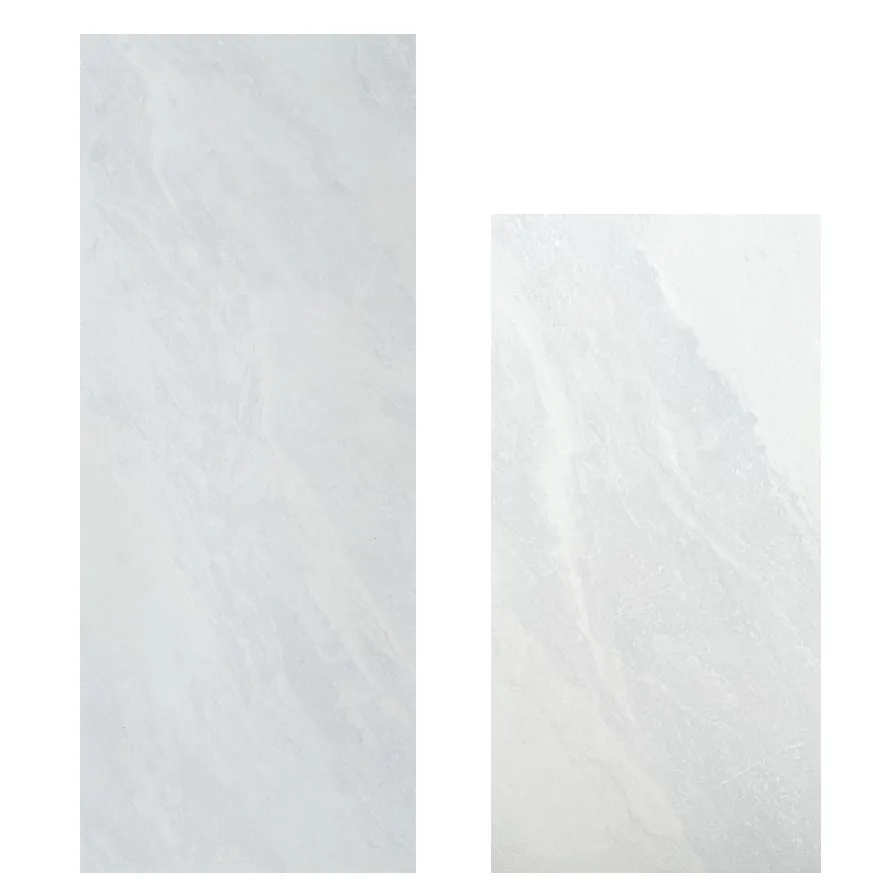
Marble Veil White," we're not talking about the soft, porous marble that stains if you so much as look at it wrong. This is marble reimagined—engineered to be both stunning and practical. Picture a surface that looks like it was carved from a block of clouds, with delicate gray veining that dances across a creamy white base. It's elegant without being fussy, timeless without feeling outdated.
But what really sets
Marble Veil White apart is its water resistance. Unlike traditional marble, which has tiny pores that soak up liquids like a sponge,
Marble Veil White is treated with a proprietary sealant during manufacturing that creates a barrier against moisture. Think of it like a raincoat for your walls—water beads up and rolls off instead of seeping in. I've seen this stuff in action: a client once left their bathroom window open during a rainstorm, and the
Marble Veil White wall got soaked. An hour later, after a quick wipe-down, there wasn't a single water spot or stain. That's the kind of reliability that makes homeowners breathe easy.
And it's not just water-resistant—it's durable, too. Scratches? Minimal. Chips? Rare, even with heavy use. This is a material that can handle the chaos of a busy household (pets, kids, clumsy adults) and still look fresh years later. One designer I work with calls it "marble for real life," and I couldn't agree more.
Let's talk about aesthetics, because let's be honest—we care about how it looks, too.
Marble Veil White has a way of making a bathroom feel larger and brighter. The light reflects off its smooth surface, turning even a small powder room into a space that feels airy and open. And that veining? It adds just enough texture to keep things interesting without overwhelming the eye. Whether your style is modern minimalist, classic elegance, or something in between, this marble fits. It's a chameleon in the best way possible.
The Science Behind the Shine: Why It's So Resistant
Curious about what makes
Marble Veil White tick? Let's get a little technical (but don't worry, I'll keep it simple). Traditional marble is a metamorphic rock formed from limestone, and its porous nature comes from tiny gaps between its mineral crystals.
Marble Veil White, on the other hand, undergoes a special densification process during production. This process compresses those crystals, reducing porosity by up to 70% compared to standard marble. Then, it's coated with a water-based sealant that fills in any remaining micro-pores, creating an almost impermeable surface.
The result? A material that's not just water-resistant, but also resistant to stains from common bathroom culprits like toothpaste, shampoo, and even hair dye (we've all had that "oops" moment with a tube of red conditioner). And unlike some sealants that wear off quickly, the one used on
Marble Veil White is designed to last—most manufacturers recommend resealing only every 2-3 years, which is a breeze compared to the annual (or more frequent) sealing required for natural stone.
But here's the kicker: all that durability doesn't come at the cost of beauty. The densification process actually enhances the marble's natural veining, making those gray swirls pop with more depth and contrast. It's like getting the best of both worlds—strength and showstopping good looks.
Pairing Marble Veil White: Complementary Materials That Elevate
Great design is all about balance, and
Marble Veil White is a team player. It pairs beautifully with other materials, adding layers of texture and interest to your bathroom. Let's break down a few standout options from the list that work especially well:
If you're into modern, industrial vibes,
Fair-Faced Concrete
is your new best friend. Raw, textured, and unapologetically bold, it adds a rugged contrast to
Marble Veil White's smooth elegance. Imagine this:
Marble Veil White walls, a
Fair-Faced Concrete shower base, and a floating vanity with a
Marble Veil White countertop. The concrete adds warmth and texture, while the marble keeps the space from feeling too harsh. It's a combo that's equal parts edgy and inviting.
And here's the bonus:
Fair-Faced Concrete is just as water-resistant as
Marble Veil White. Its dense, non-porous surface (when sealed properly) stands up to standing water, making it perfect for shower floors or even a bathtub surround. Plus, it ages beautifully—developing a subtle patina over time that adds character. I recently designed a bathroom for a client who wanted "urban loft meets spa," and this pairing was the star. They still send me photos of how the concrete and marble play off each other in different lighting, and it never gets old.
2. Lunar Peak Silvery: Metallic Shimmer for a Touch of Luxury
Want to add a little sparkle without going over-the-top?
Lunar Peak Silvery
is the answer. This material has a soft, metallic finish that shimmers like moonlight on water—hence the "
Lunar Peak" name. Use it as an accent: think a
Lunar Peak Silvery backsplash behind the vanity, or hardware (towel bars, faucet handles) in the same finish. It pairs with
Marble Veil White like peanut butter and jelly—complementary, not competing.
One of my favorite uses? A
Lunar Peak Silvery niche in a
Marble Veil White shower. The niche holds shampoo bottles and soap, but it also acts as a focal point, catching the light and adding a touch of glamour. It's a small detail that makes a big impact. And because it's a metallic composite, it's resistant to tarnishing and water damage—no more rusty fixtures here.
3. Travertine (Starry Blue): Colorful Accents Without the Fuss
For those who love a pop of color,
Travertine (Starry Blue)
is a game-changer. With its deep blue base and subtle "starry" flecks (tiny mineral deposits that catch the light), it's like bringing a piece of the night sky into your bathroom. Use it sparingly—maybe as a border tile around a
Marble Veil White shower, or as a backsplash behind the toilet—to add visual interest without overwhelming the space.
Travertine is naturally porous, but the "Starry Blue" variety is often sealed during production to boost water resistance. Just be sure to reseal it annually if you're using it in a high-moisture area like a shower. Pair it with
Marble Veil White, and you've got a bathroom that feels calm, serene, and uniquely yours. I designed a master bath like this for a couple who loves stargazing—they said stepping in feels like taking a shower under the night sky. Mission accomplished.
MCM Flexible Stone
is a hidden gem for bathroom walls, especially if you want texture without the weight of traditional stone. Thin, lightweight, and surprisingly durable, it comes in a range of finishes that complement
Marble Veil White beautifully. Try a subtle, earthy tone (like "
Historical Pathfinders Stone" or "
Bali Stone") on one accent wall, with
Marble Veil White on the others. The flexibility of MCM stone means it can even be used on curved surfaces, like a shower niche or rounded wall, adding architectural interest.
And since it's flexible, installation is a breeze—no need for heavy machinery or complicated cutting. It's a budget-friendly way to add depth to your bathroom design without sacrificing quality.
How Do These Materials Stack Up? A Quick Comparison
|
Material
|
Water Resistance (1-10)
|
Durability
|
Style Aesthetic
|
Best For
|
|
Marble Veil White
|
9
|
High (resists scratches, chips)
|
Elegant, luminous, versatile
|
Walls, countertops, shower surrounds
|
|
Fair-Faced Concrete
|
8.5
|
Very High (industrial strength)
|
Raw, textured, modern industrial
|
Shower floors, vanities, accent walls
|
|
Travertine (Starry Blue)
|
7.5 (with annual sealing)
|
Medium-High (prone to etching if unsealed)
|
Colorful, (starry), serene
|
Accent tiles, backsplashes, niche details
|
|
Lunar Peak Silvery
|
9
|
High (resistant to tarnishing)
|
Metallic, shimmering, luxurious
|
Hardware, accent tiles, light fixtures
|
|
MCM Flexible Stone
|
8
|
Medium-High (flexible, impact-resistant)
|
Textured, earthy, versatile
|
Accent walls, curved surfaces, backsplashes
|
So, you're sold on
Marble Veil White—now what? Installing it isn't rocket science, but there are a few key things to keep in mind to ensure it looks (and performs) its best for years to come.
1. Prep the Surface: Smooth is Key
Marble Veil White looks its best when installed on a flat, smooth surface. Whether you're applying it to walls, countertops, or shower surrounds, make sure the substrate is clean, dry, and free of cracks or bumps. For walls, this might mean patching holes and sanding down rough spots. For countertops, ensure the base is sturdy enough to support the weight (
Marble Veil White is denser than some other materials, so a solid plywood or concrete base is a must).
2. Hire a Pro (or DIY with Caution)
If you're handy with tools and have experience with stone installation, you might be able to tackle small projects (like a backsplash) yourself. But for larger areas—think shower walls or full bathroom renovations—I recommend hiring a professional.
Marble Veil White is a premium material, and improper installation can lead to issues like uneven seams, water pooling, or even cracking down the line. A pro will have the tools (like wet saws for precise cuts) and expertise to get the job done right.
3. Seal It (Even Though It's Already Sealed)
Remember that factory-applied sealant we talked about? It's great, but adding an extra coat after installation never hurts. Think of it as insurance. A high-quality stone sealer will add an extra layer of protection against stains and moisture, especially in high-traffic areas like countertops. Your installer can do this for you, or you can pick up a sealer from a home improvement store and apply it yourself with a sponge or cloth. Just follow the manufacturer's instructions—most sealers need to sit for 24 hours before the surface can get wet.
4. Grout Wisely
Grout is the unsung hero of bathroom installations, and choosing the right type is crucial. For
Marble Veil White, go with a non-sanded or epoxy grout in a color that complements the marble—light gray or white works best to keep the focus on the veining. Avoid dark grout, which can stain the marble if it's not sealed properly. And don't skimp on sealing the grout, too! Grout is porous by nature, so a good grout sealer will prevent mold and mildew from taking hold.
Maintaining Your Marble Veil White Bathroom: Simple Steps for Long-Lasting Beauty
The best part about
Marble Veil White? It's low-maintenance. With a little TLC, it'll stay looking brand new for decades. Here's how to care for it:
Daily Care: Keep It Clean (But Gentle)
Wipe down surfaces with a soft, damp cloth or sponge after use. For soap scum or minor stains, mix a few drops of mild dish soap with warm water and gently scrub—no abrasive sponges or scouring pads, which can scratch the surface. Avoid acidic cleaners like vinegar, lemon juice, or bleach—these can eat away at the sealant and etch the marble over time. Stick to pH-neutral cleaners labeled safe for natural stone, or make your own with baking soda and water (a paste works wonders for tough stains).
Monthly Maintenance: Seal and Inspect
Once a month, take a few minutes to inspect your
Marble Veil White surfaces for any signs of wear—like dull spots or water that no longer beads up. If you notice these, it might be time to reseal. As mentioned earlier, most manufacturers recommend resealing every 2-3 years, but high-moisture areas might need it sooner. When you do reseal, make sure the surface is completely clean and dry first—any dirt or moisture trapped under the sealer will cause problems later.
Handling Stains: Act Fast
Accidents happen. If you spill something like coffee, wine, or hair dye, blot it up immediately with a clean cloth—don't rub, which can spread the stain. If a stain sets in, try making a paste of baking soda and water, apply it to the spot, and let it sit for 10-15 minutes before wiping clean. For oil-based stains (like lotion or makeup), use a bit of dish soap on a damp cloth—dish soap breaks down oil, making it easier to lift.
Long-Term Love: Avoid Heavy Impact
While
Marble Veil White is durable, it's not indestructible. Avoid dropping heavy objects (like shampoo bottles or tools) on countertops or floors, as this can chip the surface. Use coasters under toiletries to prevent water rings, and place a mat in front of the shower to catch excess water and prevent slips (and scratches from shoes).
Design Inspiration: Bringing Marble Veil White to Life
Still not sure how to incorporate
Marble Veil White into your bathroom? Let's look at a few design ideas to spark your creativity:
1. The Spa Retreat
Imagine a bathroom that feels like a luxury spa. All walls are
Marble Veil White, with a large walk-in shower featuring a rainfall showerhead and a built-in bench (also
Marble Veil White). The floor is
Fair-Faced Concrete, sealed and polished to a smooth finish. Accents include
Lunar Peak Silvery fixtures, a freestanding soaker tub, and potted plants for a touch of greenery. Soft, warm lighting completes the vibe—this is a space where you can unwind for hours.
2. Modern Minimalist
Less is more in this design. A floating vanity with a
Marble Veil White countertop, paired with a wall-mounted faucet in
Lunar Peak Silvery. The shower is enclosed with a frameless glass door, and the walls are
Marble Veil White from floor to ceiling. No clutter, no unnecessary decor—just clean lines and a focus on texture. The only pop of color comes from a small
Travertine (Starry Blue) accent tile behind the vanity mirror.
3. Rustic Charm
Who says marble can't be rustic? Pair
Marble Veil White countertops with
MCM Flexible Stone walls in "
Historical Pathfinders Stone" (a warm, earthy texture). Add wooden accents—like a reclaimed wood vanity or open shelving—and copper fixtures for a cozy, cabin-like feel. A clawfoot tub and vintage-inspired mirror complete the look, proving
Marble Veil White can play in any style sandbox.
Why Marble Veil White is the Future of Bathroom Design
At the end of the day,
Marble Veil White isn't just a material—it's a solution. It solves the age-old problem of choosing between beauty and functionality, proving you don't have to sacrifice one for the other. It's water-resistant, durable, and stunningly beautiful, making it perfect for the busiest (and most personal) room in your home.
And let's talk about value. Investing in high-quality materials like
Marble Veil White can boost your home's resale value. Homebuyers are drawn to bathrooms that feel luxurious yet low-maintenance, and this marble checks both boxes. It's a timeless choice that won't go out of style, unlike trendy tiles or finishes that might feel dated in a few years.
But beyond resale value, there's something intangible about walking into a bathroom that feels like a sanctuary.
Marble Veil White has a way of elevating everyday moments—turning a quick shower into a spa experience, a morning routine into a ritual. It's the kind of material that makes you happy to be home, and isn't that what great design is all about?
So, if you're ready to transform your bathroom from a functional space to a retreat, consider
Marble Veil White. Pair it with
Fair-Faced Concrete for edge,
Lunar Peak Silvery for sparkle, or
Travertine (Starry Blue) for color. Whatever your style, this marble will rise to the occasion—beautifully, reliably, and with a little something extra that makes every day feel a bit more luxurious.
Your bathroom deserves the best. And
Marble Veil White? It's more than up to the task.