
In the world of architecture, materials are more than just building blocks—they are storytellers. They shape how we feel in a space, how light dances across walls, and how memories cling to the texture of a surface. For COLORIA, a leader in innovative building materials, this philosophy isn't just a mission statement; it's the heartbeat of every project they touch. From the soft glow of Marble Veil White in a Milanese cultural center to the otherworldly shimmer of Lunar Peak Silvery in Seoul's tech district, COLORIA's materials don't just fill spaces—they breathe life into them. Today, we journey through five global projects where COLORIA's signature materials have transformed ordinary structures into extraordinary experiences.
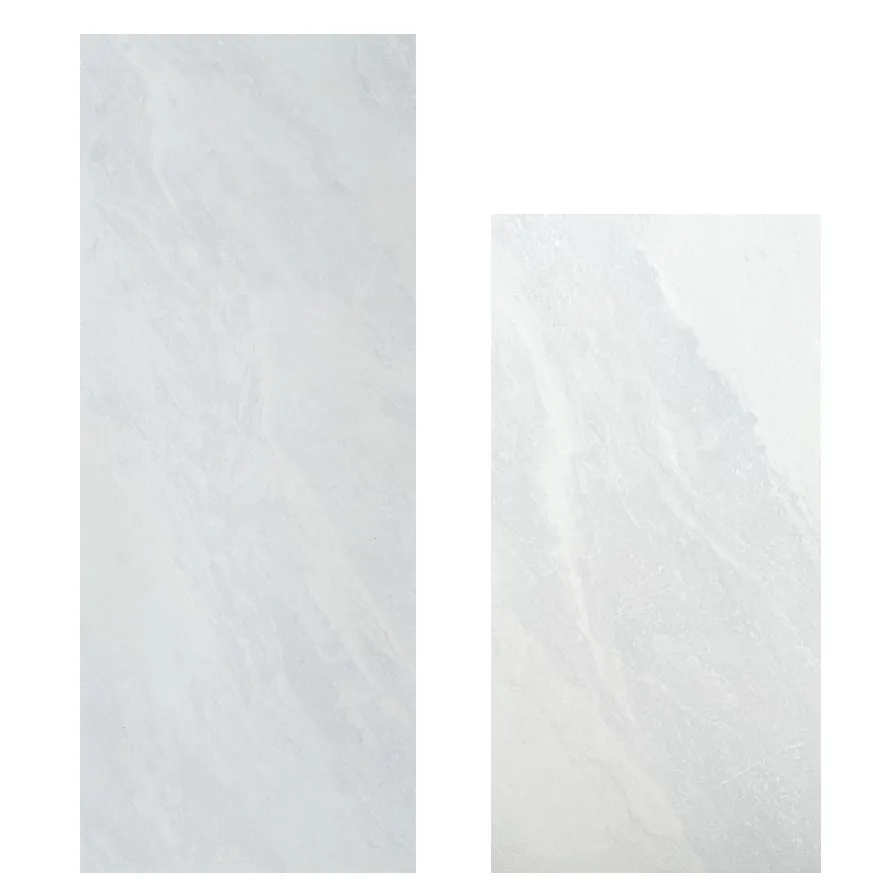
Nestled between Milan's historic canals and modern skyscrapers, the San Carlo Cultural Hub stands as a bridge between past and present. Designed by award-winning architect Elena Bertoli, the building's exterior is a study in restraint—clean lines, soaring glass, and a facade that seems to glow from within. The secret? Marble Veil White , chosen for its ability to soften harsh city light into something almost spiritual.
"Marble has always felt timeless, but Marble Veil White is different," Bertoli explains. "It's not just white—it's a canvas of subtle grays and creams, like fog lifting over a mountain lake. In Milan, where every shadow holds a story, we wanted a material that would honor the city's history without feeling stuck in it."
Inside, the Hub's auditorium takes the material's versatility a step further. Here, Marble Veil White is paired with warm oak paneling, creating a space that feels both grand and intimate. During a piano recital, the marble walls act as a natural amplifier, softening the music into a rich, resonant hum. "We tested three different marbles before choosing this one," Bertoli says with a laugh. "The others felt too cold, too sterile. Marble Veil White ? It wraps sound like a blanket."
"A mother once told me her daughter refused to leave the atrium—she was too busy tracing the marble's veins with her finger, calling them 'cloud rivers.' That's the magic of this material. It doesn't just serve a function; it sparks imagination." — Elena Bertoli, Lead Architect
Seoul's Gangnam District is a playground for futuristic design, and the Tech Innovation Center (TIC) fits right in—with a twist. While most buildings here scream "cutting-edge" with sharp angles and neon lights, TIC takes a subtler approach, thanks to Lunar Peak Silvery . This metallic composite, with its muted silver finish and microscopic texture, looks like it was chiseled from a moon rock—and that's exactly what the design team wanted.
"Tech spaces often feel cold, like you're walking into a machine," says Min-Jun Park, TIC's lead designer. "We wanted to create a space that felt innovative but also human. Lunar Peak Silvery was the answer. It has this otherworldly shine, but when you get close, you notice tiny imperfections—little pits and grooves—that make it feel alive, not manufactured."
Inside, the material takes center stage in the lobby's feature wall—a 20-foot-tall installation of Lunar Peak Silvery panels arranged in a wave pattern. "We wanted to evoke the flow of ideas," Park explains. "Tech is all about movement, about progress. The wave shape, paired with the material's reflective surface, makes you feel like you're standing at the edge of something new." Employees often pause here to take photos, the wall "the Portal." "It's become a symbol of the center's mission," Park adds. "Even the interns say it makes them feel like they're part of something bigger."
"One evening, I saw an elderly man tracing the wave pattern with his cane. He told me it reminded him of the ocean near his childhood home. That's the power of Lunar Peak Silvery —it's futuristic, but it still connects to something primal, something human." — Min-Jun Park, Lead Designer
Bali is a place of contrasts—lush jungles meet crystal oceans, ancient temples stand beside modern resorts. The Serenity Resort, tucked into the hills of Ubud, leans into this duality with a design that honors the island's natural beauty. At the heart of this vision is Travertine (Starry Green) , a stone with a mossy green base and flecks of gold that look like sunlight through leaves.
"Bali's landscape is so vibrant, we didn't want to compete with it—we wanted to complement it," says resort architect Dewi Saraswati. " Travertine (Starry Green) does exactly that. Its color mirrors the rice terraces, and the gold flecks? They look like fireflies at dusk. It's like bringing a piece of the jungle indoors."
The material shines brightest in the resort's spa, where Travertine (Starry Green) lines the walls of the treatment rooms. "Travertine is naturally cool, which is perfect for Bali's heat," Saraswati notes. "But it's also porous, so it absorbs moisture—no more sticky walls after a steam shower." Guests often comment on how the stone "feels alive," especially in the rainforest-inspired massage room, where the travertine is paired with live plants and soft lighting. "One guest told me she fell asleep during her massage because the room felt like a cave—safe, warm, and totally disconnected from the outside world," Saraswati laughs.
Even the resort's pool area leans into the material's versatility. The pool's edge is lined with Travertine (Starry Green) tiles, their non-slip surface a practical choice for wet feet. "We wanted guests to feel like they're swimming in a jungle lagoon," Saraswati says. "The green stone, the surrounding palms—it's like stepping into a postcard. But it's not just pretty. It's durable, too. After two monsoon seasons, the travertine still looks brand new."
Dubai is known for its opulence, but the Al-Mansoora Community Pavilion is a celebration of simplicity. Designed to serve as a gathering space for locals—hosting everything from weddings to weekend markets—the pavilion draws inspiration from the desert itself, using Gobi Panel and Fair-Faced Concrete to evoke the raw beauty of the Arabian landscape.
"The desert isn't just sand and heat—it's a place of quiet strength," says pavilion designer Kareem Al-Zahrani. " Gobi Panel captures that. It has this rough, earthy texture, like the wind-carved rocks of the Gobi Desert. And Fair-Faced Concrete ? It's the color of desert sand at noon—warm, golden, and full of character."
Inside, the pavilion's main hall is a study in contrast. The ceiling soars 30 feet, supported by Fair-Faced Concrete columns that look like they've been pulled straight from the desert floor. The walls are lined with Gobi Panel , their earthy tones complementing the vibrant fabrics of the market stalls. "We wanted the space to feel both grand and intimate," Al-Zahrani explains. "The high ceiling makes it feel open, but the warm materials keep it from feeling cold. It's like being in a desert canyon—spacious, but sheltered."
"Last Ramadan, we hosted a community iftar here. As the sun set, the Fair-Faced Concrete walls turned pink, and the Gobi Panel glowed like embers. An old man told me it reminded him of his childhood in Oman, sitting around a campfire with his family. That's when I knew we'd gotten it right." — Kareem Al-Zahrani, Pavilion Designer
The New York Museum of Memory is more than a museum—it's a journey through time. Dedicated to preserving personal stories of immigration, the museum uses a patchwork of COLORIA materials to reflect the diversity of the human experience. From the warmth of Marble Veil White in the "Arrival" gallery to the industrial edge of Fair-Faced Concrete in the "Struggle" exhibit, every material was chosen to mirror the emotions of the stories told within.
"Immigration is a story of contrasts—hope and fear, loss and gain," says museum curator Sarah Chen. "We needed materials that could convey that complexity. Marble Veil White in the Arrival gallery feels like a fresh start—clean, bright, full of possibility. Then, as visitors move to the Struggle exhibit, we switch to Fair-Faced Concrete —raw, unpolished, a little harsh. It makes you feel the weight of what these stories represent."
The museum's most talked-about feature is the "Memory Wall," a 50-foot-long installation where visitors can etch their own stories into a surface of Marble Veil White . "The stone is soft enough to carve, but durable enough to last," Chen explains. "We've had grandparents writing messages to grandchildren, immigrants leaving notes to their future selves. It's become a living, breathing part of the museum."
"A woman from Colombia once told me she cried when she touched the Marble Veil White in the Arrival gallery. She said it felt like the first snow she saw when she landed in New York—cold at first, but beautiful, full of promise. That's what COLORIA's materials do. They don't just tell stories—they let you feel them." — Sarah Chen, Museum Curator
In the end, COLORIA's projects are more than just buildings—they are testaments to the power of materials to connect us. Whether it's the soft glow of Marble Veil White or the raw texture of Gobi Panel , these surfaces don't just shape spaces—they shape how we see the world, and how we see each other. In a time when so much of life feels digital and distant, COLORIA reminds us that sometimes, the most profound connections are made through something as simple as the touch of a stone, the glow of a wall, or the story written in texture.
Recommend Products












