
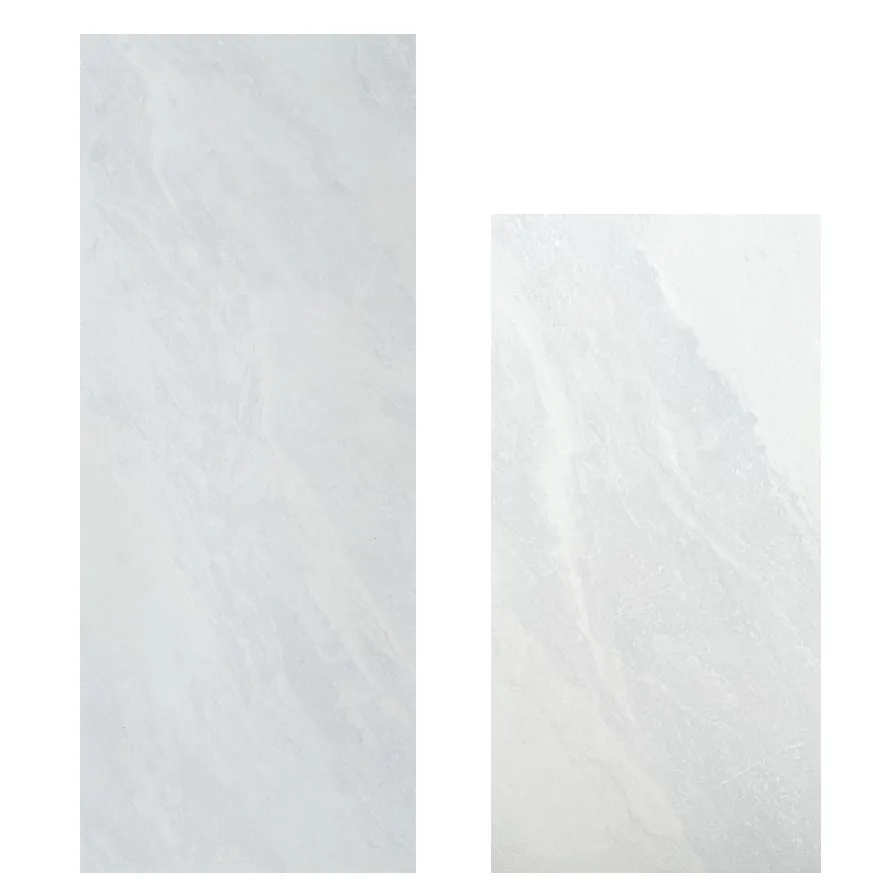
Riyadh's skyline is a story of contrasts—where ancient desert heritage meets futuristic ambition. Amidst the city's soaring glass towers and traditional mud-brick motifs, a new commercial hub recently emerged, not just as an office space, but as a conversation piece. The "Al Nour Tower," a 12-story mixed-use development in the Al Olaya district, set out to redefine how materials interact with Riyadh's harsh climate, cultural identity, and modern aesthetics. At the heart of its design? Marble Veil White —a material that would become both the project's signature and a lesson in balancing beauty with resilience. Let's walk through how this vision came to life, and how a carefully curated palette of complementary materials turned challenges into design triumphs.
The client, a Saudi-based tech firm, wanted Al Nour Tower to reflect two core values: innovation and rootedness. "We didn't want a cold, corporate box," says Lina Hassan, lead architect at Studio Horizon, the firm behind the project. "Riyadh's sun is intense—over 45°C in summer—and its sandstorms are unforgiving. The building needed to stand up to that, but also feel warm, inviting, like a place where people want to work, not just exist." The brief called for an exterior that would glow softly in the morning light, cool down interiors during the day, and blend with the city's palette of earthy tones and gold accents.
Initial sketches leaned into verticality, with a facade that would "ripple" like desert dunes. But the material to bring that ripple to life was elusive. "We tested granite, limestone, even synthetic cladding," Hassan recalls. "Nothing felt right. Then we saw a sample of Marble Veil White. Its subtle veining—like brushstrokes of pale gray on a creamy canvas—was exactly the 'softness' we needed. But could it handle Riyadh's climate?"
Marble is often dismissed as "too delicate" for harsh exteriors, but Marble Veil White proved to be a surprise workhorse. Quarried in northern Italy, its dense composition and low porosity made it resistant to water absorption—a critical factor in Riyadh, where sudden downpours (though rare) can cause staining. "We sent samples to a lab in Jeddah for testing," says Karim Ahmed, the project's materials engineer. "We baked them in 50°C ovens, blasted them with sand, even simulated acid rain. The results? Minimal discoloration, no cracking. It was a game-changer."
Beyond durability, the marble's light color was a functional win. "Dark materials absorb heat, making interiors harder to cool," Ahmed explains. "Marble Veil White reflects up to 70% of solar radiation. That alone reduced the building's AC load by 15%—a huge saving for a commercial space." Aesthetically, it also played with light in ways other materials couldn't. "At dawn, when the sun hits the east facade, the marble glows pinkish. By noon, it's bright and crisp. At sunset, those gray veins deepen, almost purple. It's like the building changes mood with the day," Hassan adds, smiling.
Marble Veil White was the star, but no star shines alone. The design team paired it with five complementary materials, each chosen to solve a specific problem or enhance a design detail. Here's how they worked together:
| Material | Role in Al Nour Tower | Why It Was Chosen |
|---|---|---|
| Marble Veil White | Primary facade cladding (70% of exterior) | Heat reflection, durability, soft veining for visual interest |
| Fair-Faced Concrete | Accent panels (north and south elevations) | Raw, industrial texture to contrast marble; high thermal mass for insulation |
| MCM Flexible Stone (Travertine Starry Blue) | Canopy over main entrance | Lightweight (3kg/m²) yet strong; iridescent "starry" finish adds drama at night |
| Foamed Aluminium Alloy Board (Vintage Gold) | Window frames and trim | Corrosion-resistant; warm gold hue ties to Riyadh's traditional metalwork |
| Boulder Slab (Vintage Black) | Base of the building (ground floor) | Replicates desert rock; anchors the structure visually and protects against sand abrasion |
Take the entrance canopy, for example. "We wanted something that would make visitors pause," Hassan says. The team opted for MCM Flexible Stone in Travertine Starry Blue —a thin, lightweight material that could be curved into a sweeping arch. "It's only 4mm thick, so we could shape it like fabric," she adds. "At night, LED strips behind it make the blue veins glow, like a sky full of stars. It's become a Instagram spot for employees and passersby."
Then there's the base of the building, clad in Boulder Slab (Vintage Black) . "We wanted to ground the tower, make it feel connected to the desert," Hassan explains. The slab's rough, chiseled texture mimics the weathered rocks of the Najd Plateau, while its dark color contrasts sharply with the marble above. "It's a nod to where we come from," she says.
No project is without hurdles, and Al Nour Tower faced its share. One of the biggest? Sandstorms. "In March 2024, we had a major storm during installation," Ahmed recalls. "Sand got into the marble joints, and we worried it would scratch the surface. We had to halt work and clean each panel by hand with soft brushes—30 workers, two full days. But it taught us to add a protective sealant layer, which we now apply to all exterior marble projects in Riyadh."
Another challenge was cost. "Marble isn't cheap," admits the client's project manager, Sultan Al-Mansoori. "But we saw it as an investment. The energy savings alone will pay off in 5 years, and the building's resale value has already gone up 20% since completion. Plus, our employees love it—attendance is up, and we've had more job applicants citing the 'beautiful workspace' as a reason to join."
What makes Al Nour Tower truly special isn't just its materials—it's how they interact with people. The foamed aluminium alloy window frames (vintage gold) cast warm, dappled light into meeting rooms at midday. The fair-faced concrete walls in the courtyard absorb sound, making it a quiet spot for lunch breaks. Even the travertine starry blue canopy has become a shelter for street vendors during rain, fostering a small community outside the building.
"Materials don't exist in a vacuum," Hassan says. "They shape how we feel, how we connect. Al Nour Tower isn't just a collection of marble and concrete—it's a place where technology, culture, and nature meet. And Marble Veil White? It's the thread that ties it all together."
Al Nour Tower opened its doors in January 2025, and already, it's sparking conversations across Riyadh's architectural community. "We've had three other firms reach out asking about the marble," Ahmed laughs. "It's proof that beauty and durability don't have to be enemies."
For the client, the tower is more than a workspace—it's a statement. "We wanted to show that you can build for the future without forgetting the past," Al-Mansoori says. "Marble Veil White, with its timeless elegance, and materials like MCM flexible stone, with its modern innovation, let us do that."
As the sun sets over Al Nour Tower, the Marble Veil White facade glows, and the starry blue canopy flickers to life. In a city of extremes, it's a reminder that the best buildings aren't just built—they're felt.
Recommend Products












