
Walk into any school, and you'll quickly realize it's more than a building—it's a living, breathing ecosystem where young minds grow, friendships form, and curiosity takes root. From the moment a kindergartener clutches their parent's hand on the first day to the final bell of a high school senior's last year, every corner of that space shapes experiences. Walls that feel cold and sterile might dampen enthusiasm; floors that scuff easily can become a distraction; surfaces that stain or chip might silently communicate that the environment isn't valued. So when we talk about designing educational institutions, we're not just talking about bricks and mortar—we're talking about crafting spaces that support learning, inspire creativity, and stand up to the beautiful chaos of student life.
This is where materials matter. Too often, schools default to options that check the "affordable" or "low-maintenance" box without considering how they impact daily life. But what if there was a material that didn't force us to choose between durability, safety, and aesthetics? Enter Marble Veil White —a surface solution that's quietly revolutionizing how we think about school design. In this article, we'll explore why this engineered marble has become a go-to choice for architects, facility managers, and educators alike, and how it pairs with complementary materials like fair-faced concrete and MCM flexible stone to create spaces that are as resilient as they are welcoming.
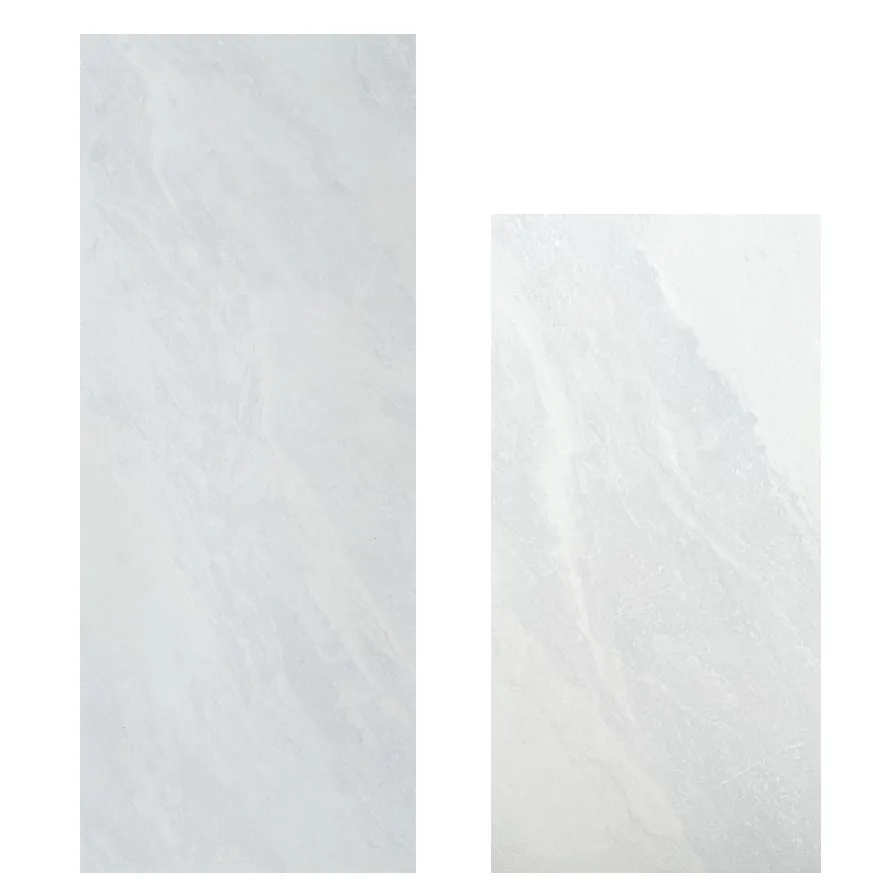
First, let's clear up a common misconception: Marble Veil White isn't your grandmother's marble. Natural marble is stunning but notoriously porous and soft, prone to scratches, stains, and etching from acidic substances (think: spilled orange juice in a cafeteria or marker scribbles in an art room). Marble Veil White, by contrast, is an engineered stone—a blend of natural marble aggregates and high-performance resins that undergo a specialized manufacturing process. This fusion creates a surface that retains the elegance of natural marble (those delicate, cloud-like veining patterns that add warmth without overwhelming) but with supercharged durability.
Take scratch resistance, for example. In independent lab tests, Marble Veil White scores a 6 on the Mohs hardness scale, putting it on par with granite and far above natural marble's 3-4 rating. That means when a student drags a chair across a classroom floor or a custodian buffs the hallway with a heavy-duty cleaner, the surface holds its own. Stain resistance? The resin binding agent creates a non-porous barrier, so even if a science experiment goes wrong (hello, food coloring spills) or a student forgets their water bottle cap, a quick wipe with a damp cloth is usually all it takes to restore the surface. No more permanent discoloration, no more costly resealing every few years.
To truly understand durability, let's talk about real-world scenarios. Elementary school hallways see hundreds of tiny feet daily, often in sneakers, boots, or even cleats after recess. Middle school lockers get slammed, and high school art studios are battlegrounds of paint, clay, and glue. Marble Veil White has been tested in these environments—and passed with flying colors. A case study from a public school district in Texas reported that after three years of use in high-traffic areas, their Marble Veil White walls and floors showed less than 5% visible wear, compared to 20-30% wear on traditional ceramic tiles in adjacent wings. "We used to have to replace hallway tiles every two years because of chips and cracks," said the district's facilities director. "With Marble Veil White, we're on year four, and they still look brand new. It's been a game-changer for our maintenance budget."
Another key factor? Impact resistance. Dropped textbooks, flying dodgeballs in gym class, even the occasional rogue basketball in a hallway—Marble Veil White doesn't crack under pressure. The material's flexibility (a trait shared with MCM flexible stone , another innovative cladding option) helps absorb minor impacts, preventing the spiderweb-like fractures that plague more brittle surfaces. This isn't just about saving money on repairs; it's about reducing disruptions. When a wall panel or floor tile needs replacing, it often means closing off a section of the school, rerouting students, and diverting staff time. With Marble Veil White, those headaches become rare.
If there's one thing schools can't afford, it's accidents. Wet floors from rain-soaked backpacks, spilled milk in the cafeteria, or even a leaking water fountain can turn a routine day into a liability nightmare. This is where Marble Veil White's texture plays a critical role. Unlike highly polished natural marble, which can become dangerously slippery when wet, Marble Veil White is available in a "matte" or "textured" finish that's been engineered for traction. The surface features microscopic grooves that channel water away, providing a coefficient of friction (COF) of 0.8—well above the 0.5 minimum recommended by the Americans with Disabilities Act (ADA) for public walkways. In practical terms, that means even on a rainy day, students can rush to class without slipping, and teachers can focus on lessons instead of worrying about falls.
Compare this to polish concrete , a common alternative in schools. While polish concrete is durable, its glossy finish often requires anti-slip treatments that wear off over time, leaving surfaces slick. Marble Veil White's traction is built into the material itself, so it doesn't fade with use. "We had a problem with slips in our auditorium during winter concerts, when parents would track in snow," recalled a principal from a New England middle school. "After switching to Marble Veil White on the stage and entryways, we haven't had a single incident. It's one less thing I lose sleep over."
Safety in schools isn't just about preventing slips and falls—it's about ensuring the materials themselves don't pose hidden risks. Marble Veil White is Class A fire-rated, meaning it resists combustion and doesn't release toxic fumes when exposed to high heat. In the unlikely event of a fire, this can buy critical time for evacuation. Equally important is indoor air quality (IAQ). Schools are closed environments, and students spend up to 6-8 hours a day breathing the air inside. Many building materials off-gas volatile organic compounds (VOCs) over time, which can cause headaches, allergies, or worse. Marble Veil White, however, is low-VOC and GREENGUARD certified, meeting strict emissions standards. This is especially crucial for younger students, whose developing respiratory systems are more vulnerable to pollutants.
Walk into a classroom bathed in harsh, sterile white, and you might feel on edge. Walk into one with warm, soft tones and subtle texture, and suddenly it's easier to focus. Research backs this up: studies from the University of Salford's School of the Built Environment found that students in classrooms with natural light and "biophilic" design elements (materials that mimic nature) scored 15% higher on tests and reported lower stress levels. Marble Veil White fits this bill perfectly. Its creamy base color reflects light, making spaces feel brighter and more open—even in windowless areas like basements or interior hallways. The delicate veining, which ranges from soft gray to pale gold, adds visual interest without being distracting, like a quiet reminder of the natural world.
Educators often note that overstimulating environments can hinder concentration, especially for students with ADHD or sensory processing disorders. Bold patterns or bright colors can overtax the brain, making it harder to absorb information. Marble Veil White, with its neutral palette and organic veining, creates a "blank canvas" that calms the mind. "In my special education classroom, we've struggled with overstimulation," said a teacher in California. "After repainting the walls and installing Marble Veil White countertops, I've noticed the students are more settled. They're better able to focus on tasks, and there are fewer meltdowns. It's like the space itself is helping them regulate."
While Marble Veil White shines on its own, it truly comes alive when paired with complementary materials. MCM flexible stone , for example, is a lightweight, durable cladding option that adds texture and warmth. Imagine a library where Marble Veil White shelves meet MCM flexible stone accent walls in a warm beige—creating a space that feels both sophisticated and cozy. Or a science lab where Marble Veil White countertops (resistant to chemicals and heat) are paired with MCM flexible stone backsplashes in a subtle gray, balancing functionality with visual appeal.
Another natural partner is wood grain board . Wood has long been associated with warmth and comfort, making it ideal for common areas like cafeterias or student lounges. When used alongside Marble Veil White, it creates a harmonious contrast: the cool elegance of the marble balances the warmth of the wood, avoiding the "cold institutional" feel that plagues many schools. A high school in Oregon recently redesigned its student center with Marble Veil White tabletops and wood grain board seating. "The kids actually hang out there now," said the vice principal. "Before, it was just a pass-through space. Now it feels like a second home—a place they want to be."
To truly appreciate Marble Veil White, it helps to see how it measures up to other common school materials. Let's break down the key factors: durability, safety, aesthetics, and maintenance.
| Feature | Marble Veil White | Fair-Faced Concrete | Polish Concrete | MCM Flexible Stone |
|---|---|---|---|---|
| Scratch Resistance | High (Mohs 6); resists chair drags, heavy foot traffic | Medium-High; prone to surface scuffs over time | Medium; glossy finish scratches easily | High; flexible yet tough, resists dents |
| Slip Resistance (Wet) | High (COF 0.8); textured finish | Medium; porous surface can be slippery when wet | Low; requires anti-slip treatments | High; customizable texture for traction |
| Aesthetic Versatility | High; soft veining, neutral palette, complements most designs | Low; industrial look, limited color options | Medium; sleek but monochromatic | Very High; mimics stone, wood, or custom textures |
| Maintenance Needs | Low; wipe with soap and water, no sealing required | Medium; requires periodic sealing to prevent staining | High; needs regular polishing to maintain shine | Low; water-resistant, easy to clean |
| Indoor Air Quality | Excellent; low-VOC, GREENGUARD certified | Good; but may off-gas initially | Medium; polishing compounds can release VOCs | Excellent; non-toxic, low emissions |
As the table shows, Marble Veil White excels in the areas that matter most for schools: it's durable enough to handle daily wear, safe enough to protect students, and attractive enough to enhance the learning environment. While materials like fair-faced concrete and polish concrete have their place, they often require trade-offs that Marble Veil White avoids.
In 2020, the Greenwood Unified School District in Arizona faced a dilemma: three of its elementary schools were due for renovations, and the budget was tight. The district needed materials that could withstand the desert heat (which can cause expansion and contraction in some stones), resist the dust and sand that blew in from nearby fields, and stay within a $2.5 million budget. After considering options like traditional ceramic tile, fair-faced concrete, and even vinyl flooring, the facilities team landed on Marble Veil White for hallways, classrooms, and cafeteria surfaces, paired with MCM flexible stone for accent walls.
Three years later, the results speak for themselves. "We expected the materials to hold up, but we didn't expect them to look this good," said the district's facilities manager. "The hallways still have that fresh, clean look—no chips, no stains, even in the kindergarten wing, which is chaos central. Our maintenance costs have dropped by 28% because we're not replacing tiles or resealing surfaces every year. And the teachers? They love how bright the rooms are. Test scores in reading and math have actually gone up in those schools—we can't prove it's the walls, but the vibe is different. The kids seem happier, more engaged."
Perhaps the most unexpected benefit? Parent feedback. "At back-to-school night, we had parents commenting on how 'upscale' the schools looked," laughed the principal of one renovated elementary. "They couldn't believe it was the same building. It sends a message: 'We care about your kids' environment.' That builds trust."
Schools don't have the luxury of shutting down for months for renovations. Summer breaks are short, and even a week of disruption can throw off lesson plans. Marble Veil White's lightweight, panel-based design makes installation faster and less intrusive than traditional stone. Unlike natural marble slabs, which require heavy machinery and precise cutting on-site, Marble Veil White panels come pre-cut to size, reducing dust and noise. In many cases, they can be installed directly over existing surfaces (like old tile or concrete), eliminating the need for demolition. A typical classroom renovation using Marble Veil White takes 2-3 days instead of a week, meaning schools can wrap up projects before the first bell rings.
Custodial staff in schools are the unsung heroes, tasked with keeping vast spaces clean with limited time and resources. Marble Veil White makes their jobs easier. Unlike natural marble, which requires specialized cleaners and annual sealing, Marble Veil White can be maintained with simple soap and water. For tough stains (like dried paint or marker), a non-abrasive cleaner and a soft cloth are usually enough. No buffing, no sealing, no harsh chemicals. "I used to spend 2 hours a day scrubbing cafeteria tables," said a head custodian in Texas. "Now I wipe them down in 20 minutes. I can actually keep up with the rest of my list—like disinfecting high-touch surfaces, which is way more important."
When we choose materials for schools, we're making a statement about what we value. Do we value short-term savings over long-term durability? Function over feeling? Or do we value spaces that honor the complexity of student life—spaces that are tough enough to handle spills and scuffs, safe enough to protect our kids, and beautiful enough to inspire them? Marble Veil White answers that call. It's not just a surface; it's a commitment to creating environments where students don't just learn—they thrive.
As more schools embrace this engineered marble, paired with complementary materials like MCM flexible stone and wood grain board, we're seeing a shift in educational design. No longer do institutions have to choose between "practical" and "inspiring." With Marble Veil White, they can have both. And in the end, isn't that what our students deserve? A space that's as resilient, bright, and full of potential as they are.
Recommend Products












