
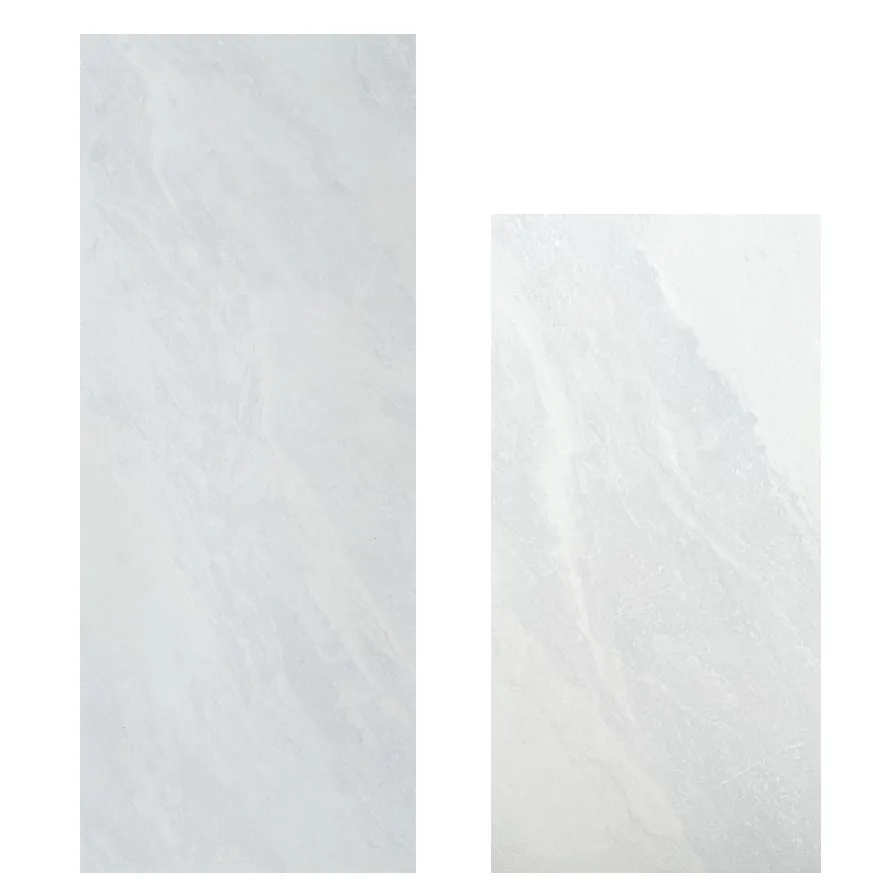
There's a quiet magic in stepping into a space that feels both timeless and alive—a 19th-century town hall with creaking wooden floors, where sunlight slants through original arched windows to dance on walls that tell two stories: one of weathered stone and chipped mortar, and another of fresh, intentional design that honors the past without being trapped by it. This is the art of heritage renovation, and at its heart lies a delicate dance between preservation and progress. Among the materials redefining this balance is Marble Veil White —a surface that doesn't just cover walls but weaves narratives, bridging centuries with its soft veining and understated elegance.
Heritage buildings are more than bricks and mortar; they're living museums of human ingenuity, each crack and stain a chapter in the story of a community. Renovating them isn't about erasing history, but reimagining it for modern life—adding insulation without hiding original beams, installing accessible entrances that complement classical facades, and choosing materials that speak the language of the past while meeting the demands of today. This is where Marble Veil White shines. Its texture, a gentle blend of creamy whites and subtle gray veins, mirrors the patina of aged marble without the fragility. Run your hand along a wall clad in it, and you'll feel the smoothness of modern engineering, yet catch hints of depth that echo the organic irregularities of stone quarried a century ago.
Ask any architect who specializes in heritage projects, and they'll tell you the same: the hardest part isn't restoring what's broken—it's adding what's new. Too much modernity, and the building loses its soul; too much reverence for the past, and it becomes a museum piece, disconnected from the people who use it daily. Take the case of the Old Mill Library in upstate New York, a 1870s brick structure with a crumbling interior that had been shuttered for decades. When the local historical society decided to reopen it as a community hub, they faced a dilemma: how to update the space for books, events, and digital access without erasing its 19th-century charm.
The solution? A careful curation of materials that converse with the building's original features. The exposed brick walls were cleaned but left with their natural wear, their rough texture a reminder of the mill workers who once walked those halls. For the new interior partitions and stairwell cladding, the architects chose Marble Veil White. "It wasn't about matching the old stone—it was about complementing it," says lead designer Elena Marquez. "The original limestone floors have these warm, honeyed tones, and the Marble Veil White acts like a soft counterpoint, brightening the space without clashing. It's like adding a new verse to an old song—familiar enough to feel like part of the melody, fresh enough to keep it interesting."
Marble Veil White's versatility is key here. Unlike natural marble, which can be porous and prone to staining, it's engineered for durability, resisting moisture and scratches—essential for a busy library. Yet it doesn't feel clinical. The veining, designed to mimic the randomness of natural stone, adds visual interest that draws the eye without overwhelming. In the reading nook, where a original wooden beam crosses above a new seating area, the contrast between the warm wood, weathered brick, and cool Marble Veil White creates a space that feels both grounded and airy. "People keep saying it feels 'lived-in but loved,'" Marquez notes. "That's the goal—heritage that doesn't feel like a relic."
Marble Veil White rarely works alone in these projects. Its strength lies in how it pairs with other materials, creating layers of texture that tell a richer story. Take fair-faced concrete , for example—a modern staple with a raw, industrial edge. When used alongside Marble Veil White, it adds a sense of groundedness, like the backbone of a building supporting its more delicate elements. In the lobby of the Grand Theater Restoration in Chicago, the original terracotta tiles were preserved, while new ticket counters were crafted from fair-faced concrete, their smooth gray surfaces offset by Marble Veil White accent walls. The result? A space that feels both grand (thanks to the terracotta's intricate patterns) and approachable (the concrete's warmth softening the formality).
Then there's wood grain board , which brings the organic warmth of timber into the mix. In heritage homes converted into boutique hotels, wood grain board is often used for wainscoting or ceiling panels, its subtle knots and lines echoing the original wooden beams. When paired with Marble Veil White on the walls, it creates a cozy, residential feel—perfect for spaces meant to feel like "a home away from home." At the Hearthstone Inn in Vermont, a 1820s farmhouse turned hotel, the guest rooms feature Marble Veil White fireplaces surrounded by wood grain board mantels. "The marble adds a touch of elegance, but the wood keeps it from feeling too fancy," says innkeeper Martha Hale. "Guests run their fingers over the wood grain like they're checking for ghosts—and then they notice the marble, how it catches the firelight. It's like the old and new are having a conversation right there in the room."
And let's not forget travertine —a classic stone with a porous, almost sponge-like texture that feels inherently ancient. Travertine (starry green), with its deep emerald hues and flecks of gold, makes a striking accent when used sparingly with Marble Veil White. In the City Hall Annex renovation in Boston, the architects used travertine (starry green) for a feature wall in the council chamber, its bold color breaking up the neutrality of the Marble Veil White cladding. "Travertine has this earthy quality that feels timeless," explains project manager James Chen. "Marble Veil White keeps the space from feeling heavy, while the starry green adds a pop of personality—like a nod to the city's vibrant present, rooted in its historic past."
| Material | Texture & Character | Best For | Why It Works in Heritage |
|---|---|---|---|
| Marble Veil White | Creamy white base with soft gray veins; smooth, polished finish with subtle depth. | Walls, countertops, stairwells, accent panels. | Mimics aged marble without fragility; brightens spaces while complementing historic stone/brick. |
| Fair-Faced Concrete | Raw, matte gray with visible aggregate; industrial yet warm. | Floors, counters, structural elements (columns, beams). | Adds modern resilience; its simplicity lets original details (terracotta, wood) stand out. |
| Wood Grain Board | Subtle wood patterns, warm tones, smooth to the touch. | Wainscoting, ceilings, furniture, mantels. | Echoes original timber features; lightweight and easy to install without damaging historic structures. |
| Travertine (Starry Green) | Deep green base with gold/bronze flecks; porous, textured surface. | Accent walls, fireplaces, outdoor patios. | Feels ancient and organic; adds color without overwhelming neutral palettes. |
| MCM Flexible Stone | Thin, lightweight sheets with stone-like texture; available in various finishes. | Exterior cladding, interior feature walls, curved surfaces. | Reduces structural load on old buildings; flexible enough to follow historic architectural curves. |
Heritage renovation isn't just about preserving the past—it's about protecting the future. Modern materials like Marble Veil White and MCM flexible stone are designed with sustainability in mind, reducing waste and energy use. MCM flexible stone, for instance, is ultra-lightweight, meaning less fuel is needed for transportation, and its thin profile reduces the amount of material used. Fair-faced concrete, when sourced locally, has a low carbon footprint, and its durability means less frequent replacement. Even wood grain board, often made from recycled or sustainably harvested timber, adds an eco-friendly layer to these projects.
At the Riverfront Mill Redevelopment in Pittsburgh, a former steel mill converted into a mixed-use space, sustainability was a core goal. The developers chose MCM flexible stone (vintage silver) for the exterior cladding, its metallic sheen paying homage to the mill's industrial past while reflecting sunlight to reduce cooling costs. Inside, Marble Veil White was used for interior walls, paired with energy-efficient LED lighting that highlights its veining. "We didn't want to just restore the building—we wanted to make it a model for how heritage and sustainability can go hand in hand," says project director Raj Patel. "Marble Veil White's durability means we won't have to replace it for decades, and its light color reduces the need for artificial lighting during the day. It's a small choice, but multiplied across the building, it adds up."
At the end of the day, the best heritage renovations aren't just about materials—they're about how those materials make people feel. Walk into a space where Marble Veil White, fair-faced concrete, and wood grain board coexist with original stone and timber, and you'll sense something intangible: a feeling of continuity. It's the difference between visiting a museum (where you're an observer) and living in a place (where you're part of the story).
Take the Heritage Schoolhouse in Portland, Oregon, a 1910s redbrick building converted into a community center for art classes and workshops. The original blackboards were preserved, their chalk-stained surfaces a canvas of decades of lessons. New studio walls were clad in Marble Veil White, their brightness making the natural light feel more vivid, while wood grain board ceilings added warmth. "Artists love it here," says program coordinator Lisa Wong. "They say the space feels 'inspired'—like the old and new are collaborating. A painter told me she stares at the Marble Veil White walls when she's stuck, watching how the light shifts over the veins. It's like the building itself is giving her ideas."
That's the magic of materials like Marble Veil White. They don't just fill a functional role—they create atmosphere, spark connection, and remind us that history isn't something to be locked away in glass cases. It's alive, evolving, and waiting to be reimagined. In the hands of thoughtful designers, these materials become storytellers, weaving the past into the present so seamlessly that we barely notice the threads—we just feel the truth of the space: that we are part of something larger than ourselves.
Heritage renovation is a radical act of hope. It says that we value where we've been, but we're not afraid to move forward. Marble Veil White, with its ability to bridge old and new, is more than a building material—it's a symbol of that hope. It reminds us that preservation and progress don't have to be enemies; they can be dance partners, each step honoring the rhythm of the past while keeping time with the present.
So the next time you walk into a renovated historic space, take a moment to touch the walls. Notice the blend of textures—the roughness of original stone, the smoothness of modern marble, the warmth of wood. You're not just touching materials; you're touching stories: the stories of the people who built the space, the ones who restored it, and the ones who will use it tomorrow. And in that touch, you'll feel something powerful: the quiet confidence that history isn't ending—it's just getting a new chapter. And Marble Veil White? It's the perfect ink to write it in.
Recommend Products












