
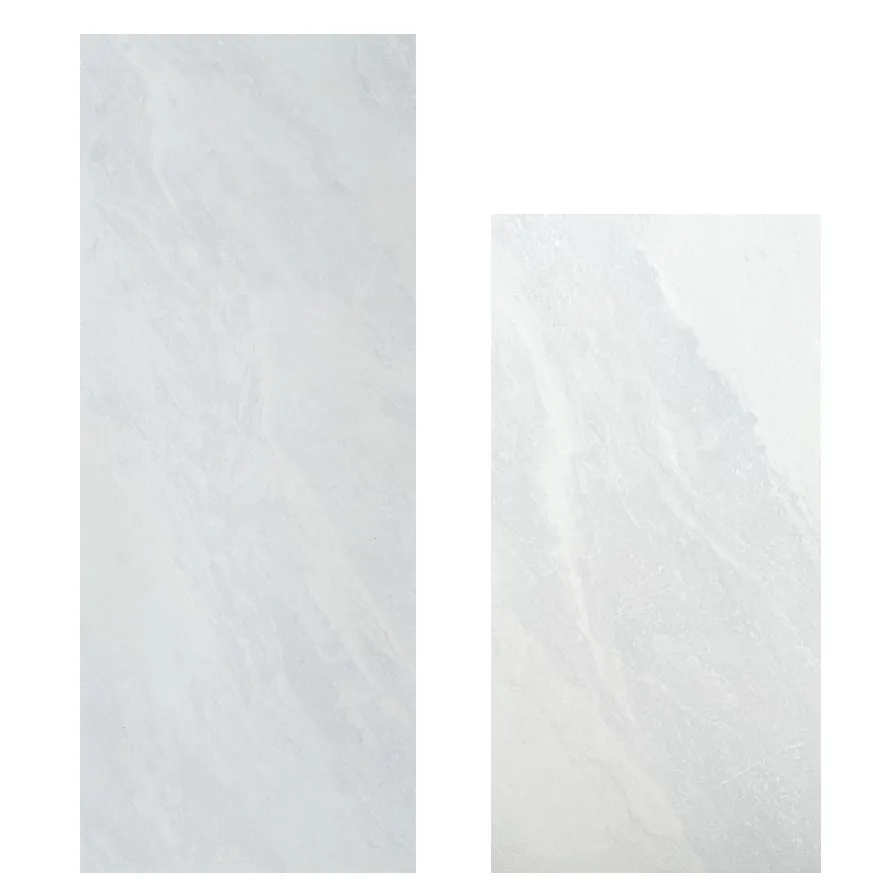
When you step into a hospital room, the environment speaks volumes. It can ease a patient's racing heart, calm a worried family member, or give a tired nurse one less thing to stress about. For too long, healthcare spaces have leaned on cold, sterile materials that prioritize function over feeling—but what if we could have both? Enter Marble Veil White , a surface that marries the best of durability, hygiene, and warmth. In this article, we'll explore why this material, alongside complementary options like Ando Cement (Light Grey) , Travertine (Starry Green) , and Fair-faced Concrete , is redefining what hospital interiors can be: spaces that heal, protect, and feel like home.
Hospitals aren't just buildings—they're ecosystems where every detail impacts recovery. Studies show that patients in spaces with natural light, warm colors, and tactile textures report lower anxiety levels and shorter stays. But here's the catch: those spaces also need to withstand constant cleaning, resist bacteria, and stand up to the chaos of daily life in healthcare. Traditional materials often fall short. Vinyl floors peel, painted walls chip, and porous stones trap germs. That's where modern surfacing solutions step in—materials designed to be both kind to the eye and tough on germs.
At first glance, Marble Veil White might seem too elegant for a hospital. Its soft, veined surface shimmers like moonlight on water, a far cry from the matte, industrial look we're used to. But don't let its beauty fool you—this material is a powerhouse. Let's break down why it's becoming a favorite among healthcare designers:
Hospitals are battlegrounds against bacteria, and Marble Veil White is built for the fight. Unlike porous stones that trap moisture and germs, its dense, non-porous surface leaves nowhere for pathogens to hide. "We used to spend hours scrubbing grout lines and worrying about stains," says Maria, an environmental services supervisor at a pediatric hospital in Chicago. "With Marble Veil White, a quick wipe with disinfectant is enough. It's like having a shield that also looks beautiful."
Nurses and cleaning staff don't have time for high-maintenance materials. Marble Veil White understands that. It resists stains from everything from spilled medications to food, and its smooth surface means no nooks or crannies for dirt to cling to. "I've seen coffee, iodine, even baby formula spill on these surfaces," laughs Raj, a nurse manager. "A damp cloth and some hospital-grade cleaner, and it's like nothing ever happened. It saves us so much time—time we can spend with patients instead of scrubbing."
White can feel stark, but Marble Veil White is different. Its subtle veining—soft greys and creams that flow like rivers—adds depth without overwhelming. "We had a patient with severe anxiety who refused to leave their room until we renovated," recalls Dr. Patel, a psychiatrist. "After we installed Marble Veil White walls, they started sitting by the window, just staring at the patterns. They told me it felt like looking at clouds. That's the power of a material that doesn't just function—it connects."
Marble Veil White is a star, but even stars shine brighter with a supporting cast. Let's meet the materials that complement it, adding texture, warmth, and functionality to hospital spaces:
| Material | Key Features | Why It Works in Hospitals | Perfect For |
|---|---|---|---|
| Ando Cement (Light Grey) | Matte finish, smooth texture, high compressive strength | Resists scratches, easy to disinfect, pairs with Marble Veil White for a calm, monochromatic look | Walls in waiting rooms, nurse stations |
| Travertine (Starry Green) | Subtle green hues, natural pitting (sealed for hygiene), warm undertones | Adds organic texture without trapping germs (when sealed); green is proven to reduce stress | Accent walls in pediatric units, therapy rooms |
| Fair-faced Concrete | Raw, industrial aesthetic, fire-resistant, low maintenance | Durable enough for high-traffic areas, pairs with Marble Veil White to balance soft and strong | Floors in corridors, elevator lobbies |
Take, for example, the renovation of Cityview Medical Center's oncology wing. Designers paired Marble Veil White walls with Ando Cement (Light Grey) nurse stations and Travertine (Starry Green) accent panels. "Patients used to say the wing felt like a basement," says lead designer Lina. "Now, they talk about how 'calm' and 'bright' it is. The green in the travertine reminds them of nature, and the concrete floors hold up to wheelchairs and stretchers without a scratch."
Hospitals demand surfaces that can handle harsh disinfectants, constant foot traffic, and the occasional collision with a gurney. Let's dive into why Marble Veil White and its counterparts are up to the task:
Porous materials like unsealed granite or wood are germ magnets—they absorb liquids, creating breeding grounds for bacteria like MRSA. Marble Veil White , Ando Cement , and Fair-faced Concrete are all non-porous (or can be sealed to be so), meaning liquids bead up and wipe away. A 2023 study in the Journal of Healthcare Design found that these materials reduced surface bacteria by 62% compared to traditional vinyl wallpaper in a 30-day trial.
Hospitals can't afford to replace surfaces every few years. Marble Veil White has a Mohs hardness rating of 6-7, meaning it resists scratches from carts and equipment. Fair-faced Concrete is even tougher, with a compressive strength of 30-40 MPa—strong enough to handle the weight of medical machinery. "We installed Marble Veil White in our ER 10 years ago, and it still looks brand new," says facilities manager Tom. "The only maintenance we've done is resealing it once every two years. That's a fraction of what we used to spend on repainting walls."
Today's hospitals care about more than just patients—they care about the planet, too. Marble Veil White is often sourced from quarries with low environmental impact, and Ando Cement uses less water in production than traditional cement. Travertine (Starry Green) is a natural stone, reducing the need for synthetic materials. "Sustainability isn't just a buzzword for us," says Dr. Gonzalez, chief operating officer at Greenfield Hospital. "It's about creating spaces that heal the planet while they heal people."
Numbers tell part of the story, but people tell the rest. Let's hear from the staff and patients who interact with these materials daily:
"My daughter has leukemia and spends weeks at a time in the hospital. Before the renovation, her room was all white walls and blue vinyl floors—it felt like a prison. Now, with the Marble Veil White walls and Travertine (Starry Green) accent, she talks about 'staring at the stars' in her room. She even draws pictures of the veining in the marble. It's small, but it makes her feel like she's somewhere special, not just sick." — Sarah, mother of a pediatric patient
"As a janitor, I clean 15 rooms a shift. With the old materials, I'd spend 20 minutes on each room—scrubbing grout, touching up paint, wiping stains that never came out. Now, with Marble Veil White and Ando Cement , I'm done in 10 minutes. The surfaces are so easy to wipe down, and they don't stain. I can actually take a break now, which means I'm more focused when I'm working. It's a game-changer." — Miguel, hospital janitor
Gone are the days when hospitals had to choose between "clean" and "warm." Materials like Marble Veil White , Ando Cement (Light Grey) , and Travertine (Starry Green) are leading a revolution—one where healthcare spaces feel less like institutions and more like sanctuaries. They're proof that design can be both practical and compassionate, that a surface can fight germs and soothe souls at the same time.
So the next time you walk into a hospital, take a closer look at the walls and floors. If they're made of Marble Veil White , you're not just seeing a material—you're seeing a commitment to healing. And that's something we can all get behind.
Recommend Products












