
It started with a sigh—one of those heavy, resigned sighs that escape when you've stared at the same chipped countertop for the hundredth morning in a row. Our kitchen, once the heart of our home, had become a source of quiet frustration. The linoleum floors curled at the edges, the laminate countertops bore stains that no amount of scrubbing could erase, and the dark wooden cabinets absorbed light like a sponge, leaving the space feeling cramped and outdated. My husband, Mike, and I had talked about renovating for years, but between work, kids, and the endless "what-ifs" of home improvement, it always stayed a vague "someday" plan. That is, until the day our 10-year-old, Lila, drew a picture of our house and labeled the kitchen "The Sad Room." Ouch. That's when we knew: "someday" had to be now.
Let me paint you a picture of "The Sad Room" as it was. The countertops were a faded beige laminate that had seen better days—coffee rings permanently etched near the coffee maker, a deep scratch from a rogue can opener, and a mysterious discoloration by the sink that we'd stopped trying to fix years ago. The backsplash was a mishmash of tiny, outdated tiles in shades of brown that clashed with… well, everything. The floors? Don't get me started. The linoleum was supposed to be "cream," but years of foot traffic and spills had turned it into a splotchy mess of gray and yellow. Worst of all, the space felt closed off. The upper cabinets went all the way to the ceiling, blocking light, and the layout made it impossible for more than one person to cook without bumping elbows. It wasn't just ugly—it was unlivable in the way that sapped your energy before you even poured your first cup of coffee.
We knew we wanted to open it up, brighten it, and create something that felt timeless. But here's the thing about home renovations: walk into any home improvement store, and you're hit with a wall of options. Granite? Quartz? Ceramic? The choices were overwhelming, and every salesperson had a different "must-have" material. We spent weekends scrolling through Pinterest, bookmarking kitchens that looked beautiful but felt… cold. Too sterile. We wanted something that felt warm , that had character, but wouldn't require the maintenance of, say, natural marble (which everyone warned us would stain if you so much as looked at it wrong). We needed durability—with two kids and a golden retriever named Max, "delicate" wasn't in our vocabulary. And we wanted something that would grow with us, not feel dated in five years.
Fun fact: We almost settled on plain white quartz. It was "safe," the contractor said. "Easy to clean, no fuss." But when we visited a showroom and ran our hands over a sample, it felt… plastic. Like a kitchen in a hotel, not a home. Mike looked at me and said, "Is this really what we want? A space that feels like it belongs to someone else?" Spoiler: it wasn't.
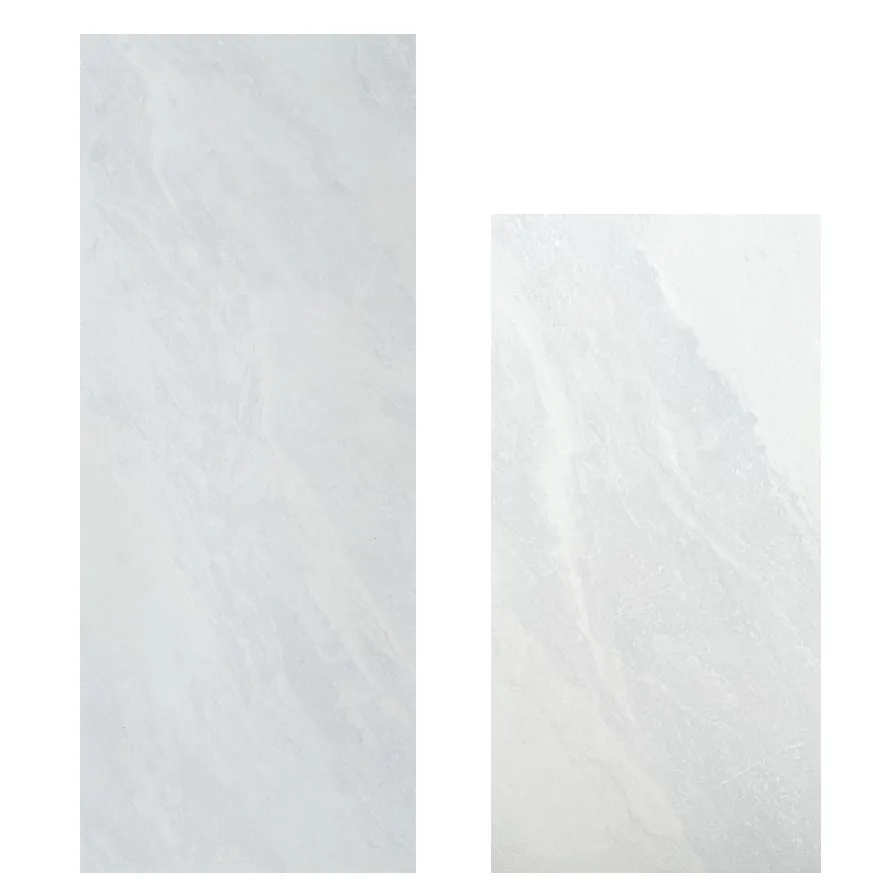
Our breakthrough came on a rainy Saturday, when we ducked into a boutique design studio to escape the downpour. There, on a wall of sample boards, was a slab that made us both stop. It was called Marble Veil White —and it was unlike anything we'd seen. At first glance, it looked like marble, with soft, wispy veining in shades of gray that swirled across a creamy white background. But when the sales rep, a warm woman named Elena, handed us a sample, the difference was clear. It had the elegance of marble, but a subtle texture that felt more robust, less fragile. "It's part of MCM's engineered stone line," she explained. "Made with natural marble aggregates but reinforced to be scratch-resistant, stain-proof, and way more durable than traditional marble. Perfect for busy families."
Elena let us take the sample home, and for a week, we tested it. We spilled coffee on it (no stain). We dragged a fork across it (no scratch). Max even tried to chew on it (don't ask) and left zero marks. But what really sold us was how it looked in different lights. In the morning, when the sun streamed through the kitchen window, the veining seemed to glow, making the space feel airy. In the evening, under warm pendant lights, it took on a cozy, inviting hue. It wasn't just a countertop material—it was a mood-setter. We were hooked. But we still needed to round out the design. Elena suggested pairing it with Wood Grain Board for the island countertop to add warmth, and Fair-faced Concrete for the backsplash to introduce an industrial edge that would balance the softness of the marble. "Contrast is key," she said. "Marble Veil White is the star, but it needs supporting players to shine."
Renovations are never easy, and ours was no exception. Demo day was equal parts exciting and terrifying—watching the old cabinets come down felt like shedding a skin, but the dust? Everywhere. For three weeks, we camped out in the living room, eating takeout on paper plates and washing dishes in the bathroom sink. Lila thought it was an adventure ("We're like explorers in our own house!"), but Mike and I counted the days until we could make coffee in our own kitchen again.
The first big moment was when the Marble Veil White slabs arrived. They were massive—8 feet long—and watching the installers carefully maneuver them into place felt like watching art being hung. The island, which we'd decided to extend to create more seating, was wrapped in Wood Grain Board , its warm, honeyed tones complementing the marble's cool elegance. The backsplash, Fair-faced Concrete , was a bold choice—raw and minimalist, with tiny air bubbles that added texture without overwhelming the space. We also opted to remove the upper cabinets and replace them with open shelving, which made the room feel instantly larger. And we swapped the linoleum for luxury vinyl planks that mimicked the look of hardwood but were waterproof (thank goodness, given Lila's tendency to spill juice boxes).
There were hiccups, of course. The initial measurements for the island were off by an inch, which meant a last-minute re-cut. And we underestimated how loud concrete cutting is (sorry, neighbors). But through it all, Elena checked in regularly, and the contractors were patient with our million questions ("Is this supposed to take this long?" "Will the veining line up perfectly?"). By week four, the chaos started to clear—and we finally got a glimpse of the finished space.
| Feature | Before (The Sad Room) | After (Our Dream Kitchen) |
|---|---|---|
| Countertops | Faded beige laminate with stains, scratches, and discoloration | Marble Veil White: Creamy white with soft gray veining, scratch/stain-resistant |
| Backsplash | Outdated brown tiles with grout that trapped dirt | Fair-faced Concrete: Raw, textured finish with subtle industrial edge |
| Island Countertop | Same laminate as main countertops, cramped size | Wood Grain Board: Warm honey tones, extended length for seating |
| Cabinets | Dark wood, floor-to-ceiling, blocking light | Light gray lower cabinets, open shelving for upper storage |
| Flooring | Worn linoleum in splotchy cream/brown | Waterproof luxury vinyl planks (wood-look) |
I'll never forget the first morning we walked into the new kitchen. The sun was coming through the window, hitting the Marble Veil White countertops, and the veining looked like clouds floating across the surface. Lila ran in, gasped, and yelled, "It's not sad anymore!" Max trotted over and plopped down on the new rug, tail wagging like he approved, too. Mike poured us coffee, and we just stood there, grinning like idiots, because it was better than we'd ever imagined.
The space is now bright, open, and alive . The Marble Veil White countertops are the star, but the Wood Grain Board island adds a touch of warmth that keeps it from feeling cold. The Fair-faced Concrete backsplash is a conversation starter—guests always run their hands over it, commenting on its unique texture. And the best part? It's functional . I can cook while Lila does homework at the island, and Mike can sneak in to steal a cookie without us colliding. We've hosted dinner parties, birthday celebrations, and lazy Sunday brunches, and the space holds up beautifully. Spills wipe right off the marble, the Wood Grain Board still looks brand-new, and the concrete backsplash just gets better with age, developing a subtle patina that feels lived-in.
One of my favorite moments? Last month, Lila brought home a friend who said, "Wow, your kitchen is so pretty! Can we do homework here?" That's when I knew we'd nailed it. It's not just a kitchen anymore—it's a space where memories are made. A space that feels like us .
"I used to avoid cooking because the old kitchen stressed me out. Now? I look forward to making dinner. It's like the space itself encourages us to slow down, connect, and enjoy being together." — Mike, on the new kitchen
If you're on the fence about renovating, or overwhelmed by material choices, let me leave you with this: your home should make you happy. It should reflect who you are and how you live. For us, Marble Veil White wasn't just a pretty surface—it was a solution that checked every box: durability, style, versatility, and that intangible "feel" that turns a house into a home. It's elegant enough for special occasions but tough enough for everyday life. And paired with complementary materials like Wood Grain Board and Fair-faced Concrete, it created a space that's both timeless and uniquely ours.
So, to anyone staring at their own "Sad Room" and wondering if a renovation is worth it: trust me, it is. It won't be easy, and there will be dust, and you'll question every decision along the way. But when you walk into that transformed space for the first time, and feel that rush of joy? That's the moment it all becomes worth it. And if you're lucky enough to find a material like Marble Veil White that feels like it was made for your family? Even better.
Our kitchen isn't just renovated—it's reborn. And honestly? I don't think Lila will be drawing "The Sad Room" ever again. In fact, her latest artwork? A picture of our kitchen with a big, sparkly heart drawn over it. Now that's the kind of review you can't put a price on.
Recommend Products












