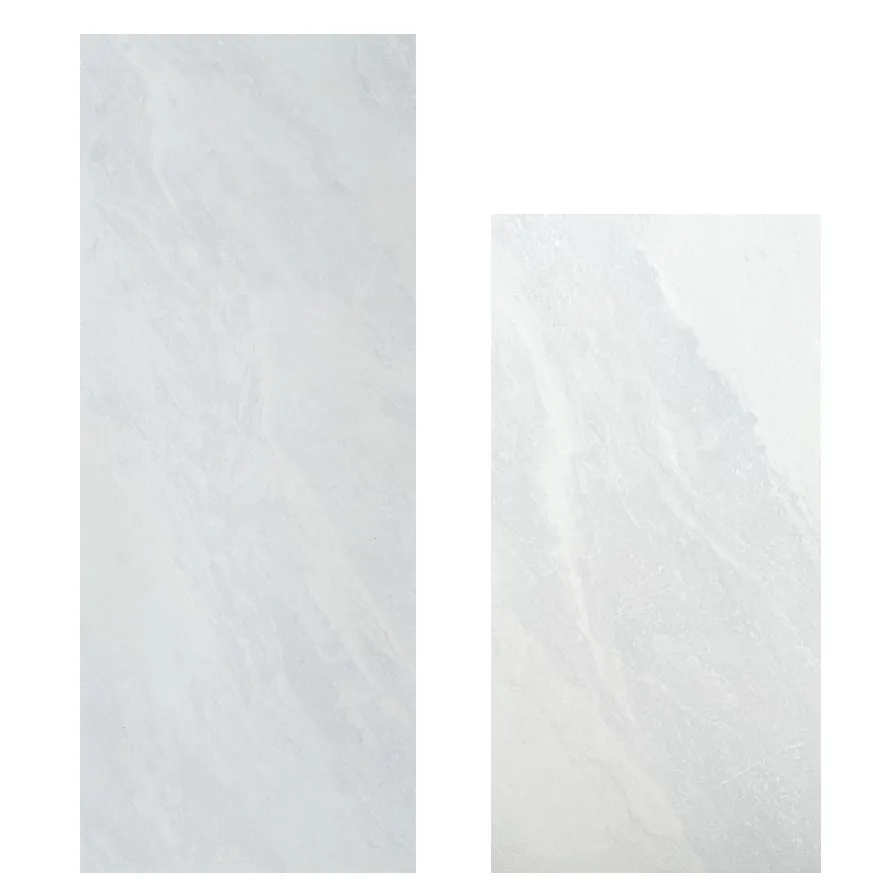
Step into the lobby of Riyadh's newest cultural center, and your gaze is immediately drawn upward. The walls rise like cliffs of polished marble, their surface a soft, creamy white interrupted only by delicate gray veins. This is Marble Veil White – not just a material, but a narrative. Its veining, irregular and organic, echoes the winding paths of desert wadis after rain, or the calligraphic flourishes of a Quranic manuscript. In a country where architecture has long served as a bridge between the divine and the earthly, this stone feels almost sacred in its simplicity.
The Allure of the Vein
What makes Marble Veil White so compelling? It starts with texture. Run a hand across its surface, and you'll find a finish that's smooth yet subtly tactile – cool to the touch, like the marble floors of traditional riads, but with a modern polish that catches light in unexpected ways. "It's versatile," says Lina Hassan, an interior designer at a leading Riyadh firm. "In a mosque, it feels serene and reverent, grounding worshippers in quiet contemplation. In a luxury hotel suite, it becomes opulent, pairing beautifully with gold accents and warm lighting. Even in a casual café, it adds a touch of elegance without feeling imposing."
The stone's color palette is another secret to its popularity. The base white is soft, not stark – more like the glow of dawn over the Empty Quarter than the harsh brightness of a hospital wall. This warmth makes it adaptable to Saudi Arabia's intense sunlight; unlike pure white surfaces that can glare, Marble Veil White diffuses light, creating spaces that feel airy without being overwhelming. "We used it in a villa in Jeddah, lining the courtyard walls," Hassan recalls. "In the morning, the sunlight filters through the palm trees, and the veins cast shadows that move like dancers. By afternoon, as the light softens, the stone takes on a honeyed hue. It's never the same space twice."
Beyond Aesthetics: Practicality in the Desert
Beauty alone doesn't make a trend in Saudi Arabia – durability does. Marble Veil White, surprisingly, holds its own against the country's harsh climate. "It's denser than traditional marble," explains engineer Kamal Al-Mansoori, who specializes in sustainable building materials. "We've treated it with a nano-coating that resists staining from dust and humidity, which is crucial in coastal cities like Jeddah. In Riyadh, where sandstorms are common, it wipes clean easily – no permanent scratches, no discoloration. For developers, that means lower maintenance costs over time."
Its popularity is also tied to Saudi Arabia's growing focus on heritage preservation. In projects like the restoration of Jeddah's Al-Balad district, Marble Veil White is being used to replicate the look of historic marble accents while offering modern durability. "Older buildings here used local limestone and marble, but many of those quarries are depleted," says Al-Mansoori. "Marble Veil White is sourced from sustainable quarries in Italy and Turkey, but its aesthetic aligns so closely with our traditional materials that it feels like a natural successor. It's not about replacing the past – it's about honoring it."
Project Spotlight: Al-Murabba Museum Expansion
One of the most anticipated uses of Marble Veil White is in the upcoming expansion of Riyadh's Al-Murabba Museum, dedicated to Saudi history. The new wing, designed by award-winning architect Zaha Hadid Architects, features a facade of interlocking Marble Veil White panels, their veining arranged to form a abstract map of the Arabian Peninsula. Inside, the galleries will use the stone for flooring and display pedestals, allowing artifacts – from ancient pottery to modern art – to take center stage. "The goal was to create a space that feels both timeless and contemporary," says a museum spokesperson. "Marble Veil White does that. It doesn't compete with the exhibits; it elevates them."