
Redefining Durability, Aesthetics, and Sustainability in Modern Architecture
In the world of large-scale construction—whether it's a sprawling shopping mall, a towering office complex, or a campus-wide university expansion—every decision carries weight. Architects, contractors, and project managers don't just select materials; they're choosing the face of a building, its longevity, and its impact on both the environment and the bottom line. Traditional options like natural stone slabs, brick, or even fair-faced concrete have long been go-to choices, but they come with a litany of headaches: excessive weight that strains structural supports, fragility that leads to cracks during installation, and inflexibility that limits design creativity.
Enter the Marble Veil White Project Board Series, a standout offering within the mcm big slab board series. Designed specifically to address the unique demands of large-scale projects, this line of flexible stone cladding panels is more than just a material—it's a solution that bridges the gap between aesthetics and functionality. Let's dive into why this series is quickly becoming the top pick for architectural big slab solutions across the globe.
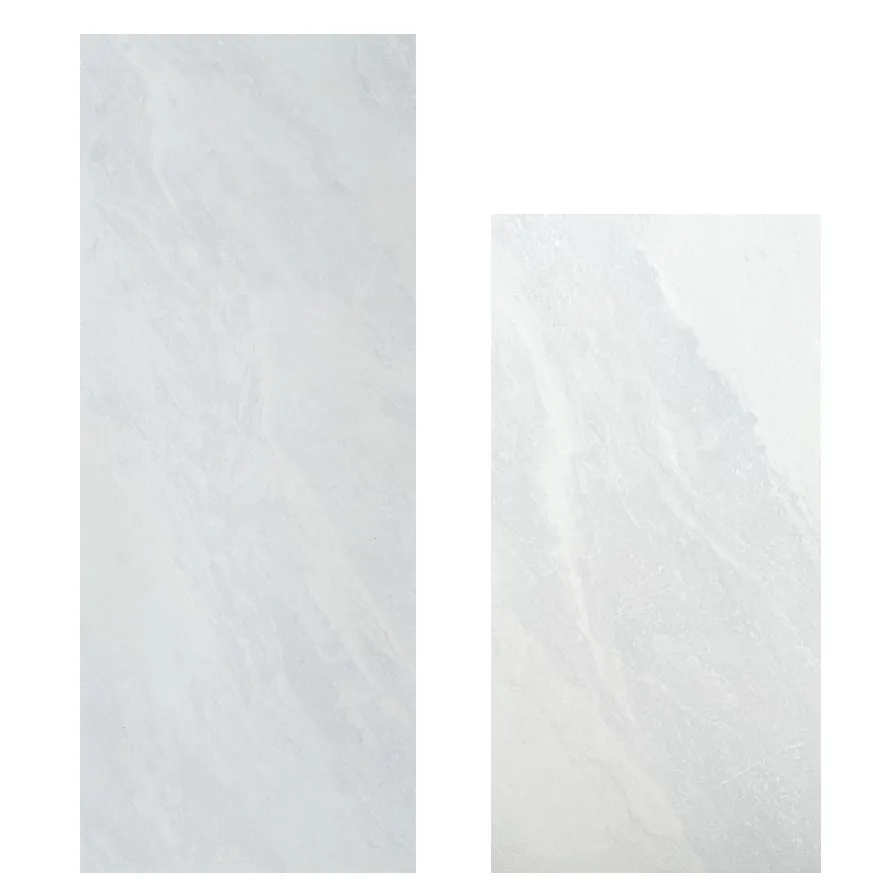
At first glance, Marble Veil White might evoke the timeless elegance of natural marble, with its soft, veined patterns in shades of ivory and pale gray. But look closer, and you'll realize it's a marvel of modern engineering. Unlike traditional marble slabs, which are quarried, cut, and transported as heavy, rigid blocks, Marble Veil White is crafted from modified composite materials that prioritize flexibility, durability, and sustainability—hallmarks of green building materials.
One of the biggest pain points in large-scale construction is material weight. A standard 2cm-thick natural marble slab weighs roughly 50 kg per square meter, requiring reinforced structural supports and specialized lifting equipment. Marble Veil White, by contrast, clocks in at just 12–18 kg per square meter, thanks to its innovative composition that combines stone aggregates with high-performance polymers. This drastic reduction in weight not only eases transportation (fewer trucks, lower fuel costs) but also reduces the load on a building's frame, allowing architects to design taller, more ambitious structures without compromising safety.
Don't let the lightness fool you, though. These panels are engineered to withstand the elements: they're resistant to impact, UV radiation, and extreme temperatures, making them suitable for everything from desert climates to coastal regions. In independent testing, Marble Veil White panels showed no signs of cracking or fading after 2,000 hours of accelerated weathering—far exceeding the performance of many traditional cladding materials.
Traditional stone slabs are rigid, which means any slight irregularity in a building's substrate can lead to gaps, cracks, or uneven surfaces. Marble Veil White, as a flexible stone cladding panel, bends slightly to accommodate minor imperfections, ensuring a smooth, uniform facade. This flexibility also simplifies installation: panels can be cut on-site with standard tools, and their interlocking design means they fit together like a puzzle, reducing labor time by up to 40% compared to traditional stone installation.
Imagine a construction crew working on a tight deadline for a new airport terminal. With traditional stone, each slab would need to be precisely measured, transported to the upper floors via crane, and carefully aligned—risking delays if even one piece breaks. With Marble Veil White, the team can carry panels by hand to upper levels, cut them to size in minutes, and secure them with a simple adhesive or mechanical fastening system. It's a game-changer for projects where time is money.
Large-scale buildings often struggle to balance grandeur with personality. A monotonous facade can feel cold and unwelcoming, while overly intricate designs can be cost-prohibitive. Marble Veil White solves this by offering a range of finishes and patterns that mimic the beauty of natural stone without the limitations. Whether architects want a sleek, polished look for a corporate headquarters or a more textured, matte finish for a cultural center, the series delivers.
The "veil white" pattern itself is a study in understated luxury—soft gray veins meandering across a creamy background, evoking the look of Italian Carrara marble but with a modern twist. And because it's part of the mcm big slab board series, it pairs seamlessly with other materials in the line, allowing for creative combinations: think Marble Veil White panels accented with strips of fair-faced concrete for a bold, industrial-chic aesthetic, or mixed with wood grain finishes for a warm, organic feel.
To truly understand the value of the Marble Veil White Project Board Series, it helps to compare it to a common alternative: fair-faced concrete. Both are used in large-scale construction for their durability, but the differences in performance, aesthetics, and sustainability are striking.
| Feature | Marble Veil White Project Board | Fair-Faced Concrete |
|---|---|---|
| Weight (per m²) | 12–18 kg | 220–240 kg (for 10cm slab) |
| Installation Time | 40% faster than traditional stone | Slow; requires formwork, curing time (7–28 days) |
| Aesthetic Range | Multiple finishes (polished, matte, textured); customizable veining | Limited; typically gray, with variations from formwork |
| Sustainability | Recycled materials; low carbon footprint; 100% recyclable | High embodied carbon; requires large amounts of water and cement |
| Maintenance | Minimal; resistant to stains, mold, and fading | Prone to cracking; may require sealing; stains difficult to remove |
The table tells a clear story: while fair-faced concrete has its place in industrial or minimalist designs, Marble Veil White offers a superior blend of practicality and beauty—especially for projects where time, weight, and aesthetics are critical.
Large-scale construction isn't one-size-fits-all, and neither is the Marble Veil White Project Board Series. Its versatility makes it suitable for a wide range of applications, from commercial skyscrapers to public spaces and residential complexes. Here are just a few examples of how architects and builders are putting it to use:
In busy commercial districts, first impressions matter. A flagship store or office lobby needs to stand out while withstanding heavy foot traffic and daily wear. Marble Veil White panels have been used to clad the exterior of a 30,000-square-meter shopping mall in Dubai, where their light weight reduced construction time by three months, and their resistance to heat and humidity ensures the facade remains pristine even in the city's scorching summers. Inside, the panels line the atriums, reflecting natural light to create an airy, welcoming atmosphere that draws shoppers in.
Universities and museums often aim to balance tradition with innovation, and Marble Veil White fits the bill. A recent expansion of a state university's campus included a new science center with a facade combining Marble Veil White panels and wood grain accents. The result? A building that feels both timeless and forward-thinking, with panels that require minimal upkeep—critical for institutions with tight maintenance budgets. The material's acoustic properties also make it ideal for lecture halls, where sound absorption helps improve clarity during presentations.
Even in residential buildings, exterior cladding plays a huge role in curb appeal and value. A 45-story apartment tower in Singapore opted for Marble Veil White panels to create a sleek, modern look that contrasts with the city's lush greenery. Because the panels are lightweight, the building's foundation required less reinforcement, saving the developer millions in construction costs. Residents appreciate the panels' insulation properties, which help keep apartments cool in Singapore's tropical climate, reducing energy bills year-round.
In an era where "green building materials" are no longer a trend but a requirement, Marble Veil White stands out for its environmental credentials. The production process prioritizes resource efficiency: up to 30% of the material is composed of recycled stone aggregates and post-consumer plastics, diverting waste from landfills. Unlike natural stone quarrying, which can disrupt ecosystems and generate significant CO2 emissions, the manufacturing of Marble Veil White uses low-energy processes and produces minimal waste.
Additionally, the panels are 100% recyclable at the end of their lifespan, which can exceed 50 years with proper care. This circular approach aligns with global sustainability standards like LEED and BREEAM, making it easier for projects to earn green building certifications—a major selling point for developers and investors increasingly focused on ESG (Environmental, Social, Governance) goals.
But sustainability isn't just about the environment; it's about people, too. The lightweight nature of the panels reduces the risk of injury during installation, and the use of non-toxic adhesives ensures healthier indoor air quality for building occupants. It's a holistic approach to construction that benefits both the planet and the people who interact with the buildings every day.
At the end of the day, large-scale construction projects demand materials that can keep up with ambition. The Marble Veil White Project Board Series, as part of the mcm big slab board series, delivers on every front: it's durable enough to withstand decades of use, beautiful enough to make a statement, and practical enough to keep projects on time and under budget. Whether you're designing a landmark skyscraper or a community center, it offers the kind of versatility that turns architectural visions into reality.
So, to the architects huddled over blueprints, the contractors racing to meet deadlines, and the developers aiming to leave a lasting legacy: Marble Veil White isn't just a material. It's a partner in building the future—one that's lighter, smarter, and more beautiful than ever before. As the demand for architectural big slab solutions grows, this series is poised to lead the way, proving that when innovation meets aesthetics, the possibilities are endless.
Recommend Products












