
We've all been there: standing in a crowded restaurant, straining to hear a friend across the table over the clatter of dishes and the buzz of a hundred overlapping conversations. Or lying awake in a new apartment, listening to the neighbor's TV seep through the walls like water through a cracked bucket. Noise isn't just an annoyance—it's a silent disruptor of our daily lives, chipping away at our focus, our peace, and even our health. In a world that feels busier than ever, the quest for quiet has become a cornerstone of thoughtful design. And that's where the magic of building materials comes in—specifically, materials like Marble Veil White, MCM Flexible Stone, and a host of innovative cladding solutions that don't just shape the look of our spaces, but the way they feel to be in.
Sound moves through buildings in ways we often take for granted. It bounces off hard surfaces, leaks through gaps, and lingers in empty rooms, turning even the most beautiful spaces into echo chambers. Traditional building materials—think smooth drywall or glossy tiles—are often culprits here. They're sleek, they're modern, but they're also terrible at taming noise. That's because sound waves need somewhere to go; without absorption or deflection, they ricochet, creating that hollow, overwhelming "loudness" we've all experienced. Acoustic design, then, isn't just about adding extra insulation in walls. It's about choosing materials that work with sound, not against it—materials that turn chaos into calm, one texture at a time.
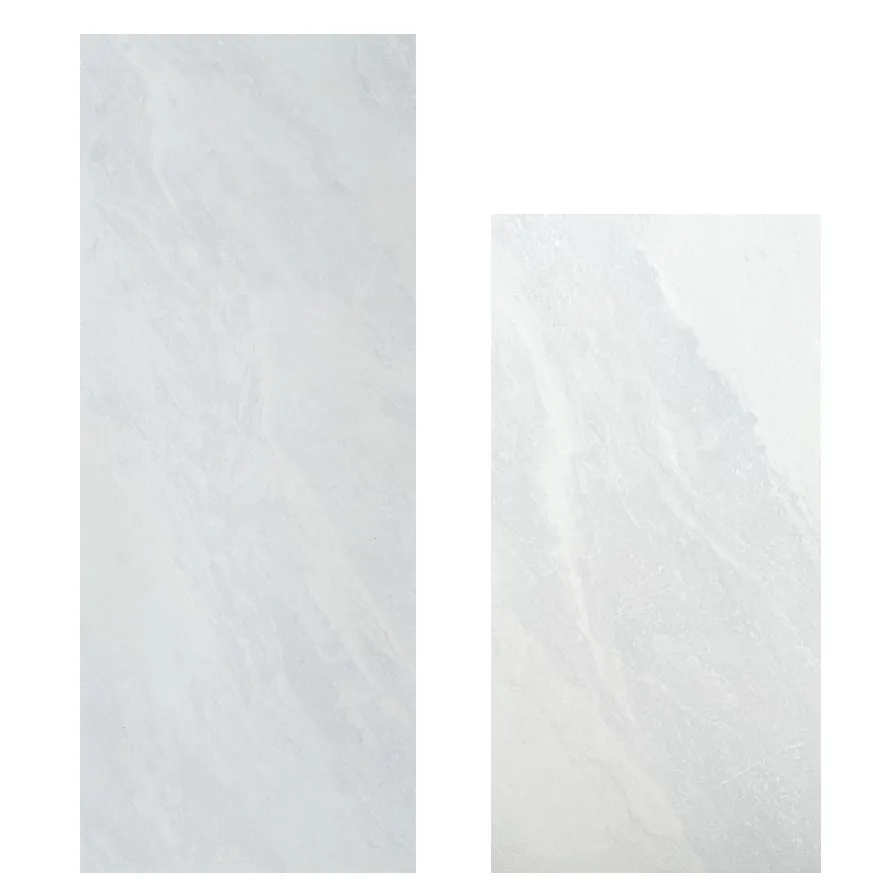
If acoustic materials were characters in a story, Marble Veil White would be the quiet protagonist with a surprising depth. At first glance, it's easy to be drawn to its aesthetic—soft, veined patterns that mimic the look of natural marble, with a creamy white base that brightens any room. But look closer, and you'll find a material engineered to do more than please the eye. Unlike polished marble, which can reflect sound and amplify echoes, Marble Veil White is crafted with a subtle porosity that acts like a gentle hand, catching sound waves before they can bounce around.
Imagine running your hand over its surface: it's smooth, but not glassy—there's a faint, almost imperceptible texture, like the skin of a peach. Those tiny, intentional pores are the secret to its acoustic superpower. They don't just add visual interest; they create millions of tiny "trapdoors" for sound. In a home office, for example, a wall clad in Marble Veil White might soften the sharp edge of a video call, making your voice sound warmer and more natural, while muffling the hum of a printer in the corner. In a hotel lobby, it could turn a space that once felt like a bustling train station into a serene waiting area, where guests actually want to linger.
While Marble Veil White shines in spaces where elegance is key, MCM Flexible Stone steps in when versatility is the name of the game. MCM, or Modified Composite Material, has been turning heads in the world for years, thanks to its lightweight, bendable nature—but its acoustic benefits are often overlooked. Unlike rigid stone slabs that can feel cold and echoey, MCM Flexible Stone is designed to flex and fit into curves, corners, and unconventional surfaces, all while bringing a surprising amount of sound absorption to the table.
What makes it special? Think of it as a chameleon with a purpose. It can mimic the look of rough-hewn stone, smooth concrete, or even wood, but beneath that adaptable exterior lies a core of sound-dampening fibers and resins. In a classroom, for instance, MCM Flexible Stone panels on the ceiling could turn a room where 30 kids' voices once clashed into a space where the teacher's instructions cut through clearly, and group discussions feel focused instead of chaotic. In a retail store, it might soften the din of shopping carts and chatter, making customers feel more relaxed—and more likely to stay awhile. It's the kind of material that doesn't just solve a problem; it fits the problem to the space, not the other way around.
If MCM Flexible Stone is the versatile chameleon, Flexible Stone Cladding Panels are its practical, on-the-go cousin. These panels are designed for easy installation, whether you're retrofitting an old building or designing a new one from the ground up. They're thin, lightweight, and surprisingly tough—perfect for spaces where every inch counts, but sound still matters. What sets them apart, though, is how they transform flat, echo-prone surfaces into acoustic allies.
Take a busy café, for example. Picture walls lined with Flexible Stone Cladding Panels in a warm, earthy tone. The panels' textured surface—maybe mimicking the look of stacked stone or weathered wood—doesn't just add visual warmth; it breaks up sound waves, preventing them from bouncing back and forth in a never-ending loop. A barista once told me, after their shop installed these panels, that customers started staying longer, ordering second coffees, and even commenting on how "cozy" the place felt. They hadn't changed the menu or the lighting—just the walls. That's the quiet power of good acoustic design: it turns spaces into experiences.
Not all acoustic materials need to shout about their looks. Fair-faced Concrete is the understated hero here—raw, unpolished, and quietly effective. There's a reason it's become a staple in modern architecture: its rough, porous surface is a natural sound absorber, while its density helps block noise from traveling between rooms. In a library, for example, fair-faced concrete ceilings could turn the rustle of pages and the murmur of study groups into a gentle, ambient hum, instead of a chaotic cacophony. In a home with an open floor plan, a dividing wall made of fair-faced concrete might keep the kitchen's morning chaos from waking a sleeping toddler in the next room, all while adding an industrial-chic edge to the decor.
What I love about fair-faced concrete is its honesty. It doesn't pretend to be something it's not—it's just concrete, doing its job. And in a world where we're often bombarded with over-the-top designs, that simplicity is refreshing. It's a reminder that good acoustic materials don't have to sacrifice style for function; sometimes, the most effective solutions are the ones that let the space breathe.
Let's talk about beauty with a purpose: Travertine (Starry Green). This isn't just any stone—it's a showstopper, with deep green hues swirled with hints of gold and cream, like a night sky scattered with stars. But beyond its striking appearance, it brings a unique acoustic quality to the table. Travertine is naturally porous, with tiny holes and channels that act like a sponge for sound. In a space like a yoga studio, where calm is everything, walls clad in Travertine (Starry Green) could turn the sound of mats unrolling and breathwork into a soothing, almost meditative experience, instead of a series of distractions.
I visited a boutique spa once that used Travertine (Starry Green) in their relaxation room. The first thing I noticed wasn't the stone itself—it was how quiet the room felt, even with half a dozen people inside. The air felt still, and when someone spoke, their voice didn't echo; it just… hung gently in the air, then faded. Later, the owner told me they'd chosen the stone specifically for its acoustic properties, but customers kept commenting on how "luxurious" and "peaceful" the space felt. It was a happy accident: beauty and function, hand in hand.
Let's ground this in real life. Take Maria, a freelance writer who lives in a downtown apartment. Her biggest complaint? The noise from the street below—honking cars, yelling vendors, the constant buzz of city life. She'd tried thick curtains, soundproofing foam, even white noise machines, but nothing worked. Then she renovated her living room with MCM Flexible Stone cladding. "It was like flipping a switch," she told me. "The street noise didn't disappear completely, but it softened—like it was happening outside a closed window, not right in my ear. Now I can actually focus on writing, and I don't feel tense all the time. It's not just a wall; it's a barrier between me and the chaos."
Or consider the team at a local community center. They were struggling to host events—concerts, lectures, art workshops—because the main hall had terrible acoustics. A single person speaking without a microphone sounded like they were yelling into a canyon. After installing a mix of Marble Veil White panels and Travertine (Starry Green) accents, they noticed a difference immediately. "The first time we held a poetry reading there, people were crying—not because of the poems, but because they could actually hear every word," the center's director laughed. "It sounds silly, but being able to connect like that? It changed the whole vibe of the place."
| Material | Acoustic Superpower | Best For | Vibe |
|---|---|---|---|
| Marble Veil White | Subtle porosity absorbs echoes; brightens spaces | Hotel lobbies, home offices, upscale restaurants | Elegant, airy, sophisticated |
| MCM Flexible Stone | Lightweight, bendable, and great at dampening mid-range noise | Curved walls, retrofits, kids' rooms | Versatile, modern, adaptable |
| Flexible Stone Cladding Panels | Textured surface breaks up sound waves; easy to install | Cafés, retail stores, community centers | Warm, inviting, tactile |
| Fair-Faced Concrete | Density blocks noise; porosity absorbs ambient sound | Libraries, home studios, industrial-chic spaces | Raw, honest, understated |
| Travertine (Starry Green) | Natural pores absorb sound; bold visual impact | Spas, yoga studios, art galleries | Luxurious, earthy, calming |
At the end of the day, acoustic design isn't just about making spaces quieter—it's about making them more human. When we can hear each other clearly, we connect better. When we're not constantly straining to block out noise, we're more present. When our homes and workplaces feel calm instead of chaotic, our mental health improves. These materials—Marble Veil White, MCM Flexible Stone, Flexible Stone Cladding Panels, fair-faced concrete, Travertine (Starry Green)—are more than just building supplies. They're tools for creating spaces that nurture us, support us, and let us be our best selves.
So the next time you walk into a room that feels instantly "right"—where the noise fades into the background, and conversation flows easily—take a closer look at the walls. Chances are, there's a material like these working quietly behind the scenes, turning sound into something beautiful. And isn't that what great design is all about? Making the invisible visible, one quiet moment at a time.
Recommend Products












