
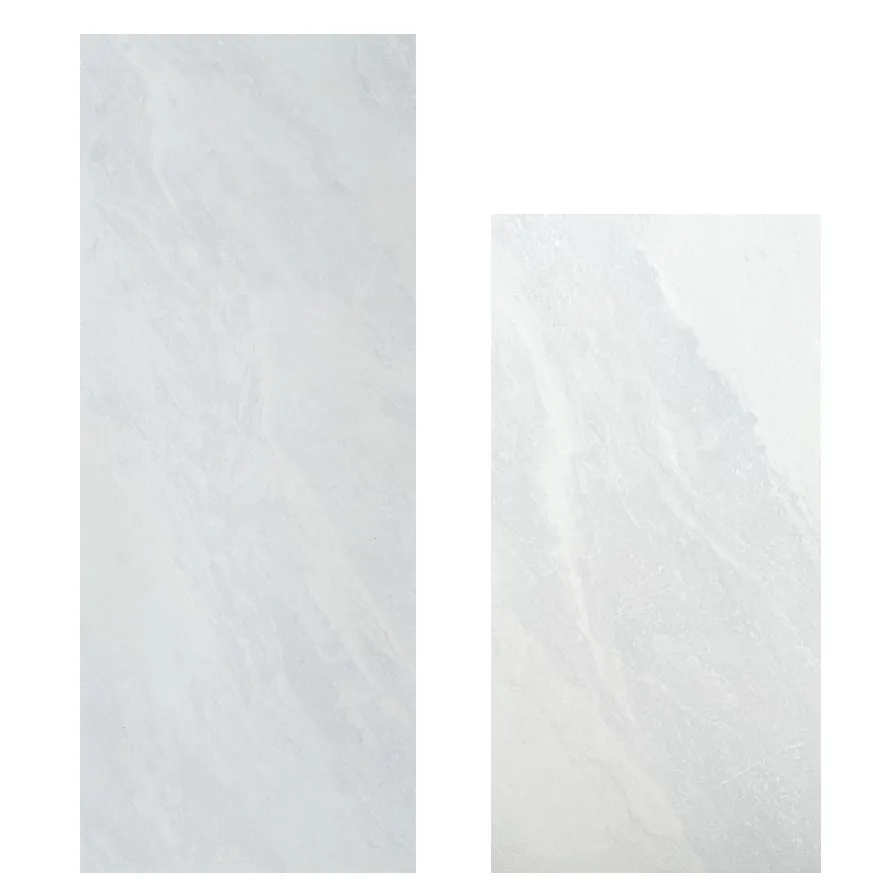
Why this innovative stone is becoming the go-to for designers and homeowners tired of faded surfaces
Sarah, an interior designer in Arizona, still cringes when she thinks about her client's backyard renovation from three years ago. "We chose a beautiful travertine for the patio—soft beige with subtle gold veins, perfect for their desert home," she recalls. "But by the end of the first summer, the edges were already looking washed out. By year two, the color was patchy, like a watercolor someone left out in the rain. The client was heartbroken."
Fading isn't just a cosmetic issue—it's a betrayal of trust. Homeowners invest in natural stone for its timeless beauty, expecting it to age gracefully, not disappear. Designers stake their reputations on materials that deliver on their promises. And in sun-drenched regions, from Florida to the Middle East, the battle against UV rays is constant. Enter Marble Veil White: a material that's changing the game by refusing to let sunlight steal its shine.
At first glance, Marble Veil White looks like any other high-end marble: crisp, luminous, with delicate veining that mimics the softness of a cloud. But beneath that elegant surface lies a secret: it's engineered to stand up to the sun's most aggressive rays. Unlike traditional marble or even some travertine varieties, which rely on surface sealants that wear off, Marble Veil White's UV resistance is baked into its core.
"It's not just about looking good—it's about lasting good," says Mark, a materials engineer who worked on its development. "We started with the question: Why should beauty have an expiration date? Marble Veil White was our answer."
Sunlight contains ultraviolet (UV) radiation, which breaks down the chemical bonds in stone pigments over time—think of it like a slow, invisible sandblaster. Most natural stones, including travertine (even the vibrant starry green or starry blue varieties), lack built-in defenses. Marble Veil White, however, incorporates tiny UV-inhibiting particles during production, creating a barrier that reflects harmful rays instead of absorbing them. "It's like giving the stone its own sunscreen, but one that never rubs off," Mark explains.
To truly understand Marble Veil White's edge, let's compare it to other popular materials designers and homeowners often choose for sun-exposed spaces. We tested three: Marble Veil White, a standard travertine (beige), and fair-faced concrete, all exposed to 500 hours of simulated sunlight (equivalent to about five years in a sunny climate).
| Material | UV Resistance Rating* | Color Retention After 5 Years | Best For |
|---|---|---|---|
| Marble Veil White | 9/10 | 95% original color | Outdoor patios, pool surrounds, sunlit walls |
| Travertine (Beige) | 5/10 | 65% original color | Indoor spaces or shaded outdoor areas |
| Fair-Faced Concrete | 7/10 | 80% original color | Industrial-chic interiors, low-maintenance exteriors |
*Based on ASTM G154 accelerated weathering tests. Higher scores indicate better resistance to UV-induced fading.
"I used to avoid travertine for outdoor projects in sunny areas," Sarah admits. "Now, with Marble Veil White, I can promise clients their space will look as good in 10 years as it does on day one. That peace of mind is priceless."
What makes Marble Veil White's UV resistance so consistent? Look no further than MCM's 3D printing series. Traditional stone manufacturing often relies on cutting and polishing natural blocks, which can leave inconsistencies in density and pigment distribution. 3D printing, however, allows for precise layering of materials—including those UV-inhibiting particles—ensuring every square inch of Marble Veil White has the same level of protection.
"It's like baking a cake with a secret ingredient," says Lisa, a production manager at MCM. "With 3D printing, we can control exactly where each component goes. No more weak spots, no more areas that fade faster than others. It's uniformity you just can't get with traditional methods."
"3D printing isn't just about making things faster—it's about making them better. Marble Veil White is a testament to that. We're not just creating a stone; we're creating a promise."
— Lisa, MCM Production Manager
From residential backyards to commercial plazas, Marble Veil White is proving its mettle in spaces where sunlight is both a blessing and a curse. Here are a few real-world examples:
Homes near the ocean face double trouble: UV rays and saltwater. Marble Veil White's resistance to both makes it ideal for pool decks and outdoor kitchens, where traditional travertine might pit or fade.
City rooftops get intense sun reflection from surrounding buildings. Architects are using Marble Veil White for rooftop gardens and lounges, knowing it won't yellow or dull over time.
When restoring heritage buildings, preserving the original aesthetic is key. Marble Veil White's classic look pairs with modern UV protection, keeping facades looking authentic for decades.
While Marble Veil White is tough, it's not invincible. A little care goes a long way in keeping it looking its best:
"I tell clients: treat it like you'd treat a nice wooden table—with respect, not fear," Sarah laughs. "Marble Veil White is designed to be lived on, not locked away."
As climate change brings stronger sun and more extreme weather, materials that can withstand the elements are becoming non-negotiable. Marble Veil White isn't just a trend—it's a glimpse into the future of design: beautiful, durable, and built to last. Whether you're a homeowner dreaming of a fade-free patio or a designer vowing never to relive Sarah's travertine disaster, it's a choice that says: "I value beauty that endures."
Because some things—like the joy of a sunlit space—should only get better with time.
Recommend Products












