
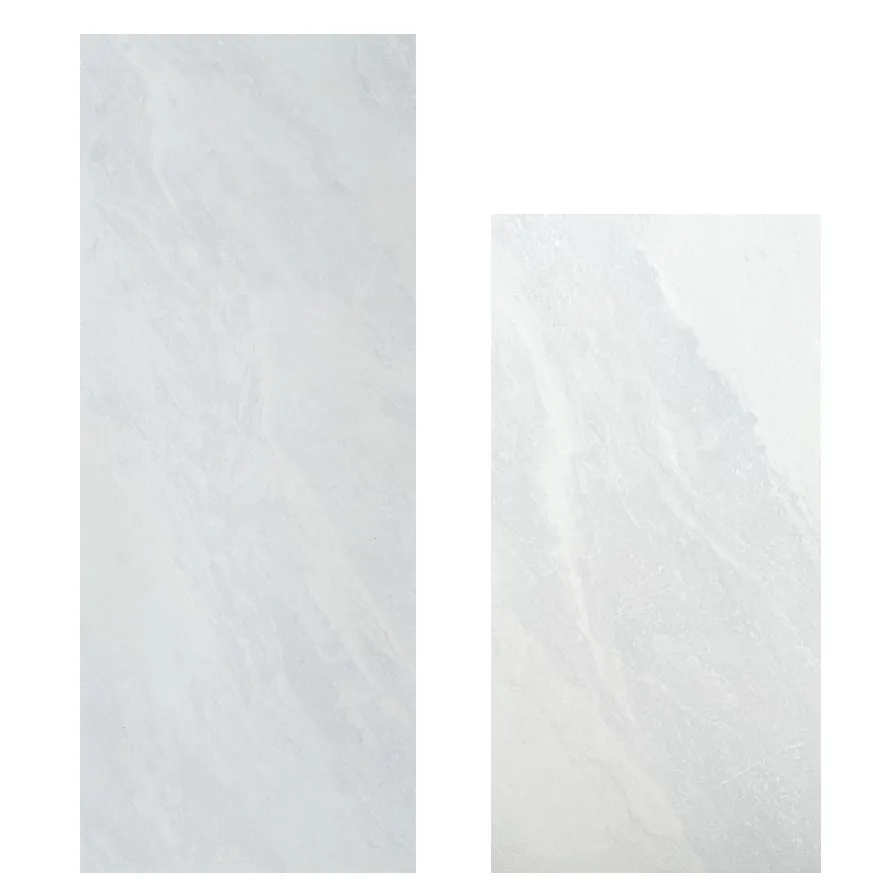
Choosing the right material for your home or commercial space is more than just a design decision—it's an investment in beauty, functionality, and longevity. For decades, natural stones like marble and granite have dominated the market, prized for their unique patterns, durability, and timeless appeal. Among the countless varieties available, two stand out for their distinct personalities: Marble Veil White and granite, with options like Granite Portoro leading the pack. Whether you're revamping a kitchen countertop, designing a bathroom backsplash, or selecting flooring for a lobby, understanding the differences between these two stones can save you from costly regrets down the line. In this guide, we'll dive deep into their aesthetics, durability, maintenance needs, and more—so you can choose with confidence.
Marble has long been synonymous with luxury, and Marble Veil White is no exception. Imagine a slab of stone that looks like a painter's canvas left out in the rain—soft, wispy veils of gray, cream, or even pale blue meandering across a pristine white background. Each piece is one-of-a-kind; no two slabs share the same pattern. That's because marble forms from limestone subjected to intense heat and pressure over millions of years, a process that creates those signature swirling veins. It's the kind of stone that turns a ordinary bathroom into a spa retreat or a kitchen into a space that feels both grand and inviting.
What makes Marble Veil White particularly captivating is its versatility. Its neutral palette pairs seamlessly with almost any decor style, from modern minimalism to traditional opulence. In a bright, sunlit room, the white base reflects light, making spaces feel larger and airier. In a cozy dining area, the subtle veining adds depth without overwhelming the eye. I once visited a boutique hotel in Lisbon where the lobby featured a Marble Veil White reception desk, and what stuck with me wasn't just its beauty—it was how it changed throughout the day. Morning light brought out the warm undertones in the veining, while evening lamps made the white base glow softly, like moonlight on snow.
Real-Life Application: A homeowner in Portland, Oregon, recently renovated their kitchen with Marble Veil White countertops paired with dark wooden cabinets and brass fixtures. "I was worried it might feel too sterile," they told me, "but the veining adds so much character. It's like having a piece of art on my counters that I get to interact with every day." They did note, though, that they're careful with acidic spills—more on that later.
If marble is the "romantic poet" of natural stones, granite is the "action hero." Formed from cooled magma deep within the earth, it's one of the hardest natural materials available, second only to diamonds in terms of scratch resistance. And while it's tough as nails, it's far from boring. Take Granite Portoro , for example—a striking black stone swirled with gold veins that look like liquid sunlight captured in rock. It's bold, dramatic, and unapologetically luxurious. But granite comes in a spectrum of styles, from the understated elegance of white granite with gray flecks to the vibrant hues of blue or red granite that make a statement in any room.
What sets granite apart is its reliability . Unlike marble, which can feel delicate, granite is built to handle the chaos of everyday life. Think of it as the stone equivalent of a well-worn leather jacket—tough, durable, and only gets better with age. A restaurant owner I spoke to in Chicago swears by granite countertops in their busy kitchen. "We've had Granite Portoro counters for 10 years, and they still look brand new," they said. "Hot pans, knife scratches, spilled wine—nothing phases them. It's the best investment we ever made."
But granite isn't just for high-traffic areas. Its versatility shines in residential spaces too. A friend in Texas used a light-colored granite with peach and brown flecks in her outdoor kitchen, and it's held up beautifully against the scorching sun and occasional hailstorms. "I wanted something that wouldn't fade or crack, and granite delivered," she told me. "Plus, it's so easy to clean—just soap and water, and it looks as good as the day it was installed."
| Feature | Marble Veil White | Granite (e.g., Granite Portoro) |
|---|---|---|
| Appearance | Soft white base with flowing gray/blue veining; elegant, ethereal, and unique to each slab. | Bold, dense patterns with flecks or veins (e.g., black with gold veins in Portoro); more uniform in texture than marble. |
| Durability | Moderate; prone to scratches, etching from acids (e.g., lemon juice, vinegar), and staining if not sealed. | Exceptional; highly scratch-resistant, heat-resistant, and less porous than marble, making it stain-resistant with proper sealing. |
| Maintenance | High; requires sealing every 3–6 months, immediate cleaning of spills, and gentle cleaners to avoid etching. | Low to moderate; seal every 1–3 years, easy to clean with soap and water, and forgiving of occasional neglect. |
| Cost | High; $80–$150 per square foot (varies by slab quality and installation). | Moderate to high; $50–$120 per square foot (more affordable than high-end marble but pricier than some engineered stones). |
| Best For | Low-traffic areas: bathroom vanities, fireplace surrounds, accent walls, or kitchens with gentle use. | High-traffic areas: kitchen countertops, outdoor kitchens, flooring, commercial spaces, or homes with kids/pets. |
At the end of the day, choosing between Marble Veil White and granite often comes down to a single question: What matters more to you—beauty or durability? If you're willing to put in the effort to maintain it, marble rewards you with unparalleled elegance. It's the stone for those who appreciate the "imperfect perfection" of natural materials—the tiny pits, the subtle color variations, the way it ages gracefully, developing a unique patina over time.
On the flip side, if you want a stone that can handle life's little (and big) accidents without breaking a sweat, granite is the way to go. It's ideal for busy families, frequent entertainers, or anyone who doesn't want to stress about every spilled cup of coffee or dropped knife. And let's not forget: granite can be just as beautiful as marble. Granite Portoro , with its black and gold veins, is every bit as luxurious as the fanciest marble, but with the added bonus of being nearly indestructible.
Designer Insight: Interior designer Sarah Lopez, who specializes in high-end residential spaces, says the choice often depends on lifestyle. "I had a client who fell in love with Marble Veil White for her kitchen, but she has three young kids and loves to cook. I suggested granite instead—specifically a white granite with gray veining that mimicked marble's look but with the durability she needed. She was hesitant at first, but now she tells me she's 'so glad I didn't have to choose between beauty and practicality.'"
Let's get into the nitty-gritty: how do these stones hold up to real-world mishaps? Marble is porous, which means liquids can seep into its surface if not sealed, leading to stains. Acidic substances like lemon juice, tomato sauce, or wine can even "etch" marble, leaving dull spots where the acid eats away at the stone's surface. It's not permanent—you can have it polished to restore the shine—but it's a hassle.
Granite, on the other hand, is much less porous, thanks to its dense crystalline structure. While it can still stain if spills are left unattended for days, it's far more forgiving. And because it's so hard, scratches are rare—you'd need a diamond-tipped tool to make a mark. Heat resistance? Both stones handle hot pans well, but marble can crack if exposed to sudden temperature changes (like placing a boiling pot directly on a cold slab), whereas granite laughs off such extremes.
Here's a pro tip: if you love marble but worry about maintenance, consider using it in low-risk areas, like a powder room vanity or a fireplace surround, where spills and scratches are less likely. Save the granite for the kitchen countertops and flooring, where durability is key. Or, if you're set on marble in the kitchen, opt for a honed (matte) finish instead of a polished one—honed marble is more resistant to etching and hides small scratches better.
Natural stone isn't cheap, and both marble and granite require a significant upfront investment. Marble Veil White tends to be pricier, ranging from $80 to $150 per square foot, depending on the quality of the slab and installation costs. Rare or imported marble can even hit $200 per square foot. Granite, while still an investment, is generally more affordable, with prices ranging from $50 to $120 per square foot. Granite Portoro , being a premium variety, sits at the higher end of that range, around $100–$120 per square foot.
But here's the thing: cost per square foot isn't the whole story . Marble requires more frequent sealing (every 3–6 months) and occasional professional polishing to maintain its shine, which adds to the long-term cost. Granite, with its annual sealing and minimal maintenance, ends up being more budget-friendly over time. Think of it as buying a car: marble is like a luxury sports car—stunning but costly to maintain—while granite is like a reliable SUV that gets the job done without constant trips to the mechanic.
That said, some homeowners see marble as a value-add for their property. A well-maintained marble kitchen or bathroom can boost resale value, as many buyers associate marble with luxury. It's a gamble, though—if the marble is stained or etched, it could have the opposite effect. Granite, with its universal appeal and durability, is often seen as a safer bet for resale.
While Marble Veil White and granite are classics, there are other stones worth considering if neither quite fits your vision. For example, Travertine (Starry Blue) offers a unique twist with its dark blue base and tiny, shimmering flecks that look like stars in the night sky. It's softer than granite but more durable than marble, making it a happy medium for some. Or, if you're drawn to the look of wood but want the durability of stone, Wood Grain Board (a type of engineered stone) mimics the texture of wood with the strength of concrete.
For those who prefer a modern, industrial vibe, Fair-faced Concrete is a sleek option that's both affordable and low-maintenance. It lacks the organic beauty of natural stone, but it's perfect for minimalist spaces where "less is more." And if you're eco-conscious, look into recycled stone options or locally sourced materials to reduce your carbon footprint.
There's no "right" answer when it comes to Marble Veil White vs. granite—it all depends on your priorities, lifestyle, and design goals. If you crave timeless elegance and are willing to put in the effort to maintain it, marble is worth every penny. It's a stone that tells a story, adds warmth, and elevates any space to new heights of luxury.
If durability, low maintenance, and versatility are your top concerns, granite is the clear winner. It's a stone that works as hard as you do, standing up to spills, scratches, and the chaos of daily life without losing its beauty. And with options like Granite Portoro , you don't have to sacrifice style for practicality.
At the end of the day, both stones are exceptional choices. They've stood the test of time for a reason—because they're more than just building materials; they're pieces of the earth, each with its own unique character and charm. So take your time, visit a stone yard, run your hands over the slabs, and let your intuition guide you. Whether you choose marble, granite, or something else entirely, you're not just choosing a stone—you're choosing a part of your home's story.
Recommend Products












