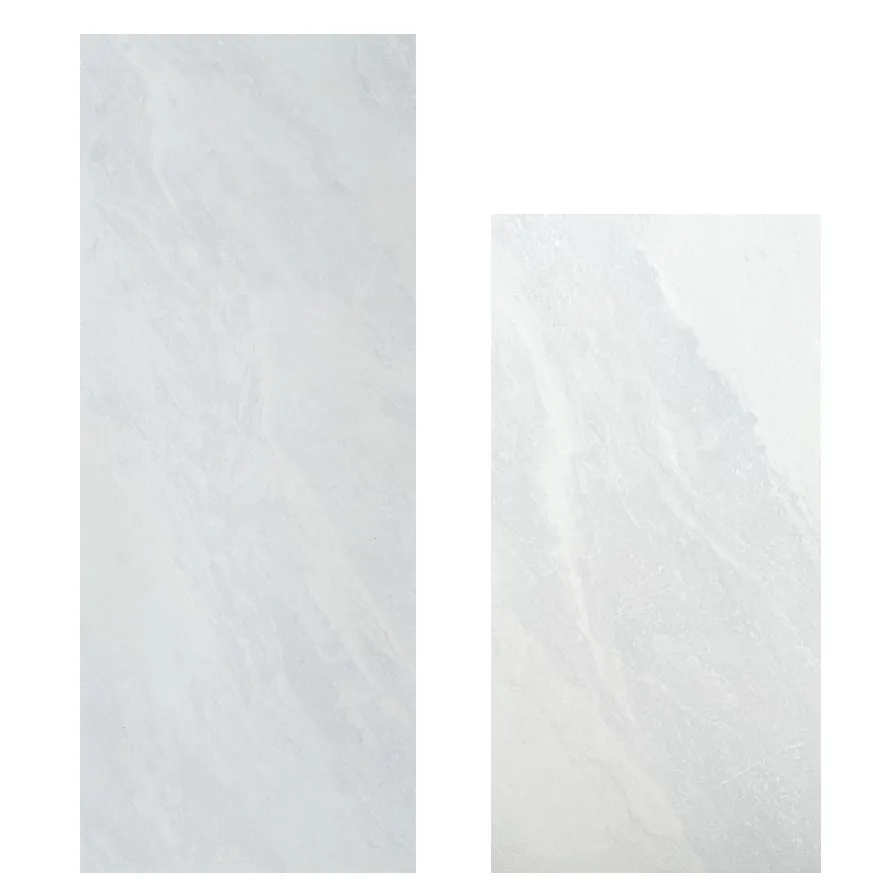
Walk into any space that feels truly timeless—a boutique hotel lobby with walls that glow softly, a family kitchen where memories are made over morning coffee, or a historic building that has weathered decades with grace—and you'll likely find stone at its heart. Stone isn't just a building material; it's a storyteller, carrying the texture of the earth and the vision of designers. But when it comes to choosing between the classic allure of natural marble and the innovative edge of engineered options like
Marble Veil White, the decision can feel overwhelming. Let's break it down, not just with facts and figures, but with the real-world impact these choices have on your space, your budget, and even your daily life.
First Things First: What Are We Actually Comparing?
Marble Veil White isn't your average stone. It's part of the next generation of building materials, often categorized under
MCM flexible stone
—a family of modified composite materials designed to blend the beauty of natural stone with the practicality modern spaces demand. Think of it as nature's best features (the soft veining, the warm undertones) reimagined with a scientist's eye for durability. Unlike traditional stone slabs, MCM products like
Marble Veil White are lightweight, flexible, and often come in large-format options through lines like the
MCM big slab board series
, making seamless installations a breeze without the structural headaches of heavy natural stone.
Natural Marble: The Timeless Classic
Natural marble is the grandparent of luxury—formed over millennia by heat and pressure, each slab a one-of-a-kind masterpiece with unique veining, pits, and color variations. Quarried from the earth, it's been used in iconic structures from the Taj Mahal to ancient Roman temples, and for good reason: its organic patterns and soft luminosity are impossible to perfectly replicate. But with that uniqueness comes trade-offs—porosity, weight, and a price tag that reflects both its rarity and the labor of extracting and shaping it.
The Cost Conversation: Beyond the Initial Price Tag
Let's talk money—a topic that's never just about numbers, but about value. When you're investing in stone, you're not just buying a material; you're buying peace of mind, longevity, and the way that material will make you feel every time you walk into the room.
Upfront Costs:
Natural marble typically starts at a higher baseline. Depending on the grade and origin (think Italian Calacatta vs. domestic varieties), you could pay anywhere from $80 to $200+ per square foot. Why? Extraction is labor-intensive, and each slab is a finite resource.
Marble Veil White, on the other hand, leverages manufacturing efficiency. As an engineered material, it can be produced more consistently, bringing costs down to roughly $40 to $80 per square foot—a difference that adds up fast in larger projects.
Installation: The Hidden Costs:
Here's where natural marble can surprise you. Those heavy slabs? They require reinforced structures, specialized installers, and often additional support like metal frames or thicker subfloors. Labor costs alone can add 30-50% to the total project price.
Marble Veil White, being lightweight (often 1/5 the weight of natural stone), installs more like a high-end tile than a slab. Contractors can handle it with standard tools, and because it's flexible, it adapts to uneven surfaces without cracking—saving you both time and labor fees.
Long-Term Maintenance: Pay Now or Pay Later?
Natural marble is porous, which means it stains easily (that spilled glass of red wine? A permanent souvenir if not sealed immediately) and etches when exposed to acids like lemon juice or vinegar. Sealing every 6-12 months is non-negotiable, and professional cleaning can run $2-$5 per square foot annually.
Marble Veil White, engineered to resist stains and moisture, often skips the sealing step entirely. A quick wipe with mild soap and water is usually all it takes—no special cleaners, no panic over accidental spills. Over 10 years, that maintenance savings alone can erase the upfront cost gap.
Performance Showdown: How Do They Stack Up in Real Life?
Let's cut to the chase: how do these two hold up when life happens? We're talking kids, pets, dinner parties, rainy weather, and the daily wear and tear that turns a "perfect" space into a "lived-in" home.
|
Feature
|
Marble Veil White (MCM Flexible Stone)
|
Natural Marble
|
|
Durability
|
Resistant to scratches, chips, and fading; ideal for high-traffic areas like entryways or commercial lobbies.
|
Prone to scratches and etching; best suited for low-traffic, indoor spaces (think master bathroom vanities or accent walls).
|
|
Weather Resistance
|
Waterproof and UV-stable; works outdoors (patio floors, exterior cladding) without warping or discoloring.
|
Not recommended for outdoor use in harsh climates; freezes, thaws, and fades under direct sunlight.
|
|
Design Versatility
|
Available in large slabs (via MCM big slab series) for seamless walls/floors; flexible enough for curved surfaces or custom shapes.
|
Limited by slab size (natural seams are inevitable); heavy weight restricts use on walls or upper floors without major structural work.
|
|
Sustainability
|
Uses less raw material than natural stone; lower carbon footprint due to efficient manufacturing and lightweight transport.
|
Quarrying can disrupt ecosystems; high transportation emissions due to weight; limited to natural deposits.
|
A Note on Aesthetics:
Let's be clear—natural marble has an irreplaceable charm. No two slabs are identical, and that "imperfection" is part of its beauty. But
Marble Veil White comes surprisingly close. Advances in printing technology mean its veining and texture mimic natural marble so closely that even designers sometimes do a double-take. And because it's engineered, you can choose a consistent look across a project—no worrying about mismatched slabs if you need to expand later.
Real People, Real Choices: When to Pick Which?
At the end of the day, the "better" option depends on your lifestyle, priorities, and the story you want your space to tell.
Choose Marble Veil White if…
You want the look of marble without the stress. Maybe you have young kids who love finger-painting on walls, or you dream of a seamless outdoor kitchen that won't fade in the summer sun. It's also a standout choice for commercial projects—restaurants, hotels, retail spaces—where durability and low maintenance directly impact your bottom line. Plus, if you're drawn to other MCM options like
lime stone(beige)
or
fair-faced concrete
, you can mix and match textures within the same material family for a cohesive design.
Choose Natural Marble if…
You're chasing that "one-of-a-kind" magic. Maybe you're restoring a historic home and want to honor its original materials, or you're creating a luxury spa where the uniqueness of each marble slab adds to the sense of exclusivity. Just be prepared to baby it—think of it like a vintage car: stunning, but requires extra care to keep it running (or in this case, looking) beautiful.
The Verdict: It's About Balance
Marble Veil White and natural marble aren't enemies—they're tools for different jobs. If your space needs to be both beautiful and bulletproof,
MCM flexible stone
(and
Marble Veil White in particular) is a game-changer. It lets you have the marble look without the marble anxiety, freeing you to enjoy your space instead of worrying about it. But if you're willing to invest in maintenance and prioritize natural uniqueness, nothing beats the real deal.
At the end of the day, the best stone is the one that fits
your
life. Whether you're drawn to the innovation of engineered materials like
Marble Veil White or the tradition of natural marble, the right choice is the one that makes you smile every time you walk through the door—and that, more than any price tag or performance metric, is what truly matters.