
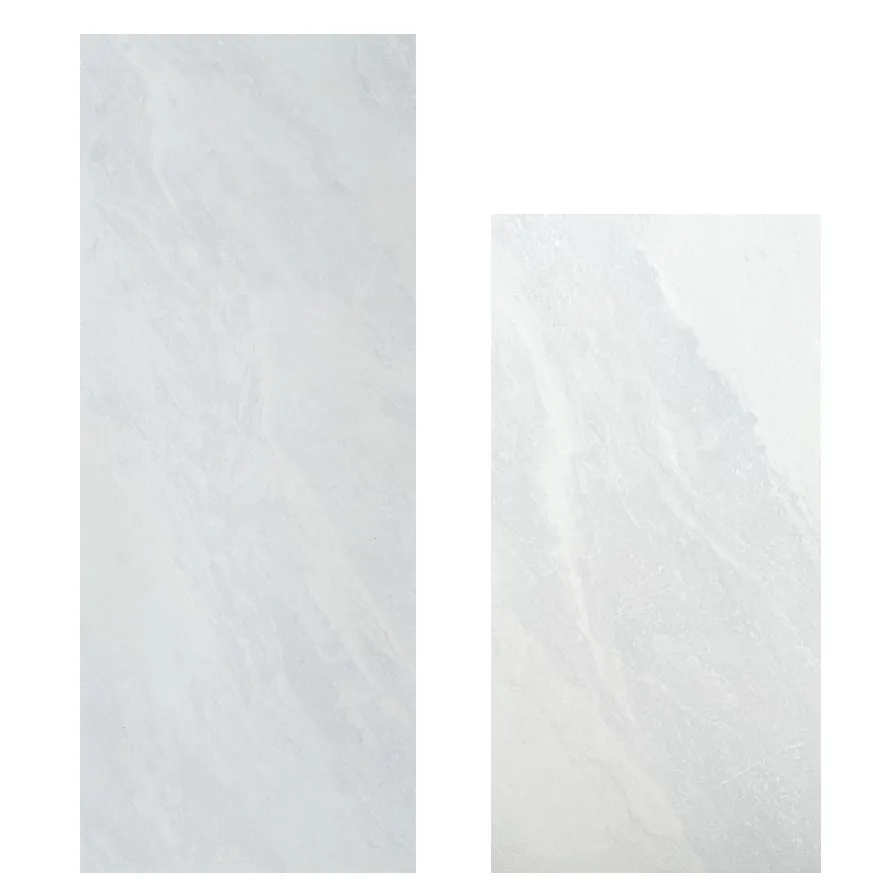
The kitchen isn't just a place to cook—it's where morning coffee rituals unfold, where family recipes are passed down, and where guests gather during parties. It's the heart of the home, and every detail, from the cabinets to the countertops, shapes its personality. When it comes to countertops, two materials often rise to the top of homeowners' wishlists: the timeless elegance of Marble Veil White and the modern reliability of quartz. But which one truly deserves a spot in your dream kitchen? Let's dive in, exploring their beauty, quirks, and how they fit into real life.
There's a reason marble has been a symbol of luxury for centuries. Walk into a kitchen with Marble Veil White countertops, and you'll immediately feel it—the soft, milky-white base swirled with delicate grey veins that look like they were painted by a watercolor artist. No two slabs are identical; some have thin, wispy lines that dance across the surface, while others feature bold, dramatic streaks that demand attention. It's nature's artwork, and it turns even the simplest kitchen into something extraordinary.
I once visited a friend's home where she'd chosen Marble Veil White for her kitchen island, and I'll never forget the way the morning light hit it. The veins seemed to glow, casting subtle shadows that made the countertop feel alive. "It's like having a piece of the Taj Mahal in my kitchen," she joked, running her hand over the cool, smooth surface. That tactile experience is part of its charm—marble is cool to the touch, which is a delight on hot summer days when you're prepping salads or rolling out dough.
As much as we love marble's beauty, it's not without its challenges. Let's get real: marble is porous. That means liquids like coffee, wine, or lemon juice can seep into its surface, leaving stains if not wiped up immediately. I learned this the hard way when I spilled red wine on a marble countertop at a dinner party—I blotted it quickly, but a faint pinkish hue lingered for weeks, even after sealing. Ouch.
Acids are marble's worst enemy. A drop of vinegar or a slice of lemon left on the surface can cause "etching"—dull, cloudy spots where the acid eats away at the marble's calcium carbonate. These etches don't stain, but they do mar the smooth, glossy finish. For busy families or anyone who loves cooking with citrus, this can be a constant source of stress.
Maintenance is another hurdle. To protect against stains, you'll need to seal your Marble Veil White countertops every 6–12 months. The process isn't complicated—you wipe on a sealer, let it sit, then buff it off—but it's an ongoing chore. And even with sealing, marble scratches more easily than harder materials like quartz or granite. A sharp knife or a heavy pot can leave a mark, which means you'll need to use cutting boards religiously.
Cost is the final consideration. Marble Veil White is a luxury material, with prices ranging from $120–$200 per square foot (installed). That's a significant investment, especially for large kitchens. For some, the beauty is worth every penny, but it's not feasible for everyone's budget.
If marble is the prima ballerina of countertops, quartz is the reliable soloist—consistent, hardworking, and ready for anything. Unlike marble, quartz is engineered: it's made from 90% crushed quartz crystals mixed with resins and pigments, then molded into slabs. This manufacturing process gives it superpowers that natural stone can't match, but does it sacrifice beauty for brawn?
Not necessarily. Modern quartz mimics the look of marble so well that even designers sometimes struggle to tell them apart. You can find quartz slabs with veining that rivals Marble Veil White —soft greys, subtle beiges, and even hints of gold. The difference? Quartz veining is uniform. There are no surprises—what you see in the showroom is exactly what you'll get in your kitchen. For some, this consistency is a relief; no worrying about a slab with "ugly" veins ruining the design. For others, it lacks the organic charm of natural marble.
For all its practicality, quartz isn't perfect. Let's start with the price: it's not cheap. While it's often less expensive than high-end marble (around $80–$150 per square foot installed), it can still stretch a budget, especially for large kitchens. Some premium quartz brands, like Caesarstone or Silestone, rival marble in cost.
Then there's the "plastic-y" feel. While top-tier quartz looks stunning, lower-quality options can have a synthetic sheen that lacks the depth of natural marble. Run your hand over a cheap quartz slab, and you might notice a slight resinous texture—a far cry from the cool, stone-like feel of marble.
Heat resistance is also relative. While quartz handles warm pots, extreme heat (like a hot pan straight from the oven) can melt the resin, causing discoloration or warping. I've heard horror stories of homeowners placing a cast-iron skillet on quartz, only to find a permanent burn mark. Oven mitts and trivets are non-negotiable.
Finally, quartz is heavy. Installing it requires professionals, and it may need extra support in areas like overhangs. This adds to the installation cost and complexity.
To make this easier, let's break down the key differences in a side-by-side comparison. Think of it as a "kitchen material showdown" where we weigh their strengths and weaknesses:
| Factor | Marble Veil White | Quartz |
|---|---|---|
| Appearance | Organic, unique veining; soft, natural glow; cool to the touch. | Consistent, uniform veining; modern, polished look; can mimic marble but lacks natural depth. |
| Durability | Porous; stains easily; etches from acids; scratches with sharp objects. | Non-porous; stain-proof; acid-resistant; scratch-resistant (but not scratch-proof). |
| Maintenance | Requires sealing every 6–12 months; immediate spill cleanup; gentle cleaners only. | No sealing needed; wipe with soap and water; low-maintenance. |
| Cost | $120–$200 per square foot (installed); high-end luxury. | $80–$150 per square foot (installed); mid-to-high range. |
| Best For | Design lovers who prioritize aesthetics over practicality; low-traffic kitchens; homeowners willing to maintain. | Busy families; frequent cooks; anyone who wants beauty with minimal upkeep; modern or contemporary kitchens. |
Marble and quartz aren't the only players in the kitchen material game. Let's take a quick look at two other options that might catch your eye: Polish Concrete and Wood Grain Board .
Polish Concrete is for the homeowner who loves a raw, modern vibe. It's exactly what it sounds like: concrete that's ground down and polished to a smooth, glossy finish. Think lofts, industrial-chic spaces, and kitchens that embrace minimalism. Polish Concrete is durable—scratch-resistant, heat-resistant, and easy to clean. It's also customizable: you can add pigments for color or aggregate (like stones or glass) for texture.
But it's not for everyone. Polish Concrete is hard and cold underfoot (and under hand), which can make a kitchen feel sterile. It's also porous, so it needs sealing (though less often than marble), and it can crack over time if not installed properly. Still, for the right aesthetic—think black cabinets, stainless steel appliances, and Wood Grain Board accents—it's stunning.
Wood Grain Board countertops bring nature indoors with their warm tones and organic texture. They're perfect for rustic, farmhouse, or Scandinavian kitchens, adding a touch of coziness that stone can't match. Imagine chopping vegetables on a Wood Grain Board countertop, the natural grain running beneath your hands—it feels like cooking in a mountain cabin, even if you're in the city.
But wood is high-maintenance. It stains easily, scratches, and can warp with moisture. You'll need to oil it regularly to keep it from drying out, and avoid leaving wet dishes on it for too long. Many homeowners opt for wood butcher blocks as accents (like a small island section) rather than full countertops, pairing them with quartz or Polish Concrete for balance.
At the end of the day, there's no "better" material—only the one that fits your lifestyle, budget, and aesthetic. Let's break it down:
Choose Marble Veil White if: You're obsessed with luxury and timeless beauty. You don't mind extra maintenance (sealing, cleaning up spills) and you're willing to accept some wear and tear as part of its charm. Your kitchen is more of a showpiece than a workhorse, and you have the budget for a high-end investment.
Choose Quartz if: You want a beautiful countertop that can keep up with your busy life. You hate chores, have kids or pets, or love cooking with acidic ingredients. You prefer consistency in design and want a material that looks new for years with minimal effort.
Consider Polish Concrete or Wood Grain Board if: You're drawn to industrial or rustic aesthetics, respectively. Polish Concrete offers durability with edge, while Wood Grain Board adds warmth—just be prepared for their unique maintenance needs.
Remember, your kitchen should reflect you. If you're a marble lover who's willing to baby it, go for Marble Veil White —those veins will make you smile every morning. If you're a busy parent who needs a countertop that can handle chaos, quartz is your friend. And if you fall somewhere in between? There's no rule saying you can't mix materials—like a quartz perimeter with a Marble Veil White island for the best of both worlds.
Whichever you choose, your countertops will be more than just a surface—they'll be the backdrop to countless memories. And isn't that what makes a kitchen truly special?
Recommend Products












