When you're embarking on a building project, whether it's a cozy home or a sprawling commercial complex, every decision counts. One of those critical choices, especially when it comes to aesthetics and structural integrity, is the thickness of your masonry stone. It's not just about how good it looks; it's profoundly about how well it stands, how long it lasts, and how it protects your space. This guide is designed to walk you through the nuances of stone thickness, helping you make informed decisions that ensure both beauty and brawn for your walls.
Historically, stone masonry has been the bedrock of enduring architecture. Think of ancient castles, grand cathedrals, or even the charming stone cottages that have stood for centuries. The strength and resilience of these structures are intrinsically linked to the size and density of the stones used. Today, while we have an array of modern materials at our disposal, the fundamental principles remain. Choosing the correct stone thickness isn't merely an aesthetic preference; it's a structural imperative that directly impacts a wall's ability to resist external forces, provide insulation, and offer long-term durability. It's about building something that doesn't just look impressive today but continues to perform admirably for generations.
But the world of construction materials is constantly evolving. What if you could achieve the timeless appeal and robust performance of traditional masonry with materials that are lighter, more versatile, and even better for the planet? This is where innovation steps in. While natural stone has its undeniable charm, it also comes with inherent challenges: weight, cost, installation complexity, and sometimes, inconsistent quality. Modern advancements have introduced revolutionary materials that address these concerns head-on, offering exciting alternatives for architects, builders, and homeowners alike. We'll explore how these cutting-edge options are reshaping how we think about wall construction, allowing for greater design freedom without compromising on strength or sustainability.
Why Stone Thickness is More Than Just a Number
Let's get down to brass tacks: why does stone thickness matter so much? It's not just about filling a space; it's about engineering a robust, resilient, and beautiful structure. Every millimeter of thickness contributes to a wall's overall performance in several key areas.
-
Structural Integrity:
This is probably the most crucial aspect. Thicker stones, especially when properly bonded, distribute loads more effectively. They can withstand greater compressive forces, which are the pressures pushing down on a wall, like the weight of the roof or upper floors. They also offer better resistance to lateral forces, such as wind or seismic activity, which can try to push a wall sideways. A thicker stone provides more mass and a larger bearing surface, enhancing the wall's stability and preventing buckling or cracking under stress.
-
Durability and Longevity:
Thicker materials generally last longer. They are less susceptible to chipping, cracking, or weathering from exposure to harsh elements. Think about the impact of freezing and thawing cycles, constant rain, or intense sunlight. A substantial stone thickness provides a protective buffer, ensuring the wall remains intact and aesthetically pleasing for decades, if not centuries. This means less maintenance and repair down the line, saving significant time and resources.
-
Thermal and Acoustic Insulation:
Mass is an excellent insulator. Thicker stone walls naturally offer superior thermal performance, helping to keep interiors cool in summer and warm in winter. This can lead to substantial energy savings. Similarly, the density and mass of thicker stone provide excellent sound attenuation, creating quieter, more peaceful indoor environments by blocking external noise. This is particularly valuable in urban areas or buildings where sound control is paramount.
-
Aesthetic Depth and Texture:
While often secondary to structural concerns, the visual impact of stone thickness cannot be overstated. Thicker stones create a more pronounced shadow line, offering a sense of permanence, solidity, and craftsmanship that thin veneers simply cannot replicate. They give a wall a rich, tactile quality, enhancing its perceived value and architectural character. The deeper relief adds a three-dimensional quality, making the building appear more substantial and authentic.
-
Fire Resistance:
Stone is inherently non-combustible. Thicker stone walls provide significantly better fire resistance, acting as a robust barrier against the spread of flames and heat. This can be a life-saving feature, offering more time for evacuation and reducing structural damage in the event of a fire.
Ignoring thickness specifications can lead to severe consequences, from minor aesthetic flaws to catastrophic structural failures. It's not a corner to cut, but a fundamental parameter to carefully consider and specify.
Factors Influencing Your Thickness Choice
The ideal stone thickness isn't a one-size-fits-all answer. It's a calculated decision based on a confluence of project-specific factors. Let's delve into what you need to consider.
-
Type of Wall:
-
Load-Bearing Walls:
These are the workhorses of a building, supporting the weight of the structure above them. For such walls, thicker, robust stone is non-negotiable. We're talking about dimensions that provide significant compressive strength, often ranging from 6 inches (15 cm) to 12 inches (30 cm) or more, depending on the load and building height.
-
Non-Load-Bearing Walls:
These walls primarily serve as partitions or enclosures and don't carry structural loads from above. While they still need to be stable, the thickness requirements are less stringent. However, they still benefit from adequate thickness for durability and insulation.
-
Veneer Walls (Cladding):
Veneer is decorative, applied over a structural substrate (like concrete or block). Here, the thickness can vary significantly. Traditional full-bed veneers might be 3-5 inches (7.5-12.5 cm) thick, providing a deep, authentic look. Modern thin veneers, often less than 2 inches (5 cm) thick, offer lighter alternatives. Our
MCM (Modified Cementitious Material)
solutions, for instance, excel in providing the aesthetic depth of traditional stone with significantly reduced thickness and weight, making them perfect for veneer applications both for
interior and exterior wall decoration
.
-
Climate and Environmental Exposure:
-
Freeze-Thaw Cycles:
In regions with harsh winters, water can penetrate stone, freeze, expand, and cause cracking. Thicker, denser stones, or materials engineered for low water absorption, perform better.
-
Wind and Seismic Activity:
Areas prone to high winds or earthquakes demand robust construction. Thicker stones, especially when properly reinforced and anchored, provide greater resistance to lateral forces.
-
Saltwater Exposure:
Coastal environments require materials resistant to salt corrosion, which can degrade certain stone types over time.
-
Local Building Codes and Regulations:
Always, and we mean
always
, consult your local building codes. These are legal requirements that specify minimum thicknesses, anchorage methods, and material standards for safety and structural integrity. Codes vary significantly by region and building type.
-
Desired Aesthetic and Design Intent:
-
Deep, Rustic Look:
Thicker stones create pronounced shadow lines and a sense of permanence, ideal for traditional or rustic designs.
-
Sleek, Modern Appeal:
While thicker materials always convey strength, modern designs might leverage thinner, large-format panels to achieve a clean, contemporary look. Our
MCM Big Slab Board Series
offers this versatility, providing both substantial presence and modern elegance.
-
Texture and Finish:
The thickness can also impact how different finishes (e.g., rough-hewn, polished, split-face) are perceived and how they interact with light.
-
Budget and Project Constraints:
-
Material Cost:
Generally, thicker natural stone costs more per square foot. However, the overall cost isn't just about the material itself.
-
Installation Costs:
Thicker, heavier stones require more labor, specialized equipment, and potentially stronger structural supports, increasing installation expenses. This is where advanced materials like
Flexible Stone
come into play, offering a lighter, easier-to-install alternative without sacrificing the stone look.
-
Logistics:
The weight of thicker stone also impacts shipping, handling, and on-site storage, which can add to the project's complexity and cost.
Navigating these factors can feel daunting, but it's essential for a successful project. A holistic approach, considering both structural necessities and design aspirations, will lead to the optimal choice for your masonry.
Traditional Stone Thicknesses: A Brief Overview
Before we dive into modern innovations, it's helpful to understand the traditional landscape of stone thicknesses. This provides a baseline for appreciating how far materials science has come.
-
Full Bed Veneer (Traditional Masonry Stone):
-
Thickness:
Typically 3 to 5 inches (7.5 to 12.5 cm).
-
Characteristics:
These stones are laid with a full mortar bed, similar to brickwork. They provide substantial depth, excellent durability, and a classic, authentic appearance. Because they are thick, they require a structural ledge or foundation to support their considerable weight.
-
Applications:
Used for exterior facades, retaining walls, fireplaces, and anywhere a truly robust and traditional stone look is desired.
-
Pros:
Unmatched authenticity, superior durability, excellent insulation.
-
Cons:
Very heavy, requires specialized structural support, higher material and installation costs, longer installation time.
-
Thin Veneer (Natural Stone):
-
Thickness:
Generally 0.75 to 1.5 inches (2 to 4 cm).
-
Characteristics:
Cut from natural stone, these are much lighter than full-bed veneers, making them suitable for applications where weight is a concern or where a structural ledge isn't feasible. They are typically adhered directly to a prepared substrate using mortar.
-
Applications:
Exterior cladding over existing structures, interior accent walls, fireplaces, and backsplashes.
-
Pros:
Lighter weight, easier and quicker installation (no structural ledge needed), lower shipping costs.
-
Cons:
Less natural depth compared to full-bed, requires careful substrate preparation, can still be prone to chipping or cracking if not installed correctly.
-
Dimension Stone (Slabs):
-
Thickness:
Varies widely, from 1.25 inches (3 cm) for countertops to much thicker custom cuts for flooring or structural elements.
-
Characteristics:
Large, custom-cut pieces of natural stone (marble, granite, quartzite) used for specific architectural applications.
-
Applications:
Countertops, flooring, wall panels, custom architectural elements.
-
Pros:
Luxurious appearance, high durability (for certain stone types), bespoke designs.
-
Cons:
Very high cost, extremely heavy, complex installation requiring specialized equipment, limited by natural stone availability and size.
These traditional options have their place, but they often come with logistical and financial challenges. This is precisely why modern materials have emerged, aiming to provide comparable or superior performance with added benefits.
The Science Behind Wall Strength: Beyond the Surface
Understanding wall strength isn't just about how thick the stone is; it's about the interplay of forces and materials. A well-built masonry wall is a marvel of engineering, effectively managing various stresses to stand tall and strong.
-
Compression, Tension, and Shear:
-
Compression:
This is the primary force acting on a wall, pushing components together. Think of the weight of the roof pressing down. Stone excels in compressive strength. Thicker stones, with their greater cross-sectional area, distribute these forces over a larger area, reducing stress concentrations.
-
Tension:
This is a pulling force that tries to separate materials. Masonry, especially traditional unreinforced masonry, is relatively weak in tension. Forces like wind suction or seismic waves can introduce tensile stresses. Reinforcement (e.g., steel rebar within concrete block walls, or engineered bonding in veneers) is crucial to counter tension.
-
Shear:
This force tries to slide one part of a material past another, often seen with lateral forces like wind or earthquakes. Good mortar joints and proper interlocking of stones are vital for shear resistance.
-
The Role of Mortar and Bonding:
-
Mortar isn't just glue; it's an integral part of the masonry system. It fills irregularities, distributes loads evenly, and bonds individual units into a monolithic structure. The type of mortar (e.g., Type N, S, M) is chosen based on the required strength and exposure conditions.
-
For veneer applications, the bond between the stone and the substrate is paramount. This can be achieved through traditional mortar beds, mechanical anchors, or advanced adhesive systems. A strong bond ensures the veneer acts as part of the overall wall system, resisting delamination.
-
How Thicker Stones Distribute Loads:
Imagine stacking books. A single thin book might bend under a heavy load, but a stack of thick books forms a stable column. Similarly, thicker masonry units, when properly laid and bonded, distribute vertical loads more broadly through the wall, reducing the localized stress on any single point or joint. This increased load-bearing capacity is fundamental to the structural integrity of load-bearing walls. For veneers, a thicker unit provides more surface area for bonding and better resistance to impact.
-
Challenges with Natural Stone:
-
Weight:
The sheer mass of natural stone is its biggest challenge. It necessitates robust foundations, structural ledges, and specialized lifting equipment, all of which add to cost and complexity.
-
Inconsistencies:
Natural stone can have variations in density, porosity, and strength, which can be unpredictable and lead to hidden weaknesses.
-
Installation Complexity:
Cutting, shaping, and setting heavy, often irregular natural stones is a skilled, labor-intensive process.
These challenges are precisely what innovations in materials aim to overcome, providing alternatives that maintain or even enhance wall strength while simplifying the construction process.
Embracing Innovation: The Rise of Modern Masonry Materials
The construction industry is constantly evolving, driven by the need for more efficient, sustainable, and versatile materials. While traditional stone masonry holds a revered place, the demands of modern architecture and the push towards
green and eco-friendly
solutions have paved the way for exciting innovations. This is where companies like COLORIA GROUP are making a significant impact, by rethinking how we approach building materials.
At the forefront of this revolution is
MCM (Modified Cementitious Material)
. This isn't just another synthetic product; it's a meticulously engineered composite that mimics the aesthetics and performance of natural stone, brick, or wood, but with vastly superior properties. MCM materials are essentially a blend of natural aggregates, minerals, and specialized binders, carefully formulated and cured to create a flexible, durable, and lightweight material. The manufacturing process often involves low-temperature curing, which significantly reduces energy consumption and carbon footprint, aligning perfectly with sustainable building practices.
Why MCM is a Game-Changer for Wall Construction:
-
Lightweight Advantage:
This is perhaps MCM's most immediate and impactful benefit. Unlike heavy natural stone that requires extensive structural support, MCM products are incredibly light. This dramatically reduces the load on the building's foundation and frame, potentially leading to savings in structural engineering and material costs. It also makes transportation easier and less expensive, contributing to overall project efficiency.
-
Exceptional Flexibility:
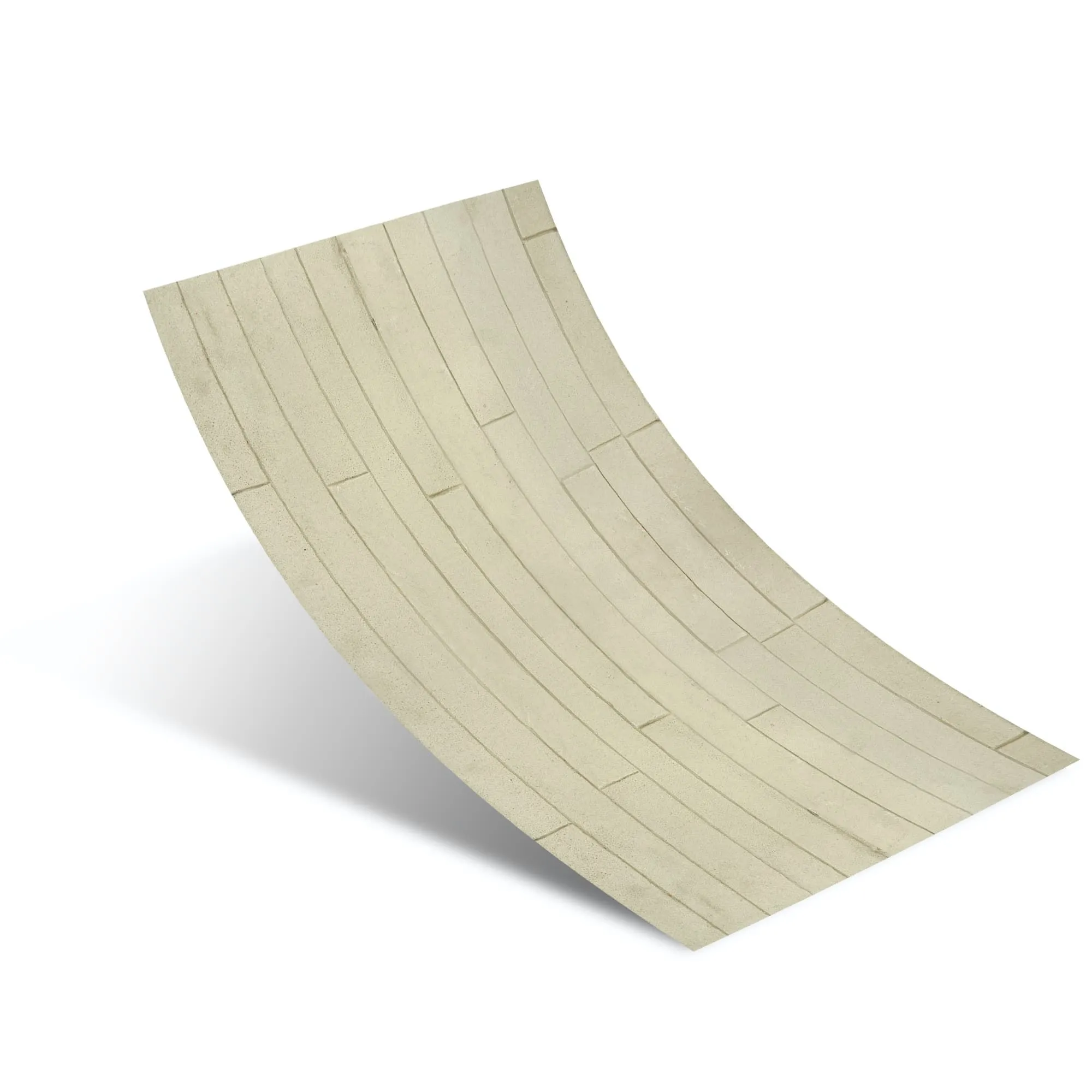
Traditional stone is rigid and prone to cracking under movement or impact. MCM, however, possesses a remarkable degree of flexibility. This makes it highly resistant to cracking from building movement, thermal expansion/contraction, or minor impacts. This flexibility also simplifies installation, allowing the material to conform to various surfaces, even curved ones, without breakage. This is particularly evident in products like our
MCM Flexible Stone
, which offers the look and feel of real stone but with unparalleled pliability.
-
Durability and Longevity:
Don't let the lightness fool you; MCM materials are built to last. They are highly resistant to UV radiation, weathering, moisture, and extreme temperatures. This makes them ideal for both
interior and exterior wall decoration
, maintaining their aesthetic appeal and structural integrity over many years with minimal maintenance. Their consistent composition means fewer hidden flaws compared to natural stone.
-
Green and Eco-Friendly:
This is a core value for COLORIA GROUP. MCM production typically uses a high percentage of recycled or natural raw materials and consumes significantly less energy than conventional building materials like ceramics or natural stone. The low-emission manufacturing process, combined with the material's durability and recyclable nature, makes it an outstanding choice for sustainable construction. It contributes to healthier indoor air quality due to its non-toxic composition.
-
Design Versatility:
MCM can replicate virtually any texture, color, and pattern found in natural stone, brick, wood, or even fabric. This opens up a world of design possibilities, allowing architects and designers unprecedented freedom to achieve specific aesthetic visions without being constrained by the limitations of natural materials. Whether you're aiming for a rustic, industrial, or sleek modern look, MCM can deliver.
-
Ease and Speed of Installation:
Being lightweight and flexible, MCM products are much easier to handle and install. This translates to faster project completion times and reduced labor costs. Many products can be applied directly to a variety of substrates, simplifying the construction process significantly.
COLORIA GROUP's MCM Product Range and How They Tackle Thickness & Strength
At COLORIA GROUP, our decades of industry experience have culminated in a range of MCM products specifically engineered to meet the diverse needs of residential and commercial projects globally, especially in discerning markets like Saudi Arabia. Our focus is on providing robust, aesthetically pleasing, and sustainable solutions.
-
MCM Big Slab Board Series:
When you need to cover large areas with a seamless, grand aesthetic, our
MCM Big Slab Board Series
is the answer. These large-format panels offer the imposing presence of thick, natural stone slabs but with a fraction of the weight.
-
Thickness and Strength:
While appearing thick and substantial, these slabs are engineered for optimal strength-to-weight ratio. Their carefully designed composition provides excellent impact resistance and structural stability when adhered properly. The large format also reduces the number of grout lines, enhancing overall wall integrity and reducing potential points of failure. This series allows for the dramatic visual impact of thick stone without the complex structural reinforcements usually required for natural stone slabs of similar size.
-
Applications:
Ideal for expansive facades, grand lobbies, feature walls, and anywhere a bold, luxurious statement is desired for both
interior and exterior wall decoration
.
-
MCM Project Board Series:
Designed with the rigors of large-scale commercial and residential developments in mind, our
MCM Project Board Series
offers durability, consistency, and cost-effectiveness without compromising on quality or aesthetic.
-
Thickness and Strength:
These boards are engineered for consistent performance across vast project scopes. Their uniform thickness and composition ensure predictable structural behavior and ease of installation. They provide excellent long-term durability and resistance to wear and tear, critical for high-traffic areas or large building envelopes. Their design minimizes waste and maximizes installation efficiency, ensuring projects stay on schedule and budget while delivering robust wall strength.
-
Applications:
Perfect for apartment complexes, office buildings, retail spaces, and public facilities where durability and consistent aesthetic are paramount.
-
MCM Flexible Stone:
Imagine the beauty of natural stone, but with the ability to bend, wrap, and conform to almost any surface. That's the magic of our
MCM Flexible Stone
.
-
Thickness and Strength:
These ultra-thin sheets defy conventional notions of stone. Despite their minimal thickness (often just a few millimeters), they offer surprising resilience due to their flexible composition. They are impact-resistant and won't crack like traditional rigid thin veneers. Their strength comes from their inherent flexibility and robust bonding to the substrate, effectively making them an integrated part of the wall structure. They provide a protective, durable, and aesthetically rich layer without adding significant weight or requiring heavy-duty structural support.
-
Applications:
Curved walls, intricate architectural details, renovations where weight is a major concern, and creative
interior and exterior wall decoration
.
-
MCM 3D Printing Series:
Pushing the boundaries of design, our
MCM 3D Printing Series
allows for unprecedented customization and intricate textural creation, offering innovative solutions for architectural expression.
-
Thickness and Strength:
This series is about creating complex, three-dimensional textures and patterns that are challenging, if not impossible, with traditional stone. The thickness can be precisely controlled during the printing process to achieve desired structural effects for intricate elements. While individual printed elements might vary in thickness for aesthetic depth, the underlying MCM material ensures a strong, durable, and lightweight component that can be integrated seamlessly into a broader wall system.
-
Applications:
Bespoke feature walls, artistic installations, custom architectural elements, and branding applications that demand unique tactile and visual experiences.
COLORIA GROUP's commitment to innovation means you no longer have to choose between aesthetics, structural performance, and sustainability. Our MCM solutions provide a comprehensive answer, ensuring your walls are not only strong and durable but also a testament to modern, responsible building practices.
Matching Thickness to Application: Practical Scenarios
Let's translate theory into practice. Here's how different thickness considerations play out in various common building scenarios.
|
Application Type
|
Traditional Stone (Typical Thickness)
|
MCM (Typical Thickness)
|
Key Considerations for Strength
|
Why MCM Excels
|
|
Exterior Facades (New Construction)
|
Full Bed Veneer: 3-5 inches (7.5-12.5 cm)Thin Veneer: 0.75-1.5 inches (2-4 cm)
|
Big Slab Board / Project Board: 2-8mm (approx. 0.08-0.3 inches)
|
Load bearing, wind resistance, freeze-thaw cycles, impact resistance, long-term durability. Requires robust anchoring and structural support for natural stone.
|
Lightweight reduces structural load, superior flexibility prevents cracking, excellent weather resistance, rapid installation, contributes to
green and eco-friendly
building.
|
|
Exterior Facades (Renovation/Recladding)
|
Thin Veneer: 0.75-1.5 inches (2-4 cm) (often limited by existing structure)
|
Flexible Stone / Project Board: 2-5mm (approx. 0.08-0.2 inches)
|
Minimal added weight to existing structure, easy integration, weatherproofing, aesthetic update without major demolition.
|
Ultra-lightweight means no need for structural upgrades, can be applied directly over existing finishes, perfect for curves and intricate details, fast and clean installation.
|
|
Interior Feature Walls
|
Thin Veneer: 0.75-1.5 inches (2-4 cm)Stacked Stone Panels: 0.5-1 inch (1.2-2.5 cm)
|
Flexible Stone / 3D Printing Series: 2-5mm (approx. 0.08-0.2 inches)
|
Aesthetics, impact resistance, ease of installation, sound dampening. Weight can still be a concern for upper floors.
|
Achieves desired texture and depth with minimal weight, easy to cut and install, excellent for bespoke designs and intricate details, adds warmth and character.
|
|
Fireplace Surrounds
|
Full Bed or Thin Veneer: 0.75-5 inches (2-12.5 cm)
|
Flexible Stone / Project Board: 2-5mm (approx. 0.08-0.2 inches)
|
Heat resistance, aesthetic appeal, durability against occasional impacts. Fire codes must be observed.
|
Non-combustible, easy to wrap around complex fireplace designs, provides a luxurious finish without the challenges of cutting and fitting heavy stone around an opening.
|
|
Accent Walls / Columns
|
Thin Veneer: 0.75-1.5 inches (2-4 cm)
|
Flexible Stone / Big Slab Board: 2-8mm (approx. 0.08-0.3 inches)
|
Visual impact, ease of application, seamless finish.
|
Allows for striking visual effects with minimal bulk, can conform to curved columns, large slabs create a grand appearance, perfect for a modern, sophisticated touch in
interior and exterior wall decoration
.
|
This table illustrates a key point: while natural stone often dictates structural changes due to its thickness and weight, MCM materials provide a high-performance alternative that simplifies construction without compromising the desired aesthetic or long-term strength.
The Installation Factor: How Thickness Affects Project Flow
Choosing the right stone thickness isn't just about the material itself; it profoundly impacts the entire installation process, from logistics to labor. This is an area where modern materials like MCM truly shine, streamlining projects and reducing overall costs.
-
Logistics and Transportation:
-
Heavy Natural Stone:
Thicker natural stone means heavier pallets, requiring specialized forklifts, robust delivery vehicles, and potentially more trips. This increases fuel consumption, carbon emissions, and transportation costs. On-site, dedicated storage areas are needed to accommodate the weight without damaging underlying structures.
-
MCM Materials:
Being significantly lighter, MCM products drastically reduce transportation requirements. More material can be shipped in a single load, cutting down on freight costs and logistical complexities. On-site, they are easier to handle, requiring less heavy machinery and simpler storage solutions. This translates directly to a more
green and eco-friendly
supply chain.
-
Labor and Equipment:
-
Heavy Natural Stone:
Setting thick, heavy stones is labor-intensive and often requires specialized equipment like hoists or cranes for larger pieces. Multiple workers are often needed to safely lift and position each stone. This increases labor costs, slows down the installation process, and raises safety concerns. Skilled masons with extensive experience are essential.
-
MCM Materials:
Due to their lightweight and flexibility, MCM products are much easier to handle by hand, often requiring fewer workers and no heavy machinery for typical installations. This accelerates the installation timeline considerably and reduces labor expenses. The installation process is often less complex, allowing for a broader pool of skilled installers. Our
Flexible Stone
, for example, can be cut with simple tools and adhered with specialized adhesives, making the process incredibly efficient.
-
Substrate Preparation:
-
Heavy Natural Stone:
Full-bed veneers demand a structural ledge or foundation to support their weight, adding another layer of complexity and cost to the project. The substrate must be incredibly robust to handle the load.
-
MCM Materials:
Because of their minimal weight, MCM products typically do not require additional structural support. They can often be applied directly over existing, properly prepared substrates, including concrete, cement board, or even sturdy plaster. This simplifies the preparation phase, saving time and money.
-
Cutting and Shaping:
-
Heavy Natural Stone:
Cutting natural stone requires heavy-duty wet saws, specialized blades, and a significant amount of water to control dust and heat. This is a messy, time-consuming process that generates substantial waste and noise.
-
MCM Materials:
Many MCM products, particularly our
Flexible Stone
and thinner boards, can be cut with standard carpentry tools like utility knives or shears. This makes on-site adjustments quick, clean, and efficient, significantly reducing waste and noise pollution.
The impact of material thickness on installation cannot be underestimated. Opting for lighter, more flexible materials like COLORIA GROUP's MCM series not only contributes to a stronger, more sustainable wall but also dramatically improves project efficiency, budget adherence, and overall safety.
Making Your Decision: A Step-by-Step Approach
With so much to consider, how do you arrive at the best decision for your project? Here's a structured approach:
-
Define Your Project's Core Needs:
-
Structural:
Is it load-bearing or decorative? What are the expected loads (wind, seismic, vertical)?
-
Aesthetic:
What look, texture, and depth are you trying to achieve? What is the overall architectural style?
-
Environmental:
What are the climate challenges (freeze-thaw, humidity, UV exposure)? Is
green and eco-friendly
a priority?
-
Budget & Timeline:
What are your financial and time constraints?
-
Consult with Experts:
-
Architects and Structural Engineers:
They are crucial for load-bearing applications and ensuring compliance with building codes.
-
Experienced Installers/Masons:
Their practical knowledge of material handling and application is invaluable.
-
Material Suppliers:
This is where COLORIA GROUP comes in. We can provide detailed specifications, performance data, and expert recommendations for our MCM products tailored to your specific project needs. Don't hesitate to reach out to us to discuss how our
MCM Big Slab Board Series
,
MCM Project Board Series
, or
Flexible Stone
can be integrated.
-
Review Building Codes:
This cannot be stressed enough. Local regulations will dictate minimum thicknesses, fastening methods, and material standards. Non-compliance can lead to costly rework or safety hazards.
-
Evaluate Material Options:
-
Natural Stone:
Consider its weight, cost, installation complexity, and long-term maintenance.
-
MCM (Modified Cementitious Material):
Explore options like our
MCM Big Slab Board Series
for grand facades,
MCM Project Board Series
for large-scale consistency, and
MCM Flexible Stone
for versatility and ease of application. Compare their performance benefits (lightweight, flexibility, durability, sustainability) against traditional materials.
-
Consider the Life Cycle Cost:
Don't just look at the upfront material cost. Factor in installation labor, ongoing maintenance, potential repair costs, and energy savings (or losses) over the lifespan of the wall. Often, a higher initial investment in a superior material can lead to significant savings down the line. For example, the durability and low maintenance of COLORIA GROUP's MCM products can offer substantial long-term value.
-
Request Samples and Mock-ups:
Whenever possible, obtain samples of your preferred materials. This allows you to see the true color, texture, and thickness in person and understand how it interacts with light and other design elements. For larger projects, a mock-up section of the wall can be invaluable for assessing aesthetics and installation nuances.
Remember, the goal is to achieve a harmonious balance between structural integrity, aesthetic vision, budget, and environmental responsibility. A well-chosen masonry thickness, whether traditional or innovative, will stand as a testament to thoughtful design and quality construction.
The Future of Masonry: Sustainable Strength
As global awareness shifts towards sustainable building practices, the choice of materials has never been more critical. The future of masonry isn't just about building strong walls; it's about building them responsibly, with minimal environmental impact and maximum efficiency. This is where the advancements in materials science, championed by companies like COLORIA GROUP, truly come into their own.
The emphasis on
green and eco-friendly
construction is no longer a niche trend; it's a fundamental requirement. Traditional stone, while natural, often involves resource-intensive quarrying, transportation, and processing. MCM materials, by contrast, are engineered to optimize resource use, reduce waste, and minimize energy consumption during production. Their lightweight nature also significantly cuts down on the carbon footprint associated with shipping and installation. This dual benefit of superior performance and environmental stewardship positions MCM as a leading material for the sustainable future of construction.
Furthermore, the drive for customization and architectural expression continues to push boundaries. The ability of MCM to replicate diverse textures and forms, as seen in our
MCM 3D Printing Series
, means that design freedom is no longer limited by the inherent properties of natural materials. Architects can envision intricate patterns, unique finishes, and complex geometries, knowing that there's a material solution that can bring their vision to life while adhering to principles of structural soundness and sustainability. This convergence of technology, design, and environmental consciousness is defining the next generation of wall construction.
From the bustling cities of Saudi Arabia, where COLORIA GROUP proudly operates with local agencies, to dynamic projects across the globe, the demand for innovative, reliable, and sustainable building materials is only growing. Our role as a comprehensive solution provider is to equip builders and designers with the tools to create structures that are not only beautiful and strong but also considerate of our planet's future. By carefully considering aspects like stone thickness and embracing cutting-edge materials like
MCM (Modified Cementitious Material)
, we can collectively build a more resilient, efficient, and aesthetically inspiring built environment.
Final Thoughts on Choosing Wall Strength
In conclusion, the journey of choosing the right masonry stone thickness is a multifaceted one, intertwining structural engineering, aesthetic aspirations, logistical considerations, and environmental impact. It's a decision that, when made thoughtfully, contributes profoundly to the longevity, safety, and beauty of any building.
Whether you are designing a high-rise facade, a serene interior space, or a robust commercial building, understanding the implications of your material choices is paramount. While traditional stone masonry will always have its timeless appeal, the advent of advanced materials like COLORIA GROUP's
MCM (Modified Cementitious Material)
series offers compelling advantages. These include superior flexibility, lightweight handling, exceptional durability, and a significantly reduced environmental footprint, all while delivering the desired aesthetic quality for
interior and exterior wall decoration
. Our
MCM Big Slab Board Series
,
MCM Project Board Series
,
MCM 3D Printing Series
, and
MCM Flexible Stone
are not just products; they are solutions engineered to empower builders and designers to construct better, smarter, and more sustainably.
The thickness of your masonry stone is a silent guardian, a fundamental component ensuring your walls stand strong against the elements and the test of time. By taking a holistic approach, consulting with experts, and exploring the innovative options available today, you can ensure your project achieves both unparalleled strength and enduring beauty. Embrace the future of masonry with confidence, knowing that a well-informed choice in material thickness is the bedrock of a truly resilient structure.













