
Walk into a space designed with intention, and you'll feel it before you can name it—the quiet hum of a room that breathes, the subtle warmth of surfaces that seem to hold stories, the way light dances on textures that echo the world outside. For designers and architects, capturing that "alive" quality has long meant turning to nature: the rough-hewn charm of stone, the organic flow of wood, the weathered patina of materials shaped by time. But nature, for all its beauty, is unruly. It's heavy, fragile, and often impractical for the demands of modern spaces. Enter MCM 3D printing series and MCM flexible stone —technologies that don't just mimic nature, but translate it. Today, we're diving into how these innovations, paired with materials like dolomitic travertine, are redefining what it means to bring the outdoors in.
Think of travertine, and you might picture the sunlit terraces of Italian villas, their surfaces pockmarked with tiny holes—remnants of the mineral-rich water that once flowed through them. Or maybe it's the smooth, creamy beige of a bathroom wall, warm and inviting. Travertine isn't just a stone; it's a record of time. Each groove, each veining pattern, tells a story of ancient rivers, mineral deposits, and the slow, steady work of geology. But travertine, like many natural stones, comes with trade-offs. Quarrying large slabs is resource-intensive, and transporting them risks cracks or chips. Installing them requires heavy machinery, and maintaining them means constant sealing to avoid stains. For designers dreaming of seamless, large-scale installations or lightweight applications, natural travertine often feels like a beautiful puzzle with missing pieces.
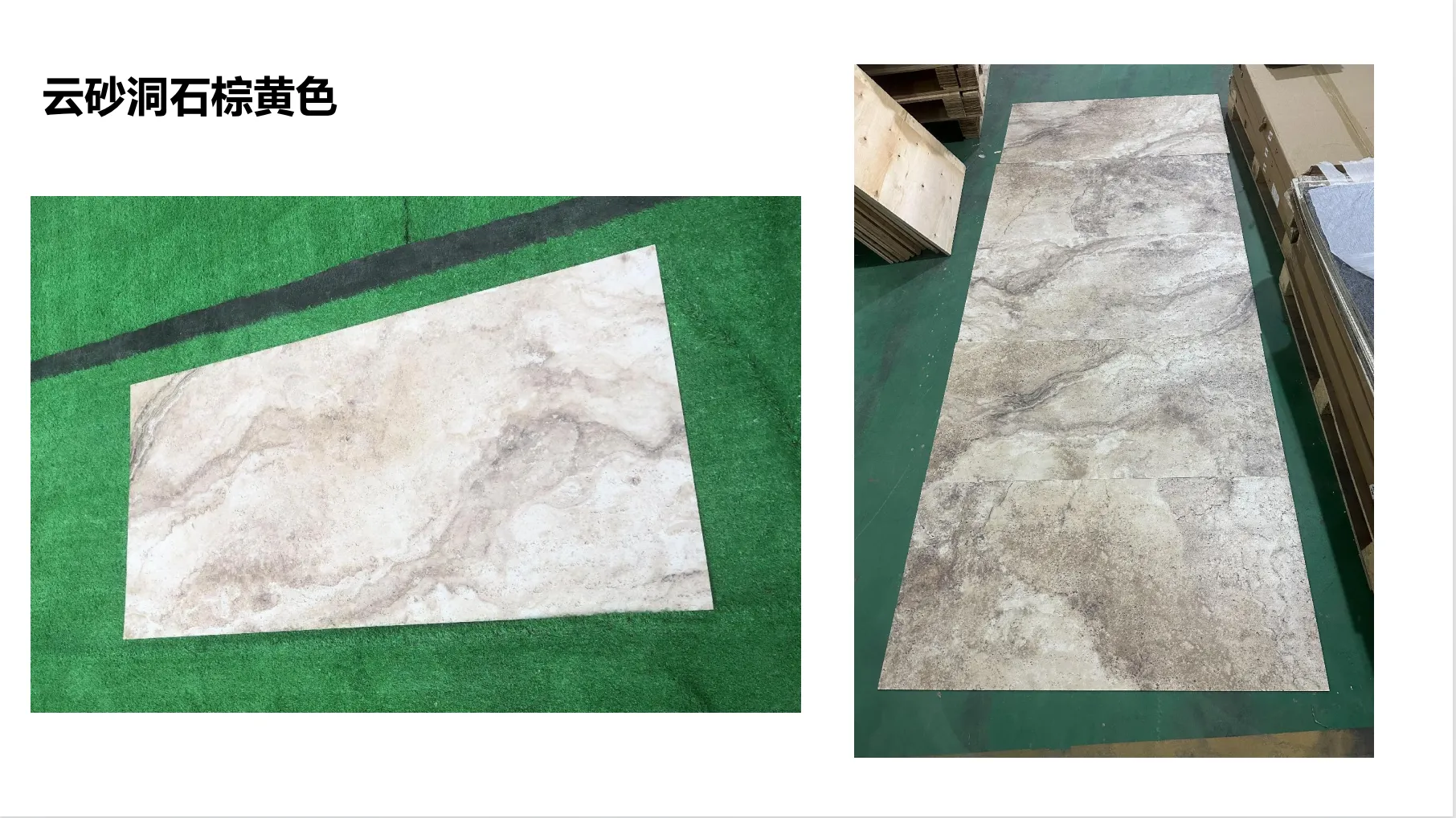
That's where dolomitic travertine steps in. A variation of traditional travertine, dolomitic travertine gets its name from dolomite—a mineral that adds density and durability. It's available in hues that feel both earthy and modern: dolomitic travertine (claybank) , with its warm, terracotta undertones that evoke sunbaked landscapes, and dolomitic travertine (dark grey) , a moodier, more dramatic option that pairs effortlessly with contemporary design. But even dolomitic travertine, in its natural form, can't escape the limitations of weight and fragility. This is where MCM's engineering prowess takes center stage.
The MCM 3D printing series isn't about replacing nature—it's about listening to it. Traditional manufacturing methods often flatten natural textures, reducing them to repetitive patterns or overly uniform surfaces. 3D printing, by contrast, allows for precision at a microscopic level. Imagine a printer that doesn't just lay down layers of material, but sculpts each layer to mimic the exact flow of mineral deposits in travertine, the irregularity of a river-worn stone, or the subtle ridges of wind-carved rock. That's the magic of MCM's 3D printing technology. It starts with high-resolution scans of natural dolomitic travertine samples—capturing every pit, groove, and color variation. Then, using advanced algorithms, the printer recreates these details in a lightweight, composite material that's both flexible and strong.
What does this mean for designers? It means the dolomitic travertine (claybank) you specify for a restaurant wall isn't just a "lookalike"—it's a faithful reproduction of the real thing, down to the way light catches its surface. It means the dolomitic travertine (dark grey) panels on a hotel facade won't crack under the weight of a storm, because they're engineered to be impact-resistant. And it means you can have a 10-foot-tall feature wall made of "travertine" that two people can carry and install in a day, no cranes required. This isn't just convenience; it's creative freedom. Suddenly, a ceiling can mimic the undulating surface of a riverbed, or a backsplash can feature the same intricate veining as a centuries-old travertine quarry—without the environmental footprint of mining.
Let's zoom in on dolomitic travertine, the material that's become a favorite for MCM's 3D-printed innovations. What makes it so special? Unlike traditional travertine, which is primarily calcium carbonate, dolomitic travertine has a higher concentration of magnesium, giving it a denser, more durable structure. In its natural state, this makes it resistant to scratches and stains, but it's still heavy. MCM's process takes the best of dolomitic travertine—the texture, the color, the organic feel—and pairs it with a composite base that's lightweight and flexible. The result? Panels that look and feel like the real stone, but weigh up to 70% less.
Take dolomitic travertine (claybank) , for example. Its warm, earthy tone is a designer's dream for creating cozy, inviting spaces. Picture a living room where the feature wall is clad in these panels: the light hits them, and suddenly the room feels like a sunlit canyon, with the claybank hue reflecting the warmth of natural light. Because the texture is 3D-printed, there's no repetition—each panel has unique variations, just like natural stone. Now imagine that same material in a commercial space, like a café. The lightweight panels mean they can be installed on curved walls or even ceilings, turning a plain room into a cave-like retreat that feels both intimate and grand.
On the flip side, dolomitic travertine (dark grey) brings a touch of modern drama. Its deep, moody color is perfect for creating contrast in a space—think a sleek kitchen with dark grey travertine backsplash against white cabinetry, or a hotel lobby where a wall of dark grey panels serves as a backdrop for art. The beauty of MCM's version is that the dark grey isn't flat; it has depth, with lighter veining that mimics the natural mineral deposits in real dolomitic travertine. Run your hand over it, and you'll feel the slight texture—the same way you would with the natural stone. It's this attention to detail that bridges the gap between "fake" and "authentic."
For designers craving seamless, large-scale installations, the MCM big slab board series is a game-changer. Traditional natural stone slabs are limited by quarry size—usually topping out at around 8 feet. MCM's big slabs, however, can be produced in sizes up to 12 feet by 5 feet, with no visible seams. Imagine a restaurant where the entire wall, from floor to ceiling, is a single slab of dolomitic travertine (claybank), its texture flowing uninterrupted like a river. Or a corporate office with a reception desk made from a single dark grey dolomitic travertine slab, making a bold, cohesive statement. The possibilities for visual impact are endless.
But the MCM big slab board series isn't just about size—it's about consistency. Natural stone slabs can vary widely in color and pattern, even within the same quarry. With MCM's 3D printing, every slab in a project can match perfectly, ensuring the designer's vision is executed exactly as planned. This is a boon for large commercial projects, where maintaining a uniform look across multiple floors or spaces is critical. And because the slabs are lightweight, they can be installed in high-rise buildings without adding extra structural support—a detail that saves both time and money.
If 3D printing is the brain behind MCM's innovations, MCM flexible stone is the heart. Traditional stone is rigid; it bends, and it breaks. Flexible stone, on the other hand, is designed to move. Made from a composite of natural stone powder and a polymer base, it can bend up to 90 degrees without cracking. This opens up a world of applications that were once impossible with natural stone. Think curved walls in a boutique hotel, where the panels wrap around the space like a gentle embrace. Or a retail store with a ceiling that slopes and dips, clad in lightweight travertine panels that mimic the curve of a wave. Even outdoor spaces benefit—flexible stone is weather-resistant, so it can be used on patios, pool surrounds, or exterior cladding without fading or warping.
One of the most exciting uses of flexible stone is in renovation projects. Older buildings often have uneven walls or unique architectural features that make installing rigid materials a nightmare. Flexible stone conforms to these irregularities, turning a problem into a design opportunity. Imagine a historic home with plaster walls that have settled over time—instead of tearing them out, you can cover them with flexible dolomitic travertine panels, preserving the building's character while updating its look. It's a sustainable approach, too—by avoiding demolition, you reduce waste and keep the building's original story intact.
| Feature | Natural Dolomitic Travertine | MCM 3D-Printed Dolomitic Travertine |
|---|---|---|
| Texture Detail | Unique, organic patterns but inconsistent across slabs | Identical replication of natural texture with customizable consistency |
| Weight | Heavy (20-30 lbs per sq ft) | Lightweight (5-8 lbs per sq ft) |
| Durability | Prone to chipping, staining, and water damage without sealing | Impact-resistant, stain-proof, and weather-resistant; no sealing required |
| Installation | Requires heavy machinery and professional installers | Can be installed with basic tools; suitable for DIY or small teams |
| Sustainability | Resource-intensive quarrying and transportation | Low waste production; uses recycled materials in composite base |
Let's step into some real-world scenarios where MCM's materials shine. Take a boutique hotel in the heart of a city, where the design brief calls for a "desert oasis" vibe. The lobby features a 20-foot-tall feature wall clad in dolomitic travertine (claybank) from the MCM big slab series. The panels flow seamlessly, their warm hue and textured surface evoking sand dunes at sunset. Above, the ceiling curves gently, covered in flexible stone that mimics the undulating shape of desert hills. Because the panels are lightweight, the hotel didn't need to reinforce the ceiling—saving on construction costs. Guests walk in, and instantly, they feel transported, even though they're blocks from the nearest desert.
Or consider a family home in a coastal area, where salt air and humidity can wreak havoc on natural stone. The homeowners wanted a kitchen backsplash that looked like travertine but could withstand the elements. They chose dolomitic travertine (dark grey) panels from MCM's 3D printing series. The panels are stain-proof, so splatters from cooking wipe right off, and they're resistant to the salt in the air—no more worrying about discoloration. The dark grey hue complements the home's modern aesthetic, and the texture adds depth without overwhelming the space. It's a practical choice that doesn't sacrifice beauty.
Even public spaces are benefiting. A new library in a bustling downtown area wanted to create a "cave of knowledge"—a quiet reading nook that felt cozy and protected. The designers used MCM flexible stone in dolomitic travertine (claybank) to line the walls and ceiling of the nook. The panels curve gently, creating a sense of enclosure, and the warm color feels inviting. Because the stone is lightweight, it was installed quickly, minimizing disruption to the library's operations. Now, visitors curl up with books in a space that feels both ancient and new—a testament to the power of texture to shape how we experience a room.
MCM's 3D printing series and flexible stone aren't just materials—they're a philosophy. They remind us that we don't have to choose between nature and technology, between beauty and practicality. Instead, we can have both: the soul of natural stone, paired with the innovation of engineering. As designers, this means more freedom to dream—to create spaces that connect us to the world outside, even when we're indoors. It means using materials that are kind to the planet, reducing waste and resource use. And it means making those dreams accessible, whether you're designing a luxury hotel or a small home renovation.
So the next time you walk into a space and feel that "alive" quality—the warmth, the texture, the sense of connection—take a closer look. It might just be MCM's dolomitic travertine panels, 3D-printed with precision, flexible enough to adapt, and big enough to make a statement. It's nature, reimagined. And it's only the beginning.
Recommend Products












