
Architecture has always been more than just walls and roofs—it's a language. Every curve, every texture, every shade tells a story of creativity, culture, and human ingenuity. Yet for too long, architects and designers have danced within the limits of traditional building materials. Brick, concrete, and stone, while timeless, often feel like rigid storytellers, confined to straight lines and predictable forms. That is, until the arrival of the MCM 3D printing series —a revolution that's not just changing how buildings are made, but how they speak .
Imagine a world where an architect's wildest sketch—whether a sinuous wave-inspired facade, a geometric mosaic that mimics constellations, or a textured panel that feels like petrified wood—can leap off the page and onto a building with zero compromise. That's the promise of MCM 3D printing cement board. It's not just a material; it's a collaborator, a tool that bends to the vision of creators, turning "impossible" into "already built."
At its core, MCM 3D printing cement board is a marvel of modern material science. Part of the broader MCM big slab board series , it's crafted using modified composite materials (MCM) that blend the strength of cement with the flexibility of polymers, all shaped by precision 3D printing technology. Unlike traditional concrete, which requires molds and curing time, 3D printing allows for layer-by-layer construction, enabling intricate designs that would be cost-prohibitive or structurally unsound with older methods.
But what truly sets it apart is its dual identity: it's both a flexible stone and a structural powerhouse. Imagine a material that can curve like a ribbon around a building's corner, yet stand up to decades of rain, wind, and sun. That's the magic here. The flexibility doesn't come at the expense of durability—in fact, MCM 3D printed panels often outperform traditional stone in impact resistance and weathering, thanks to their engineered composition.
Let's talk about the fun part: customization. For architects, this is where the MCM 3D printing series truly shines. Traditional materials force trade-offs: you want a unique shape? Prepare for sky-high mold costs. You crave a specific texture? Hope the quarry has the right stone. With 3D printing, those trade-offs vanish.
Take, for example, the wave panel —a design that mimics the ebb and flow of ocean waves. With traditional methods, creating a wave-like facade would require hand-carving each panel or investing in custom molds, a process that's time-consuming and expensive. With MCM 3D printing, the same wave pattern can be programmed into a printer, which layers the material with millimeter precision, ensuring every curve is consistent yet organic. The result? A facade that looks like it was sculpted by nature, not machines.
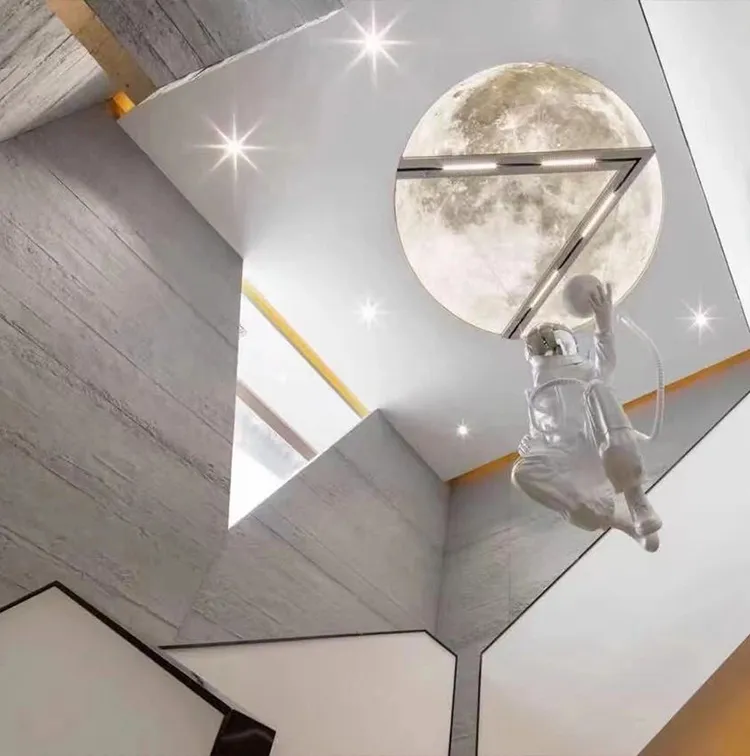
Or consider the lunar peak silvery finish—a texture that shimmers like moonlight on rock, with subtle craters and ridges that catch the light. This isn't just a paint job; it's built into the material during printing. The 3D printer can vary the density of layers, creating peaks and valleys that mimic the moon's surface, all while maintaining the panel's lightweight properties. For a cultural center aiming to evoke celestial wonder, or a luxury hotel seeking to blend modernity with nature, this level of detail is transformative.
Still on the fence? Let's put MCM 3D printing cement board side-by-side with traditional building materials. The difference is clear:
| Feature | Traditional Concrete/Stone | MCM 3D Printing Cement Board |
|---|---|---|
| Customization | Limited by molds; complex designs = high costs | Unlimited shapes/textures; 3D models drive production |
| Weight | Heavy (e.g., 200+ kg/sq.m for natural stone slabs) | Lightweight (30-50 kg/sq.m); reduces structural load |
| Installation Time | Weeks (mold setup, curing, transportation) | Days (pre-printed panels, easy on-site assembly) |
| Sustainability | High carbon footprint; excess material waste | Recyclable materials; 3D printing minimizes waste |
| Durability | Strong but prone to cracking under stress | Flexible yet impact-resistant; UV and weather-proof |
MCM 3D printing cement board isn't picky about its stage. It performs equally well on the facade of a 50-story commercial tower as it does on a cozy mountain cabin. Let's explore a few real-world scenarios where it's already making waves:
In a recent project, a museum dedicated to marine biology wanted its exterior to reflect the ocean's dynamism. The architect's vision? A facade that looked like a wave frozen mid-crash, with translucent panels that glowed at night like bioluminescent plankton. Traditional stone would have required hundreds of custom-cut pieces, each weighing tons. Instead, the team used MCM 3D printing to create 12-meter-long wave panels, each curved to match the design, with embedded LED channels. The result? A building that moves , even when standing still.
For homeowners, MCM 3D printing is about personalization. A family in Kyoto, for example, dreamed of a home that honored their heritage with a modern twist. They wanted a garden wall that resembled the historical pathfinders stone of old Japanese villages but with a geometric pattern that nodded to contemporary art. Using 3D scanning, the design team replicated the rough texture of pathfinders stone, then overlaid it with a 3D-printed grid of interlocking triangles. The wall now serves as a backdrop for tea ceremonies, blending the past and present seamlessly.
In urban centers, where every building vies for attention, MCM 3D printing is a secret weapon. A tech company in San Francisco wanted its headquarters to embody innovation, so they commissioned a facade that looked like a digital code "unfolding." The design featured thousands of tiny, interconnected polygons, each slightly tilted to catch the light differently. With traditional materials, this would have been a logistical nightmare. With MCM 3D printing, the panels were printed in sections, each numbered for easy assembly, and installed in just 10 days. Today, the building is a landmark—a physical representation of the company's mission to "code the future."
In an era where "green building" is no longer optional, MCM 3D printing cement board checks all the boxes. Unlike fair-faced concrete , which often requires energy-intensive curing and generates significant waste, MCM's production process is designed to minimize environmental impact. The 3D printing technology uses only the exact amount of material needed, cutting down on scraps, and many of its composite components are made from recycled plastics and industrial byproducts.
Its lightweight nature also reduces transportation emissions—fewer trucks are needed to haul panels to the site—and its durability means less frequent replacement, lowering the building's lifecycle carbon footprint. Even better, MCM panels are fully recyclable at the end of their life, closing the loop on sustainability.
One project in Copenhagen took this a step further: a community center built entirely with MCM 3D printed panels, including foamed aluminium alloy board (vintage silver) accents for a sleek, modern look. The building's energy use is 40% lower than similar structures, thanks in part to the panels' insulating properties, and its construction waste was 70% less than a traditional build. It's proof that beauty and responsibility can coexist.
As 3D printing technology advances, so too will the possibilities of MCM cement boards. Imagine panels that change color with temperature, or surfaces embedded with sensors that monitor air quality—all printed in one go. Or big slab board series that span entire building facades in a single piece, eliminating seams and creating a seamless canvas for art.
Architects are already dreaming bigger. One firm is experimenting with 3D printing "living walls" where MCM panels are printed with pockets for plants, blurring the line between building and nature. Another is exploring how the material can be used in disaster relief, printing temporary shelters that are lightweight enough to airlift but strong enough to withstand storms.
At the end of the day, MCM 3D printing cement board is more than a trend—it's a shift in how we think about construction. It's a reminder that the best buildings aren't just built; they're imagined first. And with MCM, the only limit to imagination is how far we're willing to dream.
Architecture is the art of leaving a legacy. It's the stadium where a child watches their first game, the library where a student discovers a passion, the home where a family grows. With MCM 3D printing cement board, we're not just building structures—we're building stories that are as unique as the people who inhabit them.
So here's to the architects who sketch in the margins, the designers who refuse to "tone it down," and the builders who turn those sketches into reality. With MCM 3D printing cement board, the next masterpiece is already in the works. And this time, it's going to be unlike anything we've ever seen.
Recommend Products












