
In the world of architecture, there's a quiet revolution unfolding—one that marries the timeless warmth of traditional building materials with the cutting-edge precision of modern technology. At the heart of this movement lies the MCM 3D Printing Series, a collection of materials that redefine what's possible in design. Among its standout innovations is the gradient color rammed earth board, a product that doesn't just build spaces, but tells stories through color, texture, and the subtle art of transition. Let's dive into how MCM is blending heritage, technology, and creativity to shape the future of construction.
Before we explore the magic of 3D-printed gradients, it's essential to understand the foundation: MCM flexible stone. Short for Modified Composite Material, MCM has quickly become a favorite among architects and designers for its rare combination of flexibility, strength, and aesthetic versatility. Unlike traditional stone or concrete, which can be heavy and rigid, MCM flexible stone is lightweight—often 70% lighter than natural stone—yet resistant to impact, weathering, and fire. It's a material built for the demands of modern architecture, without sacrificing the organic feel that makes spaces feel alive.
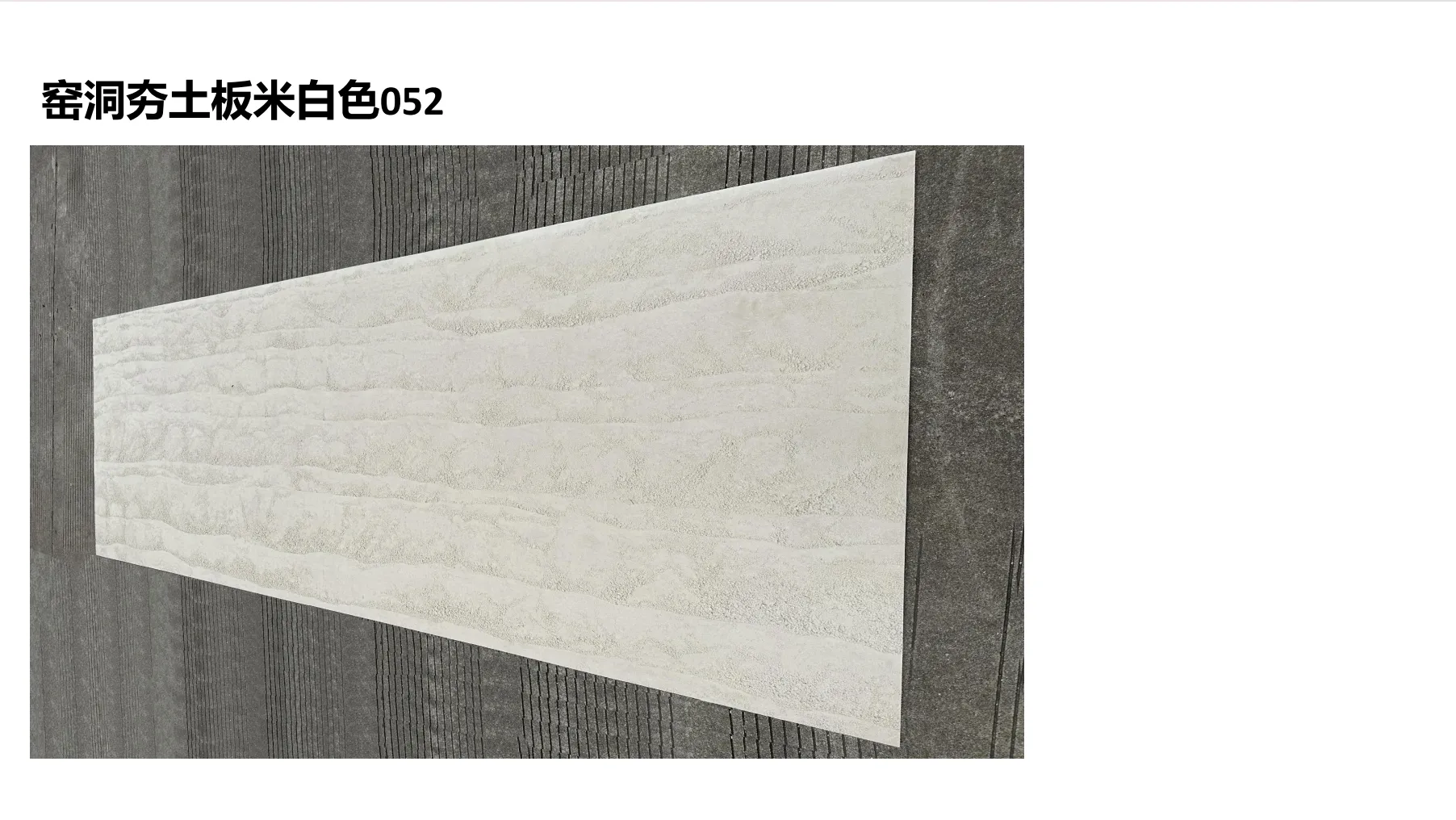
What truly sets MCM apart, though, is its respect for tradition. Many of its product lines, from the rough-hewn charm of historical pathfinders stone to the earthy warmth of gobi panel , draw inspiration from natural landscapes and ancient building techniques. Rammed earth, for example, is a method as old as civilization itself—layers of soil, gravel, and clay compacted to form solid walls. It's a material that carries the memory of handcrafted homes, of communities building with what the land provided. But traditional rammed earth has limitations: it's heavy, hard to transport, and limited in color variation. Enter MCM 3D printing, which takes this age-old technique and propels it into the future.
3D printing technology has transformed industries from healthcare to aerospace, and construction is no exception. In the context of MCM materials, 3D printing isn't just about speed (though it certainly accelerates production); it's about precision. Traditional manufacturing methods often force designers into rigid molds or repetitive patterns. With 3D printing, every layer is controlled—thickness, texture, and even color can be adjusted in real time. This level of control is what makes gradient color rammed earth boards possible.
Imagine a wall that shifts from the soft beige of lime stone(beige) to the deep, rusty red of historical pathfinders stone , with every shade in between blending seamlessly. Or a facade that mimics the transition from dawn to dusk, starting with the silvery glow of lunar peak silvery and fading into the warm gold of lunar peak golden . These aren't just color choices—they're narratives. 3D printing allows MCM to turn abstract design concepts into tangible, tactile surfaces that evoke emotion and connection.
At first glance, gradient color rammed earth boards might look like a stroke of artistic luck—a happy accident of color mixing. But in reality, they're the result of meticulous engineering. MCM starts with a base of recycled stone powder, mineral aggregates, and a polymer binder (the secret to that flexibility). Pigments are then added in precise quantities as the 3D printer deposits each layer. By varying the pigment concentration layer by layer, the material naturally transitions from one hue to another, creating gradients that are both bold and nuanced.
Take, for example, a gradient inspired by the Gobi Desert. It might start with the pale, sun-bleached tone of gobi panel , deepen into the warm khaki of rammed earth board (khaki) , and finally settle into the rich, rusty red of rusty red . The effect is striking—not just visually, but emotionally. It's a wall that feels like a journey, a space that invites you to trace the colors with your eyes and imagine the landscape that inspired it.
But gradient rammed earth boards aren't just about aesthetics. They're also a sustainability win. Because MCM uses recycled materials and 3D printing minimizes waste (only the exact amount of material needed is used), these boards have a lower carbon footprint than traditional stone or concrete. They're also low-maintenance: resistant to fading, staining, and moisture, they'll keep their gradient beauty for decades without the need for frequent repairs or repainting.
One of the most exciting aspects of gradient color rammed earth boards is their versatility. MCM draws from a vast color library, ensuring that designers can create gradients tailored to any project. Whether you're aiming for the celestial vibe of the travertine (starry series) —think starry green , starry red , or starry blue blending into deep space—or the earthy tones of dolomitic travertine (claybank) fading into dolomitic travertine (dark grey) , the options are nearly endless. Even metallic accents are possible, thanks to pigments that mimic the luster of foamed aluminium alloy board (vintage gold) or the industrial chic of foamed aluminium alloy board (vintage silver) .
Gradient color rammed earth boards rarely stand alone in a design. They shine brightest when paired with other MCM materials that enhance their beauty and expand their applications. Let's explore some of the most popular pairings:
The lunar peak line— silvery , golden , and black —is a natural complement to gradient rammed earth. Imagine a lobby with gradient walls in sunset hues (amber to terracotta) paired with lunar peak silvery accent panels. The silvery, almost iridescent finish of the lunar peak boards adds a touch of modernity and contrast, making the gradient colors pop even more. It's a design that feels both grounded (thanks to the earthy gradients) and otherworldly (the lunar sheen), perfect for spaces that aim to inspire.
Travertine has long been a staple in luxury architecture, prized for its porous, organic texture. MCM's travertine line—including travertine (vintage silver) , travertine (starry orange) , and travertine (vintage black) —pairs beautifully with gradient rammed earth. For example, a restaurant might use gradient rammed earth for the main walls (say, a transition from travertine (beige) to red travertine ) and linear travertine(claybank) for the bar front. The smooth gradient of the walls balances the linear texture of the travertine, creating a space that's both dynamic and harmonious.
For projects that need a touch of industrial elegance, foamed aluminium alloy board is the way to go. Available in vintage silver , vintage gold , and gold , these boards have a lightweight, airy feel (thanks to the foam core) and a metallic finish that adds sophistication. A modern office might combine gradient rammed earth (in soft greys, inspired by fair-faced concrete ) with foamed aluminium alloy board (vintage gold) accents. The gold adds warmth to the cool greys, while the rammed earth softens the industrial edge of the aluminium—proof that opposites truly attract in design.
Nothing grounds a space like the warmth of wood, and MCM's wood grain board does just that. With its realistic patterns, it pairs effortlessly with gradient rammed earth. Picture a home interior where the walls are a gentle gradient from wood line (a soft, woody beige) to bamboo mat board (a warm, golden tone), and the ceiling features wood grain board panels. The effect is cozy and inviting, a space that feels connected to nature without sacrificing modern style.
| Product Name | Core Material | Color Range | Key Applications | Standout Features |
|---|---|---|---|---|
| Gradient Color Rammed Earth Board | Recycled stone powder, polymer binder | Custom gradients (e.g., beige → rusty red, khaki → golden sunset) | Feature walls, facades, accent panels | Storytelling through color transitions, sustainable, lightweight |
| Lunar Peak Series | MCM composite with metallic pigments | Silvery, Golden, Black | Celestial-themed interiors, modern facades | Iridescent finish, durable, pairs with earthy tones |
| Travertine (Starry Collection) | Travertine aggregate, polymer binder | Starry Green, Starry Red, Starry Blue, etc. | Luxury hotels, high-end retail | Porous, organic texture with "starry" pigment flecks |
| Foamed Aluminium Alloy Board | Aluminium alloy foam core | Vintage Silver, Vintage Gold, Gold | Industrial-chic interiors, accent walls | Lightweight, metallic sheen, fire-resistant |
Gradient color rammed earth boards are surprisingly versatile, finding their way into projects of all scales and styles. Here are just a few examples of how designers are using them:
Hospitality Spaces: Boutique hotels are using gradient walls to create themed rooms. Imagine a "Desert Suite" with a gradient from gobi panel to rusty red , paired with bali stone accents and marble stream stone floors. It's a room that feels like a mini-vacation, transporting guests to far-off landscapes.
Corporate Offices: Forward-thinking companies are using gradient rammed earth to foster creativity. A tech startup might opt for a gradient inspired by the night sky— travertine (starry blue) fading into lunar peak black —to encourage employees to "reach for the stars." Paired with fair-faced concrete desks and foamed aluminium alloy board (vintage silver) partitions, the space feels innovative yet grounded.
Residential Homes: Homeowners are embracing gradient rammed earth for feature walls in living rooms or bedrooms. A family home might have a wall that transitions from the soft beige of lime stone(beige) to the warm gold of golden faith real photos , creating a cozy, sunlit atmosphere. When paired with wood grain board flooring and weaving (beige) textiles, the space feels like a retreat from the hustle and bustle of daily life.
Public Spaces: Museums and cultural centers are using gradient rammed earth to tell stories. A history museum might have a wall that gradients from the ancient, weathered tone of relic rammed earth board to the crisp, modern hue of epoch stone , symbolizing the passage of time. It's a visual narrative that educates and inspires, making history feel tangible.
As technology advances, the possibilities for MCM 3D printing only grow. One exciting development is the integration of smart materials—gradient rammed earth boards that can change color in response to light or temperature, for example. Imagine a facade that shifts from lunar peak silvery during the day to travertine (starry green) at night, adapting to the environment and creating a dynamic, ever-changing building.
Another trend is the expansion of texture gradients. Currently, MCM focuses on color transitions, but future iterations could blend textures—from the smoothness of polish concrete to the roughness of rough granite stone (medium grey) —in a single panel. It's a way to add even more depth and complexity to spaces, making them feel truly one-of-a-kind.
At the end of the day, MCM 3D printing for gradient color rammed earth boards is about more than materials and technology. It's about reimagining what a building can be—a canvas for storytelling, a bridge between past and future, a space that feels alive. Whether you're an architect designing a skyscraper or a homeowner dreaming of a feature wall, these materials invite you to think differently: to see color not as a static choice, but as a journey, and to build spaces that don't just shelter us, but inspire us.
In a world that often feels rushed and uniform, MCM reminds us that the most memorable spaces are those with heart. And with gradient color rammed earth boards leading the way, the future of architecture looks brighter—and more colorful—than ever.
Recommend Products












