
Exploring the clash between time-honored craftsmanship and cutting-edge innovation in architectural design
Walk into any space—whether a century-old cottage, a sleek urban loft, or a towering commercial complex—and the first thing that greets you, often unconsciously, is the texture of its surfaces. The rough-hewn charm of wooden planks, the cool smoothness of stone, the industrial edge of concrete—these materials don't just fill a functional role; they tell stories. They shape how we feel, how we interact, and how we remember a place. For decades, traditional methods like sawing wood board have been the backbone of this narrative, offering warmth and a connection to nature that's hard to replicate. But in recent years, a new protagonist has entered the scene: the MCM 3D Printing Series. This isn't just a technological upgrade; it's a reimagining of what building materials can be. Today, we're diving into the heart of this evolution—comparing the legacy of sawing wood board with the innovation of MCM 3D printing, and exploring how both are shaping the future of architecture.
There's a reason sawing wood board has been a cornerstone of construction for millennia. It's not just about function—it's about craft. Think of the carpenters of old, their hands calloused from years of guiding logs through sawmills, their eyes trained to spot the perfect grain pattern hidden within a tree. Sawing wood board is a dance with nature: selecting timber, curing it to prevent warping, then carefully cutting and sanding each plank to bring out its unique character. The result? Surfaces that breathe with life—knots that tell of a tree's journey, grains that flow like rivers, and a warmth that softens even the starkest spaces.
In residential design, sawing wood board has long been the gold standard for creating cozy, inviting interiors. A wooden floor underfoot feels grounding; a wooden accent wall adds depth without overwhelming. In heritage projects, it's irreplaceable—restoring a 19th-century home demands the same tactile quality that the original builders relied on. Even in modern spaces, designers often turn to reclaimed wood boards to inject history and texture, proving that tradition still holds sway in a world obsessed with the new.
But for all its charm, traditional sawing wood board comes with significant challenges. Let's start with sustainability. As global demand for wood grows, deforestation has become a pressing issue. Even with responsible forestry practices, harvesting trees takes decades to replenish, and the process of sawing itself is surprisingly wasteful—up to 30% of a log can end up as sawdust or offcuts, depending on the cuts needed. Then there's consistency: natural wood is at the mercy of its environment. A single batch of planks might vary in color, density, or moisture content, leading to uneven wear or warping over time. Moisture, in fact, is a wood board's worst enemy—too much, and it swells; too little, and it cracks. In humid climates, this means constant maintenance, from sealing to sanding, to keep those beautiful planks looking their best.
And let's not forget cost. High-quality, sustainably sourced wood isn't cheap, and the labor-intensive nature of sawing and finishing adds up. For large-scale projects, like commercial facades or high-rise interiors, the price tag can become prohibitive. Yet, despite these hurdles, sawing wood board endures because it offers something intangible: a connection to the natural world that feels increasingly rare in our digital age.
Enter the MCM 3D Printing Series—a technology that's not just changing how we make building materials, but redefining what they can do. MCM, or Modified Composite Material, is a blend of natural minerals and advanced polymers designed for durability, flexibility, and sustainability. When paired with 3D printing, it becomes a powerhouse of innovation. Imagine a world where you can design a facade with the complexity of a honeycomb, or a wall panel that mimics the look of weathered wood but resists rot, fire, and moisture. That's the promise of MCM 3D printing.
So, how does it work? Unlike traditional sawing, which starts with a block of material and cuts away what's not needed, 3D printing is additive—building up layers of MCM (often reinforced with materials like flexible stone for added strength) to create a precise, custom shape. It all begins with a digital model, crafted in CAD software, where designers can tweak every curve, texture, or pattern. Once the design is finalized, the 3D printer gets to work, extruding the MCM mixture layer by layer, each one bonding seamlessly to the last. The result is a material that's not just strong, but surprisingly lightweight—and because it's printed to exact specifications, there's almost no waste. No offcuts, no sawdust, no excess material sitting in a landfill.
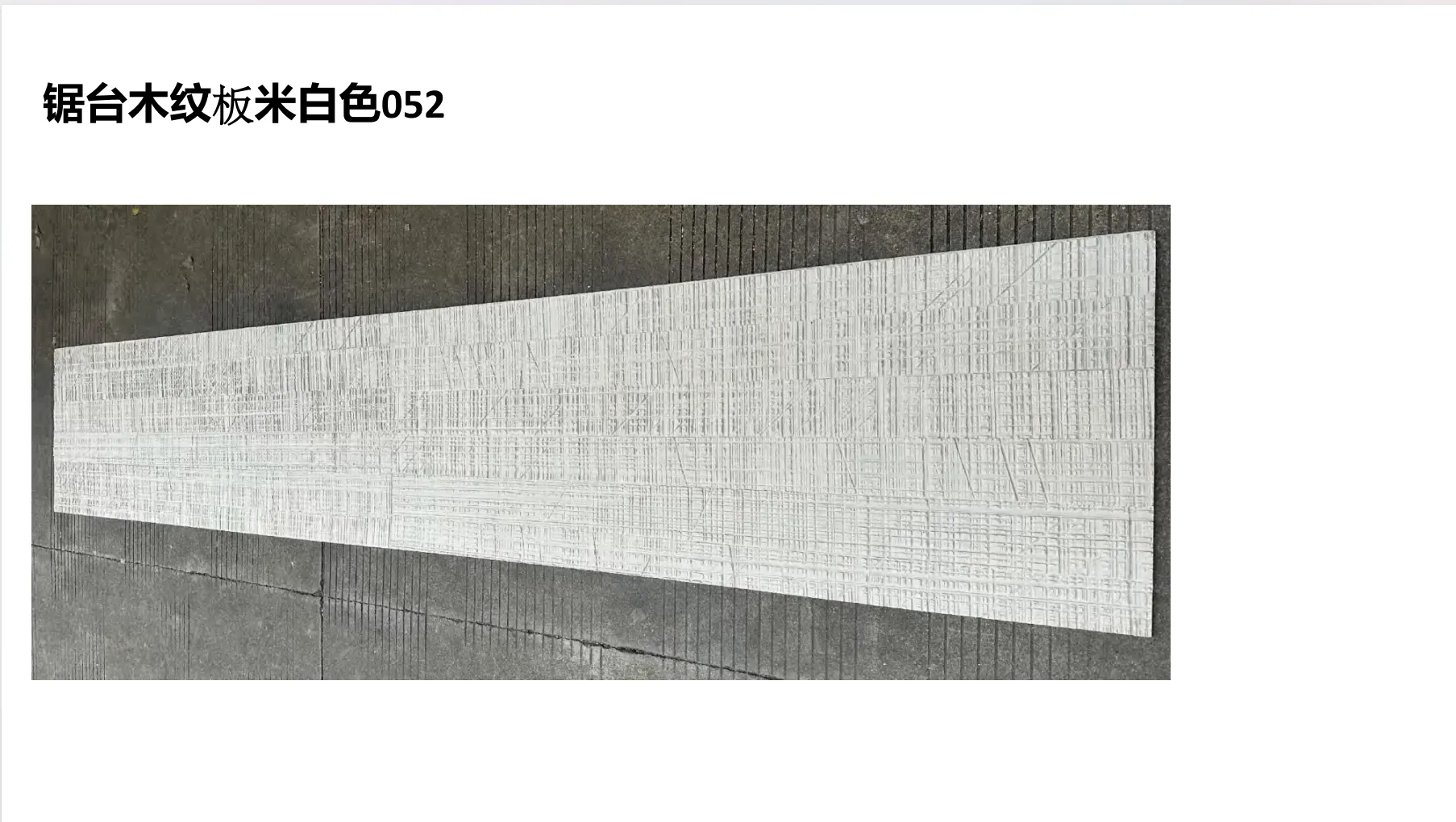
But the real magic of MCM 3D printing lies in its flexibility—both literal and figurative. Take flexible stone, a key component in many MCM blends. It's exactly what it sounds like: stone that bends. This means panels can be curved around corners, wrapped over arches, or shaped into organic forms that would be impossible with rigid materials like traditional stone or even wood. And because the printing process is digital, the design possibilities are endless. Want a wall that looks like it's covered in starry night sky? Print tiny, glittering flecks into the MCM mixture. Crave the look of aged wood grain? Program the printer to mimic those intricate patterns with pinpoint accuracy. It's customization on a scale that traditional sawing could never match.
Sustainability is another area where MCM 3D printing shines. The MCM base is often made from recycled or abundant minerals, reducing reliance on virgin resources. The additive process cuts waste by up to 90% compared to traditional manufacturing, and because the finished product is so durable, it lasts longer—meaning less frequent replacement. Plus, many MCM blends are designed to be energy-efficient, reflecting heat in warm climates or insulating in cold ones, which can lower a building's carbon footprint over time.
Durability, too, is a standout feature. Unlike wood, MCM 3D printed panels don't rot, warp, or attract pests. They're resistant to fire, water, and UV rays, making them ideal for harsh environments—think coastal buildings battered by saltwater, or desert structures facing extreme heat. And because they're lightweight, they reduce the load on a building's foundation, opening up new possibilities for architectural design (hello, cantilevered structures and floating facades).
Of course, some might argue that MCM lacks the "soul" of natural wood. But here's the thing: MCM 3D printing isn't trying to replace wood—it's offering a new tool in the designer's toolkit. It can mimic the look of wood with uncanny precision, but with none of the drawbacks. Or it can create entirely new aesthetics, like the sleek, metallic finish of foamed aluminium alloy board (vintage silver), which adds a futuristic edge to modern spaces. It's about expanding possibilities, not erasing tradition.
To truly understand the impact of MCM 3D printing, let's put it head-to-head with traditional sawing wood board. The table below breaks down key factors, from production to performance, to help you see how these two methods stack up.
| Factor | Traditional Sawing Wood Board | MCM 3D Printing Series |
|---|---|---|
| Production Process | Subtractive: Starts with a log, saws into planks, sands, and finishes. Labor-intensive, relies on skilled craftsmen. | Additive: Digital design → 3D printer extrudes layers of MCM (often with flexible stone or other reinforcements). Automated, precise, and scalable. |
| Material Efficiency | High waste: 20-30% of wood is lost to sawdust, offcuts, or defective planks. | Minimal waste: ~5% waste (mostly from support structures), as material is only used where needed. |
| Design Flexibility | Limited by wood's natural size, grain, and rigidity. Curves or complex shapes require expensive custom cutting. | Virtually unlimited: Can print complex geometries, textures, and patterns. Flexible stone allows for bending and shaping. |
| Sustainability | Relies on tree harvesting; slow regrowth. High embodied energy in transportation and processing. | Uses recycled/mineral-based MCM; low waste, energy-efficient production. Durable, reducing replacement needs. |
| Durability & Maintenance | Prone to moisture damage, rot, pests, and warping. Requires regular sealing, sanding, and repairs. | Resistant to water, fire, pests, and UV rays. Minimal maintenance—no sealing or sanding needed. |
| Cost | High upfront costs (sustainable wood + labor). Ongoing maintenance adds to long-term expenses. | Higher initial investment in 3D printing tech, but lower labor and material costs at scale. Minimal maintenance reduces long-term costs. |
| Best For | Heritage projects, cozy interiors, small-scale designs prioritizing natural warmth. | Large-scale facades, complex geometries, high-traffic areas, sustainable builds, and modern aesthetics. |
One of the most exciting things about MCM 3D printing isn't just its technology—it's the sheer range of aesthetics it offers. The MCM big slab board series, for example, proves that "composite material" doesn't have to mean "bland." These large-format panels (some up to 12 feet long) come in finishes that mimic everything from polished marble to rough-hewn stone, all with the durability of MCM. Imagine a hotel lobby with floor-to-ceiling MCM big slabs that look like rare Italian travertine but weigh half as much and cost a fraction of the price. It's luxury without the logistical nightmare.
Then there's the foamed aluminium alloy board (vintage silver)—a standout in MCM's metal-inspired lineup. With its brushed, aged finish, it adds industrial chic to any space, whether used as a backsplash in a trendy restaurant or a facade for a tech startup's headquarters. Unlike real aluminium, it's lightweight and corrosion-resistant, making it ideal for outdoor use. And because it's 3D printed, you can add custom textures—like a honeycomb pattern for extra grip or a geometric design that catches the light at different angles.
But MCM doesn't stop at mimicking existing materials. It's creating entirely new aesthetics, like the "lunar peak" series, which combines MCM with metallic flecks to evoke the surface of the moon, or "stream limestone," which replicates the smooth, worn look of river rocks but with the strength to withstand heavy foot traffic. These designs aren't just visually striking—they're functional, solving problems that traditional materials can't. For example, MCM's "weaving" textures (available in khaki, jacinth, or grey) add visual interest to walls while hiding scuffs and scratches, making them perfect for high-traffic areas like airports or schools.
So, when should you choose traditional sawing wood board, and when is MCM 3D printing the better bet? The answer lies in the project's goals, budget, and aesthetic vision.
For heritage restoration or projects that prioritize authenticity, sawing wood board is still the way to go. Take the renovation of a 18th-century farmhouse in the English countryside: using reclaimed oak planks for the floors and beams honors the building's history, creating a space that feels rooted in time. Similarly, in boutique hotels or cozy cafes, the warmth of wooden boards can make guests feel at home in a way that synthetic materials can't replicate. There's a reason why "rustic chic" remains a popular design trend—wood's ability to evoke comfort and nostalgia is unmatched.
But for modern, forward-thinking projects, MCM 3D printing is a game-changer. Consider a skyscraper in Dubai with a facade designed to mimic the desert's sand dunes. Traditional materials would struggle to create those sweeping curves and intricate textures, but MCM 3D printing makes it possible—all while reducing the building's weight and energy costs. Or a sustainable housing development in Scandinavia, where MCM panels printed to look like pine bark blend seamlessly with the natural landscape but resist the region's harsh winters. Even in residential design, MCM is making waves: homeowners can now have a "wood grain board" accent wall that looks like solid oak but won't warp in humid basements or fade in sunny living rooms.
Another area where MCM shines is in public spaces. Think of a university campus with outdoor seating areas: MCM 3D printed benches designed to look like smooth river stones but built to withstand rain, snow, and graffiti. Or a museum with a 3D printed facade that changes color based on the time of day, using light-reactive MCM blends. These projects push the boundaries of what architecture can be, turning buildings into works of art that engage and inspire.
Perhaps the most exciting possibility is when the two methods are combined. Imagine a home where the interior walls are clad in warm wooden boards, creating a cozy living space, while the exterior uses MCM 3D printed panels (in a "lunar peak silvery" finish) to resist harsh weather. It's the best of both worlds: tradition where it matters, innovation where it counts.
As technology advances, the line between traditional and modern building materials will continue to blur, but one thing is clear: MCM 3D printing is here to stay. We're already seeing innovations like 3D printed MCM panels with integrated smart technology—think walls that can change color with a smartphone app, or facades that generate solar power through embedded sensors. The possibilities are endless, and they're only limited by our imagination (though, as per our earlier note, we won't ask you to "imagine" anything—we'll just show you).
Sustainability will also be a driving force. As the construction industry faces pressure to reduce its carbon footprint, MCM's low-waste production and durable design will become even more appealing. We may soon see MCM blends made from 100% recycled materials, or 3D printers powered by renewable energy, making the technology not just innovative, but carbon-neutral.
And let's not forget affordability. As MCM 3D printing becomes more mainstream, the cost of equipment and materials will drop, making it accessible to smaller projects, from home renovations to community centers. Imagine a local library being able to afford a custom 3D printed facade that reflects the town's history, or a school adding MCM "stream limestone" panels to its playground to create a safe, durable surface that looks like a real riverbed. MCM has the potential to democratize design, allowing more people to access high-quality, custom materials.
At the end of the day, building materials are more than just tools—they're storytellers. Traditional sawing wood board tells a story of craftsmanship, of humans working in harmony with nature, of patience and skill passed down through generations. MCM 3D printing tells a story of innovation, of pushing the boundaries of what's possible, of building a more sustainable, flexible future. Both have their place, and neither is "better" than the other—they're just different.
As designers, architects, and homeowners, our job is to choose the right material for the story we want to tell. Sometimes that story is one of tradition and warmth, and we reach for the saw and the wooden plank. Sometimes it's one of innovation and resilience, and we turn to MCM 3D printing and flexible stone. And sometimes, it's a blend of both—honoring the past while building something new.
So, whether you're standing in a room with floors made of century-old oak or a facade printed layer by layer from MCM, take a moment to appreciate the material beneath your feet (or above your head). It's not just a surface—it's a piece of the future, shaped by the past.
Recommend Products












