
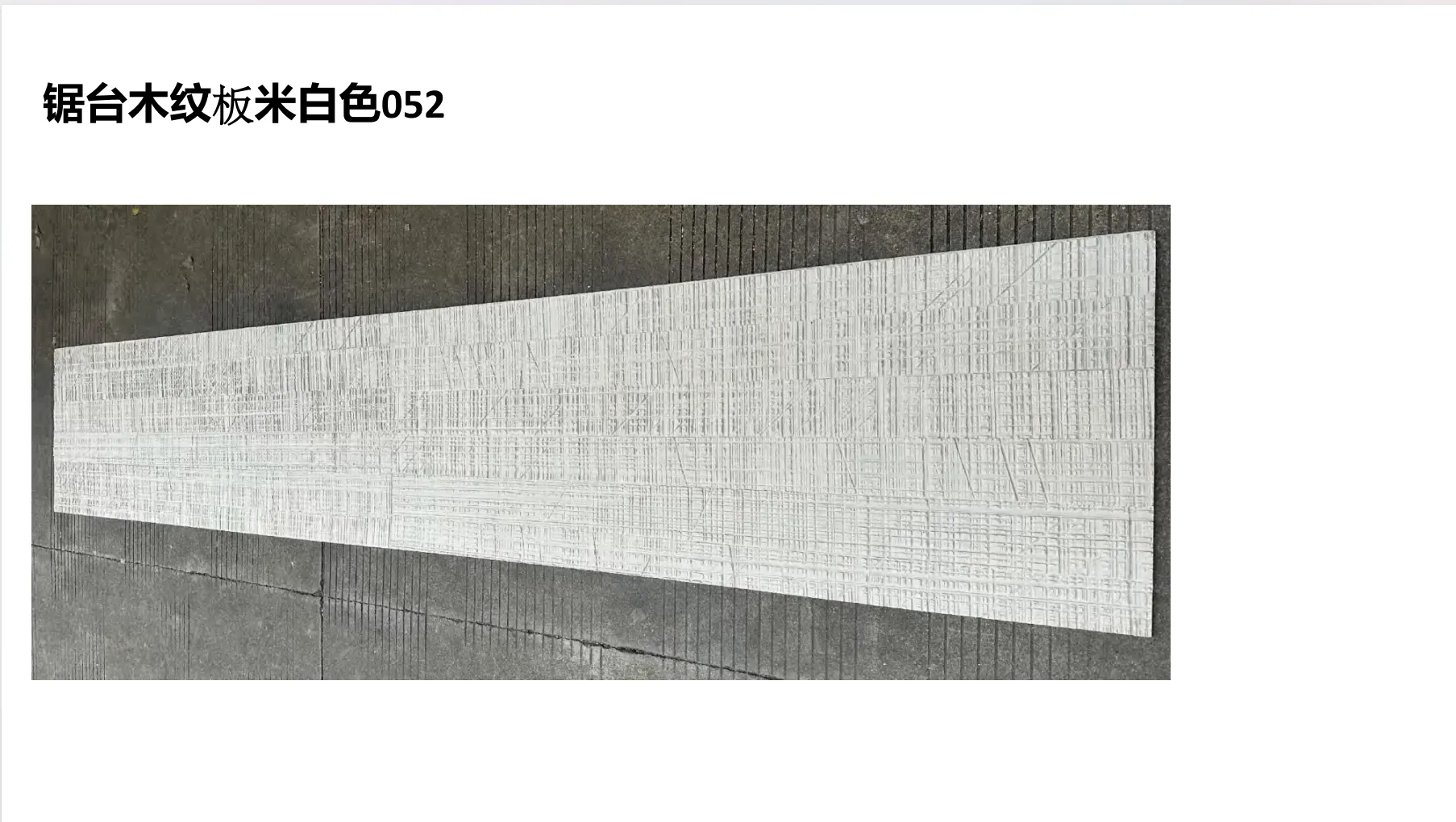
In the world of architecture and interior design, materials aren't just building blocks—they're storytellers. The texture underfoot, the curve of a wall, the pattern of a facade—each choice whispers something about the space it shapes. Today, we're diving into two materials that have designers talking: MCM 3D Printing Series and Sawing Wood Board . Both promise to transform spaces, but when it comes to design freedom—the ability to turn wild ideas into tangible, breathtaking reality—how do they stack up? Let's explore, chat-style, because great design should feel like a conversation, not a textbook.
Design freedom isn't just about making something "pretty." It's about solving problems, evoking emotion, and pushing boundaries. Imagine a hotel lobby that wants to feel like a forest—can the walls curve like tree trunks? A restaurant aiming for industrial edge—can the bar top have a texture that looks like frozen lava? Or a home office that needs to fit into an awkward corner—can the desk follow the room's unique angles? The answers often lie in the materials we choose.
On one side, we have Sawing Wood Board —a classic, rooted in tradition, carrying the warmth of nature in every grain. On the other, MCM 3D Printing Series —a tech-forward innovator, born from modified composite materials and 3D printing magic. Let's break down what makes each tick, and how they let designers spread their creative wings.
First things first: MCM stands for Modified Composite Material. Think of it as a supercharged blend of polymers, minerals, and sometimes recycled materials—engineered to be lightweight, durable, and… extremely moldable. Now, add 3D printing to the mix. Instead of carving or cutting, layers of this composite are printed, one on top of another, to build up shapes. It's like building with digital clay, but the result is a tough, weather-resistant material that can mimic stone, metal, even wood—without the limitations of those natural materials.
And here's where it gets exciting: flexible stone is often part of this family. Imagine a stone-like material that can bend. Not crack, not break—bend. That's the kind of flexibility MCM brings to the table. It's why designers are losing their minds over it.
Let's talk shapes. Traditional materials—like stone or even wood—are limited by how you can cut them. Want a wall with 100 tiny, overlapping curves that look like ocean waves? With sawing or chiseling, that's a nightmare (and a budget-buster). With MCM 3D printing? You upload the 3D model, hit "print," and watch the wave panel come to life. No two curves have to be the same—each can be unique, like actual waves.
Textures are another playground. MCM 3D printing can mimic just about anything: the rough pockmarks of gobi panel (evoking desert winds), the sleek sheen of foamed aluminium alloy board (vintage gold) , or even the starry sparkle of travertine (starry blue) . And because it's digital, you can tweak textures mid-print. Want a section of wall to shift from smooth to grainy halfway up? No problem. It's like having a paintbrush that builds the canvas as it goes.
Customization is where MCM 3D printing truly shines. Let's say a client wants a feature wall in their home that tells their family story—maybe a timeline of important dates, each marked by a unique symbol. With 3D printing, those symbols can be embedded directly into the panel. Or a hotel chain wants each location to have a facade that reflects the local culture—one in Bali might have bali stone textures, another in Dubai could mimic gobi panel landscapes. Each design is 100% custom, no molds required.
This material isn't just for walls. Think furniture: a coffee table with a base that looks like tree roots, twisting and turning in impossible ways. Or lighting fixtures that look like floating clouds, with hollow interiors for LEDs. Even outdoor spaces— 3D art concrete board can create benches that curve around trees, or planters with organic, almost alien shapes that blend into gardens.
Sustainability? MCM often uses recycled materials, and 3D printing is additive—meaning you only use the material you need, cutting down on waste. Compare that to cutting a slab of stone, where half might end up as dust. Plus, it's lightweight, so transporting it uses less fuel. For eco-conscious designers, that's a big win.
No material is perfect. MCM 3D printing can mimic wood or stone, but it doesn't have that raw, organic feel of the real thing. Some designers argue that warmth is irreplaceable. And while it's durable, it might not age the same way—wood gets richer with patina, stone weathers gracefully. MCM? It stays pretty much as printed. For some projects, that's a plus (no surprises!), but for others, it might lack character.
Sawing wood board is exactly what it sounds like: wood, cut into flat boards using saws. It's been around for centuries, and for good reason. Wood is renewable (when sourced responsibly), biodegradable, and has a warmth that's hard to replicate. Each board has unique wood grain —the pattern of growth rings, knots, and streaks that make every piece one-of-a-kind. Think of it as nature's own artwork.
There are variations, of course. Wood grain board might be sanded smooth to highlight the grain, or left rough for a rustic look. Bamboo mat board is a popular eco-friendly option—bamboo grows fast, so it's sustainable, and its natural texture adds a tropical vibe. But at the end of the day, it's all about that natural wood core.
Wood's design freedom is rooted in its natural beauty. The wood grain itself is a design element—no two boards are alike, so even a simple wall of wooden planks feels dynamic. Stain it, paint it, or leave it natural—each finish brings out different tones. Knots, cracks, and imperfections? They're not flaws; they're character. A dining table with a big knot in the center becomes a conversation piece, a reminder of the tree it came from.
But here's the trade-off: wood is a natural material, and nature doesn't always cooperate with straight lines or sharp angles. Sawing wood board is… well, sawing. You can get straight cuts, miters, maybe some gentle curves with a jigsaw, but anything too complex? You'll likely end up with a lot of waste, or a fragile piece that might split. Want a spiral staircase made entirely of wood? It's possible, but it'll take a master craftsman, weeks of work, and a huge budget.
Texture options are also limited by the wood itself. Oak has bold, open grain; maple is smooth and tight; pine has knots and soft lines. You can sand it to a polish or leave it rough-sawn, but you can't make oak look like marble, or pine mimic lunar peak silvery (a shimmery MCM texture). Wood is true to its roots—and that's part of its charm.
Wood is unbeatable for spaces that need to feel cozy or timeless. A cabin in the woods? All wood walls and wood grain board ceilings—immediate warmth. A traditional restaurant? Wooden tables and chairs that feel like they've hosted generations of meals. Even modern spaces often use wood to soften sleek lines—think a minimalist living room with a wooden accent wall, adding warmth to all that concrete and glass.
And let's talk sustainability again. When sourced from FSC-certified forests (meaning trees are replanted), wood is a renewable resource. It biodegrades, so at the end of its life, it won't sit in a landfill. Bamboo mat board is even better—bamboo grows in 3-5 years, compared to 20+ for hardwoods. For designers who want to honor nature, wood is a clear choice.
Wood moves. It expands when humid, contracts when dry. That means if you're using it for a large surface, like a wall, you need to leave gaps for movement—otherwise, it'll warp or crack. It's also prone to water damage, pests, and fire. You can treat it, but that adds chemicals and cost. And let's not forget: large, old-growth trees are finite. Even with sustainable sourcing, some rare woods are endangered, limiting design choices.
| Aspect | MCM 3D Printing Series | Sawing Wood Board |
|---|---|---|
| Shape Complexity | Can print intricate curves, spirals, hollow structures, and custom 3D art (hello, wave panel !). No shape is too wild. | Best for straight lines, gentle curves, and simple angles. Complex shapes require expert craftsmanship and risk splitting. |
| Texture Options | Mimics stone, metal, wood, and more—think lunar peak golden , travertine (starry red) , or foamed aluminium alloy board (vintage silver) . Custom textures are easy to program. | Limited to natural wood grain (oak, maple, bamboo) and finishes (sanded, stained, painted). Wood grain board highlights natural patterns. |
| Customization | 100% custom—any size, shape, or texture. Perfect for one-of-a-kind projects. | Custom sizes (within wood plank limits) and finishes, but constrained by wood's natural properties. |
| Sustainability | Often uses recycled materials; additive printing reduces waste. Lightweight = lower transport emissions. | Renewable (with responsible sourcing); biodegradable. Bamboo mat board is highly sustainable. |
| Durability | Weather-resistant, moisture-proof, and low-maintenance. Ideal for outdoor use. | Prone to warping, rotting, and pests without treatment. Better for indoor or covered outdoor spaces. |
| Emotional Vibe | Modern, innovative, and bold—feels like the future of design. | Warm, nostalgic, and organic—feels like home. |
It's not about "better"—it's about what your project needs. If you're designing a futuristic museum with a 3D art concrete board facade that looks like it's floating, MCM 3D printing is your best bet. It can handle the wild shapes and bold textures that will make visitors stop and stare.
But if you're creating a cozy bed and breakfast where guests should feel like they're staying in a rustic cabin? Sawing Wood Board —maybe with bamboo mat board accents—will wrap the space in warmth. The natural grain and knots will tell a story of nature, making it feel welcoming and timeless.
And here's a secret: designers often mix them. Imagine a modern home with an MCM 3D printed wave panel accent wall (sleek, futuristic) paired with wood grain board flooring (warm, grounding). It's the best of both worlds—innovation and tradition, working together.
At the end of the day, design freedom is about having options. MCM 3D Printing Series gives you the freedom to dream without limits—curves, textures, and shapes that were once impossible. Sawing Wood Board gives you the freedom to connect with nature, to honor tradition, and to create spaces that feel alive with history.
So whether you're team "future tech" or team "natural charm," the real win is that we live in a time where both are possible. And that? That's the most freeing part of all.
Recommend Products












