
Walk into any modern building today, and you'll notice something subtle but powerful: the materials shaping our spaces are no longer just static elements—they're storytellers. From the rough-hewn charm of a historic stone wall to the sleek minimalism of a glass facade, architecture has always been a dialogue between human creativity and the resources of the earth. But in recent years, that dialogue has shifted. Architects and designers are no longer limited by what nature provides in its raw form; instead, they're reimagining materials from the ground up, thanks to innovations like 3D printing and advanced composites. At the forefront of this revolution is MCM, a brand that's quietly redefining what's possible with building materials. Today, we're diving into one of their most exciting offerings: the mcm 3d printing series , with a spotlight on dolomitic travertine(dark grey) —a material that blends the timeless allure of natural stone with the cutting-edge flexibility of 21st-century technology. Alongside MCM flexible stone and MCM big slab board series , it's not just changing how buildings are built; it's changing how we experience space itself.
Let's start with a familiar frustration: traditional building materials. For decades, architects have relied on stone, concrete, and wood for their durability and aesthetic appeal. But here's the catch: natural stone is heavy—so heavy that it limits where and how it can be used. A single slab of marble or granite can weigh hundreds of pounds, requiring cranes, reinforced structures, and teams of installers. Then there's flexibility, or rather, the lack of it. Natural stone is rigid; try bending it to fit a curved wall or a sculptural facade, and it cracks. And customization? Forget about it. Carving intricate patterns or unique textures into stone is time-consuming, expensive, and wasteful—often leaving piles of unused material on job sites.
Wood, while lighter, comes with its own set of issues: warping, rotting, and a limited lifespan in harsh climates. Concrete, the workhorse of modern construction, is durable but lacks personality—its cold, uniform surface often feels sterile in spaces meant to feel warm and inviting. These limitations aren't just logistical; they're creative roadblocks. How do you design a building that feels both grand and intimate, modern and rooted in nature, if your materials can't keep up with your vision?
Enter MCM. Short for Modified Composite Material, MCM isn't just a new product—it's a new approach to building. By combining natural minerals with advanced polymers, MCM has created a line of materials that borrow the best qualities of traditional options (the texture of stone, the warmth of wood) while ditching the drawbacks (weight, rigidity, waste). And when you pair that with 3D printing? The result is a toolkit that lets architects and designers stop compromising and start creating.
The mcm 3d printing series isn't your average 3D printing project. We're not talking about small plastic trinkets or prototype models here. This is industrial-scale innovation, designed to produce building materials that are as functional as they are beautiful. Imagine a printer the size of a semi-truck, extruding layers of MCM composite with pinpoint precision—creating everything from intricate wall panels to large-scale facades, all in a fraction of the time it would take to carve or cut traditional stone.
What makes this series game-changing is its ability to merge two seemingly opposing ideas: the organic, unpredictable beauty of natural materials and the precision of digital design. Traditional 3D printing with plastics or metals often results in smooth, uniform surfaces—a look that works for tech products but feels out of place in spaces meant to evoke nature. MCM's 3D printing process, however, uses a composite that includes real mineral particles, like those found in travertine or limestone. As the printer layers the material, it mimics the randomness of natural stone formation—veins, pits, and subtle color variations that make each piece feel one-of-a-kind.
Take, for example, the 3D art concrete board (a close cousin to the 3D printing series). These panels feature textures that look like they were chiseled by hand—deep grooves, rough-hewn edges, and a tactile quality that invites touch. But unlike hand-chiseled stone, each panel is identical in size and shape, making installation a breeze. It's the best of both worlds: the soul of artisanal craftsmanship with the consistency of modern manufacturing.
But the real magic of the mcm 3d printing series is its adaptability. Want a wall panel that looks like a flowing riverbed, with ripples frozen in time? The printer can do that. Dream of a facade that mimics the surface of the moon, pockmarked with tiny craters? Done. Architects can upload digital designs—whether inspired by nature, geometry, or abstract art—and the printer brings them to life in MCM flexible stone or dolomitic travertine(dark grey) , ensuring that no two projects ever look the same.
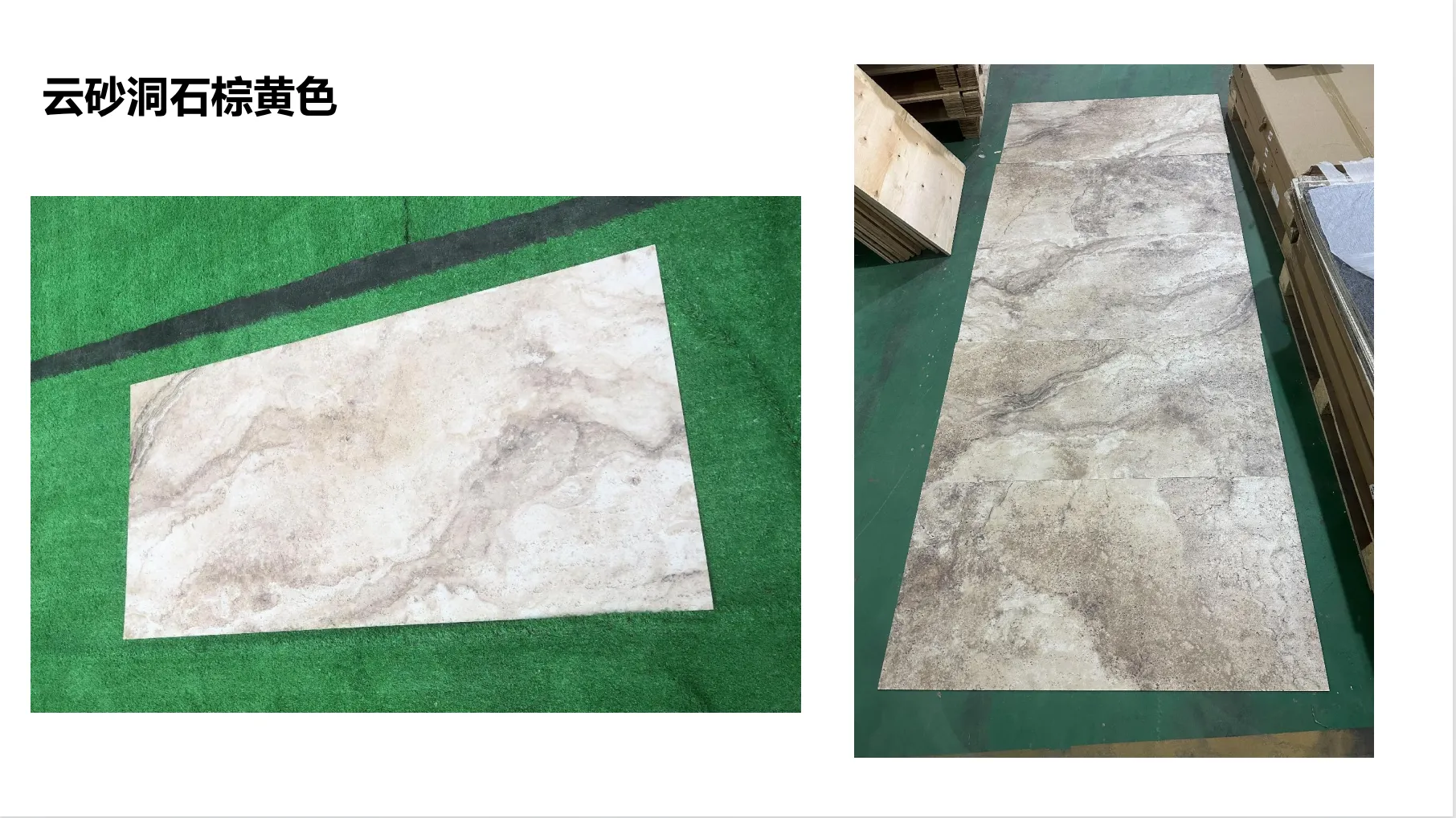
Now, let's zoom in on the star of the show: dolomitic travertine(dark grey) . Travertine itself is a classic—think of the warm, honey-colored stone used in ancient Roman architecture, with its characteristic pitted surface and soft veining. But MCM's dark grey dolomitic travertine is a modern twist on that tradition. Imagine the depth of a storm cloud at dusk, the richness of wet asphalt after rain, or the subtle warmth of charcoal—all wrapped into a material that feels both grounded and forward-thinking.
What sets dolomitic travertine apart from regular travertine is its composition. Dolomite, a mineral rich in magnesium, gives the stone a denser, more durable structure, while the dark grey hue comes from natural mineral deposits, not dyes. This means the color won't fade over time, even when exposed to harsh sunlight or rain. And when printed via the mcm 3d printing series, that durability is paired with something extraordinary: texture.
Run your hand over a 3D printed dark grey dolomitic travertine panel, and you'll feel a surface that's equal parts rough and refined. There are the subtle pits and pores that travertine is known for, but amplified by 3D printing into patterns that catch the light—creating shadows and highlights that shift as you move around the panel. Some designs mimic the look of stone split by a geologist's hammer, with jagged edges and uneven surfaces. Others are smoother, with flowing veining that looks like rivers of ink frozen in stone. It's a material that doesn't just sit there; it interacts with its environment, changing mood with the time of day.
And let's talk about versatility. Dark grey is a chameleon in design: it pairs beautifully with warm woods and brass for a cozy, industrial vibe; it contrasts sharply with whites and pastels for a minimalist, Scandinavian look; and it holds its own alongside bold colors like emerald green or burnt orange in more eclectic spaces. In commercial settings, it adds a sense of sophistication—think of a high-end restaurant with a dark grey dolomitic travertine accent wall behind the bar, or a boutique hotel lobby where the stone wraps around a curved reception desk. In homes, it can transform a bathroom into a spa-like retreat or add edge to a living room fireplace.
Let's step into a real project to see how this all comes together. Last year, a boutique hotel in downtown Portland wanted to create a facade that would stand out in a city known for its rain and gray skies. The architect's vision? A building that looked like it had been carved from a single block of stone, with sweeping curves and a texture that would glow when lit up at night. But traditional stone was out of the question—the building's structure couldn't support the weight, and curved stone is notoriously hard to source.
That's when the team turned to MCM. They chose the mcm 3d printing series with dolomitic travertine(dark grey) for the facade, paired with MCM flexible stone for the curved sections. The result? A building that looks like it was sculpted by nature, not built by humans. The 3D printed panels were custom-designed to mimic the look of layered rock, with each panel interlocking like puzzle pieces to create a seamless surface. The flexible stone, which bends up to 90 degrees without cracking, wrapped around the hotel's curved corners, eliminating the need for clunky seams or visible fasteners.
The best part? Installation took half the time of traditional stone, and the panels were so lightweight that they didn't require additional structural support. Today, the hotel's facade is a local landmark—proof that when you combine innovative materials with bold design, the results can be transformative.
If dark grey dolomitic travertine is the "what" of MCM's innovation, MCM flexible stone is the "how." Imagine a material that looks and feels like stone but can bend, fold, and curve like fabric. That's flexible stone in a nutshell. Made by combining natural stone particles with a proprietary polymer matrix, MCM's flexible stone is up to 80% lighter than natural stone, yet just as strong. It can be rolled up for transportation, cut with standard tools, and installed on curved surfaces—from archways and domes to spiral staircases and wave-like facades.
The flexibility comes from the polymer binder, which acts like a glue that holds the stone particles together while allowing them to move slightly. This means the material can absorb impacts (like a stray baseball hitting a facade) without cracking, and it can expand and contract with temperature changes, reducing the risk of warping or splitting. For architects, this is a game-changer. No longer do they have to design around the rigidity of stone; they can design first and let the material adapt.
Take, for example, the trend toward organic, biomimetic architecture—buildings inspired by natural forms like leaves, shells, or clouds. These designs often feature curved, flowing lines that traditional materials struggle to achieve. With MCM flexible stone, a museum roof that mimics the shape of a bird's wing isn't just a concept; it's a feasible, cost-effective reality. Or consider a retail store with a facade that undulates like a wave—each curve designed to draw customers in, made possible by flexible stone panels that conform to the building's unique shape.
And it's not just about curves. Flexible stone is also ideal for retrofits. Older buildings with uneven walls or historic structures that can't support heavy materials can now get a facelift with lightweight, flexible MCM panels. A 1920s apartment building in Chicago, for instance, recently updated its exterior with flexible stone designed to look like traditional brick—preserving the building's historic character while improving insulation and durability.
There's something inherently satisfying about a seamless surface. Whether it's a countertop with no visible seams or a wall that looks like it was carved from a single block, minimal joints create a sense of calm, order, and grandeur. But traditional stone slabs are limited by size—natural stone can only be quarried so large before it becomes too heavy or prone to cracking. That's where the MCM big slab board series comes in.
MCM's big slab boards are exactly what they sound like: massive panels, often measuring up to 12 feet long and 4 feet wide, made from MCM's signature composite materials. And when paired with dark grey dolomitic travertine and the mcm 3d printing series, these slabs become works of art. Imagine a living room wall covered in a single slab of 3D printed dark grey dolomitic travertine—no grout lines, no breaks, just a continuous expanse of texture and color that makes the space feel larger, more cohesive, and infinitely more luxurious.
The benefits of big slab boards go beyond aesthetics. Fewer seams mean fewer places for dirt, moisture, or mold to accumulate—making them ideal for high-traffic areas like airports, hospitals, or schools. They're also easier to install: instead of aligning dozens of small tiles, installers can put up a few large slabs, cutting labor time and costs. And because they're lightweight, they can be used on upper floors or even ceilings, opening up new possibilities for interior design.
One particularly innovative use of MCM big slab boards is in retail design. Luxury brands often use large, seamless surfaces to create a sense of exclusivity and sophistication. A high-end fashion store, for example, might use a big slab board of dark grey dolomitic travertine as a backdrop for its clothing displays—letting the texture of the stone complement the fabrics while keeping the focus on the merchandise. The lack of seams ensures the eye isn't distracted, creating a clean, impactful visual experience.
To truly understand the impact of MCM's innovations, let's compare traditional natural stone with 3D printed dark grey dolomitic travertine from the mcm 3d printing series, paired with MCM flexible stone and big slab boards. The differences are striking, and they highlight why MCM is quickly becoming the go-to choice for forward-thinking architects.
| Feature | Traditional Natural Stone | MCM 3D Printed Dark Grey Dolomitic Travertine |
|---|---|---|
| Weight | Heavy (20-30 kg/sqm) | Lightweight (4-6 kg/sqm) |
| Flexibility | Rigid; cracks under bending | Flexible; bends up to 90 degrees |
| Installation Time | Slow (requires cranes, reinforced structures) | Fast (can be installed by 2-3 people with basic tools) |
| Design Customization | Limited (carving is time-consuming and expensive) | Unlimited (3D printing allows intricate patterns, textures, and shapes) |
| Sustainability | High waste (up to 30% of stone is lost during cutting) | Low waste (3D printing uses precise material; panels are recyclable) |
| Durability | Durable but prone to cracking from impacts | Highly durable; impact-resistant and weatherproof |
| Cost | High (quarrying, transportation, installation) | Cost-effective (lower transportation and labor costs) |
So, what does the future hold for MCM and architectural design? If the past few years are any indication, the possibilities are endless. We're already seeing the mcm 3d printing series being used to create "smart" building materials—panels embedded with sensors that monitor temperature, humidity, or structural integrity, sending data to building management systems in real time. Imagine a wall that alerts maintenance when a crack forms, or a facade that adjusts its color based on sunlight to reduce energy use.
There's also the potential for even more sustainable practices. MCM is already committed to reducing its environmental footprint—using recycled stone particles, water-based adhesives, and energy-efficient manufacturing processes—but future innovations could take this further. Think 3D printers powered by renewable energy, or panels made from carbon-negative materials that actually remove CO2 from the atmosphere.
And let's not forget about collaboration. As MCM continues to push the boundaries of what's possible, architects and designers are responding with increasingly bold visions. We're talking about skyscrapers wrapped in 3D printed dark grey dolomitic travertine and flexible stone, creating undulating facades that change with the light. We're talking about community centers with big slab board ceilings that mimic the night sky, with constellations 3D printed into the stone. We're talking about homes that feel like they've been carved from the earth, yet are lightweight enough to withstand earthquakes and hurricanes.
At the heart of all this is a simple idea: materials shouldn't limit design—they should inspire it. MCM's 3D printing series, with its dark grey dolomitic travertine, flexible stone, and big slab boards, isn't just selling building materials; it's selling a new way of thinking about space. It's a reminder that architecture is as much about emotion as it is about function—that the materials we choose shape how we feel in a room, how we interact with a building, and how we connect with the world around us.
As we wrap up, let's circle back to that hotel in Portland—the one with the 3D printed dark grey dolomitic travertine facade. What makes that building special isn't just its looks; it's what it represents: a shift from "can't" to "can." Can we design a building that's both beautiful and sustainable? Yes. Can we create materials that are lightweight, durable, and full of character? Yes. Can we blend the past (the timeless appeal of travertine) with the future (3D printing technology) to build spaces that feel both familiar and new? Absolutely.
The mcm 3d printing series, dolomitic travertine(dark grey), MCM flexible stone, and MCM big slab board series are more than just products—they're tools for storytelling. They allow architects to tell stories of innovation, sustainability, and human creativity through the very walls we live and work in. They remind us that the future of architecture isn't about replacing the old with the new; it's about reimagining the old to create something better.
So, the next time you walk into a building and pause, struck by how the light plays off the walls or how the texture of the materials makes you feel, take a closer look. Chances are, you're not just looking at stone or concrete—you're looking at the future. And that future is being built, one 3D printed panel at a time, by brands like MCM who dare to ask: "What if?"
Recommend Products












