Picture standing outside a newly built luxury boutique hotel in the heart of a bustling city. The first thing that hits you isn't just the height of the building or the grand entrance—it's the facade. It shimmers subtly in the sunlight, with textures that seem to shift as you walk past, like a living, breathing work of art. Up close, you notice intricate patterns that look handwoven, mixed with sleek metallic accents and hints of blue that evoke a starry night sky. This isn't just concrete and glass; it's a story told through materials. And chances are, it was brought to life by MCM's innovative approach to building facades—specifically, the magic of combining the
MCM 3D Printing Series with
weaving real photos, and a curated selection of complementary materials that turn ordinary exteriors into extraordinary statements.
In the world of luxury architecture, the facade is more than just a protective layer. It's the building's first impression, a reflection of its identity, and often a selling point for clients who crave uniqueness. But for years, architects and designers have faced a familiar challenge: how to balance creativity with practicality. Heavy materials limit design flexibility; generic cladding feels impersonal; and custom solutions often come with sky-high costs and long lead times. Enter MCM—a brand that's redefining what's possible with two game-changers: the
MCM 3D Printing Series and
weaving real photos. When paired with materials like foamed aluminium alloy,
travertine, and
flexible stone cladding panels, they're not just building facades—they're crafting experiences.
Let's start with the backbone of this innovation: the
MCM 3D Printing Series. If you've ever marveled at 3D-printed objects—from tiny prototypes to furniture—you know the technology's superpower is its ability to turn digital designs into physical reality with mind-blowing precision. Now, imagine scaling that up to building-sized proportions. That's exactly what MCM has done with their 3D printing series, and it's a total game-changer for facade design.
Here's why architects are raving about it: traditional facade materials like brick or concrete are rigid. They come in standard sizes, and if you want a unique shape or pattern, you're looking at custom molds, manual labor, and a lot of waste. MCM's 3D printing series flips that script. Using advanced modified composite materials, the 3D printers can create panels in virtually any shape—curves, angles, intricate latticework—without the need for expensive molds. Want a facade that mimics the flow of a river? Or geometric patterns inspired by ancient mosaics? The 3D printing series makes it possible, and it does so efficiently.
But it's not just about looks. These 3D-printed panels are surprisingly lightweight, which is a huge win for construction. Heavy facades require reinforced structures, adding cost and limiting where you can build. MCM's panels, though, are designed to be strong yet light, making them ideal for both new builds and retrofits. And durability? They're built to withstand harsh weather—rain, wind, UV rays—without fading or cracking. "We used the
MCM 3D Printing Series for a coastal hotel project last year," says Elena, an architect based in Barcelona. "The client was worried about saltwater corrosion and high winds, but after two years, the facade still looks brand new. It's tough, but it doesn't feel industrial—it feels intentional."
What really sets the
MCM 3D Printing Series apart, though, is its versatility. Whether you're designing a sleek modern office building or a boutique hotel with a bohemian vibe, the 3D-printed panels can adapt. They can be printed in a range of textures—from smooth, almost metallic finishes to rough, stone-like surfaces—and colored to match any palette. And because the process is digital, tweaks to the design are easy to make mid-project. No more scrapping entire batches of panels if the client changes their mind; just adjust the 3D model, and the printer does the rest. It's like having a design genie that grants wishes without the catch.
Weaving Real Photos: Adding Warmth and Storytelling to Facades
Now, let's talk about the element that adds soul to the structure:
weaving real photos. If the 3D printing series is the facade's skeleton,
weaving real photos are its skin—soft, textured, and full of character. MCM's approach to weaving isn't about traditional textiles (though the inspiration is there); it's about capturing the look and feel of woven materials and translating them into durable, weather-resistant panels. And the "real photos" part? That's where it gets personal.
Imagine a designer sitting down with a client who wants their hotel facade to feel like a cozy, high-end retreat—something that contrasts with the cold steel and glass of the surrounding skyscrapers. The client mentions they love the look of handwoven fabrics, the kind you'd find in a luxury villa in Tuscany. Instead of trying to attach actual fabric to the building (which would be a maintenance nightmare), MCM uses high-resolution
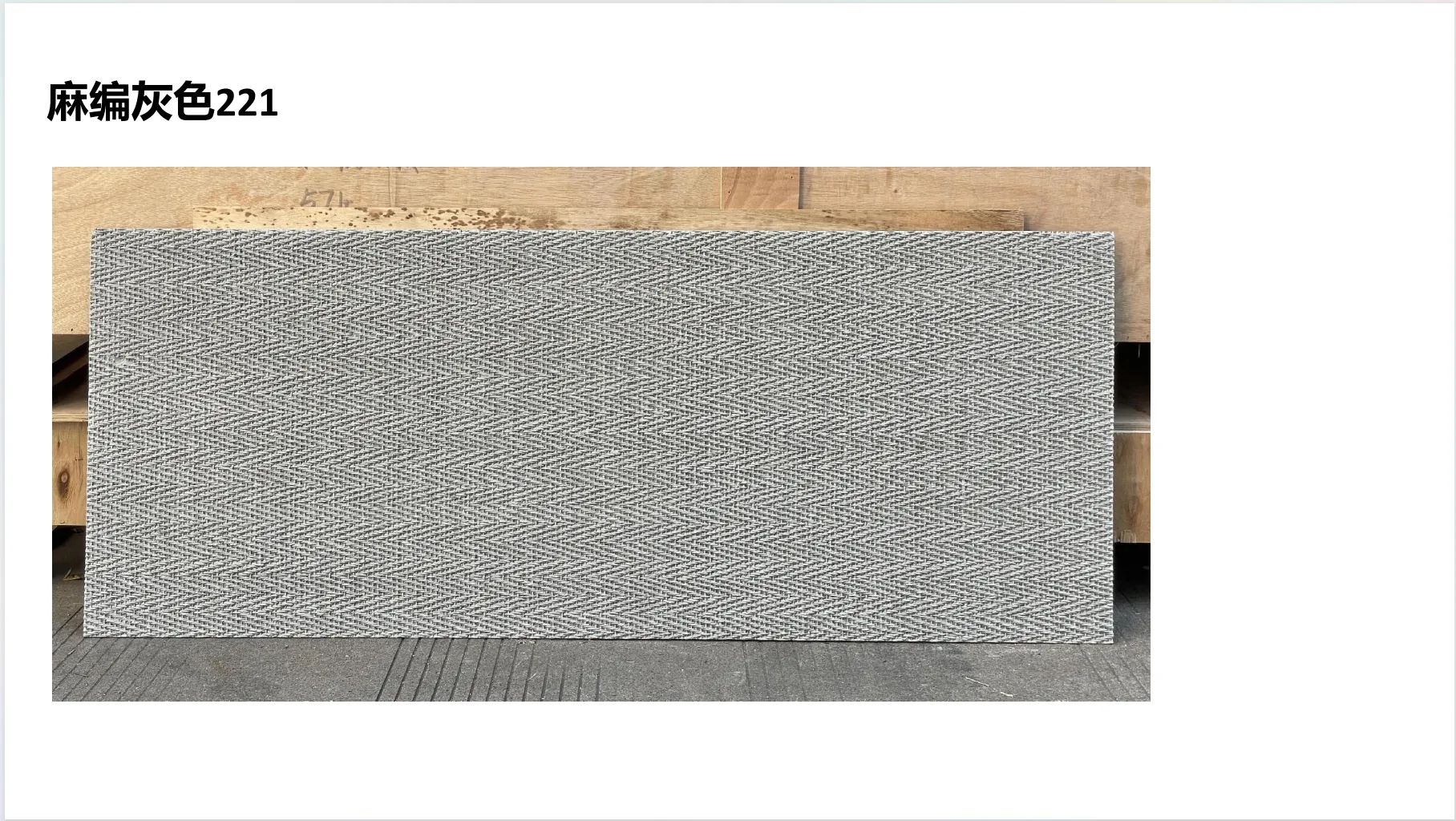
weaving real photos to replicate that texture. Take, for example, their weaving (khaki) panels. The photos capture the subtle variations in
thread color, the way the weave tightens and loosens, even the tiny imperfections that make handwoven fabric feel authentic. When printed onto MCM's composite panels, the result is a facade that looks and feels warm, inviting, and distinctly human.
"
Weaving real photos add a layer of storytelling you can't get with plain cladding," explains Marcus, a senior designer at a luxury hospitality firm. "I worked on a project where the client wanted the facade to reflect the local culture—specifically, the traditional weaving techniques of the region. MCM took photos of actual woven textiles from the area, digitized them, and printed them onto their panels. The result? A facade that doesn't just look beautiful; it honors the community. Guests walk by and say, 'That feels familiar. It tells a story.' That's the power of these photos—they bridge the gap between modern design and cultural heritage."
And it's not just about khaki. MCM's
weaving real photos come in a range of colors and patterns—weaving (jacinth) for a pop of rich red, weaving (grey) for understated elegance, weaving (beige) for a neutral, earthy vibe. Each one is designed to evoke a different mood. Khaki feels grounded and organic; jacinth adds energy; grey exudes sophistication. The best part? These panels are as durable as they are beautiful. The photos are printed using UV-resistant inks, so they won't fade in the sun, and the composite material is water-resistant, making them perfect for any climate. No more worrying about fabric fraying or colors washing out—this is weaving for the long haul.
When 3D Printing Meets Weaving: A Match Made in Design Heaven
Now, here's where the magic really happens: combining the
MCM 3D Printing Series with
weaving real photos. Think of it as a collaboration between technology and art. The 3D printing series provides the structure and bold design elements, while the weaving photos add texture and warmth. Together, they create facades that are both visually striking and emotionally resonant.
Let's walk through an example. Suppose an architect is designing a luxury residential tower in Dubai, a city known for pushing architectural boundaries. The client wants something that stands out but still feels welcoming. The architect decides to use the
MCM 3D Printing Series to create large, curved panels that give the building a fluid, organic shape—no sharp edges, just soft, flowing lines. But curved panels alone might feel too smooth, too clinical. So, they integrate weaving (khaki) real photos into sections of the facade. The 3D-printed curves provide the drama, while the woven texture adds depth and a tactile quality that invites people to reach out and touch (even if they don't). The result? A building that looks futuristic yet approachable, bold yet warm.
Another example: a boutique winery in Napa Valley. The client wants the facade to reflect the natural beauty of the surrounding vineyards and the craftsmanship of winemaking. The architect uses the 3D printing series to create panels with patterns inspired by grapevines—intricate, twisting lines that wrap around the building. Then, they overlay weaving (beige) real photos to mimic the look of burlap sacks used to store grapes, adding a rustic, artisanal touch. The 3D-printed vines are sharp and precise, while the woven beige panels soften the design, creating a balance between modern technology and traditional craft. It's a facade that tells the story of wine—from the vine to the bottle—without saying a word.
"The synergy between 3D printing and
weaving real photos is incredible," says Sarah, a project manager at a leading construction firm. "We recently completed a hotel in Tokyo where we used 3D-printed geometric panels in white and paired them with weaving (grey) photos. The contrast between the crisp, modern lines and the soft, textured grey was stunning. Guests keep asking, 'How did you do that?' It's not just a facade—it's a conversation starter."
Elevating the Design: Complementary Materials That Make a Difference
Of course, 3D printing and weaving are just the starting point. To create truly unforgettable facades, MCM pairs these with other standout materials that add depth, color, and functionality. Let's shine a spotlight on two that are making waves in luxury projects: foamed aluminium alloy board (vintage silver) and
travertine (starry blue).
Foamed Aluminium Alloy Board (Vintage Silver): Sleekness with a Hint of Nostalgia
Aluminium is a staple in modern architecture for its strength and lightweight properties, but MCM's foamed aluminium alloy board (vintage silver) takes it to the next level. The "foamed" part refers to the material's cellular structure, which makes it even lighter than traditional aluminium while maintaining durability. And the "vintage silver" finish? It's a game-changer. Instead of the cold, shiny silver you might associate with metal, this has a warm, slightly weathered look—like a well-loved antique that's been polished to perfection.
Why use it with 3D printing and weaving? It adds a touch of industrial chic without feeling harsh. Imagine a facade where 3D-printed panels form the base, weaving (khaki) adds texture, and accents of foamed aluminium alloy (vintage silver) run along the edges or create geometric patterns. The silver complements the khaki's earthiness, adding a modern contrast that feels both timeless and trendy. It's also incredibly versatile—use it for large panels or small details, indoors or outdoors. And because it's foamed, it's easy to cut and shape, making it a breeze to integrate with 3D-printed designs.
Travertine (Starry Blue): Nature's Artwork, Reimagined
If foamed aluminium is the modern industrialist,
travertine (starry blue) is the poet of the material world.
Travertine is a natural stone known for its unique pores and earthy tones, but MCM's starry blue variant is something else entirely. Picture the classic
travertine texture—those subtle indentations and veins—but instead of beige or cream, the base color is a deep, rich blue, with flecks of lighter blue and silver that look like stars scattered across the night sky. It's nature meets fantasy, and it's absolutely stunning.
When paired with 3D printing and weaving,
travertine (starry blue) adds a sense of wonder. For example, a luxury spa might use 3D-printed panels to create flowing, wave-like shapes, weaving (beige) to add warmth, and
travertine (starry blue) accents to evoke the calm of the ocean under a starry sky. It's a facade that doesn't just look beautiful—it transports you to a place of relaxation. And because MCM uses
flexible stone cladding panels (more on that later), even this natural stone feels lightweight and easy to install, making it possible to use in designs that would have been impossible with traditional stone.
Let's talk about the unsung hero that ties all these materials together:
flexible stone cladding panels. If you've ever wondered how architects can create curved facades with stone or how lightweight materials can still look like heavy stone, this is the answer.
Flexible stone cladding panels are exactly what they sound like: thin, lightweight panels made from real stone (or stone-like composites) that can bend and flex without cracking. They're the reason MCM can combine 3D printing, weaving,
travertine, and aluminium into seamless designs.
Traditional stone cladding is thick and heavy, which limits where you can use it. You can't wrap it around a curved wall without expensive custom cutting, and it adds significant weight to the building.
Flexible stone cladding panels solve both problems. They're thin—often just a few millimeters thick—and lightweight, so they can be bent around curves, applied to uneven surfaces, and installed without reinforcing the building's structure. And because they're made from real stone or high-quality composites, they look and feel just like the real thing. No one will ever guess they're flexible unless you tell them.
For luxury projects, this is a game-changer. Imagine a hotel with a facade that curves gently from the ground to the roof, clad in
travertine (starry blue) flexible panels. Or a museum with a 3D-printed geometric facade where the
weaving real photos are printed directly onto flexible stone panels, adding texture and depth. The possibilities are endless, and it all comes down to flexibility—both in design and in the material itself.
"
Flexible stone cladding panels are a lifesaver," says Raj, a construction engineer with over 20 years of experience. "We recently worked on a project where the architect wanted a curved facade with
travertine. Ten years ago, that would have meant custom-cutting every piece of stone, tons of waste, and a huge budget. With MCM's flexible panels? We installed the whole thing in half the time, with no waste, and the client couldn't believe how perfect it looked. It's like having stone that bends to your will."
A Closer Look: Comparing Key Materials for Luxury Facades
|
Material
|
Key Features
|
Ideal Applications
|
Standout Benefit
|
|
MCM 3D Printing Series
|
Custom shapes, lightweight, precise detailing, durable composite material
|
Curved facades, geometric patterns, large-scale installations
|
Turns bold digital designs into physical reality without molds
|
|
Weaving (khaki) Real Photos
|
High-res texture replication, UV-resistant, warm earthy tone
|
Residential buildings, boutique hotels, cultural centers
|
Adds human warmth and cultural storytelling to modern designs
|
|
Foamed Aluminium Alloy Board (Vintage Silver)
|
Lightweight, weathered finish, easy to shape, durable
|
Industrial-chic designs, accent panels, modern commercial buildings
|
Combines industrial edge with vintage warmth
|
|
Travertine (Starry Blue)
|
Natural stone texture, deep blue base with star-like flecks, flexible cladding option
|
Luxury spas, resorts, high-end residential towers
|
Evokes wonder and tranquility with nature-inspired design
|
|
Flexible Stone Cladding Panels
|
Thin, lightweight, bendable, real stone appearance
|
Curved facades, retrofits, custom-shaped designs
|
Makes heavy stone look and feel lightweight and adaptable
|
Case Study: The Azure Tower—A Masterclass in Material Synergy
To really understand how these materials come together, let's dive into a real-world example: the Azure Tower, a luxury residential building in Singapore that opened in 2024. Designed by award-winning architect firm Studio W, the tower was tasked with standing out in a city filled with skyscrapers while still feeling like a home. The solution? A facade that combines MCM's 3D Printing Series,
weaving real photos, foamed aluminium alloy,
travertine (starry blue), and
flexible stone cladding panels.
The design concept was "sky meets earth"—a building that feels grounded yet connected to the sky. The base of the tower uses 3D-printed panels in a warm beige, shaped to mimic the curves of sand dunes. Integrated into these panels are weaving (khaki) real photos, adding texture that feels like woven baskets, a nod to Singapore's cultural heritage of craft markets. As the tower rises, the 3D-printed panels transition to a lighter shade, and accents of foamed aluminium alloy (vintage silver) appear, creating horizontal lines that evoke the horizon.
The crown of the tower is where things get really special. Here, MCM's
travertine (starry blue)
flexible stone cladding panels take center stage. The deep blue stone, with its star-like flecks, wraps around the top floors, creating the illusion of the building reaching up to the night sky. The flexible panels allowed the architects to create a gentle curve at the top, softening the tower's silhouette against the skyline.
The result? A building that changes with the light: warm and earthy at the base, bright and airy in the middle, and magical at the top. Residents rave about how the facade makes the building feel unique—like it belongs to them, not just another generic tower. And for Studio W, it's a portfolio piece that showcases what's possible when materials are chosen with intention.
The Future of Luxury Facades: Innovation Without Compromise
As we look to the future, one thing is clear: the demand for unique, emotionally resonant facades isn't going away. Clients want buildings that tell a story, that stand out, that feel human. And MCM is leading the charge with innovations like the 3D Printing Series,
weaving real photos, and
flexible stone cladding panels. They're proving that you don't have to choose between creativity and practicality—that you can have a facade that's bold, beautiful, durable, and affordable.
What's next? MCM is already experimenting with even more sustainable materials, integrating recycled content into their 3D printing series and exploring new weaving patterns inspired by global cultures. They're also pushing the boundaries of 3D printing, using larger printers to create even bigger panels and more intricate designs. And with
weaving real photos, they're adding interactive elements—imagine a facade where the weaving pattern changes slightly based on the time of day, thanks to smart inks. The possibilities are endless, and it's an exciting time to be in architecture and design.
So, the next time you walk past a building that takes your breath away—one with a facade that feels more like art than architecture—take a closer look. Chances are, you'll see the handiwork of MCM's 3D Printing Series,
weaving real photos, and a team of designers who refused to settle for ordinary. Because in the world of luxury projects, ordinary just won't cut it. And with MCM, extraordinary is just the beginning.