
Walk into any thoughtfully designed space—whether it's a sunlit café, a sleek office lobby, or a cozy home—and you'll quickly realize that materials do more than just fill a room. They set the mood. They spark memories. They make you pause and think, "This feels right." In recent years, the world of architectural materials has seen a quiet but powerful shift: a move away from cold, uniform surfaces toward something warmer, more intentional, and deeply human. At the heart of this shift is the mcm 3d printing series , and one material in particular has been turning heads: MCM 3D Printing Wood-Cement Board. It's not just a product; it's a collaboration between nature's beauty and technology's precision. Let's dive into what makes this material so special, from the custom textures that feel like they've been crafted by hand to the finished projects that bring these textures to life—and why the real photos tell a story no sales pitch ever could.
First things first: Let's break down the basics. MCM (Modified Composite Material) has long been a leader in flexible, durable building materials—think flexible stone that bends like paper but withstands the elements, or fair-faced concrete that balances raw industrial charm with surprising warmth. The mcm 3d printing series takes this innovation a step further by using 3D printing technology to craft materials with textures so intricate, they'd be nearly impossible to replicate with traditional manufacturing.
Wood-Cement Board, a standout in this series, is exactly what it sounds like—but better. It marries the organic warmth of wood with the strength and longevity of concrete, all while being lightweight and easy to install. Imagine the rich, grainy texture of oak or the weathered charm of reclaimed pine, but without the warping, rotting, or termite worries that come with real wood. That's the magic here: it looks and feels like wood, but performs like a high-performance composite. And because it's 3D printed, the possibilities for texture are endless—no two boards have to be the same, and every detail, from the depth of a knot to the direction of a grain, is intentional.
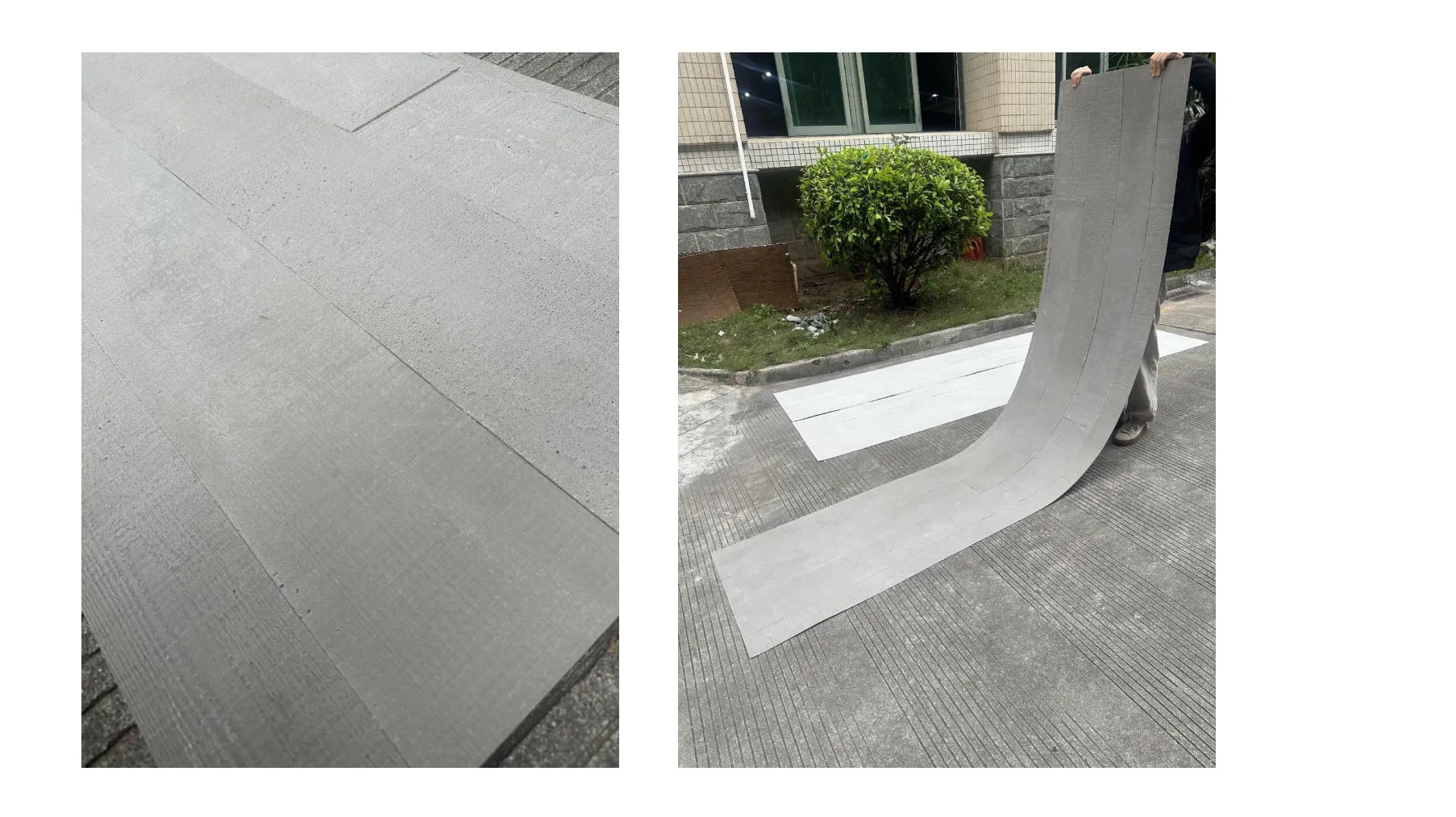
But don't just take our word for it. The real magic lies in the details—and that's where the real photos come in. Close-up shots reveal the tiny ridges of a wood grain board texture, so lifelike you can almost feel the splinters (though, don't worry—they're smooth to the touch). Wide-angle shots show entire walls clad in the material, where the wood-like patterns flow seamlessly, creating a sense of movement that static materials like traditional drywall or even real wood paneling can't match. It's a material that's as much about feeling as it is about function.
Here's the thing about design: no two projects are the same. A beach house in Bali needs a different vibe than a loft in New York City. A boutique hotel might crave the rustic charm of a mountain cabin, while a tech startup's office wants something sleek and modern. That's why MCM 3D Printing Wood-Cement Board isn't a "take it or leave it" product—it's a canvas. And the custom texture samples are where that canvas starts to come alive.
Let's talk about wood grain board textures, for starters. MCM offers dozens of pre-designed options, but the real fun begins when clients say, "I want something that looks like the old barn wood from my grandfather's farm." The 3D printing process can replicate that—down to the nail holes, the slight warping, and the subtle color variations that make real wood so unique. One recent project, for example, requested a "Driftwood Texture" inspired by the weathered logs found on Oregon's coast. The result? A board with soft, bleached grains, tiny cracks that mimic sun damage, and even faint blue-gray hues that echo the ocean's spray. When the client held the sample, they teared up—"It looks just like the wood we used to build our childhood treehouse," they said. That's the power of custom texture: it connects to memory.
But wood grain isn't the only option. The 3D printing series also plays well with other textures, blending wood elements with hints of fair-faced concrete for an industrial-meets-organic look. Imagine a board with the warmth of oak grain running through a base of smooth, gray concrete—a texture MCM calls "Urban Timber." It's perfect for spaces that want to balance ruggedness with coziness, like a brewery taproom or a home office. And because these textures are 3D printed, there's no limit to how intricate they can get. Want a texture that looks like bamboo matting? Done. Or like the rough-hewn surface of a rock cut stone ? They've got that too.
What really sets MCM apart, though, is how they approach custom samples. It's not just about sending a swatch in the mail. The team works with designers and architects to understand the story behind the space. Is it a restaurant aiming to evoke a mountain lodge? They'll create samples with deeper, more pronounced wood grains, maybe even a "Chiseled Timber" texture that looks like it was hacked from a tree with an axe. Is it a minimalist home where less is more? They'll suggest a "Sanded Lumber" texture—subtle, smooth, and quietly elegant. These samples aren't just pieces of material; they're the first step in bringing a vision to life. And when clients see the real photos of these samples—close-ups that show every groove, every variation in color—they don't just see a product. They see their space, finally starting to take shape.
At the end of the day, materials are only as good as how they perform in the real world. And MCM 3D Printing Wood-Cement Board has proven itself in spaces big and small, from residential renos to commercial showstoppers. Let's take a look at a few finished projects—and how the real photos capture their soul.
Nestled along the coast of Cape Cod, "The Driftwood Café" wanted to create a space that felt like an extension of the beach outside—without the sand in your shoes. The owner, a former marine biologist, dreamed of walls that looked like weathered driftwood, but knew real wood would never hold up to the salty sea air. Enter MCM's custom "Driftwood Grain" Wood-Cement Board. The real photos of the café's interior tell the story: walls clad in the board, their soft gray-brown hues shifting with the sunlight, mimic the look of wood that's been polished by waves for years. Close-up shots reveal tiny pits and grooves, just like real driftwood, but when you touch the surface, it's smooth and cool—no splinters, no warping, just durability. The café's customers often comment on how "calming" the space feels, and the owner credits the material: "It's like bringing a piece of the beach indoors, but it'll still look this good in 10 years."
In downtown Chicago, a young couple bought a 1,200-square-foot loft with exposed brick and high ceilings—but the blank concrete walls felt cold, almost sterile. They wanted to add warmth without losing the industrial vibe. Their designer suggested pairing MCM's wood concrete board with fair-faced concrete accents, creating a balance of textures. The result? A living room where one wall is covered in "Sawn Pine" Wood-Cement Board—its warm, golden grains standing out against the cool gray of the concrete. The real photos here are striking: wide shots show how the wood texture softens the harshness of the concrete, making the space feel cozy enough for movie nights but sleek enough for dinner parties. Close-ups of the wood concrete board reveal the precision of the 3D printing—each grain is crisp, each knot perfectly placed, giving the wall depth that real wood paneling (which would have been too heavy for the loft's structure) could never match. "We wanted something that felt both modern and timeless," the homeowner says. "This material checks both boxes."
In Kyoto, Japan, a boutique hotel aimed to honor the city's traditional craftsmanship while offering modern comfort. The design team wanted to use wood, but with a twist—something that paid homage to Japan's "wabi-sabi" philosophy (finding beauty in imperfection) without the maintenance headaches of real timber. They turned to MCM's "Ancient Cypress" texture, inspired by the weathered wood of Kyoto's historic temples. The real photos of the hotel's lobby are breathtaking: walls lined with the Wood-Cement Board, their deep, rich tones and subtle cracks mimicking the look of cypress wood that's stood for centuries. The material's flexibility allowed it to be curved around the lobby's circular reception desk, creating a seamless flow that feels organic, not forced. Guests often remark on how the space "feels like a temple, but with air conditioning," and the hotel's manager notes that the boards have held up beautifully to foot traffic and humidity—no peeling, no fading, just the same warm, timeless look as day one.
Let's be honest: in the age of digital design, it's easy to scroll through endless renderings and think, "That looks great," only to be disappointed when the real thing arrives. That's why MCM's focus on real photos—not just polished renderings—is so refreshing. These photos don't just show you what the material looks like; they let you experience it.
Take, for example, a close-up photo of the wood grain board texture. You can see the way light catches the ridges, creating depth that a flat swatch could never convey. You can spot the tiny variations in color—the lighter streaks that mimic sapwood, the darker knots that add character. These details matter because they're what make a space feel alive, not sterile. Then there are the wide shots of finished projects: a restaurant wall bathed in golden evening light, a home's accent wall glowing in morning sun, a lobby ceiling (yes, ceiling!) clad in the material, proving its versatility. These photos answer the questions designers and homeowners ask most: How does it look in different light? Does it work with other materials? Will it make my space feel warm or cold?
One architect we spoke to put it best: "Renderings can lie, but real photos don't. When I show clients MCM's real photos, they stop asking, 'Will it look like this?' and start saying, 'I want this.' It's the difference between selling a product and selling a vision."
| Feature | Traditional Wood Boards | MCM 3D Printing Wood-Cement Board |
|---|---|---|
| Durability | Prone to warping, rotting, and termite damage; needs regular sealing. | Resistant to moisture, pests, and fading; no sealing required. |
| Weight | Heavy; requires sturdy framing and often professional installation. | Lightweight (up to 70% lighter than real wood); easy to install with basic tools. |
| Customization | Limited by natural wood grain; hard to replicate specific textures. | Endless options via 3D printing—from driftwood to bamboo to custom designs. |
| Sustainability | Often requires cutting down trees; finishes may contain harmful chemicals. | Made with recycled materials; 3D printing reduces waste; low-VOC finishes. |
| Cost Over Time | Low upfront cost, but high maintenance (sealing, repairs, replacement). | Slightly higher upfront cost, but no maintenance fees; lasts 30+ years. |
The mcm 3d printing series isn't just changing how we build—it's changing how we think about materials. For too long, durability meant sacrificing beauty, and warmth meant sacrificing longevity. MCM 3D Printing Wood-Cement Board flips that script. It's a material that understands that spaces are for people, not just function—and that the right texture, the right feel, can turn a house into a home, a office into a community, a café into a memory.
And the innovation doesn't stop here. MCM's team is already experimenting with hybrid textures—blending flexible stone patterns with wood grains, or adding subtle metallic accents to fair-faced concrete bases. They're exploring ways to integrate 3D printed lighting channels directly into the boards, turning walls into works of art that glow from within. The goal? To keep pushing the boundaries of what a "building material" can be—more human, more intentional, more alive .
At the end of the day, MCM 3D Printing Wood-Cement Board is more than just a product. It's a reminder that the spaces we live, work, and play in should reflect who we are—warm, unique, and full of stories. The custom textures, the real photos, the finished projects—they all point to one truth: materials matter, but the feeling they create matters more.
So the next time you walk into a space that makes you think, "This feels right," take a closer look at the walls. Chances are, it's not just the layout or the lighting—it's the materials. And if it's warm, durable, and full of texture, there's a good chance it's MCM. After all, why settle for a material that just fills a space when you can have one that makes the space?
Recommend Products












