
Blending timeless wood aesthetics with unbeatable durability in harsh coastal environments
There's something magical about coastal living—the sound of waves, the salt-kissed breeze, the endless horizon where sky meets sea. But for architects, builders, and homeowners, that same coastal charm comes with a hidden price: a relentless environment that wages war on building materials. Salt spray drifts in on the wind, moisture lingers in the air, UV rays beat down unforgivingly, and temperatures swing wildly between scorching days and cool nights. For wood—long cherished for its warmth and natural beauty—this is a battle it often loses.
Traditional wood panels, decking, and cladding may start out looking stunning on a beachfront home or coastal hotel, but time tells a different story. Within years, saltwater seeps into pores, causing rot and decay. Moisture breeds mold and mildew, leaving unsightly stains and compromising structural integrity. UV rays fade rich tones to a dull gray, while constant expansion and contraction from temperature changes warp boards and create gaps. What was once a dreamy wooden retreat becomes a maintenance nightmare, with replacement costs piling up and aesthetics fading fast.
But what if there was a way to keep the timeless allure of wood without the vulnerability? Enter MCM Ancient Wood Panels—a revolutionary solution designed to thrive where traditional materials falter. Part of the broader MCM big slab board series , these panels marry the organic texture of aged wood with cutting-edge composite technology, creating a material that laughs in the face of coastal corrosion.
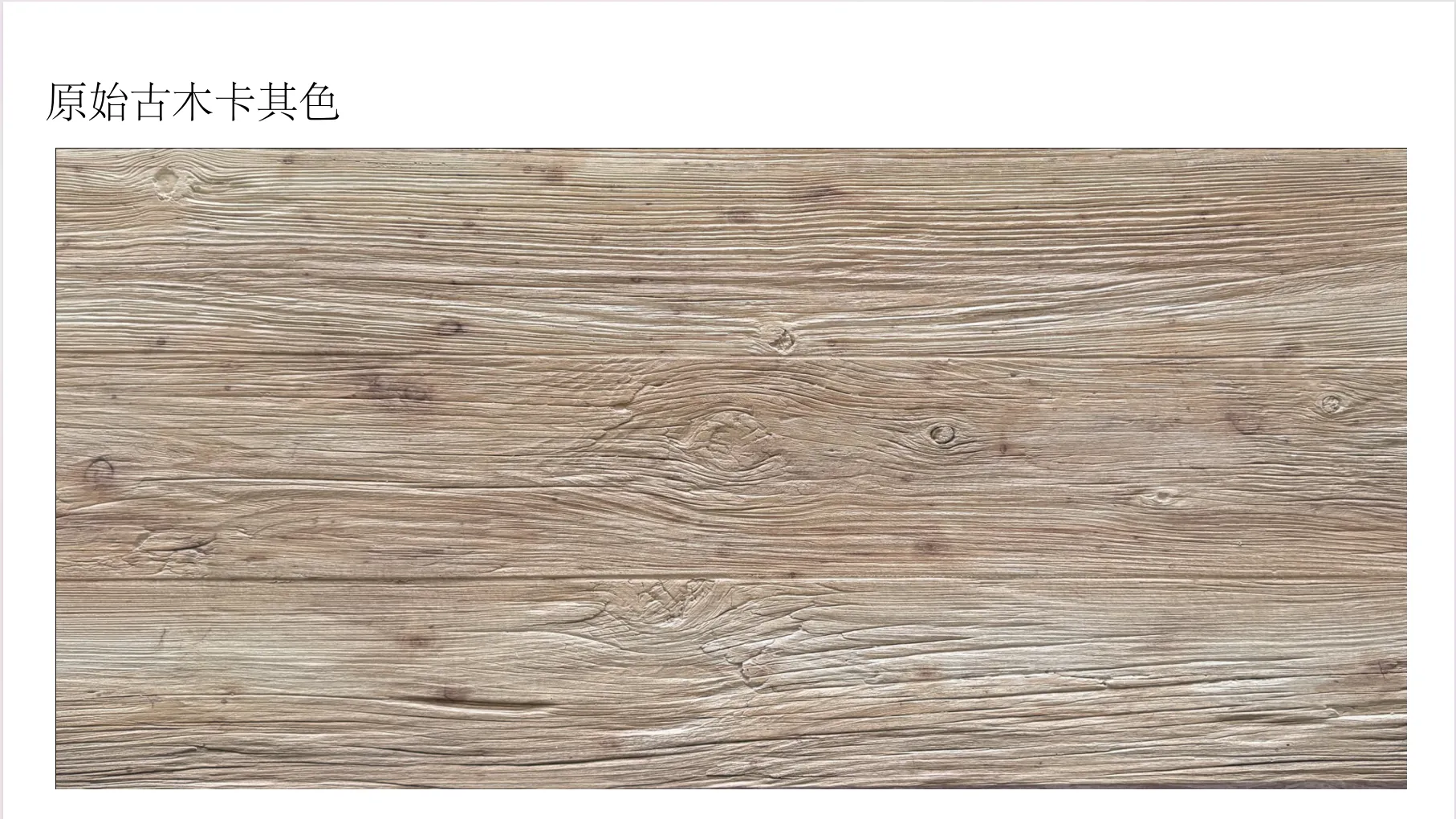
At first glance, you might mistake MCM Ancient Wood Panels for reclaimed timber—rich grain patterns, subtle knots, and warm hues that evoke the comfort of a rustic cabin or a sun-bleached beach house. But look closer, and you'll realize this isn't ordinary wood. Crafted from a proprietary blend of modified composite materials, these panels are engineered to resist the very elements that destroy traditional lumber. They're part of MCM's commitment to merging nature-inspired design with industrial strength, joining siblings like MCM flexible stone and wood grain board in the brand's lineup of durable, aesthetically versatile cladding solutions.
What sets Ancient Wood Panels apart? It starts with their core composition. Unlike solid wood, which is porous and prone to absorbing moisture, MCM panels are dense and non-porous, with a protective outer layer that repels water, salt, and chemicals. They're also reinforced to withstand the structural stresses of coastal life—no warping, no cracking, no splitting, even after years of exposure to the elements. And because they're part of the MCM family, they pair seamlessly with other products like bamboo mat board for accent walls or fair-faced concrete for a modern-industrial contrast, giving designers endless creative freedom.
Let's break down the science (and the real-world results) behind these panels' anti-corrosion superpowers. In coastal zones, three enemies top the list: salt, moisture, and UV radiation. MCM Ancient Wood Panels neutralize all three, making them a game-changer for any project near the sea.
Saltwater is wood's worst nightmare. When salt spray settles on traditional lumber, it draws moisture into the fibers, accelerating decay and creating a breeding ground for corrosive fungi. MCM Ancient Wood Panels, however, are impervious to salt's advances. Their composite matrix is chemically inert, meaning salt ions can't penetrate or react with the material. In third-party tests, panels exposed to continuous salt spray for 5,000 hours showed zero signs of corrosion, discoloration, or structural weakening—results that would be unthinkable for untreated wood or even pressure-treated lumber, which eventually succumbs to salt over time.
Coastal air is thick with humidity, and rainstorms can drench surfaces for days on end. Traditional wood absorbs this moisture like a sponge, leading to swelling, warping, and mold growth. MCM Ancient Wood Panels, by contrast, have a water absorption rate of less than 0.5%—compared to 10-15% for untreated pine. This low porosity means even in the wettest conditions, the panels stay dry, preventing mold, mildew, and rot from taking hold. Homeowners in hurricane-prone areas have reported panels surviving storm surges with no visible damage, a testament to their moisture-resistant design.
The sun's UV rays don't just fade paint—they break down wood fibers, turning vibrant cedar into a gray, weathered mess. MCM Ancient Wood Panels are infused with UV-stabilizing pigments that lock in color, even under the intense coastal sun. Unlike traditional wood, which requires annual staining or sealing to maintain its hue, these panels retain their rich, warm tones for decades. In a Florida-based case study, a beachfront restaurant using Ancient Wood Panels reported zero visible fading after 7 years of direct sunlight—a stark contrast to the adjacent wooden deck, which needed restaining every 18 months.
Coastal temperatures swing dramatically—scorching hot during the day, cool and damp at night. This thermal expansion and contraction is brutal on rigid materials like wood, which can warp or crack as they expand and shrink. MCM Ancient Wood Panels, however, have minimal thermal conductivity, meaning they expand and contract far less than traditional wood. Their composite core also resists dimensional change, ensuring panels stay flat and tight, with no gaps or loose edges. This stability isn't just about looks; it's about safety. In high-wind zones, loose or warped cladding can become dangerous projectiles. MCM panels stay securely fastened, even in hurricane-force winds.
| Property | Traditional Wood Panels | MCM Ancient Wood Panels |
|---|---|---|
| Resistance to Salt Spray | Poor; prone to rot and decay within 3–5 years | Excellent; no corrosion after 10+ years of exposure |
| Moisture Absorption Rate | High (10–15%); risk of mold and warping | Low (<0.5%); impervious to water damage |
| UV Fading (After 5 Years) | Significant (30–50% color loss without maintenance) | Minimal (<5% color loss, no maintenance needed) |
| Annual Maintenance Required | Staining, sealing, or painting; costly and time-consuming | Simple cleaning with soap and water; no special treatments |
| Average Lifespan (Coastal Environment) | 5–8 years (with regular upkeep) | 30+ years (with minimal upkeep) |
Talk is cheap—let's look at how MCM Ancient Wood Panels perform in the real world. Take the Seaside Haven Resort, a luxury beachfront property in the Caribbean. When architects first proposed wood cladding for the guest villas, the owners were skeptical. "We'd replaced traditional wood decks three times in 15 years," says resort manager Elena Marquez. "The cost and downtime were killing us." After switching to MCM Ancient Wood Panels for exterior cladding and wood grain board for decking, the results were transformative. "Five years later, the panels still look brand new," Marquez reports. "No rot, no fading, no mold. We save $20,000 annually on maintenance, and guests rave about the 'authentic beachy vibe'—they can't believe it's not real wood!"
Another example: the Coastal Pathfinder Community Center in Oregon, a public facility nestled between the Pacific Ocean and a coastal forest. The design team wanted to honor the region's logging heritage with wood-like cladding but needed a material that could withstand the area's relentless rain, salt, and wind. They chose MCM Ancient Wood Panels for the exterior and paired them with historical pathfinders stone for the foundation—a nod to local geology. "We were blown away by how well the panels held up during the winter storms," says lead architect James Chen. "Even after a particularly harsh season with 120 mph gusts, there wasn't a single crack or loose panel. And the wood grain detail? It looks like it was pulled straight from an old-growth forest. The community loves it."
"MCM Ancient Wood Panels gave us the best of both worlds: the warmth of wood and the durability of modern composite. In coastal construction, that's a game-changer." — James Chen, Lead Architect, Coastal Pathfinder Community Center
MCM Ancient Wood Panels aren't just tough—they're also kind to the planet. Traditional wood cladding often relies on old-growth timber or tropical hardwoods, contributing to deforestation and habitat loss. MCM panels, by contrast, are made from recycled and sustainable materials, with no trees cut down in the process. Their long lifespan also reduces waste; while traditional wood panels need replacement every 5–8 years, MCM panels last 30+ years, cutting down on material consumption and landfill waste. And because they require no toxic treatments (like the pressure-treated lumber's arsenic or formaldehyde), they're safer for installers, homeowners, and the environment.
Aesthetically, the panels are a designer's dream. Available in a range of finishes—from "Driftwood Gray" that mimics sun-bleached beach wood to "Heritage Oak" with deep, rich grains—they suit everything from modern minimalist homes to rustic coastal cottages. They can be cut, shaped, and installed like traditional wood, making them easy to work with, and their lightweight design reduces installation time and labor costs. For projects aiming for a cohesive look, they pair beautifully with other MCM products like epoch stone or century stone for a timeless, earthy palette that complements coastal landscapes.
One of the biggest myths about "high-performance" building materials is that they're complicated to install or expensive to maintain. Not so with MCM Ancient Wood Panels. Thanks to their lightweight design (about 30% lighter than solid wood panels), they're easy to transport and install, requiring no special tools or equipment. Contractors familiar with traditional cladding can master MCM installation in hours, reducing labor costs and project timelines.
Maintenance? It couldn't be simpler. Unlike traditional wood, which needs annual sanding, staining, or sealing, MCM panels just need an occasional rinse with soap and water to keep them looking fresh. No toxic chemicals, no expensive treatments, no weekends spent on upkeep. Over time, this translates to significant cost savings. While MCM panels may have a slightly higher upfront cost than budget wood options, their 30+ year lifespan and zero maintenance fees make them far more affordable in the long run. For coastal property owners, that's not just a financial win—it's peace of mind.
As climate change intensifies coastal weather patterns—stronger storms, higher sea levels, more extreme temperatures—the need for durable, corrosion-resistant building materials has never been greater. MCM Ancient Wood Panels aren't just a trend; they're a glimpse into the future of sustainable coastal construction: materials that honor aesthetics while prioritizing resilience. They prove that you don't have to sacrifice beauty for durability, or vice versa.
Whether you're building a beachfront home, a coastal restaurant, or a public boardwalk, MCM Ancient Wood Panels offer a solution that lasts. They're more than just cladding—they're a promise: that your project will stand strong against the sea, retain its beauty for decades, and do right by the planet. In a world where coastal living is both a privilege and a challenge, that's a promise worth investing in.
Recommend Products












