
Where Timeless Beauty Meets Coastal Resilience
There's something almost magical about coastal homes. They're not just buildings—they're stories written in wood and stone, where the rhythm of waves meets the warmth of natural materials. For decades, designers and homeowners alike have chased that dream: a space that feels rooted in tradition, with weathered wood decks that creak gently in the breeze, walls that bear the soft patina of time, and a connection to the sea that feels both ancient and alive. But here's the quiet truth many discover too late: along the coast, that "perfect" wood often turns into a battle against nature.
Salt-laden air clings to every surface. Humidity seeps into cracks, turning once-sturdy beams soft and splintered. Mold creeps in like an uninvited guest, and before long, that dream deck or accent wall starts to look less like a coastal retreat and more like a project list of repairs. It's a heartache I've heard echoed by homeowners, architects, and even seasoned builders: "We wanted the charm of old wood, but the ocean had other plans."
To understand why coastal wood so often disappoints, let's step into the shoes of a piece of traditional lumber destined for a beachfront porch. From the moment it's installed, it's bombarded by three relentless foes:
Saltwater Intrusion: Coastal air isn't just moist—it's salty. When waves crash or wind whips in from the ocean, microscopic salt particles settle on wood surfaces. Over time, they draw moisture into the material, accelerating rot and weakening fibers. Even treated woods, designed to resist decay, often falter here; salt breaks down chemical treatments, leaving the wood vulnerable.
Constant Humidity: In coastal areas, humidity levels can hover around 80% year-round. Wood, being a natural material, soaks up that moisture like a sponge. This swelling and shrinking cycle warps boards, loosens fasteners, and creates gaps where water (and pests) can sneak in.
UV Radiation: Sunlight, amplified by reflection off the water, bleaches wood's natural color and breaks down its cellular structure. What starts as a rich, warm tone fades to a dull gray, and the wood itself becomes brittle, prone to cracking and splintering.
The result? A cycle of maintenance that never ends. Staining every six months. Replacing rotted boards. Watching your investment in "timeless beauty" turn into a costly, never-ending chore. It's no wonder so many coastal homeowners end up asking: Is there a way to have the look I love without the heartache?
Enter MCM Ancient Wood—a material born not just from innovation, but from a deep understanding of what makes coastal design special. It's not just a "product"; it's a promise to bridge the gap between the romance of weathered wood and the unforgiving reality of coastal living. So what makes it different?
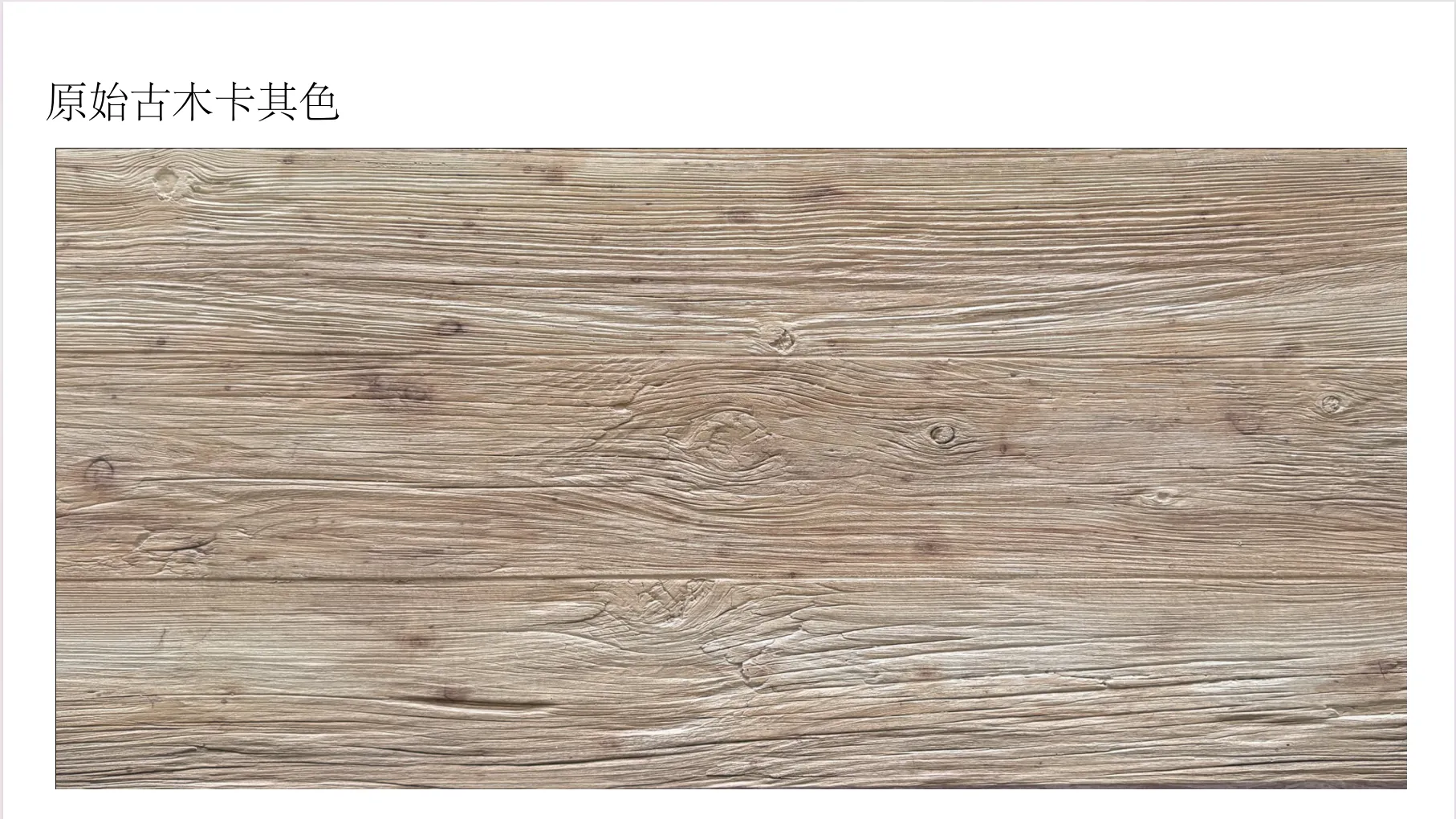
At its core, MCM Ancient Wood is a masterpiece of modern engineering wrapped in the soul of traditional craftsmanship. It starts with a base of modified composite materials, reinforced with fibers that mimic the strength of natural wood without its vulnerabilities. Then, through a proprietary process, it's (given) the texture, color, and grain patterns of aged wood—those subtle knots, the gentle variations in tone, the "lived-in" feel that makes wood so beloved. But here's the twist: unlike real wood, it's designed to laugh in the face of salt, moisture, and UV rays.
MCM Ancient Wood's waterproof superpower lies in its composition. Unlike natural wood, which has porous cells that absorb water, MCM is engineered to be non-porous. That means when rain pours, waves splash, or humidity spikes, water beads up and rolls off instead of seeping in. It's like giving the wood a permanent raincoat—one that never fades or wears thin.
But it's not just about repelling water. MCM Ancient Wood also resists the other coastal villains: salt doesn't corrode its fibers, UV rays don't bleach its color, and humidity can't warp its shape. I recently spoke with a homeowner in Cape Cod who installed MCM Ancient Wood siding three years ago. "We were skeptical at first," she told me. "We'd tried teak, cedar, even expensive composite boards, and they all failed. But this stuff? It still looks like the day it went up. No mold, no cracks, no faded spots. Last winter, we had a nor'easter with 70 mph winds and driving rain—our neighbor's wooden deck lost a board; ours didn't even budge."
For many, the biggest fear with alternative materials is losing that "authentic" wood look. But MCM Ancient Wood doesn't just mimic wood—it channels it. Run your hand over a panel, and you'll feel the rise and fall of the grain, the slight roughness of a "weathered" surface, the subtle variations in color that make real wood so unique. It's a texture that invites touch, that makes you want to lean against it and feel the connection to something timeless.
Designers love it, too. One coastal architect I worked with recently used MCM Ancient Wood for a beach house exterior, pairing it with MCM flexible stone accents in a warm travertine tone. "Clients want that 'collected over time' look," he explained. "MCM Ancient Wood gives me the aged wood vibe, and the flexible stone adds depth—like the home has been there for decades, but without the upkeep. It's design without compromise."
While MCM Ancient Wood is a star player in coastal design, it rarely shines alone. The best coastal spaces are symphonies of materials, where wood's warmth is balanced by stone's solidity, metal's sleekness, or other textures that echo the natural world. Here are a few materials that pair beautifully with MCM Ancient Wood, enhancing both its beauty and functionality:
MCM flexible stone is a chameleon of a material—lightweight, durable, and available in a stunning range of finishes, from rough-hewn travertine to smooth, polished marble. It's perfect for adding accents to MCM Ancient Wood designs: think a stone veneer fireplace surround in a beach house living room, a patio border that mimics natural rock, or a feature wall that combines wood and stone for a layered look.
What makes it ideal for coastal use? Like MCM Ancient Wood, it's waterproof, salt-resistant, and UV-stable. Unlike traditional stone, it's easy to install (no heavy lifting or mortar required) and won't crack or chip in freeze-thaw cycles. One designer I know used MCM flexible stone in a "starry blue" travertine pattern to line a pool deck bordered by MCM Ancient Wood. "The stone looks like it was pulled from the ocean floor," she said, "and the wood feels like driftwood washed ashore. Together, they tell a story of the sea—without any of the maintenance headaches."
For spaces where you want a unified wood look—say, a deck that flows into a covered porch— wood grain board is a perfect companion to MCM Ancient Wood. Made with the same durable MCM technology, it offers a consistent wood grain pattern that pairs effortlessly with Ancient Wood's more "weathered" aesthetic. Use it for railings, ceiling panels, or even furniture pieces to create a cohesive design that feels intentional, not mismatched.
A homeowner in Charleston shared how she used wood grain board for her deck's built-in benches, paired with MCM Ancient Wood decking. "I wanted the benches to look like they were carved from the same wood as the deck, but smoother—like they'd been loved and polished over time," she said. "Wood grain board gave me that uniformity, and since it's MCM, I know the benches won't rot or warp, even with salt air and rain."
MCM Ancient Wood isn't just for siding or decks—it's a versatile material that can transform nearly any coastal space. Here are a few ways designers and homeowners are using it to bring their visions to life:
Exterior Siding: Imagine a beach house with MCM Ancient Wood siding in a soft, weathered gray, accented by MCM flexible stone in a warm travertine hue. The wood looks like it's been baking in the sun for decades, but it's actually impervious to salt and rain. "It's the 'shabby chic' coastal look without the 'shabby' part," one designer joked.
Decking & Patios: Decks are where coastal living happens—morning coffee with the tide, evening barbecues with friends. MCM Ancient Wood decking stands up to foot traffic, splashing kids, and even the occasional rogue beach chair without splintering, warping, or rotting. One family in Florida replaced their rotting cedar deck with MCM Ancient Wood and now says, "We spend more time enjoying the deck than maintaining it. That alone was worth the switch."
Interior Accent Walls: Even indoor spaces can benefit from MCM Ancient Wood's warmth. A living room accent wall in a rich, dark wood tone adds depth, while a bathroom feature wall (paired with water-resistant tile) brings coastal charm without the risk of mold. "I wanted my bathroom to feel like a spa by the sea," a homeowner told me. "Ancient Wood on the wall gives it that 'driftwood lodge' vibe, and I never worry about steam or humidity ruining it."
| Feature | Traditional Wood (Cedar/Teak) | MCM Ancient Wood |
|---|---|---|
| Water Resistance | Porous; absorbs moisture, prone to rot | Non-porous; waterproof, resists saltwater damage |
| Durability | 5-10 years (coastal), requires annual maintenance | 25+ years (coastal), minimal maintenance |
| Aesthetic Authenticity | High, but fades/warps over time | High; retains texture and color permanently |
| Installation | Heavy; requires specialized tools | Lightweight; easy to cut and install |
| Cost Over Time | Higher (replacement + maintenance) | Lower (one-time investment, no upkeep) |
One of the joys of MCM Ancient Wood is how little it asks of you. Unlike traditional wood, which demands regular staining, sealing, and repairs, MCM Ancient Wood thrives on minimal care. A quick rinse with a hose to wash away salt or dirt is usually all it takes to keep it looking fresh. For tougher grime, a mild soap and soft brush work wonders—no harsh chemicals needed.
And because it's fade-resistant, you'll never have to repaint or restain. That means more time enjoying your coastal retreat and less time maintaining it. As one homeowner put it: "I used to spend weekends sanding and sealing my deck. Now? I spend them watching sunsets. That's the real luxury."
Coastal design shouldn't be a choice between beauty and durability. It should be about creating spaces that feel alive with history, that connect us to the sea, and that stand the test of time—without the stress of constant upkeep. MCM Ancient Wood, paired with materials like MCM flexible stone and wood grain board , offers exactly that: a way to have the coastal home of your dreams, where the wood looks like it's been kissed by the sun and sea for decades, but where the only "wear" is the kind that tells a story of joy, not repair.
So whether you're building a new beach house, renovating a coastal cottage, or simply adding a deck to your oceanfront property, consider this: the best coastal designs aren't just about looking good—they're about living well. With MCM Ancient Wood, you can have both. Because the ocean should inspire wonder, not worry. And your home? It should be a place where memories are made, not where maintenance lists are born.
Recommend Products












