
Walk through any city, and you'll notice that buildings don't just exist—they communicate . A sleek glass tower whispers modernity; a stone-clad museum shouts heritage; a timber facade hums warmth. Facades are the first impression, the silent storytellers of a structure's purpose and personality. For grand buildings—those that aim to inspire, impress, or endure—this "first impression" matters even more. They need materials that don't just cover walls but elevate them into something unforgettable. Enter MCM Big Slab Ancient Wood: a material that marries the timeless charm of aged timber with the innovation of modern engineering, designed specifically for facades that demand attention.
But why focus on "large-format" for grand facades? Think about it: when you're designing a skyscraper, a cultural center, or a luxury hotel, small, fragmented materials can feel busy or underwhelming. Large slabs create clean, sweeping lines that make a building feel cohesive, bold, and intentional. They turn facades into canvases, where texture and color can unfold without interruption. And MCM Big Slab Ancient Wood? It's not just a slab—it's a bridge between the past and present, between nature and technology. Let's dive into what makes it so special.
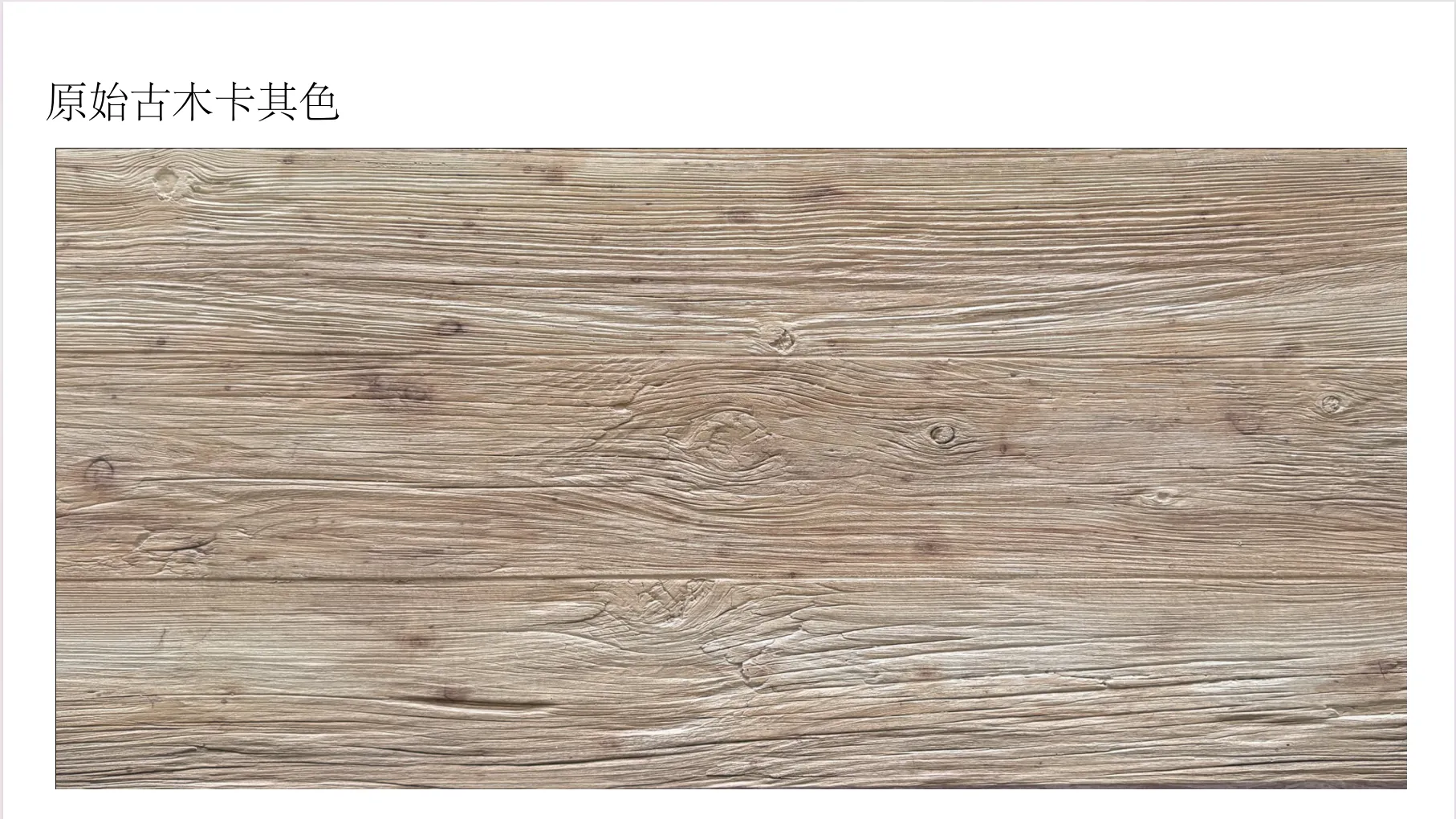
First things first: MCM stands for Modified Composite Material, a clever blend of natural minerals, polymers, and fibers that's been engineered to be lightweight, flexible, and durable—qualities that make it a game-changer for construction. The "Big Slab" part? Exactly what it sounds like: extra-large panels (we're talking up to 3 meters in length) that minimize seams and maximize visual impact. And then there's "Ancient Wood"—the star of the show. This isn't actual wood, but a hyper-realistic texture that mimics the weathered grain, deep knots, and warm patina of timber that's stood the test of time. Imagine the charm of a centuries-old barn, but reimagined for a 21st-century skyscraper. That's the vibe.
There's something primal about our love for aged wood. Maybe it's the way it tells a story—each crack, each variation in tone whispers of years gone by. In a world that often feels rushed and disposable, materials that evoke longevity feel like anchors. MCM Big Slab Ancient Wood taps into that emotion. Its texture isn't just "wood-like"; it's lived-in . You can almost picture it standing in a forest, baking in the sun, getting rained on, slowly transforming into something with character. But here's the twist: unlike real wood, it won't warp, rot, or fade when exposed to harsh winds, heavy rain, or scorching sun. It's the best of both worlds—emotional resonance without the high maintenance.
This balance is key for grand facades. Architects don't just want a material that looks good on day one; they want it to look good in 10, 20, 50 years. Ancient Wood delivers that, making it a favorite for projects that aim to leave a legacy.
Let's talk about a problem every architect has faced: heavy materials. Traditional stone or concrete slabs can weigh a ton, requiring beefed-up structural support and driving up construction costs. MCM Big Slab Ancient Wood? It's surprisingly light—up to 70% lighter than natural stone. That means it's easier to transport, easier to install, and puts less stress on the building's frame. But don't let the "lightweight" label fool you. Thanks to its composite makeup, it's also flexible. Think about it: buildings move. They sway in the wind, settle over time, and expand/contract with temperature changes. Rigid materials can crack under that pressure. Ancient Wood? It bends (just a little!) with the building, reducing the risk of damage. That's a big deal for tall structures, where wind forces are stronger and movement is more pronounced.
Grand facades often face grand challenges. A hotel on the coast has to battle saltwater spray; a museum in a desert deals with extreme heat and sand; a office tower in a rainy city contends with constant moisture. MCM Big Slab Ancient Wood laughs in the face of these hurdles. It's resistant to water, so no rotting or mold. It's fade-resistant, so that rich, warm tone won't turn pale after a few summers. It's even fire-retardant, meeting strict safety standards. Compare that to real wood, which needs regular sealing, painting, or staining to stay protected. With Ancient Wood, once it's up, you can basically set it and forget it (okay, maybe a quick wash now and then, but that's it). For building owners, that translates to lower long-term costs and less hassle—a win-win.
These days, "sustainable" isn't just a buzzword—it's a requirement. Clients, communities, and even governments are demanding materials that minimize environmental impact. MCM Big Slab Ancient Wood checks that box, too. Since it's a composite, it uses fewer natural resources than, say, quarried stone or solid timber. It also doesn't require harsh chemicals to treat (unlike some woods that need preservatives). Plus, because it's lightweight, transporting it uses less fuel, cutting down on carbon emissions during construction. For projects aiming for green certifications (like LEED or BREEAM), Ancient Wood is a smart choice that aligns with eco-friendly goals without sacrificing style.
When you hear "ancient wood," you might picture a single shade of brown. But MCM's designers had more in mind. The Ancient Wood line comes in a range of tones, from warm honey blondes to deep, espresso browns, and even subtle grays that evoke weathered driftwood. Some slabs have more pronounced grain patterns, while others are smoother, mimicking reclaimed barn wood. This variety means it can fit into almost any design scheme. Want a modern, minimalist facade? Opt for a lighter, more uniform Ancient Wood. Going for a rustic, mountain-lodge vibe? A darker, grainier option would work. And because the slabs are large-format, you can create sweeping, monochromatic sections that feel calm and intentional, or mix shades for a more dynamic look.
Grand facades rarely rely on one material alone. The magic often happens when two or more textures or colors play off each other. MCM Big Slab Ancient Wood pairs beautifully with another standout material: foamed aluminium alloy boards, especially the vintage gold or vintage silver variants. Imagine this: a facade where large Ancient Wood slabs form the base, their warm, organic texture grounding the building, while panels of foamed aluminium alloy (vintage gold) accent the upper floors, adding a touch of metallic luxury. The contrast is striking—earthy vs. sleek, natural vs. industrial. It's a combination that feels both timeless and modern, perfect for luxury hotels or high-end office buildings.
Or, for a more understated look, pair Ancient Wood with fair-faced concrete. The wood's warmth softens the concrete's cool, gray austerity, creating a facade that feels balanced and inviting. The key is that Ancient Wood is versatile enough to complement, not compete with, other materials. It's a team player, but it still knows how to stand out when it needs to.
No two grand facades are the same, and MCM gets that. That's why Ancient Wood slabs can be customized in size, finish, and even texture. Need a slab longer than the standard 3 meters? They can do that. Want a specific shade of wood that matches a historic building next door? The color can be tweaked. Some clients even request custom grain patterns, mimicking rare woods that would be impossible (or unethical) to source in real life. This level of customization is a dream for architects who hate being boxed in by "off-the-shelf" options. It means your vision—no matter how unique—can become a reality.
In downtown Chicago, a new mixed-use tower recently made waves with its facade. The architects wanted something that would stand out among the glass-and-steel giants but still feel connected to the city's industrial past. They chose MCM Big Slab Ancient Wood in a deep, weathered gray-brown, paired with foamed aluminium alloy (vintage silver) accents. The result? A building that looks both rooted in history and ready for the future. The large wood slabs create a sense of rhythm as they rise up the tower, while the silver panels catch the light, making the facade glow at sunset. Tenants love it, visitors snap photos of it, and it's quickly become a landmark in the neighborhood. That's the power of a well-designed facade.
A museum in Barcelona, dedicated to local history, faced a challenge: how to design a building that honored the past but didn't feel stuck in it. The solution? MCM Big Slab Ancient Wood. The architects used large, light-toned Ancient Wood slabs for the main facade, their texture evoking the region's traditional wooden farmhouses. But they added a modern twist by cutting the slabs into angular shapes, creating geometric patterns that play with light and shadow. Inside, the wood continues, blurring the line between exterior and interior. Visitors say the space feels both familiar and new—as if they're walking through a piece of history that's still being written. For cultural institutions, that emotional connection is everything.
Luxury hotels often aim for a balance between opulence and comfort. Too much marble or metal can feel cold; too much wood can feel cluttered. A five-star resort in Bali recently used MCM Big Slab Ancient Wood to strike that balance. The facade of its main building features oversized Ancient Wood slabs in a rich, golden-brown tone, arranged in a way that mimics the thatched roofs of traditional Balinese huts. The large format keeps the look clean and sophisticated, while the wood's texture adds warmth. Guests often comment on how the building feels "welcoming" and "connected to nature," even though it's a modern structure. It's a reminder that materials don't just shape how a building looks—they shape how it feels .
Still not sure if MCM Big Slab Ancient Wood is right for your project? Let's break down how it stacks up against other popular facade materials, including some from the keyword list. We'll focus on the factors that matter most: aesthetics, durability, installation ease, and cost over time.
| Material | Aesthetic Appeal | Durability (Resistance to Weather, Rot, Fading) | Installation Ease (Weight, Handling) | Long-Term Cost (Maintenance + Lifespan) |
|---|---|---|---|---|
| MCM Big Slab Ancient Wood | Warm, organic, weathered wood texture; multiple color options | High: Resists water, rot, fading; fire-retardant | Very Easy: Lightweight (70% lighter than stone); large slabs reduce seams | Low: Minimal maintenance; long lifespan (50+ years) |
| Foamed Aluminium Alloy Board (Vintage Gold) | Sleek, metallic, modern; high shine | High: Resists corrosion, fading; lightweight but strong | Easy: Lightweight; can be cut to size | Medium: Low maintenance, but may scratch; lifespan 30–40 years |
| Fair-Faced Concrete | Industrial, minimalist, raw; gray tone | High: Resists weather, but can crack over time; stains easily | Hard: Heavy; requires structural support; difficult to repair | Medium-High: May need sealing; cracks require patching; lifespan 40–50 years |
| Natural Wood (Solid Timber) | Authentic, warm, organic; rich texture | Low-Medium: Prone to rot, warping, insect damage; fades quickly | Medium: Heavy; requires regular sealing/treatment | High: Frequent maintenance (sealing, painting); lifespan 15–25 years |
| Travertine (Vintage Silver) | Elegant, natural stone look; neutral, earthy tones | Medium: Porous (absorbs water); can stain; requires sealing | Hard: Very heavy; requires specialized installation | High: Regular sealing; prone to chipping; lifespan 30–40 years |
As you can see, MCM Big Slab Ancient Wood holds its own—and often comes out on top—especially when you factor in long-term durability and low maintenance. It offers the emotional appeal of natural wood without the headaches, and it's more versatile than materials like concrete or travertine. For grand facades that need to look great and last, it's a clear front-runner.
Contractors have a saying: "Time is money." And when it comes to installing a grand facade, every day saved on the job site translates to lower costs and happier clients. MCM Big Slab Ancient Wood is a contractor's dream in this regard. Because the slabs are lightweight, workers don't need heavy machinery to lift them—often, a small team can handle installation with basic tools. The large format also means fewer seams, which cuts down on the time spent aligning and securing individual panels. On average, Ancient Wood facades can be installed 30–40% faster than natural stone or concrete facades. That's a huge difference when you're working on a tight deadline.
Once installed, MCM Big Slab Ancient Wood is surprisingly low-maintenance. Unlike natural wood, it doesn't need to be sealed, painted, or stained every few years. A simple rinse with water (no harsh chemicals needed) is usually enough to keep it clean. If a slab gets scratched (though it's resistant), it can be repaired with a matching touch-up kit. And because it resists fading, the color you love on day one will still be there a decade later. For building owners, this means lower maintenance budgets and fewer disruptions (no scaffolding up for weeks while workers refinish the facade). It's one less thing to worry about, which is priceless for busy property managers.
The world of architecture is always evolving, but some trends stick around because they solve real problems. MCM Big Slab Ancient Wood is one of those trends. Here's why we think it will remain a go-to for grand facades in the years to come:
At the end of the day, grand facades are about more than just covering a building—they're about creating something that matters. Something that makes people stop, look, and feel. MCM Big Slab Ancient Wood does that. It's a material with heart—it evokes the warmth of aged wood, the durability of modern engineering, and the flexibility to fit any design vision. Whether you're designing a skyscraper, a museum, or a luxury hotel, it offers a way to create a facade that's both grand and grounded, bold and welcoming.
So, if you're ready to move beyond generic, forgettable facades, consider MCM Big Slab Ancient Wood. It's not just a material—it's a story waiting to be told. And in the world of architecture, stories are what make buildings last.
Recommend Products












