To truly understand why
MCM big slab board series
is disrupting the market, let's stack them against sawing wood boards across key categories:
Aesthetics: Seamless vs. Fragmented
Visual flow is everything in design. A
MCM big slab board
in
lunar peak golden
doesn't just cover a wall—it becomes the wall. The absence of seams creates a sense of grandeur, making spaces feel larger and more cohesive. Imagine a hotel lobby with a 10-meter-long MCM slab in
travertine (starry red)
: the eye glides across the surface, unbroken by gaps, evoking luxury and modernity.
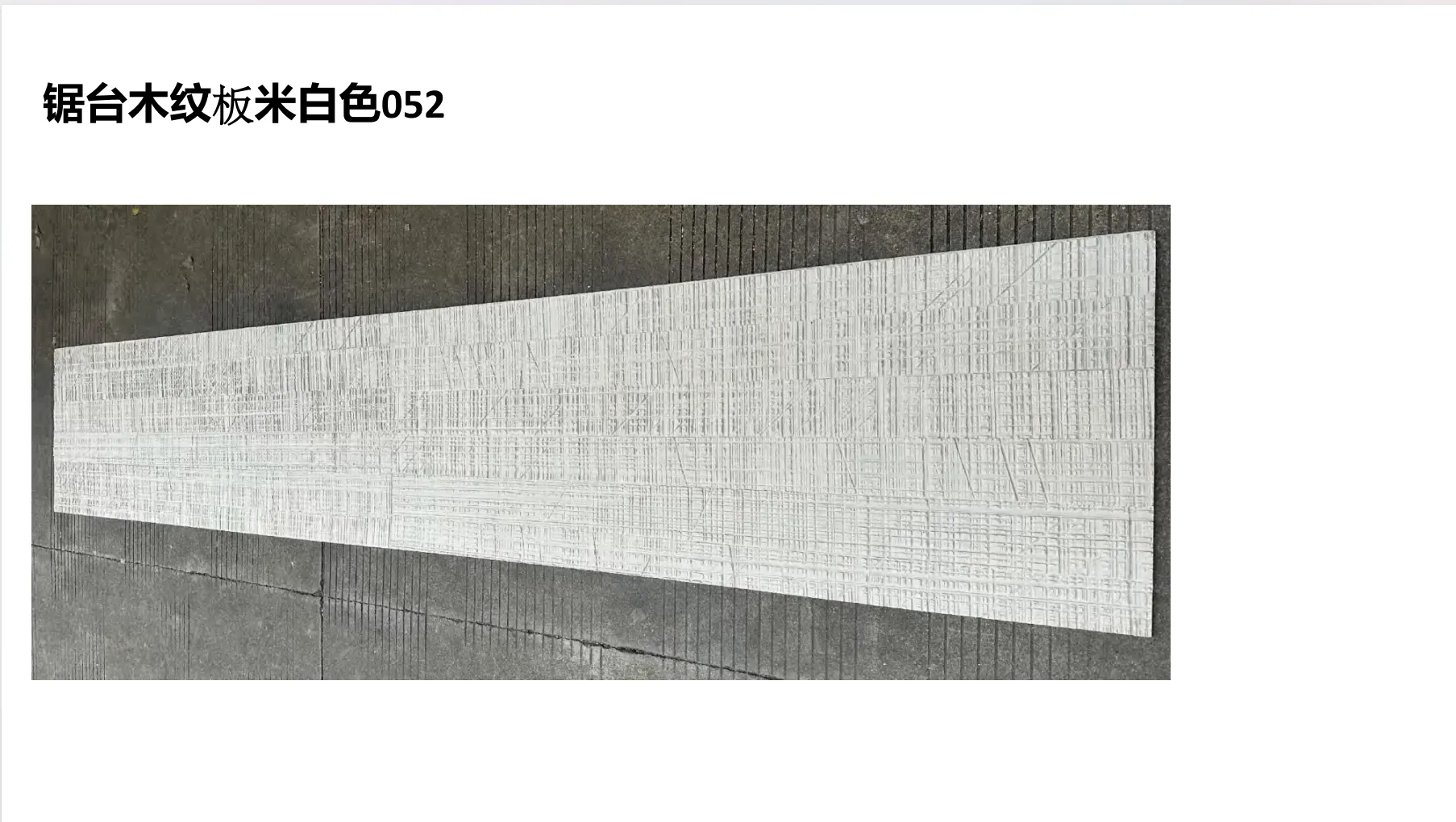
Sawing wood boards, by contrast, interrupt that flow. Even with expertly matched grains, the seams act as visual speed bumps. A wood floor might look charming in a cottage, but in a high-end retail store aiming for a minimalist vibe, those lines can feel cluttered. It's the difference between a painting on a canvas and a collage of photos—both have merit, but one feels intentional and whole.
Durability: Built to Last
Wood is vulnerable to the elements, but MCM slabs are engineered to resist them.
MCM flexible stone
is water-resistant, so it won't warp in bathrooms or kitchens. It's also fire-retardant, making it ideal for commercial spaces. Unlike wood, which attracts termites or rot, MCM is impervious to pests and decay. Even outdoors,
foamed aluminium alloy board (vintage gold)
MCM panels stand up to rain, snow, and UV rays without fading or cracking. In fact, most MCM slabs come with a 15–20 year warranty—unheard of for wood.
Installation: Speed and Simplicity
Installing sawing wood boards is a labor of love (and time). Each plank must be measured, cut, and nailed into place, with careful attention to spacing to account for expansion. A 500-square-foot wall might take a team of two days to finish, with dozens of seams to hide.
MCM big slab boards
, on the other hand, are lightweight (some as thin as 6mm) and large, so a single panel can cover 10–15 square feet. Installation is faster—often half the time of wood—and with fewer joints, there's less room for error.
Maintenance: Set It and Forget It
Wood requires coddling. MCM requires a damp cloth. Spill coffee on a
MCM wood grain board
? Wipe it off—no staining. Splash water on a
fair-faced concrete
MCM slab? It dries without a trace. Unlike wood, MCM doesn't need sealing, staining, or painting. Even in high-traffic areas like airports or shopping malls, MCM slabs retain their finish for years, saving on long-term maintenance costs.
Sustainability: Eco-Friendly Innovation
In an era of environmental consciousness, MCM has another edge. Many MCM slabs, like
foamed aluminium alloy board (vintage silver)
, use recycled materials, reducing reliance on virgin resources. Wood, while renewable, often comes with deforestation concerns, especially for rare or exotic species. MCM production also generates less waste—no sawdust, no chemical treatments—and the panels are fully recyclable at the end of their life. For green-minded designers, that's a compelling selling point.