
In the world of architecture and design, the materials we choose don't just cover surfaces—they shape experiences. Walk into any space, and the walls, floors, and ceilings tell a story: about the designer's vision, the building's purpose, and even the era it belongs to. Today, we're diving into a material revolution that's changing how we approach large-scale projects: MCM Big Slab Board. But first, let's set the stage by understanding why material choice matters, especially when the project scale grows from a small café to a sprawling shopping mall or a towering hotel.
Large-scale projects come with unique challenges: tight deadlines, the need for visual consistency, durability that stands up to heavy foot traffic, and materials that can be installed efficiently without compromising on aesthetics. For decades, regular panels—think traditional stone, ceramic tiles, or solid wood—have been the go-to. But as designs become bolder and projects more ambitious, these regular panels often hit limits: they're heavy, small in size, and tough to customize. Enter MCM Big Slab Board, a game-changer in the building materials industry, and its siblings like MCM Flexible Stone, which are redefining what's possible.
In this article, we'll break down the key differences between MCM Big Slab Board and regular panels, explore how weaving real photos of materials like Weaving (Khaki) or Lunar Peak Silvery can transform project planning, and even dive into real-world examples where materials like Foamed Aluminium Alloy Board (Vintage Silver) have turned vision into reality. Whether you're an architect, designer, or simply someone curious about the future of building materials, this is your guide to why MCM is becoming the material of choice for projects that aim to make a statement.
Let's start with the basics: MCM stands for Modified Composite Material, a term that might sound technical, but boils down to something surprisingly intuitive. MCM Big Slab Board is a lightweight, flexible cladding material made by bonding a thin layer of natural stone, metal, or other decorative finishes to a durable, lightweight core—usually a mix of recycled polymers and fiberglass. The result? A material that looks and feels like the real thing (marble, granite, wood, you name it) but weighs a fraction of the traditional version, with the added bonus of being customizable in size, color, and texture.
What makes "Big Slab" special? Size. While regular panels typically max out at 600x600mm (about 2x2 feet), MCM Big Slab Board can reach up to 1200x2400mm (4x8 feet) or even larger, depending on the manufacturer. Imagine covering an entire wall with just a handful of panels instead of dozens—fewer seams, a smoother finish, and a look that feels expansive and intentional. It's like the difference between a mosaic made of tiny tiles and a single canvas painting: both can be beautiful, but the latter has a coherence that's hard to match.
But MCM Big Slab isn't just about size. Its flexibility is another superpower. Unlike rigid stone or concrete panels, MCM can bend slightly without cracking, making it ideal for curved surfaces. Think of a hotel lobby with a sweeping, circular wall—traditional panels would require cutting into small, wedge-shaped pieces to fit, leading to visible seams and a patchy appearance. With MCM Big Slab, you can wrap the material around the curve, creating a seamless flow that follows the architecture's natural lines.
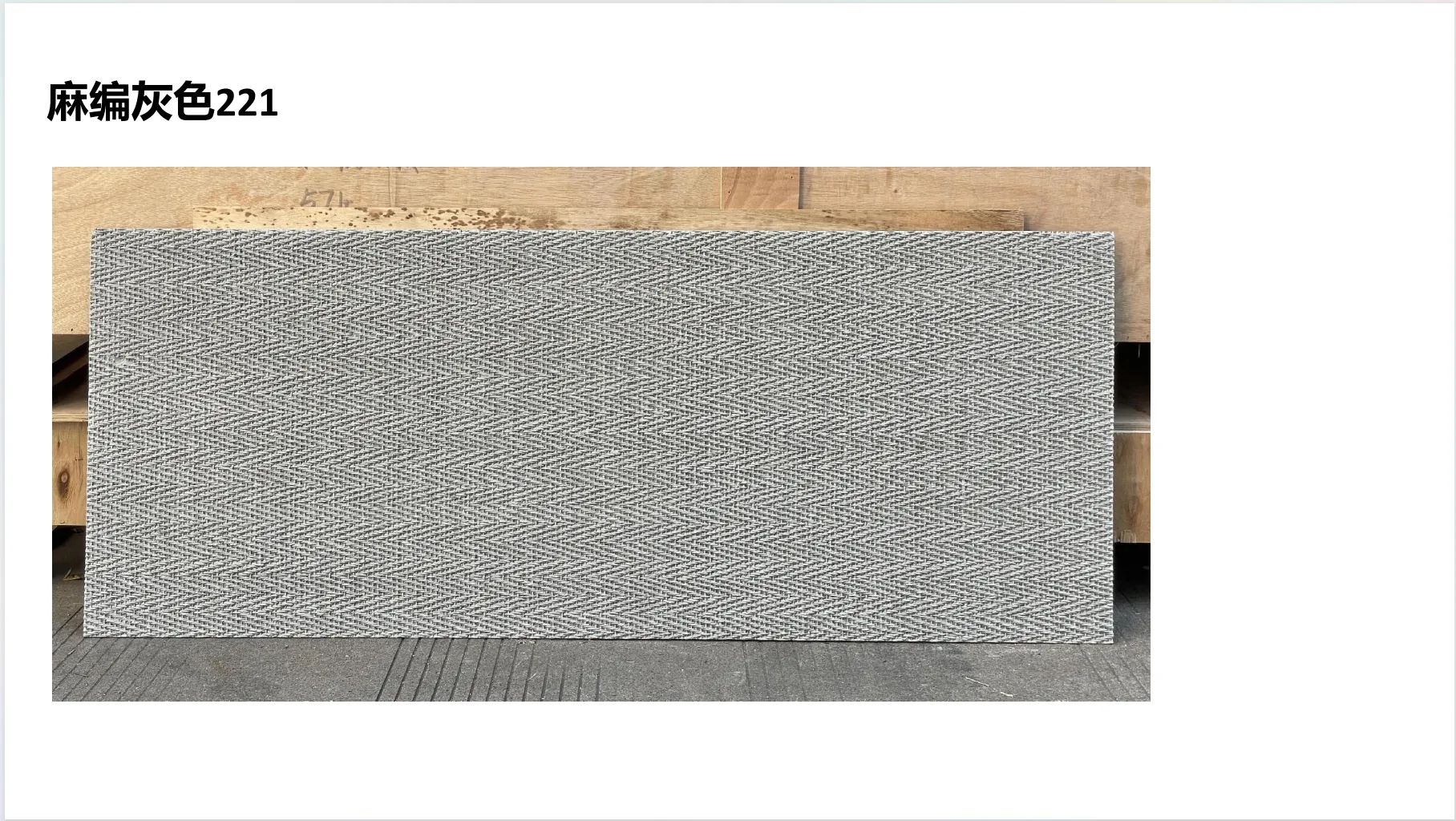
And let's talk about variety. The MCM lineup includes finishes that mimic everything from natural stone (like Travertine in Starry Green or Rustic Red) to industrial metals (Foamed Aluminium Alloy Board in Vintage Gold or Silver) and even organic textures like Weaving (Khaki), which has a fabric-like weave pattern that adds warmth to modern spaces. One standout collection is the Lunar Peak series—available in Silvery, Golden, and Black—with a crater-like texture and subtle metallic flecks that evoke the moon's surface. It's these design options that make MCM Big Slab a favorite for projects where aesthetics and functionality go hand in hand.
Before we compare, let's clarify what we mean by "regular panels." These are the tried-and-true materials that have been used for decades: natural stone slabs (granite, marble), ceramic tiles, solid wood planks, concrete panels, or even metal sheets. They're familiar, reliable, and have a long history of use in construction. But as project scales grow, their limitations become harder to ignore.
Take natural stone panels, for example. A standard marble slab might measure 1000x2000mm, but it weighs around 25-30kg per square meter—heavy enough that installing it requires multiple workers and specialized equipment. Ceramic tiles, on the other hand, are lighter (about 15kg/m²) but small, often topping out at 600x600mm, which means hundreds of tiles for a large wall, each requiring grout and precise alignment to avoid uneven seams. Solid wood panels bring warmth but are prone to warping in humid environments and can be expensive to source sustainably.
Regular panels also struggle with customization. If you want a specific color or texture, you're limited by what nature or traditional manufacturing can provide. For example, finding a batch of natural travertine with consistent "starry blue" veining is nearly impossible—each slab is unique, which can be charming in a small bathroom but a headache in a hotel where 50 identical rooms need matching walls. Regular metal panels, while durable, often lack the texture of their MCM counterparts; solid aluminum, for instance, has a smooth, industrial look but none of the vintage charm of Foamed Aluminium Alloy Board, which has a porous, light-catching texture that feels almost handcrafted.
Installation is another pain point. Regular panels require careful handling: stone slabs can crack if dropped, ceramic tiles chip easily, and wood panels need to be sealed and treated before installation to prevent moisture damage. This adds time to the project timeline—time that, on a large-scale build, can translate to increased labor costs and missed deadlines. And once installed, maintenance isn't always straightforward: natural stone might need regular sealing to prevent staining, while wood panels require refinishing every few years to keep their color.
To really understand the impact of MCM Big Slab Board, let's put it side by side with regular panels. The table below breaks down key features that matter most for large-scale projects:
| Feature | MCM Big Slab Board | Regular Panels |
|---|---|---|
| Size Range | Up to 1200x2400mm (4x8 feet) or custom sizes | Typically 300x300mm to 600x600mm (1x1 to 2x2 feet); stone slabs up to 1000x2000mm |
| Weight | 6-10kg per square meter (lightweight core) | 15-30kg per square meter (stone, ceramic, solid metal) |
| Flexibility | Bends up to 30 degrees; ideal for curved surfaces | Rigid; prone to cracking if bent; requires cutting for curves |
| Installation Time | 30-50% faster (fewer panels, lightweight, easy to handle) | Slower (more panels, heavier, requires specialized tools) |
| Seam Visibility | Minimal seams (large slabs); can be installed with invisible joints | Visible seams (small panels); grout lines or gaps between tiles/slabs |
| Design Consistency | Uniform color/texture across batches; custom finishes (e.g., Lunar Peak Silvery, Weaving Khaki) | Natural variation (stone, wood); limited custom color options |
| Durability | Weather-resistant, scratch-proof, and moisture-resistant; suitable for high-traffic areas | Varies: stone is durable but heavy; ceramic chips; wood warps in humidity |
| Maintenance | Low maintenance; wipe clean with water; no sealing required | High maintenance: stone needs sealing; wood needs refinishing; metal may rust |
| Cost-Effectiveness | Higher upfront cost, but lower labor and long-term savings (faster installation, less maintenance) | Lower upfront cost, but higher labor (installation, repairs) and maintenance expenses |
| Sustainability | Often made with recycled materials; lightweight design reduces transport emissions | Natural materials may require mining/deforestation; heavy weight increases carbon footprint |
The standout differences? Size, weight, and design consistency. For a project like a 10-story hotel with a feature wall spanning the lobby, MCM Big Slab Board would require just 10-15 panels, while regular 600x600mm tiles would need over 100—each with a grout line that could collect dust and dirt over time. The lightweight nature of MCM also means fewer workers are needed for installation; a two-person crew can handle MCM slabs, whereas regular stone panels might require four people and a crane for lifting.
Design consistency is a game-changer, too. Imagine a retail chain rolling out a new store concept across 50 locations—each needs the same "Lunar Peak Golden" finish on the walls to maintain brand identity. With MCM, you can order batches that match perfectly, down to the last metallic fleck. Try that with natural golden travertine, and you'll end up with 50 slightly different shades, confusing customers and diluting the brand's visual impact.
Now, let's talk about a topic that's often overlooked but critical for large-scale success: visualization. When you're designing a project that spans 100,000 square feet, how do you ensure everyone—clients, contractors, even the construction crew—shares the same vision? This is where weaving real photos of materials comes into play, and it's a tool that pairs beautifully with MCM's design flexibility.
Weaving real photos aren't just stock images—they're high-resolution, close-up shots of actual MCM panels, taken in different lighting conditions (natural sunlight, warm indoor bulbs, cool LED) and scaled to match the project's dimensions. For example, a photo of Weaving (Khaki) might show a 1x1 meter swatch, but when imported into 3D rendering software, it can be stretched to cover a 10x5 meter wall, allowing designers to see how the texture will look from 5 feet away (cozy and inviting) versus 50 feet away (a cohesive, warm backdrop).
For clients, these photos eliminate guesswork. A hotel owner might worry, "Will the Lunar Peak Silvery walls look too cold in the ballroom?" With a real photo rendered in the actual space, they can see how the material reflects the chandelier light, softening the tone and adding warmth. This reduces revisions and delays—no more "I thought it would be lighter" surprises halfway through installation. For contractors, real photos mean clearer instructions: "Install the Foamed Aluminium Alloy Board (Vintage Silver) trim 3 inches from the ceiling, just like in the photo," leaves no room for misinterpretation.
Weaving real photos also help with material selection. Let's say you're torn between "Stream Limestone (Claybank)" and "Dolomitic Travertine (Dark Grey)" for a hospital's patient rooms. Real photos can show how each material looks under the harsh fluorescent lights typically used in healthcare settings: Stream Limestone might appear warm and calming, while Dolomitic Travertine could read as too dark, making the room feel smaller. Without these photos, you'd be relying on small swatches that don't capture scale or lighting effects, risking a choice that doesn't align with the project's goals (in this case, creating a stress-free environment for patients).
MCM manufacturers have leaned into this trend, offering libraries of real photos for every finish—from the subtle grain of "Wood Grain Board" to the bold veining of "Marble Interstellar Gray." Some even provide 360-degree videos of panels, so you can see how the texture shifts when you walk past it (a crucial detail for high-traffic areas like airport terminals). This level of detail isn't possible with regular panels, which often lack standardized real photos; natural stone, for instance, varies so much that a single "travertine beige" photo might not represent the batch you receive.
On a practical level, weaving real photos streamline the supply chain. Once a material is chosen via a real photo, the manufacturer can produce MCM panels that match the image exactly, ensuring consistency across the project. For a university campus with 10 identical buildings, this means every "Rona Yellow" accent wall will look the same, reinforcing the campus's unified design language. Regular panels, with their natural variation, can't offer this level of precision—you might order 100 "claybank" dolomitic travertine tiles and end up with 10 that are too light, 10 too dark, and 80 that are "close enough."
To bring this all to life, let's look at a real-world example: the 2024 renovation of Westlake Mall, a 1980s-era shopping center in Chicago. The goal? update the space to attract younger shoppers while preserving its historic architecture. The design team chose MCM Big Slab Board as the star material, with Lunar Peak Silvery as the primary finish, Foamed Aluminium Alloy Board (Vintage Silver) for accents, and Weaving (Khaki) in the food court seating areas. Here's how it unfolded:
Westlake Mall had 120,000 square feet of interior wall space to update, plus 50,000 square feet of exterior cladding. The original 1980s design featured small, dark ceramic tiles that made the mall feel cramped, and the exterior was clad in heavy limestone that was starting to crack due to water damage. The renovation needed to be completed in 12 weeks to avoid losing holiday season revenue—a tight timeline for such a large space.
The design team opted for MCM Big Slab Board in Lunar Peak Silvery (1200x2400mm) for the interior walls. The large slabs minimized seams, making the mall feel more open, while the silvery finish reflected natural light from the skylights, brightening the space. For the exterior, they chose Foamed Aluminium Alloy Board (Vintage Silver), which is lightweight (6kg/m²) and resistant to Chicago's harsh winters, eliminating the risk of cracking limestone. In the food court, Weaving (Khaki) panels were installed on the backs of banquettes, adding texture and warmth to balance the sleekness of the Lunar Peak walls.
Before construction began, the team used real photos of the materials to create a 3D model of the mall. The client was initially hesitant about the "cold" look of silver, but seeing a real photo of Lunar Peak Silvery rendered under the mall's existing skylights convinced them it would feel bright, not sterile. The Weaving (Khaki) photos also helped the food court designer adjust the seating layout—they realized the texture would hide stains better than smooth panels, a practical win for a high-traffic dining area.
The renovation finished 3 weeks ahead of schedule, thanks to MCM's fast installation: a crew of 4 installed 500m² of Lunar Peak Silvery slabs per day, compared to the 200m² they could manage with regular ceramic tiles. The exterior Foamed Aluminium panels withstood a winter storm just 2 weeks after installation, with no signs of damage. Post-opening surveys showed a 35% increase in foot traffic, with customers noting the "modern, airy feel" of the interior and the "striking" exterior that stood out among nearby buildings.
While we've focused on MCM Big Slab Board, it's worth shining a light on its versatile sibling: MCM Flexible Stone. As the name suggests, this material can bend and flex, making it ideal for curved surfaces—a common feature in modern architecture, from rounded hotel lobbies to circular staircases. Unlike regular stone panels, which would shatter if bent, MCM Flexible Stone uses a fiberglass core that allows it to curve up to 30 degrees without cracking.
Take the example of a luxury spa with a domed ceiling. Traditional stone panels would require cutting into hundreds of small, wedge-shaped pieces to fit the curve, resulting in a patchwork look. With MCM Flexible Stone (say, in "Marble Veil White"), the installer can roll the panel over the dome, creating a smooth, continuous surface that looks like it was carved from a single piece of marble. The texture is so realistic that guests often mistake it for natural stone—until they notice how light it feels when they tap the wall.
MCM Flexible Stone also excels in renovation projects where walls aren't perfectly straight. Older buildings often have uneven surfaces, and regular rigid panels would require extensive prep work (like building a new sub-wall) to ensure a flat installation. MCM Flexible Stone, however, can conform to minor imperfections, saving time and money. A recent renovation of a 1920s theater used MCM Flexible Stone in "Historical Pathfinders Stone" to cover the curved proscenium arch, preserving the building's historic character while updating the materials to meet modern fire safety standards.
As project scales grow, so do the demands on building materials. Regular panels, while reliable, simply can't keep up with the need for speed, consistency, and design flexibility in today's architecture. MCM Big Slab Board, with its large size, lightweight design, and customizable finishes, is more than a material—it's a tool that empowers designers to dream bigger, contractors to work faster, and clients to visualize their vision with confidence.
When paired with weaving real photos, MCM becomes even more powerful, turning abstract ideas into tangible previews and ensuring everyone involved in the project is on the same page. Whether you're cladding a skyscraper in Lunar Peak Black, designing a hotel lobby with Weaving (Jacinth) accents, or renovating a mall with Foamed Aluminium Alloy Board, MCM Big Slab Board proves that large-scale projects don't have to sacrifice beauty for practicality.
So, the next time you walk into a space that takes your breath away—the seamless walls, the perfect texture, the way it feels both grand and intimate—take a closer look. Chances are, you're looking at MCM Big Slab Board, quietly revolutionizing how we build, one large, beautiful slab at a time.
Recommend Products












