
In the world of architecture and design, the materials we choose do more than just fill space—they shape experiences. From the grand facades of skyscrapers to the cozy walls of a home, every material tells a story of balance: between strength and beauty, tradition and innovation. Today, two names stand out in the conversation of modern building materials: the MCM big slab board series and Rock Cut Dolomitic Stone . Both have earned their place in projects worldwide, but when it comes to two critical factors—weight and installation ease—their differences paint a clear picture of how design and practicality intersect. Let's dive in.
Weight might not be the first thing that comes to mind when choosing a wall material, but it's a silent architect that influences everything from structural planning to project timelines. For builders, heavy materials mean higher transport costs, stricter structural load requirements, and even safety risks during installation. Here's where the divide between MCM Big Slab Board and Rock Cut Dolomitic Stone begins to widen.
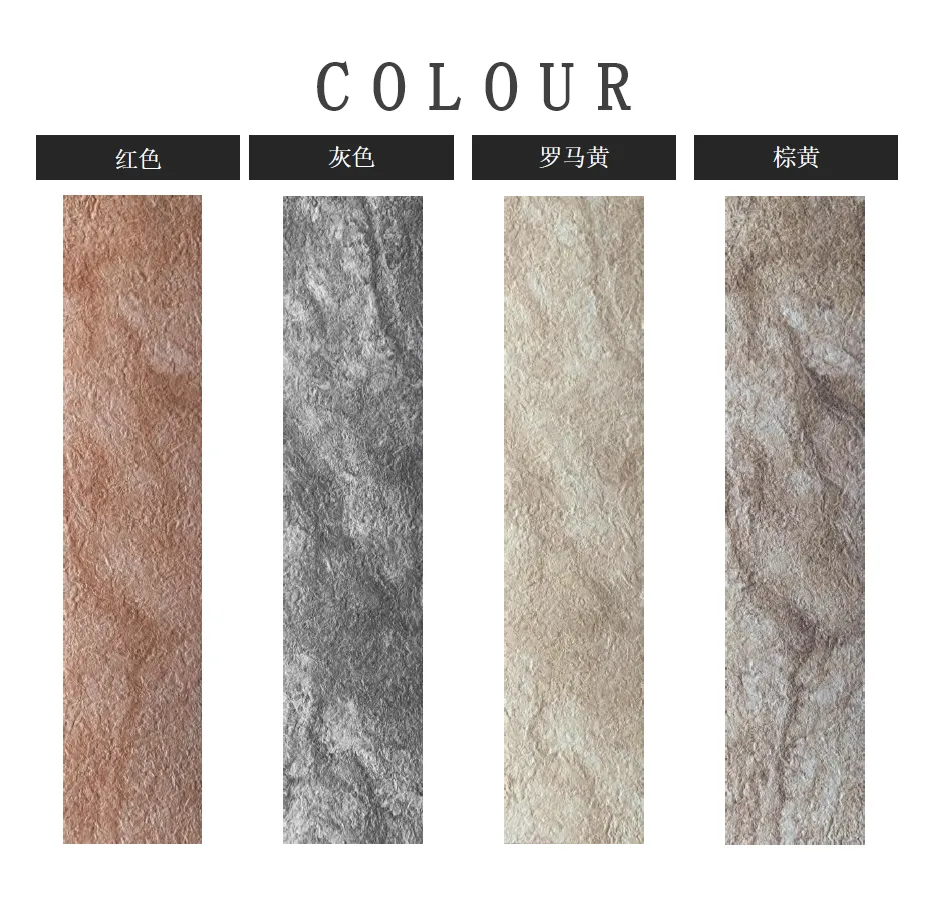
The MCM big slab board series is part of the broader family of MCM flexible stone , a category defined by its clever use of modified composite materials. Unlike traditional stone or concrete, MCM slabs are engineered to be lightweight without sacrificing durability. Imagine a material that retains the robustness needed for exterior cladding but weighs a fraction of natural stone—this is where MCM shines. Thanks to advancements in modified composite material panels , these slabs often tip the scales at just 3-5 kg per square meter, making them a dream for projects where structural (reducing load) is key.
Take, for example, a 20-story residential tower. If the design calls for exterior cladding on all floors, the cumulative weight of the material adds up quickly. With MCM Big Slab Boards, the reduced weight means engineers can often skip reinforcing the building's framework—saving time, money, and materials. Even during transport, a single truck can carry hundreds of MCM slabs, cutting down on fuel costs and carbon footprints. For high-rise projects or retrofits where the existing structure can't bear heavy loads, this lightweight advantage isn't just convenient—it's transformative.
On the flip side, Rock Cut Dolomitic Stone is a product of nature's grandeur—and nature doesn't skimp on density. Quarried from deep within the earth, this stone is hewn from solid dolomite, a mineral-rich rock known for its hardness and natural veining. While this gives it unparalleled character, it also makes it inherently heavy. A typical slab of Rock Cut Dolomitic Stone can weigh 20-30 kg per square meter or more—five to six times heavier than MCM. For low-rise buildings or projects with reinforced structures, this might be manageable, but for high-rises or historic renovations where the original framework can't support extra load, it becomes a logistical headache.
Consider a renovation project in a 1920s building with wooden floor joists. Adding Rock Cut Dolomitic Stone walls could require costly structural upgrades, from reinforcing beams to installing additional supports. With MCM, the same project might proceed without a hitch, preserving the building's historic integrity while modernizing its interiors. Weight, in this case, isn't just about numbers—it's about preserving possibility.
If weight sets the stage, installation ease is the performance that brings a project to life. A material that's lightweight but hard to install can still derail timelines, while a heavy material that's simple to work with might surprise you. But when it comes to MCM Big Slab Board and Rock Cut Dolomitic Stone, the gap here is even more pronounced.
Let's start with the MCM big slab board series . Its defining feature—flexibility—isn't just about bending; it's about adaptability. These slabs are designed to be cut, shaped, and installed with minimal fuss. Unlike brittle natural stone, MCM's flexible stone composition means it resists cracking during handling, and can be trimmed on-site with basic tools (think circular saws or utility knives) rather than specialized equipment. For a team of installers, this translates to speed: a typical MCM wall can be installed 30-50% faster than traditional stone, especially when paired with 3D printing series customization. Imagine ordering pre-cut slabs tailored to your project's unique dimensions—no on-site cutting, no waste, just seamless assembly.
Another advantage? MCM's lightweight nature eliminates the need for heavy lifting machinery. On a busy construction site, this is a game-changer. Instead of coordinating cranes or forklifts to hoist slabs into place, installers can carry them by hand or with simple lifts, reducing congestion and safety risks. For interior projects like feature walls or retail spaces, this means less disruption to surrounding areas—critical for businesses that need to stay operational during renovations.
Now, contrast this with Rock Cut Dolomitic Stone . As a natural stone, it's dense, rigid, and unforgiving. Installing it requires a team of skilled masons, specialized diamond-tipped saws for cutting, and often heavy equipment to maneuver slabs into position. Even a small miscalculation during cutting can result in a cracked slab—wasting material and time. In one recent hospital renovation project, contractors reported spending twice as many labor hours installing Rock Cut Dolomitic Stone compared to MCM, with additional costs for replacing damaged pieces. For projects on tight deadlines, this can turn a manageable budget into a stressful overrun.
There's also the matter of lightweight flexible stone sheets —a subset of MCM that takes installation ease a step further. These thin, bendable sheets can conform to curved surfaces, a feat that would be nearly impossible with rigid Rock Cut Dolomitic Stone. Picture a circular lobby with a curved accent wall: MCM sheets would wrap around the curve like wallpaper, while natural stone would require painstakingly cutting and fitting small, wedge-shaped pieces—a process that's both time-consuming and aesthetically risky (gaps, uneven edges).
| Feature | MCM Big Slab Board Series | Rock Cut Dolomitic Stone |
|---|---|---|
| Weight (per sq.m) | 3-5 kg | 20-30 kg |
| Installation Time | 30-50% faster than natural stone | Slower; requires specialized labor |
| Tools Needed | Basic (circular saw, utility knife) | Specialized (diamond saws, heavy lifts) |
| Structural Load Requirement | Low; suitable for retrofits/high-rises | High; requires reinforced frameworks |
| Flexibility for Curves/Angles | High (conforms to curved surfaces) | Low (rigid; requires custom cutting) |
Of course, no material choice is made on weight and installation alone—beauty and longevity matter too. Here, both materials hold their own, but MCM adds a few tricks up its sleeve.
The MCM big slab board series is engineered to mimic the look of natural stone, from the earthy textures of travertine to the sleek lines of marble. Thanks to 3D printing series technology, designers can even customize patterns, colors, and finishes to match a project's unique vibe—no two MCM walls have to look the same. And because it's a composite, it resists fading, moisture, and weathering better than some natural stones, making it ideal for exterior use in harsh climates.
Rock Cut Dolomitic Stone, on the other hand, offers the irreplaceable charm of nature. Its unique veining, depth, and organic texture tell a story of millions of years of geological formation—a narrative that's hard to replicate. For heritage projects or spaces where "authenticity" is non-negotiable, this natural character is priceless. However, it does require regular sealing to protect against stains and water damage, adding to long-term maintenance costs.
At the end of the day, there's no "better" material—only the right material for the project's story. If your priority is a lightweight, fast-installing solution that works for high-rises, tight timelines, or curved designs, the MCM big slab board series (paired with flexible stone and lightweight flexible stone sheets ) is hard to beat. It's a material that respects both the vision of the designer and the practical needs of the builder.
But if your project calls for the raw, timeless beauty of natural stone—if the weight and installation challenges are outweighed by the desire for a material with history in its veins—then Rock Cut Dolomitic Stone will always have a place. It's a reminder that some traditions are worth the extra effort.
In the end, both materials reflect the heart of design: solving problems with creativity. Whether you're reaching for the innovation of MCM or the heritage of natural stone, the best choice is the one that lets your space tell its story—loud, clear, and without compromise.
Recommend Products












